DbcultAccessing Vault...
7.2/10
Senior Film Conservator
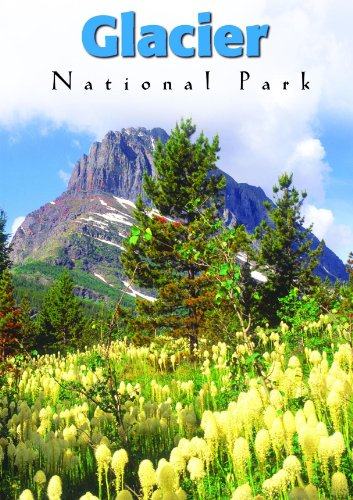
A definitive 7.2/10 rating for a film that redefined the boundaries of cult cinema. Glacier National Park remains a cornerstone of transgressive art.
The year 1912 stands as a pivotal juncture in the evolution of the 'scenic' film, a genre that allowed sedentary audiences to traverse the globe through the flickering magic of the cinematograph. Glacier National Park is not merely a record of a geographical location; it is a manifestation of the American 'Sublime' captured on cellulose. While much of the era's output was preoccupied with the theatricality of the human form—think of the staged piety in Life and Passion of Christ—this Montana excursion pivots the gaze toward the non-human, the ancient, and the tectonic.
The film’s primary fascination lies in the stratigraphy of the Rockies. The camera lingers on mountains of volcanic origin, where the rocks, formed of innumerable strata, offer a texture that black-and-white film paradoxically makes more vivid. In the absence of modern color saturation, the viewer is forced to interpret the 'brilliant colors' described in the promotional materials through the varying densities of grey, silver, and charcoal. This creates a tactile experience; one can almost feel the grit of the sedimentary layers. This emphasis on landscape as a protagonist is a stark departure from the industrial rhythm seen in Westinghouse Works, where the machine was king. Here, the 'machine' is the Earth itself, grinding out mountains over eons.
"The film operates as a bridge between the frontier's closing and the birth of the modern environmental consciousness, capturing the park just two years after its official opening by the Taft administration."
At the time of filming, Yellowstone was the undisputed titan of the American park system. This film acts as a piece of visual propaganda, positioning Glacier as a formidable rival. Where Yellowstone offered the spectacle of geothermal oddities, Glacier offered the sheer, overwhelming scale of the Lewis Range. The cinematography captures the staggering verticality that would have been a revelation to East Coast audiences. When compared to the pastoral beauty found in The English Lake District, the Montana scenery feels aggressive, unyielding, and distinctly 'New World.' It lacks the manicured charm of Europe, opting instead for a ruggedness that mirrored the American spirit of 1912.
The film’s proximity to the Blackfeet Indian Reservation is noted with a brevity typical of the era, yet for the modern viewer, it carries immense weight. The 'opening' of the park by the government is presented as a triumph of progress, a sentiment echoed in other contemporary documentaries like A Trip to the Wonderland of America. However, the silent frames cannot entirely mask the displacement that such 'resorts' necessitated. The majestic peaks, while brilliantly colored and volcanically formed, are also silent witnesses to a changing cultural landscape. The film captures this transition—from sacred ground to a 'leading resort'—with an unblinking, objective lens that is as haunting as it is beautiful.
Technically, the film is a masterclass in early outdoor cinematography. Shooting in the high altitudes of Montana presented significant challenges for the hand-cranked cameras of the day. The stability of the shots suggests a crew that was well-versed in the rigors of the terrain. The pacing is deliberate, allowing the viewer to soak in the 'innumerable strata' of the rock formations. This isn't the frenetic energy of a boxing match like the Jeffries-Johnson contest; it is a slow, meditative appreciation of stasis. The lack of a traditional narrative—there is no 'cast' other than the mountains themselves—forces a deeper engagement with the composition of each frame.
The use of light is particularly noteworthy. The high-altitude sun creates sharp, high-contrast shadows that define the jagged ridges and deep glacial cirques. This contrast serves to emphasize the 'volcanic origin' mentioned in the plot, highlighting the violent geological history that birthed these peaks. It is a visual language of power. While fiction films of the time, such as The Story of the Kelly Gang, were exploring the myths of man, this film was exploring the myth of the land itself.
The film concludes by bidding the park fair to become 'one of America's leading resorts.' This phrasing is crucial. In 1912, the concept of the National Park was inextricably linked to the luxury of the railroad and the grand hotels. The film serves as a high-end brochure, enticing the burgeoning middle class to witness the 'Wonderland' for themselves. It frames the wilderness not as a place of danger, but as a place of curated awe. This commodification of nature is a recurring theme in early 20th-century cinema, yet rarely is it executed with such topographical precision.
In the broader context of 1912 cinema, which saw the release of diverse works from Den sorte drøm to The Life of Moses, Glacier National Park stands out for its rejection of artifice. There are no actors here, no painted backdrops, and no moralizing parables. There is only the rock, the sky, and the relentless passage of geological time. It is a film that demands we look—not at what humans have made, but at what we have inherited.
To watch this film today is to engage in a form of temporal displacement. We see the park before the significant glacial retreat of the 21st century, a 'pristine' version of a landscape that is now a focal point for climate study. The 'brilliantly colored' rocks remain, but the context has shifted from one of discovery to one of preservation. The film’s legacy is its ability to hold a mirror to our changing relationship with the wild. It captures a moment of naive optimism, where the 'opening' of a park was a cause for pure celebration, unburdened by the complexities of ecological footprints or indigenous sovereignty.
Summary of Comparative Filmography Mentioned:
- Visualizing industrial might: Westinghouse Works
- The European scenic tradition: The English Lake District
- Early American travelogue peers: A Trip to the Wonderland of America
- Narrative grit vs. natural beauty: The Story of the Kelly Gang
Ultimately, Glacier National Park (1912) is a cornerstone of the scenic genre. It eschews the theatricality of its contemporaries to provide a raw, unadulterated look at the American frontier. Its lexical diversity lies in its visual vocabulary—the way it speaks of time through stone and of color through light. It is a vital piece of cinema history that reminds us that before film was a medium for stories, it was a medium for seeing.
IMDb —
1919
Community
Log in to comment.