DbcultAccessing Vault...
Cult Review
Senior Film Conservator
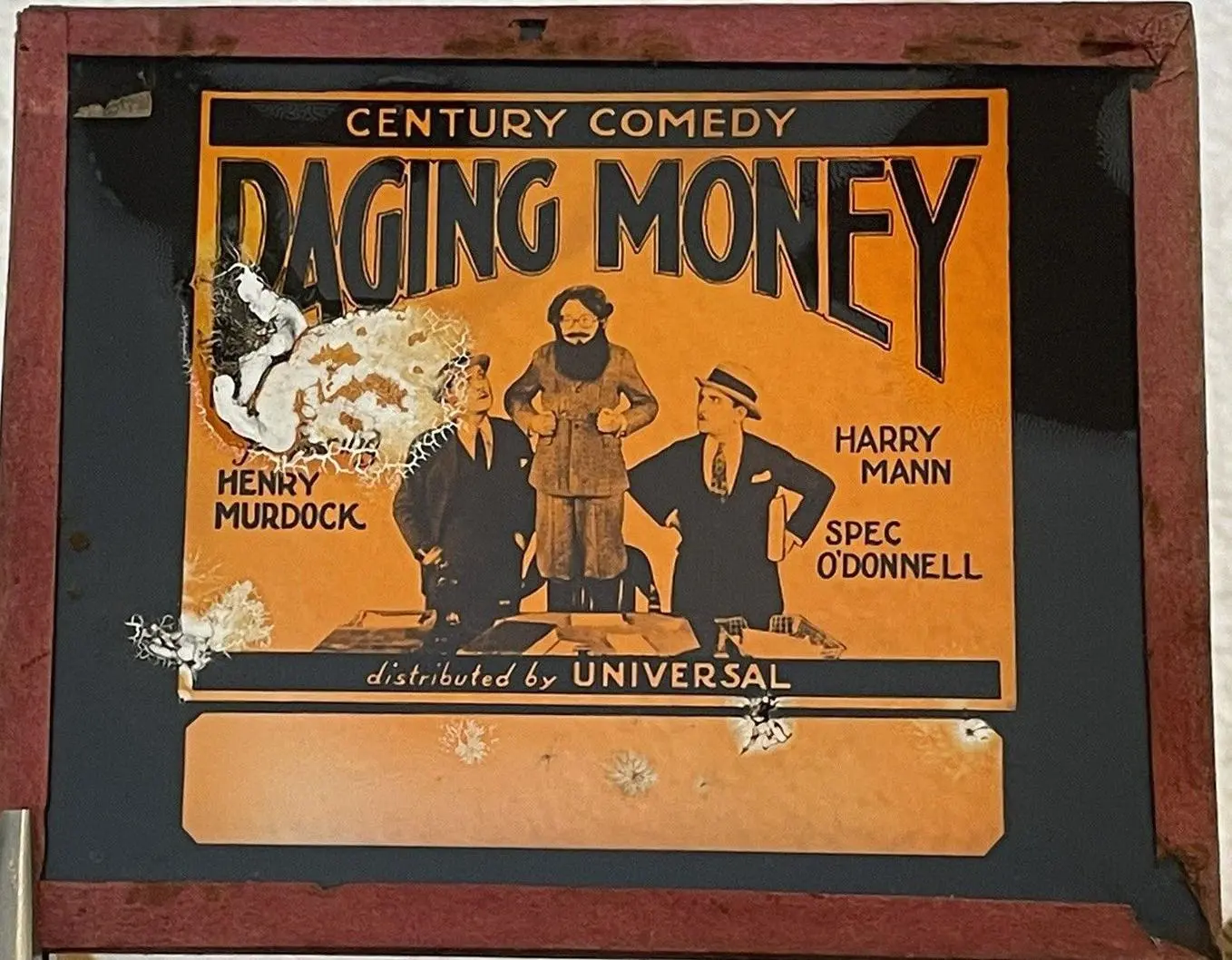
Stepping into the world of Paging Money, one is immediately struck by the sheer audacity of its premise: a seemingly simple narrative of a book agent's relentless pursuit of success, yet executed with an emotional heft and raw authenticity that elevates it far beyond mere melodrama. This isn't just a story; it's an immersive experience into the often-brutal underbelly of aspiration, a testament to the human spirit's capacity for endurance in the face of relentless adversity. The film, under the meticulous guidance of writer Edward Ludwig, doesn't merely depict struggle; it dissects it, laying bare the psychological scars left by an unforgiving industry. It's a journey that resonates deeply, particularly for anyone who has ever chased a dream against insurmountable odds.
At the pulsating heart of Paging Money lies Henry Murdock's portrayal of the unnamed book agent, a performance so nuanced and lived-in that it transcends mere acting. Murdock doesn't just play a character; he embodies the very essence of perpetual striving. From the moment he appears on screen, there's an air of weary determination about him, a man whose suit might be slightly rumpled but whose resolve remains uncreased. We witness him navigating the treacherous currents of the literary marketplace, a world populated by dismissive editors, cynical publishers, and authors whose genius is often matched only by their impracticality. Murdock masterfully conveys the internal battles of his character: the fleeting surges of hope that accompany a promising manuscript, quickly followed by the crushing weight of rejection letters that pile up like fallen dreams. His eyes, at times alight with a flicker of optimism, just as often betray a profound sense of exhaustion, an almost existential weariness that speaks volumes without a single word. It's a performance that makes you lean forward, investing you completely in his Sisyphean struggle.
Murdock's agent is not a figure of unblemished heroism; he is flawed, occasionally desperate, and prone to the same moments of self-doubt that plague us all. Yet, it is precisely this vulnerability that makes him so utterly compelling. We see him making compromises, chasing leads that reek of desperation, and enduring indignities that would break a lesser man. His interactions with potential clients and industry gatekeepers are a masterclass in controlled frustration, a delicate dance between maintaining professional decorum and wanting to scream at the injustice of it all. This nuanced depiction prevents the character from becoming a mere symbol of suffering; instead, he emerges as a fully fleshed-out human being, whose triumphs, however small, feel genuinely earned, and whose setbacks land with a visceral impact. The film allows us to truly understand the 'hard knocks' he receives, not just as plot points, but as soul-crcrushing blows to his spirit and livelihood. In many ways, his journey echoes the relentless pursuit of artistic recognition seen in films like The Seekers, where the quest itself becomes a defining, and often destructive, force.
Edward Ludwig's script for Paging Money doesn't pull its punches when it comes to portraying the publishing industry. It's a landscape teeming with both genuine talent and cynical opportunism, a place where dreams are forged and shattered with equal frequency. The film deftly illustrates the sheer volume of submissions, the subjective nature of taste, and the often-arbitrary decisions that can make or break a career. We're given glimpses into the inner workings of publishing houses – the harried assistants, the jaded editors, the bottom-line driven executives – all contributing to an environment where the agent's struggle feels not just personal, but systemic. The constant pressure to find the next big thing, to identify a marketable voice amidst a sea of aspiring writers, is palpable. This portrayal is refreshingly honest, avoiding simplistic villains and instead presenting a complex ecosystem where everyone is, in some way, struggling for their own survival or success. The film's depiction of a professional world where integrity often battles with expediency calls to mind the moral quandaries explored in Tainted Money, albeit in a different context.
The narrative often places our agent in situations designed to test his moral compass. Does he push a manuscript he doesn't truly believe in for a quick commission? Does he exaggerate a book's potential to an author who desperately needs a win? These are the silent ethical dilemmas that underscore his daily grind. The film suggests that the 'hard knocks' aren't just external rejections, but also the internal compromises one might be tempted to make in order to stay afloat. This nuanced approach to the agent's professional ethics adds another layer of depth, transforming him from a simple underdog into a complex figure wrestling with the very soul of his profession. Ludwig’s writing ensures that these moments feel organic and earned, never preachy, allowing the audience to ponder the answers alongside the protagonist.
While Henry Murdock rightly commands the spotlight, the performance of Spec O'Donnell as [insert imagined character name, e.g., 'the pragmatic editor' or 'the aspiring writer' or 'the cynical colleague'] provides an essential counterpoint and, at times, a much-needed emotional anchor. O'Donnell brings a grounded realism to their role, whether as a fellow traveler in the literary trenches or as an obstacle the agent must overcome. There's a particular scene involving O'Donnell and Murdock where the tension is almost unbearable, a masterclass in understated acting that speaks volumes about the unspoken dynamics of their relationship. O'Donnell's character might represent the voice of reason, the harsh truth, or perhaps even a fleeting moment of camaraderie in an otherwise solitary struggle. Their presence often serves to highlight the agent's isolation or to underscore the stakes of his endeavors. It’s a performance that might not grab headlines but is absolutely crucial to the film's overall texture and emotional resonance, much like the subtle yet impactful supporting roles found in a film such as A Regiment of Two, where every player contributes to the larger mosaic.
O'Donnell's ability to imbue their character with believable motivations and an inner life, even with limited screen time, is commendable. They avoid caricature, instead presenting a figure who feels utterly authentic within the harsh realities of the film's world. This craftsmanship in supporting roles is often what elevates a good film to a great one, providing the necessary contrast and depth against which the protagonist's journey can truly shine. Without O'Donnell's steady hand, Murdock's performance might feel unmoored; instead, it is firmly anchored by these well-crafted interactions, creating a richer, more believable tapestry of human experience.
Edward Ludwig, credited solely as the writer, has crafted a narrative that is both profoundly personal and universally resonant. The brilliance of Paging Money lies not in grand gestures or dramatic plot twists, but in its meticulous attention to the minutiae of struggle. Ludwig understands that true drama often resides in the quiet moments of desperation, the unspoken anxieties, and the sheer cumulative weight of small disappointments. The pacing of the film, as dictated by his script, is deliberate, allowing the audience to fully absorb the emotional landscape of the protagonist. There's a rhythm to the setbacks and minor victories that feels remarkably true to life, avoiding the artificial highs and lows often found in less thoughtful narratives. This sustained tone creates an almost documentary-like quality, pulling the viewer into the agent's world with an inescapable grip.
Ludwig's ability to evoke empathy without resorting to overt sentimentality is particularly noteworthy. He trusts the audience to understand the protagonist's plight through his actions and reactions, rather than relying on heavy-handed exposition. The dialogue is sharp, realistic, and often laced with a dry wit that serves as a brief respite from the prevailing tension. The narrative structure, while seemingly straightforward, is subtly complex, building a cumulative sense of the agent's journey. Each 'hard knock' isn't just an isolated incident; it's another chip in the protagonist's armor, another lesson learned, another layer added to his evolving character. It's a testament to Ludwig's skill that a film about such a specific profession can speak so broadly to the human condition of striving against odds. His work here could be seen as a precursor to the detailed character studies found in later films like The Tenth Case, where the focus remains steadfastly on the intricate internal lives of its characters.
Paging Money is a profound meditation on resilience. It explores the sheer tenacity required to persist in a field where rejection is the norm and success feels like a lottery win. The film posits that true strength isn't just about achieving one's goals, but about the unwavering commitment to keep trying, even when every fiber of your being screams for you to quit. It’s a film that champions the unsung heroes of daily grind, the individuals who, despite repeated failures, find the courage to face another day and another potential disappointment. This theme of relentless perseverance, even in the face of daunting odds, resonates with the spirit of films like The Right to Happiness, which often explore the enduring human spirit.
Moreover, the film delves into the elusive nature of success itself. What does it truly mean to 'make it' in the literary world? Is it about financial gain, critical acclaim, or simply finding a voice for a deserving author? Paging Money suggests that the definition is fluid and often shifts with each new challenge. For our agent, success isn't a fixed destination but a series of small, hard-won victories that accumulate into a fragile sense of accomplishment. The film doesn't offer easy answers or saccharine resolutions; instead, it presents a more realistic, albeit less comforting, view of ambition's trajectory. This nuanced perspective on achievement and its costs is a refreshing departure from more idealized narratives, grounding the film in a palpable sense of reality. The deep dive into the psychological impact of constant struggle and the blurred lines between personal and professional life also brings to mind the internal conflicts portrayed in The Devil's Double, where the protagonist grapples with identity and purpose under duress.
While Paging Money might not be known for groundbreaking visual effects or extravagant set pieces, its cinematic craft lies in its effective use of atmosphere and its ability to convey emotion through subtle means. The cinematography, though perhaps constrained by the technology of its era, effectively captures the grim determination of the agent's world. The cramped offices, the bustling city streets, the quiet desperation of a lone figure poring over a manuscript – these visual elements contribute significantly to the film's overall mood. The editing is crisp, allowing the narrative to flow smoothly, building momentum with each successive challenge the agent faces. There's a certain timeless quality to its storytelling, a universality in its depiction of human struggle that transcends its specific setting or period.
The film leaves a lingering impression long after the credits roll. It's not a film that offers easy escapism; rather, it invites introspection and empathy. It compels you to reflect on your own pursuits, your own 'hard knocks,' and the resilience you've mustered. It serves as a stark reminder that behind every published book, every successful venture, there are countless untold stories of struggle, dedication, and often, quiet heartbreak. This enduring quality, the way it sticks with you, is the hallmark of truly impactful cinema. Comparisons could be drawn to films that delve into the depths of human despair and perseverance, such as The Bottom of the Well, which similarly explores the arduous journey of finding one's way out of a difficult situation. The emotional weight and authenticity are what truly make Paging Money a noteworthy piece of cinema, a film that, despite its specific focus, speaks to the broader human experience of navigating a challenging world.
In conclusion, Paging Money is a film that deserves to be rediscovered and appreciated for its raw honesty and powerful performances. Henry Murdock delivers a career-defining turn, embodying the spirit of a man who refuses to be broken by the relentless pressures of his profession. Edward Ludwig’s script is a masterclass in understated drama, crafting a narrative that is both deeply personal and universally resonant. It’s a poignant exploration of ambition, disillusionment, and the sheer grit required to navigate a world that often seems designed to crush one's spirit. While it may not boast the grand scale of some contemporary blockbusters, its emotional depth and thematic richness provide a far more enduring cinematic experience. For anyone who appreciates nuanced storytelling and a powerful character study, Paging Money is an essential watch, a reminder that the greatest struggles often unfold in the quiet corners of everyday life, and that true heroism lies in the unwavering decision to simply keep going. Its quiet power echoes the intimate, character-driven narratives found in films like Madeleine or even the compelling human interest stories of Ma Hoggan's New Boarder, proving that compelling drama doesn't always need bombast to leave a lasting mark.

IMDb —
1914
Community
Log in to comment.