DbcultAccessing Vault...
Cult Review
Senior Film Conservator
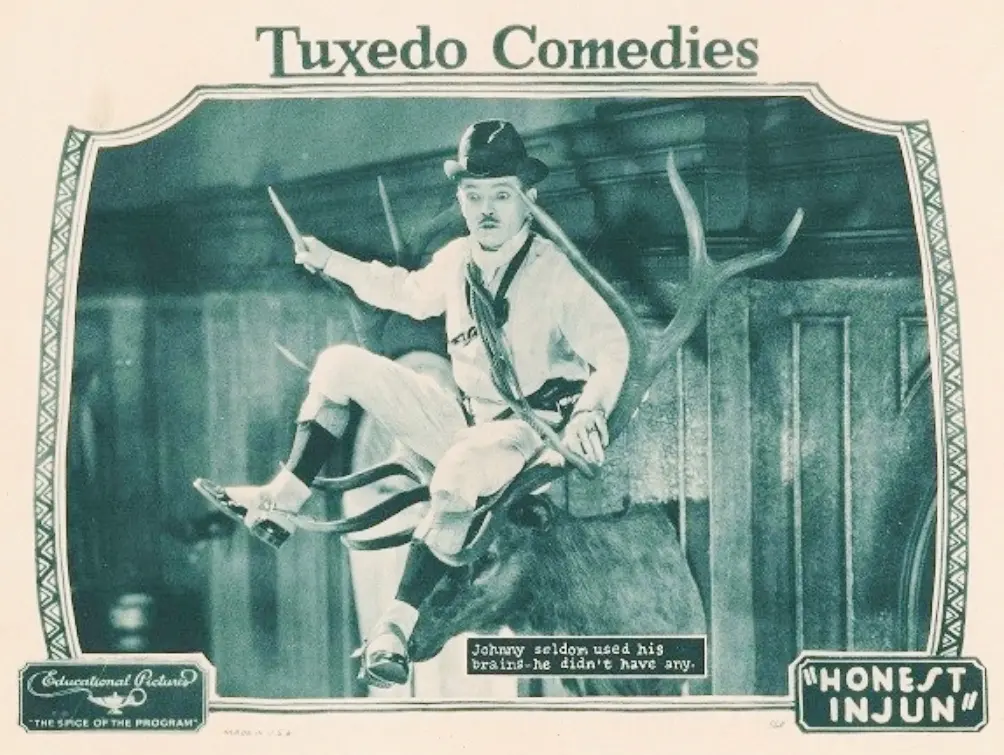
Short answer: Yes, but only if you appreciate the specific mechanical rhythm of 1920s physical comedy. This film is for silent cinema historians and fans of the 'fish-out-of-water' archetype, but it is not for those who demand narrative complexity or modern pacing.
Honest Injun (1926) serves as a fascinating time capsule of an era where the American West was transitioning from a living memory into a cinematic playground. Johnny Arthur delivers a performance that is both frustratingly naive and technically impressive, embodying the 'Effete Easterner' with a commitment that makes the inevitable falls into watering troughs feel earned.
This film works because it leans heavily into the absurdity of the 'correspondence school' culture of the 1920s. The idea that one could learn the deadly art of the six-gun through a mail-order pamphlet is a gag that still resonates in our era of YouTube tutorials and 'masterclasses.' When Johnny attempts to mount a horse using a diagram, the resulting chaos is a masterclass in silent timing.
This film fails because it relies too heavily on the 'mistaken kidnapping' trope, which even by 1926 was beginning to show its age. The transition from the ranch hands' prank to Black Bart's actual crime is handled with a narrative clunkiness that requires the audience to suspend an immense amount of disbelief. We are asked to believe Johnny is so oblivious that he cannot tell the difference between a friend and a notorious outlaw.
You should watch it if you want to see a bridge between the high-octane stunts of Buster Keaton and the more character-driven comedies of the mid-silent era. It provides a blueprint for how physical comedy can be used to mask a lack of budget.
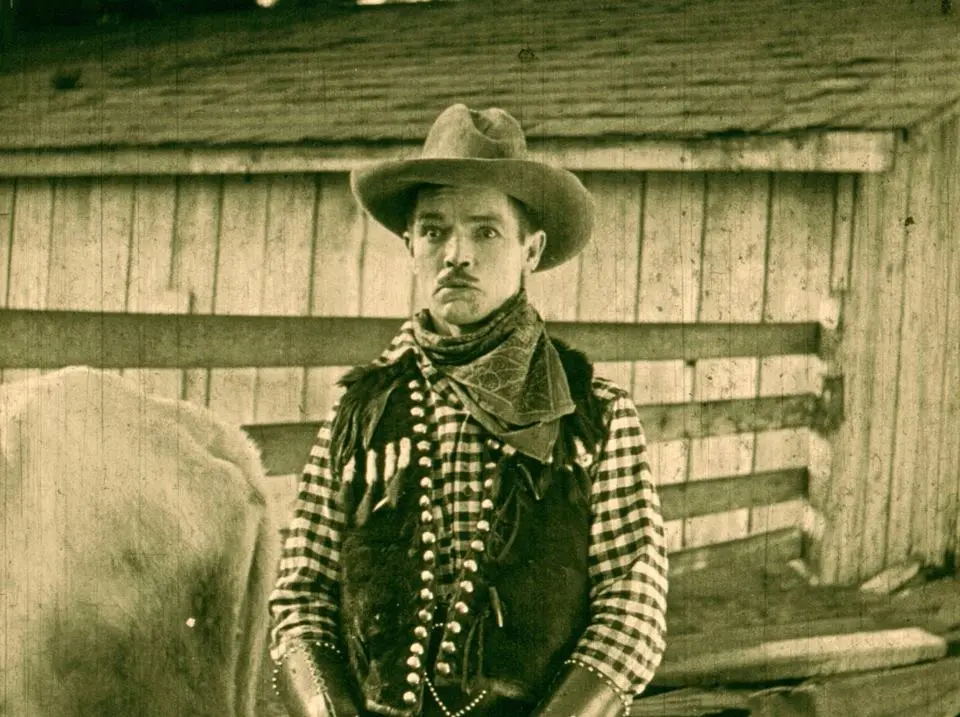
If you are looking for a quick, 20-minute burst of historical slapstick, Honest Injun is worth watching. It offers a clear look at 1920s social anxieties regarding masculinity and the 'softness' of urban life. However, if you are not a fan of silent film conventions, the repetitive falls and broad facial acting will likely feel tedious.
Johnny Arthur is an interesting figure in this landscape. Unlike the stone-faced Keaton or the charming Lloyd, Arthur plays Peppercorn with a frantic, almost desperate energy. He is a man who is clearly out of his depth, and his reliance on his valet, 'Slats' (played with a weary cynicism by Phil Dunham), adds a layer of class-based humor that elevates the material. One specific moment involving a rope and a fence post stands out; Arthur’s struggle with the lasso feels less like a choreographed stunt and more like a genuine fight with physics.
Compared to films like His Own Medicine, where the comedy is more situational, Honest Injun is purely physical. The environment is the antagonist. The dust, the horses, and the very landscape of the Circle-X ranch are designed to humiliate Johnny. This creates a sympathetic bond with the viewer; we have all felt like the person who brought a book to a gunfight.
The visual language of the film is surprisingly crisp. The outdoor photography captures the harshness of the terrain, which contrasts sharply with the soft-lit interiors of Johnny’s city life seen in the opening. The use of deep space during the kidnapping sequence allows the viewer to see the real bandits approaching while Johnny is occupied with the 'fake' bandits, creating a sense of dramatic irony that is the film's strongest narrative tool. This technique is similar to the staging found in Felix Goes West, though obviously grounded in live-action limitations.
“The West in 1926 wasn't a place; it was a punchline for the urban elite, and Honest Injun punches back with a watering trough.”
The pacing is brisk, but it suffers from the 'short-film syndrome' where the resolution feels incredibly rushed. The capture of Black Bart happens through a series of 'incidents, accidents, and coincidence'—as the plot describes—which is a polite way of saying the writers didn't know how to end it properly. It works. But it’s flawed.
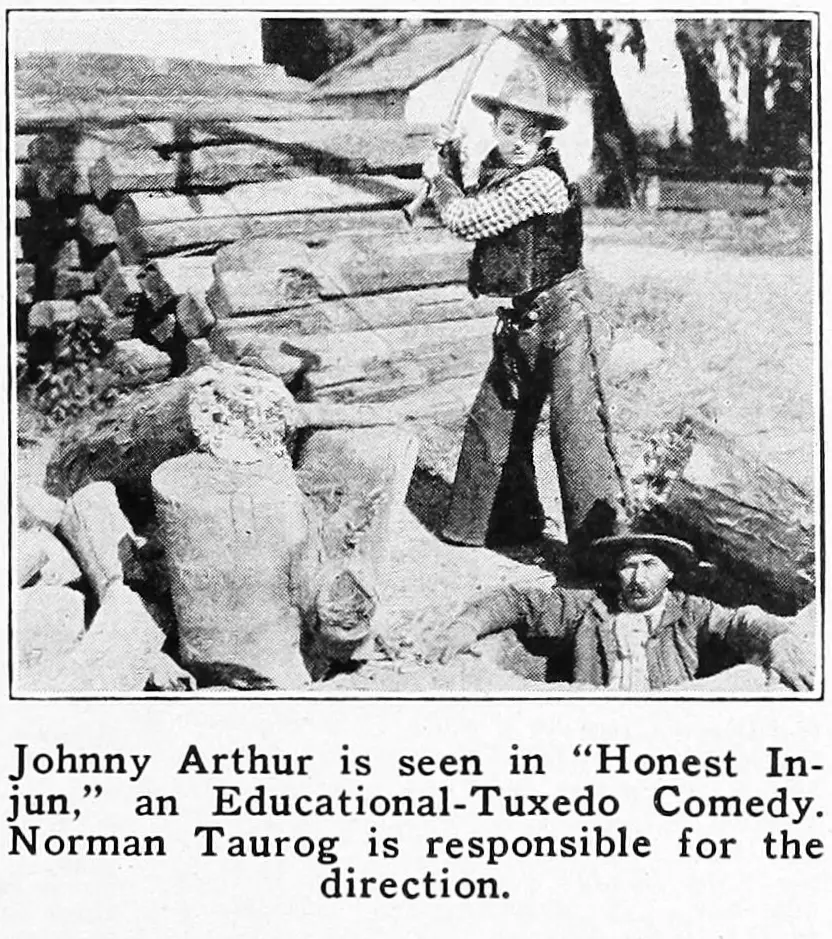
Virginia Vance as Blossom Steele is more than just a damsel in distress. While the script limits her to being the object of the rescue, her reactions to Johnny’s incompetence provide some of the film’s best subtle laughs. She portrays a woman who is clearly unimpressed by the 'manhood' the Circle-X is trying to instill in Johnny. This adds a cynical edge to the romance that feels more modern than the rest of the film. It reminds one of the character dynamics in Annie-for-Spite, where social expectations are constantly subverted.
The ranch hands themselves are a collective Greek chorus of derision. Their 'agitation' at Johnny’s arrival is palpable. The scene where they first put Johnny on a pony is a brutal bit of physical theater. The horses used weren't 'movie horses' in the modern sense; they look genuinely unpredictable, which adds a layer of real danger to the slapstick that you don't see in contemporary CGI-heavy comedies.
Pros:
The film is a tight 20 minutes with no fluff. The stunt work, particularly the horse falls, is genuinely impressive and looks painful. It offers a unique look at 1920s male fashion and the 'city slicker' stereotype.
Cons:
The plot is paper-thin. Some of the humor relies on cultural stereotypes of the era that haven't aged well. The 'Black Bart' villain is a one-dimensional caricature with no clear motivation other than being 'bad.'
The direction by the uncredited filmmaker (likely a studio hand at the time) is functional. It doesn't take the risks seen in Trapped in the Air, but it understands the geography of a gag. If a character is going to fall, we see the obstacle, the attempt, and the failure in a clear wide shot. This clarity is what makes silent comedy work. When Johnny is dragged by the horse, the camera stays wide, emphasizing his isolation in the vast landscape.
The editing is sharp, particularly during the climax. The intercutting between Johnny’s 'theory-based' riding and the actual pursuit of the bandits creates a rhythmic tension. It’s a primitive version of the cross-cutting perfected by Griffith, but used here for laughs rather than melodrama. It’s similar in spirit to the editing in Pals First, where the reveal is everything.
Honest Injun is a loud, dusty, and occasionally brilliant example of mid-20s comedy. It doesn't strive for the poetic heights of a Chaplin film, nor does it have the architectural precision of Keaton. Instead, it settles for being a solid, blue-collar comedy that mocks the very audience it was made for: the city dwellers who dreamt of being cowboys. It is a film of accidents that feels entirely intentional. It isn't a 'masterpiece,' but it is a damn good time for twenty minutes. If you can find a restored print, the contrast between the white-collar Johnny and the brown-dirt West is a visual treat that justifies the runtime.
IMDb 7.3
1931
Community
Log in to comment.