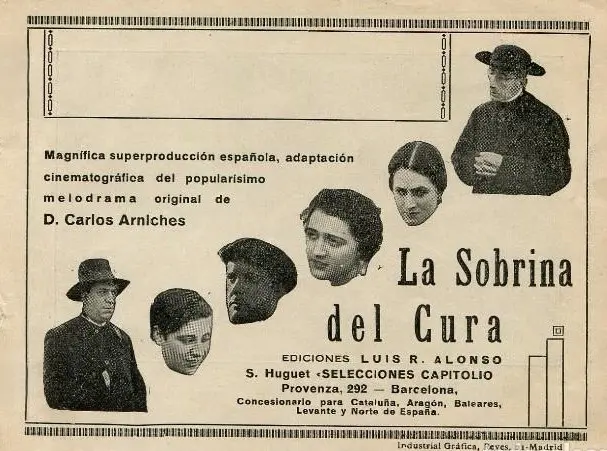
A definitive 4.8/10 rating for a film that redefined the boundaries of cult cinema. La sobrina del cura remains a cornerstone of transgressive art.
Is 'La sobrina del cura' worth watching today? Short answer: yes, but with significant caveats that demand a certain cinematic palate. This film is an intriguing artifact for devotees of early 20th-century Spanish cinema and those fascinated by period dramas exploring societal constraints, yet it will likely test the patience of viewers accustomed to modern pacing and narrative complexity.
It's a film for the patient cinephile, the cultural historian, or anyone looking for a window into a bygone era of storytelling. It is emphatically not for those seeking fast-paced plots, sophisticated visual effects, or narratives that neatly align with contemporary sensibilities.
This film works because of its earnest performances and its surprisingly nuanced exploration of moral hypocrisy within a devout community.
This film fails because its narrative predictability and an often-glacial pace occasionally undermine its thematic ambitions.
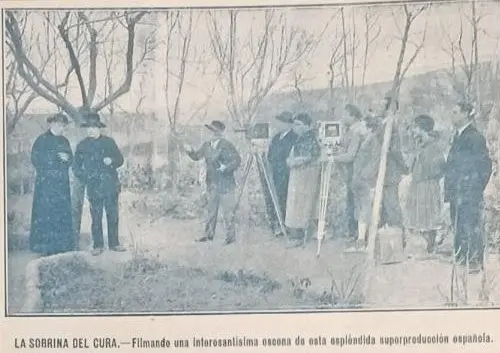
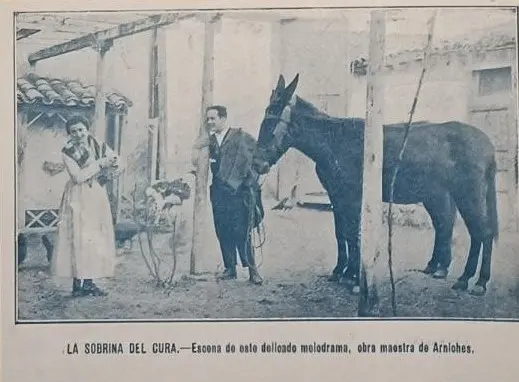
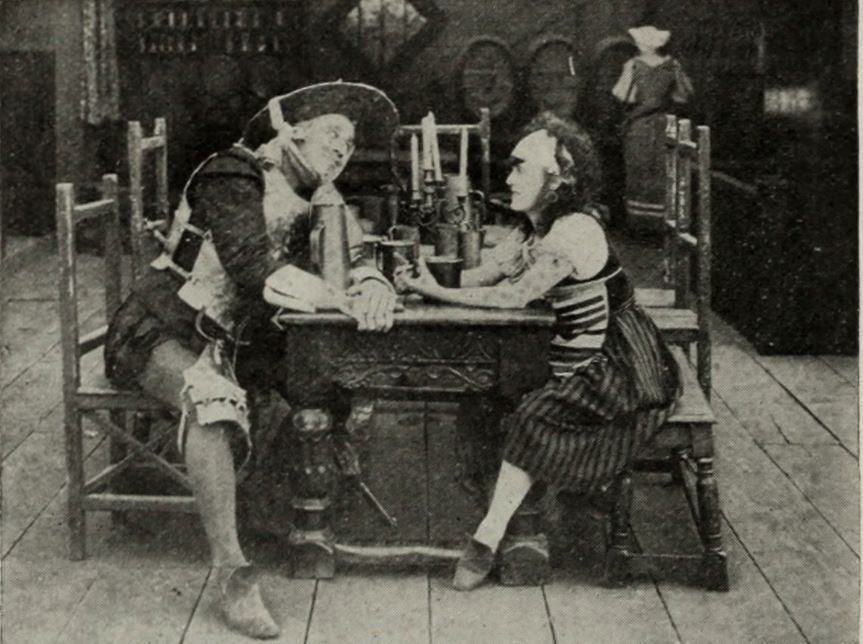
Scene from La sobrina del cura
Cinematic perspective: Exploring the visual vocabulary of La sobrina del cura (1925) through its definitive frames.
You should watch it if you appreciate the raw, unpolished charm of early cinema and are genuinely interested in the cultural and social fabric of early 20th-century Spain.
A Glimpse into a Bygone Era: The Plot Refined
Carlos Arniches and Luis R. Alonso, known for their theatrical roots, craft a narrative that feels both intimately personal and broadly allegorical. At its core, 'La sobrina del cura' chronicles the quiet tempest stirred by Elena (Carmen Rico), a young woman whose vivacious spirit is abruptly transplanted from the relative freedoms of the city to the stifling piety of Valverde.
Her uncle, Father Miguel (Antonio Mata), embodies the rigid moral authority of the village, a man whose love for his niece is inextricably bound by his unyielding adherence to duty. The dramatic friction arises not from grand external conflicts, but from the internal struggle of Elena as she navigates a world where every glance, every interaction, is weighed against the unforgiving scales of community expectation.
The introduction of Mateo (José María Jimeno), a local artisan with a checkered past, serves as the catalyst for Elena’s true test. He represents an alluring counterpoint to the village’s strictures – a forbidden fruit whose charm is undeniable. Their burgeoning romance, conducted in hushed tones and furtive meetings, acts as a slow-burning fuse, threatening to ignite a scandal that could shatter the fragile peace of Valverde and the reputation of Father Miguel.
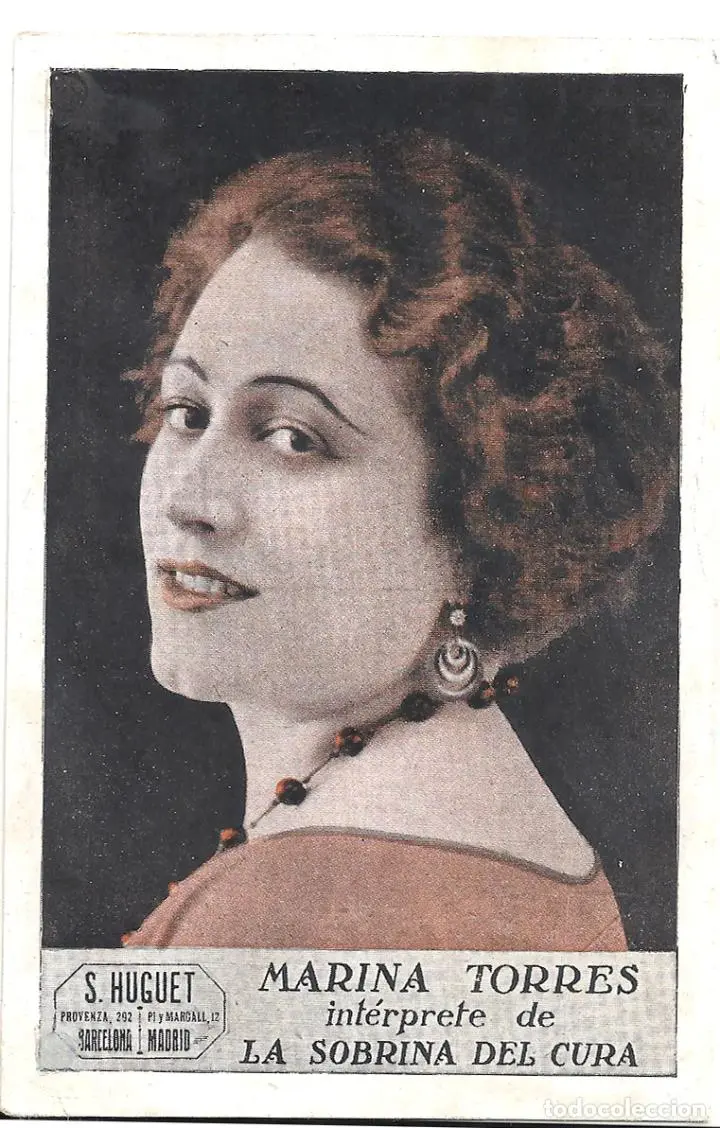
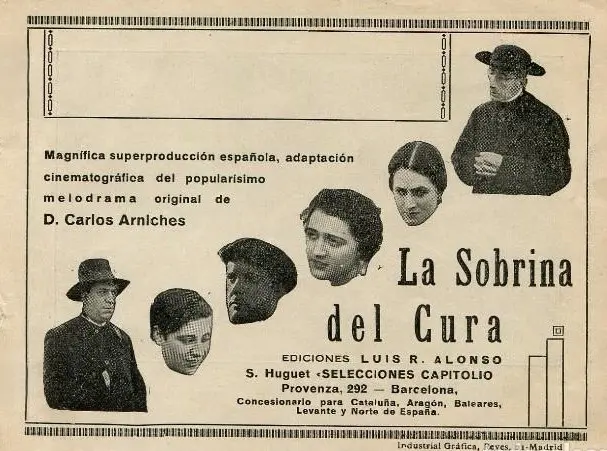
Scene from La sobrina del cura
Cinematic perspective: Exploring the visual vocabulary of La sobrina del cura (1925) through its definitive frames.
The narrative, while perhaps predictable by modern standards, excels in its meticulous build-up of tension. It’s a study in social pressure, where the whispers of Doña Isabel (Blanca Muñoz) and the judgmental gazes of the villagers are as formidable an antagonist as any overt villain. The film doesn't rush its revelations; instead, it allows the audience to marinate in the suffocating atmosphere of a community obsessed with propriety.
The climax, involving a false accusation against Mateo, is where the film’s moral compass truly spins. Elena’s defiant public defense of her beloved is a powerful statement, not just of love, but of individual conscience against collective judgment. It forces Father Miguel, and by extension the audience, to confront the limitations of dogma when faced with genuine human connection and a surprising display of integrity from an unexpected source. The resolution, while offering a glimmer of hope, remains subtly tinged with the enduring shadow of societal judgment, a realistic touch that elevates it beyond simple melodrama.
Performance: The Heart of the Matter
For a film of its vintage, the performances in 'La sobrina del cura' are remarkably earnest, though they occasionally lean into the broader theatricality common to the era. Antonio Mata as Father Miguel is the film’s anchoring presence. He delivers a portrayal of conflicted piety that feels genuinely weighty. His internal struggle, particularly when he discovers Elena’s affections for Mateo, is conveyed through subtle shifts in his posture and a palpable weariness in his eyes, rather than overt histrionics. There’s a scene where he sits alone in the church, head bowed, the candlelight flickering across his face, that speaks volumes about his moral dilemma without a single line of dialogue.
Carmen Rico, as Elena, is the film’s vibrant core. She manages to imbue Elena with a spirited independence that feels authentic, even when the narrative occasionally pushes her into conventional damsel-in-distress territory. Her defiance, especially during the public accusation scene, is a highlight, showcasing a strength that transcends the period’s typical female archetypes. One might argue that her initial 'scandal' is rather vaguely defined, a common trope, but Rico’s conviction sells the subsequent struggle for redemption.
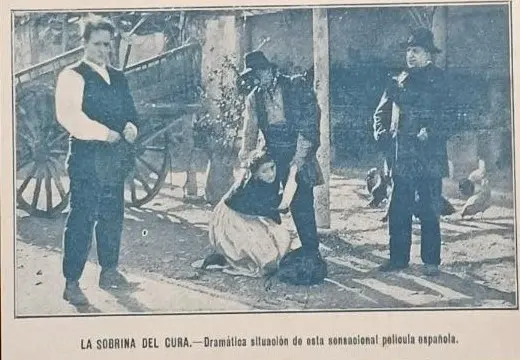
Scene from La sobrina del cura
Cinematic perspective: Exploring the visual vocabulary of La sobrina del cura (1925) through its definitive frames.
José María Jimeno, as Mateo, has the unenviable task of portraying the charming rogue with a heart of gold. While his character often feels more archetypal than deeply explored, Jimeno brings a certain warmth and sincerity that makes his transformation credible. His earnest gaze towards Elena, even when confronted by the entire village, is a crucial element in solidifying the audience's belief in their bond. The supporting cast, notably Blanca Muñoz as the gossipy Doña Isabel, adds texture to the village's judgmental atmosphere, though some performances do stray into caricature.
Directorial Vision and Cinematic Language
The direction, while not groundbreaking by today's standards, is effective in establishing the film’s tone and atmosphere. There’s a deliberate, almost contemplative pace that allows the emotional beats to resonate. The use of long shots to establish the village of Valverde as a character in itself—a place both beautiful and suffocating—is particularly noteworthy. The camera often lingers, allowing the audience to absorb the environment's impact on its inhabitants.
Cinematography, while limited by the technology of the era, makes judicious use of available light, particularly in the interior scenes, to create a sense of intimacy and often, confinement. The shadows in Father Miguel's study, for instance, seem to mirror his own internal darkness and conflict. Close-ups are employed sparingly but effectively, often reserved for moments of profound emotional impact, such as Elena’s tearful plea or Father Miguel’s look of dawning realization.
The pacing, as mentioned, is a double-edged sword. While it contributes to the film's immersive quality, it can also feel ponderous. This is not a film that races to its conclusion; it ambles, allowing scenes to play out in extended takes, demanding a different kind of engagement from the viewer. This deliberate choice, however, reinforces the film's tone of quiet observation, a stark contrast to the more frantic energy seen in contemporary works like Tillie's Punctured Romance from a similar period, highlighting a distinct stylistic preference in Spanish cinema of the time.
Scene from La sobrina del cura
Cinematic perspective: Exploring the visual vocabulary of La sobrina del cura (1925) through its definitive frames.
Thematic Resonance: Duty, Desire, and Society
'La sobrina del cura' delves deeply into themes that remain pertinent even a century later: the oppressive weight of societal expectations, the conflict between individual desire and collective morality, and the challenge of unconditional love in a judgmental world. It’s a timeless narrative about a young woman trying to forge her own path in a world determined to dictate it for her.
The film subtly critiques the hypocrisy inherent in strict religious communities, where outward piety often masks internal prejudice and a readiness to condemn. Father Miguel’s journey is perhaps the most compelling in this regard; his transformation from an unyielding arbiter of morality to a man capable of empathy and understanding forms the emotional backbone of the story. This isn't a radical deconstruction of faith, but rather a gentle push towards a more compassionate interpretation of it.
The romance between Elena and Mateo, while conventional, serves as a powerful symbol of defiance. It’s a love that dares to exist outside the bounds of what is considered 'proper,' and in doing so, exposes the limitations and cruelties of those very bounds. The film’s strength lies in its ability to present these complex moral quandaries without resorting to simplistic answers, leaving the audience to ponder the true cost of both conformity and rebellion.
Pacing and Structure: A Test of Patience
One cannot discuss 'La sobrina del cura' without addressing its pacing. For modern audiences, this will undoubtedly be the biggest hurdle. The film unfolds with a deliberate, almost stately rhythm that can feel agonizingly slow. Scenes are often protracted, allowing for long stretches of silent contemplation or dialogue delivered at a measured cadence. This is not a flaw in the traditional sense, but a stylistic choice reflective of early cinema and perhaps the theatrical heritage of its writers.
Scene from La sobrina del cura
Cinematic perspective: Exploring the visual vocabulary of La sobrina del cura (1925) through its definitive frames.
The narrative structure is linear and largely predictable, following a well-trodden path of forbidden love, societal condemnation, and eventual vindication. While this familiarity can be comforting, it also means there are few genuine surprises. The film prioritizes emotional depth and character study over plot twists or rapid developments. Comparing it to the more adventurous narrative structures of films like The Adventures of an Octoberite would be unfair, as they operate on entirely different cinematic principles.
Is this film worth watching?
Yes, 'La sobrina del cura' is worth watching, but with a specific mindset. It's a valuable historical document, offering insight into early Spanish filmmaking and societal values. It's a testament to the power of simple, character-driven storytelling.
However, it demands patience. It requires an appreciation for a different kind of cinematic language, one that predates rapid cuts and complex sound design. Approach it not as a blockbuster, but as a quiet, reflective piece of art.
It works. But it’s flawed. Its true value lies in its earnestness and its capacity to transport you to another time and place, allowing you to observe human nature through a lens that has long since fallen out of fashion.
Pros and Cons
Pros:
Authentic portrayal of early 20th-century Spanish village life and societal norms.
Strong, earnest performances, particularly from Antonio Mata and Carmen Rico.
Nuanced exploration of themes like duty, desire, moral hypocrisy, and forgiveness.
A compelling, if slow-burning, character arc for Father Miguel.
Offers significant historical and cultural value for cinephiles.
Cons:
Pacing is extremely slow, challenging for modern viewers.
Plot can be predictable and occasionally veers into melodrama.
Technical limitations of the era are evident (e.g., sound quality, visual fidelity).
Some supporting performances are less refined, bordering on caricature.
May not offer enough 'action' or 'excitement' for general audiences.
Key Takeaways
Best for: Fans of early cinema, historical dramas, and character studies.
Not for: Viewers seeking fast-paced entertainment, high production values, or complex plots.
Standout element: Antonio Mata's portrayal of Father Miguel's internal conflict.
Biggest flaw: Its undeniably slow, deliberate pacing.
Verdict
'La sobrina del cura' is far from a perfect film, and it certainly won't appeal to everyone. Its deliberate pace and adherence to early cinematic conventions demand a specific kind of viewership – one that values historical context and thematic depth over modern spectacle. However, to dismiss it entirely would be a disservice to its quiet power.
The film offers a fascinating window into a bygone era, with performances that, while occasionally broad, are often deeply affecting. It's a testament to the enduring human struggles of love, duty, and societal acceptance, wrapped in a package that is both quaint and profoundly resonant. I believe its understated manipulation of the audience's moral compass, guiding us to question our own judgments alongside Father Miguel, is its true, unconventional genius.
For those willing to invest the time and embrace its unique rhythm, 'La sobrina del cura' offers a rewarding, if challenging, experience. It’s a film that lingers, not with explosive set pieces, but with the quiet dignity of its characters and the timeless questions it poses. It's a piece of Spanish cinematic history that, despite its age, still has something meaningful to say.