DbcultAccessing Vault...
5.8/10
Senior Film Conservator
A definitive 5.8/10 rating for a film that redefined the boundaries of cult cinema. Lulu remains a cornerstone of transgressive art.
Cinema in 1917 was a landscape of rapid evolution, a medium struggling to transition from mere novelty to a sophisticated art form capable of handling the complexities of the human psyche. Amidst this backdrop, the adaptation of Frank Wedekind’s Lulu stands as a monumental, if often overlooked, milestone. This is not merely a story of a woman; it is an exploration of an archetype—the Erdgeist or Earth Spirit. As we navigate the celluloid flicker of this silent era relic, we encounter a protagonist who is neither hero nor villain, but a mirror reflecting the insecurities and repressed desires of the men who claim to love her. Unlike the later, more famous rendition by G.W. Pabst, this version offers a distinct, raw texture that feels deeply rooted in the theatrical traditions of the time while hinting at the expressionism that would soon dominate German cinema.
The film opens in the vibrant, chaotic world of the circus, a setting that serves as more than just a colorful backdrop. For Lulu, the ring is her natural habitat—a place where artifice is the only truth and performance is survival. Her relationship with Alfredo the clown, played with a poignant, sagging melancholy by Rolf Brunner, establishes the emotional core of her character. Alfredo represents a lost innocence, a link to a world where joy is manufactured for others but rarely felt by the performers themselves. In many ways, their bond mirrors the tragic undercurrents found in Price of Treachery; Or, The Lighthouse Keeper's Daughter, where the isolation of the setting amplifies the internal conflicts of the characters. However, Lulu’s trajectory is far more volatile.
When Henri von Reithofen enters her life, the film pivots from the whimsical to the catastrophic. Henri, portrayed with a stiff, eventually brittle nobility by Adolf Klein, is the antithesis of the circus. He is the personification of the old world—moneyed, titled, and utterly unprepared for the chaotic energy that Lulu exudes. The transition from the sawdust of the arena to the velvet-lined drawing rooms of the aristocracy is visually jarring, emphasizing the inherent incompatibility of these two worlds. It is a thematic resonance we often see in films like The Gates of Eden, where the clash between pastoral ideals and harsh reality creates a fertile ground for tragedy.
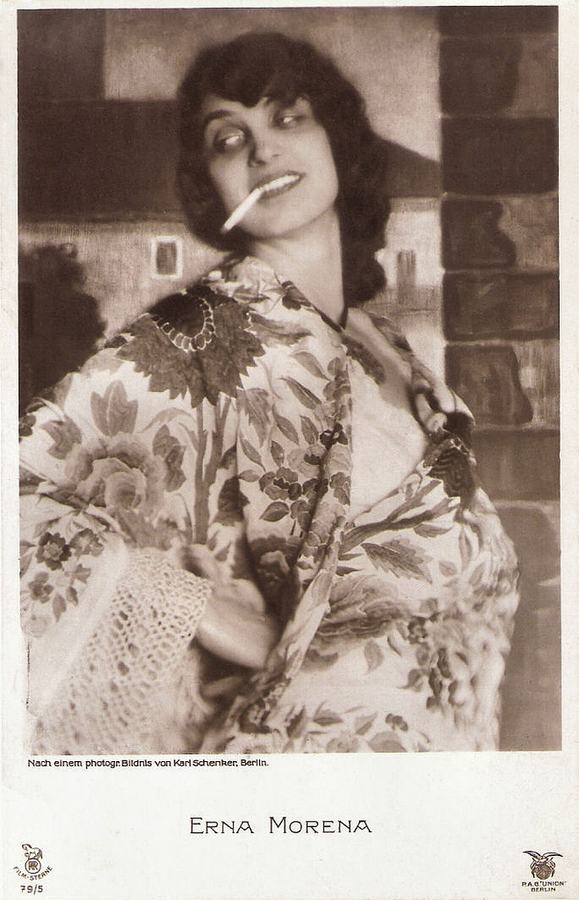
Erna Morena’s performance as Lulu is a masterclass in silent era histrionics, but it possesses a subtlety that was rare for the period. She does not rely solely on the exaggerated gestures common in 1917; instead, she uses her eyes to convey a sense of profound detachment. Lulu is a woman who is constantly being 'watched'—by her audience, by her lovers, and by the camera—yet she remains fundamentally unknowable. Her 'liberal being' is not a political stance but an ontological one. She exists in a state of perpetual 'now,' unburdened by the consequences that eventually crush Henri. This performance invites comparison to the titular figure in Joan of Arc, though while Joan is driven by divine purpose, Lulu is driven by a purely secular, almost animalistic, instinct for self-preservation and pleasure.
The chemistry between Morena and Harry Liedtke adds a layer of sophistication to the production. Liedtke, a stalwart of the era, brings a certain gravitational pull to his scenes, grounding the more flighty aspects of the plot. Their interactions are a dance of power, where the traditional gender roles are subtly subverted. In many films of this era, such as Master of His Home, the domestic sphere is a place of patriarchal control. In Lulu, however, the domestic sphere becomes a site of financial and emotional hemorrhage for the male lead, as Lulu’s presence proves too expensive for the structures of traditional marriage to sustain.
One of the most fascinating aspects of this 1917 version is its focus on the 'horrendous expenses' Lulu incurs. In a modern context, this might seem superficial, but in the context of Wedekind’s critique, it is a vital metaphor. Lulu’s consumption is not merely of goods, but of Henri’s very essence. Every dress, every jewel, and every lavish party is a bite taken out of his social standing. The film meticulously documents his descent into insolvency, treating the loss of his fortune with the same gravity that a religious film might treat the loss of a soul. This thematic obsession with the cost of sin and the weight of moral debt is a common thread in works like The Judgment House and The Innocent Sinner.
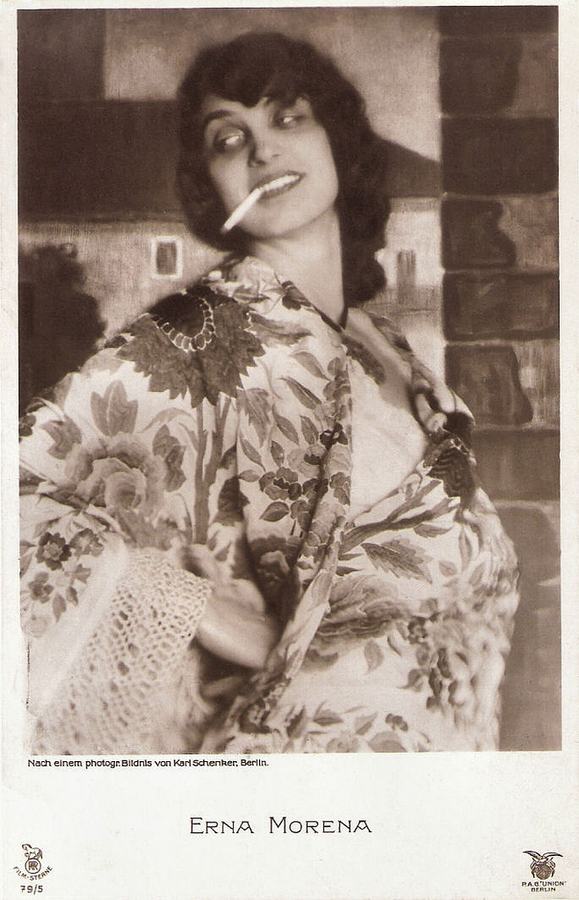
The suicide of Henri von Reithofen is handled with a stark, unromanticized efficiency. There is no grand speech, no lingering farewell. Instead, there is the hollow silence of a man who has realized that his entire identity was built on a foundation of sand. The tragedy lies in the fact that Lulu does not intend to destroy him; she simply survives him. She is like a storm that passes through a landscape; the storm is not 'evil,' but the houses it leaves in ruins are nonetheless destroyed. This nihilistic worldview was incredibly daring for 1917, prefiguring the dark cynicism that would characterize the post-war Weimar Republic.
Visually, the film utilizes a range of techniques that were cutting-edge for the time. The use of lighting to differentiate between the 'warm' chaos of the circus and the 'cold' rigidity of Henri’s estate is particularly effective. While it lacks the dizzying camera movements of the later silent era, there is a deliberate pace to the editing that builds a sense of inevitable doom. We see echoes of this visual storytelling in Der gestreifte Domino, where costume and setting are used to telegraph internal shifts in the characters' motivations. The cinematography captures the textures of the era—the heavy drapes, the intricate lace, and the stark, white face paint of Alfredo—creating a sensory experience that compensates for the lack of spoken dialogue.
The screenplay by Wedekind himself (or based closely on his work) ensures that the film retains the jagged, uncomfortable edges of the original plays, Erdgeist and Die Büchse der Pandora. It avoids the easy moralizing found in many American films of the same year, such as Nearly Married or the lightheartedness of Peggy. Instead, it leans into the discomfort, forcing the audience to confront the predatory nature of desire. Even films with religious overtones, such as His Holiness, the Late Pope Pius X, and the Vatican, deal with the absolute, but Lulu deals with the absolute absence of moral certainty.
To watch Lulu today is to witness the birth of a cinematic trope that would define noir and psychological thrillers for decades. The 'femme fatale' is often simplified into a manipulative temptress, but this 1917 version reminds us that the archetype is far more complex. Lulu is a catalyst. She doesn't necessarily 'do' anything to Henri; she simply exists, and his own weaknesses do the rest. This exploration of male fragility is a recurring theme in European cinema, often contrasted with the more adventurous, pulp-oriented narratives of the time like The Million Dollar Mystery or the proto-superheroics of Ultus, the Man from the Dead.
Furthermore, the film’s portrayal of the 'other'—the circus folk, the liberal spirits—challenges the viewer to question where the true 'ruin' lies. Is it in the loss of Henri’s money, or in the stifling social codes that made his obsession so destructive in the first place? In this regard, the film shares a spiritual DNA with The Spanish Jade or La Salome, both of which deal with the exoticization and eventual destruction of the 'unconventional' woman. Even in the dreamlike sequences that recall the atmosphere of Das Tal des Traumes, Lulu remains grounded in a brutal, material reality.
In the final analysis, the 1917 Lulu is a haunting, evocative piece of cinema that demands more than a cursory glance. It is a film that breathes with a strange, frantic energy, oscillating between the joy of the circus and the silence of the grave. Erna Morena’s Lulu remains one of the most enigmatic figures of the silent screen, a woman who escapes every attempt to define her. For those interested in the evolution of the tragic form, or for those who simply wish to see a masterclass in early German dramatic acting, this film is an essential artifact. It serves as a reminder that even in the infancy of the medium, filmmakers were already grappling with the deepest, darkest corners of the human heart, proving that while technology changes, the fundamental mysteries of desire and destruction remain eternally constant.
Note: This review explores the 1917 production directed by Alexander Antalffy (often associated with the Wedekind adaptations of that year), focusing on the atmospheric and thematic contributions of the cast and the seminal writing of Frank Wedekind. It remains a cornerstone of early transgressive cinema.
IMDb —
1927
Community
Log in to comment.