DbcultAccessing Vault...
Cult Review
Senior Film Conservator
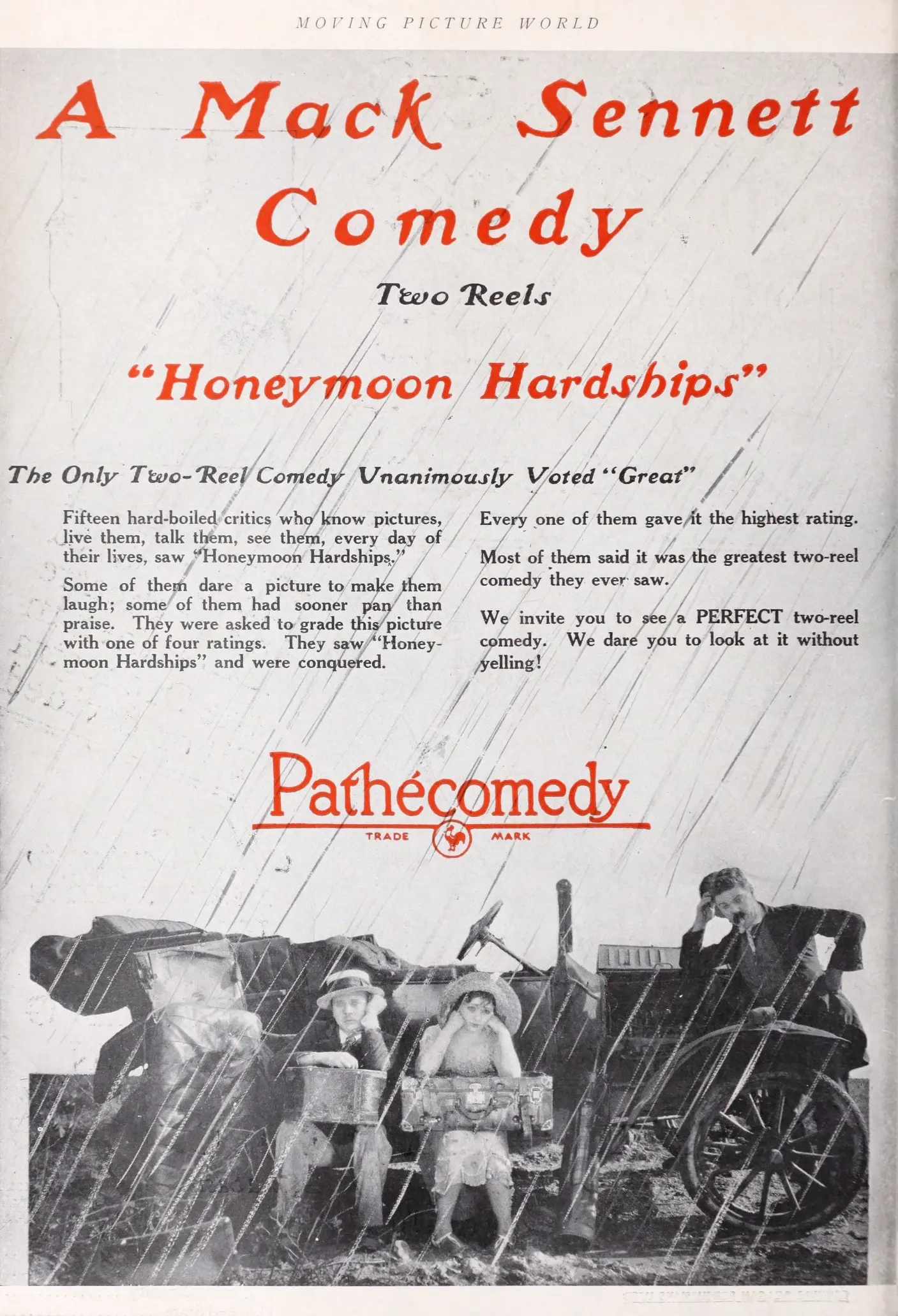
Is Honeymoon Hardships worth watching today? Short answer: absolutely, if you appreciate the raw, unpolished charm of early silent comedies, but it's certainly not for those seeking refined humor or modern narrative sophistication. This film is a delightful, if somewhat uneven, relic best enjoyed by cinephiles with a keen interest in the foundational elements of slapstick and a high tolerance for the absurd.
It's a perfect fit for viewers who revel in physical comedy and the unbridled chaos that defined a significant era of early cinema. Conversely, if your comedic tastes lean towards witty dialogue, intricate plots, or subtle character development, this boisterous silent short might prove to be more of a curiosity than an engaging experience.
Tay Garnett, Jefferson Moffitt, and John A. Waldron penned a script that doesn't just present a series of unfortunate events; it weaponizes them against the naive optimism of new love. The premise is simple: a honeymoon gone spectacularly wrong, not due to a single mishap, but a relentless barrage of them. This isn't just bad luck; it’s a cosmic joke played at the expense of our protagonists.
The film works because it commits wholeheartedly to its premise of escalating domestic disaster. Every new hardship, from the rock-hard beds to the inedible food, is met with an unyielding, almost pathological cheerfulness from the eccentric relatives. This contrast is where the film finds its unique comedic rhythm. It’s a study in how far one can push the boundaries of discomfort before the audience breaks into genuine laughter or sympathetic wincing.
This film fails because its humor, while often broad and effective, can feel repetitive over its runtime. The gags, while inventive in their individual execution, sometimes lack the narrative progression that would elevate them beyond mere spectacle. Modern audiences, accustomed to more complex comedic structures, might find themselves wishing for a deeper emotional core or a more satisfying arc for the beleaguered couple.
You should watch it if you're a student of silent film, a lover of pure, unadulterated slapstick, or simply in the mood for a lighthearted, chaotic escape into a bygone era of moviemaking. It’s an excellent example of how early filmmakers found humor in universal domestic frustrations, amplified to cartoonish extremes.
The heart of any silent comedy lies in the expressive capabilities of its cast, and Honeymoon Hardships is no exception. Billy Bevan, a stalwart of early cinema, carries much of the film's comedic weight. His reactions to the unfolding disasters are a masterclass in exaggerated frustration and bewildered resignation. Consider the scene where he attempts to sleep on the 'rock hard' bed. Bevan's contorted facial expressions and increasingly desperate attempts to find comfort, twisting and turning like a fish out of water, are genuinely hilarious. He doesn't just react; he embodies the escalating torment.
Alice Day, as the other half of the suffering couple, provides a perfect counterpoint. Her initial hopeful demeanor slowly crumbles into weary exasperation, yet she maintains a certain plucky resilience. The dynamic between Bevan and Day is crucial; they anchor the chaos with their shared, albeit often unspoken, misery. Their silent glances of disbelief and shared sighs become a poignant, comedic commentary on their predicament. It’s a testament to their skill that without a single spoken word, their characters' growing despair is palpable.
The supporting cast, particularly the 'demented relatives,' are equally vital. Sunshine Hart and Anna Dodge, as members of the peculiar household, excel at portraying the utterly oblivious, almost gleeful, nature of their characters. Their wide, unblinking smiles in the face of a leaking roof or a ruined meal are not just funny; they're unsettling. They create an atmosphere where the protagonists' suffering is not just ignored but almost celebrated, adding a layer of dark humor to the proceedings. The arrival of the 'hick uncle' and his large family, portrayed by actors like Herman White and John White, injects another dose of frenetic energy, overwhelming the screen with boisterous, uninvited intrusion.
This film, while ostensibly a comedy, subtly critiques the romanticized ideal of marriage by throwing every conceivable obstacle at its protagonists, forcing them to bond not over shared joy, but shared suffering. It’s an unconventional take on marital bliss, to say the least.
Tay Garnett’s direction, alongside the credited writers, ensures that the film maintains a brisk pace, which is essential for slapstick. There's little time for reflection; one disaster quickly follows another, preventing the audience from dwelling too long on any single gag. This relentless momentum is both a strength and, at times, a slight weakness. The rapid-fire succession of misfortunes keeps the energy high, but occasionally, a moment of comedic brilliance feels rushed, not given quite enough room to breathe before the next calamity strikes.
The editing is sharp, cutting between the couple’s reactions and the source of their distress with precision. For instance, the transition from a shot of the fierce rainstorm to the interior of the farmhouse with water pouring through the ceiling is executed efficiently, maximizing the comedic impact without lingering. This efficiency is characteristic of silent shorts, designed to deliver maximum laughs in a compact timeframe.
However, one could argue that a slightly more varied pacing, perhaps a brief pause for the couple to truly process their predicament, might have deepened the comedic effect. As it stands, the film often feels like a series of interconnected vignettes rather than a fully cohesive narrative arc. But for a film of its era and genre, this approach is entirely fitting, prioritizing immediate laughs over intricate storytelling.
The cinematography in Honeymoon Hardships is functional and effective, serving the comedic purpose rather than striving for artistic grandeur. Shots are typically wide enough to capture the physical comedy, allowing the actors' full-body movements and expressions to convey the story. The rustic setting of the farmhouse, despite its dilapidated state, provides an authentic backdrop for the rural chaos. The visual language is direct, ensuring that the audience can easily follow the rapid-fire gags without confusion.
The tone is overtly comedic, leaning heavily into absurdity and physical humor. There's a certain endearing crudeness to the presentation that feels genuine. It doesn't attempt to be subtle; it aims for belly laughs. The film's humor stems from the sheer audacity of the situations and the heightened reactions of the characters. It’s a world where gravity seems to have a personal vendetta against the newlyweds, and every object conspires against their comfort.
While the film lacks the visual polish of later silent era masterpieces like The Lost Chord or the intricate character work seen in films like Human Desire, it possesses an undeniable charm. Its raw energy and commitment to its comedic vision make it stand out. The use of practical effects for the leaking roof and the general disarray of the farmhouse adds a tangible, if low-budget, authenticity to the comedic suffering.
Yes, Honeymoon Hardships is absolutely worth watching, especially for specific audiences. It offers a fascinating glimpse into early American silent comedy.
It's a foundational text for understanding slapstick. The film showcases the incredible talent of performers like Billy Bevan.
It's a short, punchy experience. You won't invest hours into it. It delivers its laughs efficiently.
However, it's not for everyone. If you prefer modern pacing or sophisticated humor, it might feel dated. But if you're open to classic, physical comedy, it's a gem.
There's something inherently appealing about watching characters endure an endless parade of misfortunes, especially when those misfortunes are exaggerated for comedic effect. Honeymoon Hardships taps into a primal comedic wellspring: the schadenfreude of observing others' struggles from a safe distance. The film’s chaotic energy isn't just a stylistic choice; it feels like a commentary on the unpredictable nature of life itself, albeit a highly caricatured one.
What surprises me most about this film is how, despite its age and simple premise, it manages to evoke genuine empathy for the couple amidst the relentless gags. Their plight, while absurd, resonates with anyone who has ever experienced a vacation gone wrong, or a domestic situation spiraling out of control. It’s a reminder that even in the most outlandish scenarios, human frustration and resilience remain relatable.
This film, in its own peculiar way, feels like a precursor to modern sitcoms that thrive on domestic dysfunction. It’s not just about the gags; it’s about the dynamic between people trapped in an inescapable, shared ordeal. The relatives' 'demented' laughter isn't just a gag; it’s a terrifyingly accurate portrayal of how some people react to the misfortunes of others – with a complete lack of self-awareness. It works. But it’s flawed.
Honeymoon Hardships is more than just a historical curiosity; it’s a vibrant, if unpolished, piece of early cinematic comedy that still manages to elicit genuine laughs. While its humor is broad and its narrative simple, its commitment to chaos and the stellar physical performances of its cast make it a worthwhile watch for those with an appreciation for the genre. It's a testament to the enduring power of slapstick and a delightful, if slightly jarring, dive into the origins of screen comedy. It won’t change your life, but it might just make you appreciate your own, less chaotic, living arrangements. A solid recommendation for the adventurous viewer.
IMDb 4.8
1919
Community
Log in to comment.