Is Honeymoon Hospital worth watching today? Short answer: yes, but with significant caveats. This early 20th-century farce offers a fascinating, albeit uneven, glimpse into the comedic sensibilities of its era, making it a peculiar delight for film historians and silent cinema enthusiasts, but likely a test of patience for casual viewers accustomed to modern pacing and narrative sophistication.
This film is unequivocally for those with a deep appreciation for the foundational elements of slapstick, the broad physical comedy that predates sophisticated dialogue, and the often-unpolished charm of early cinema. It’s a historical artifact as much as it is entertainment. Conversely, if your comedic tastes lean towards subtle wit, intricate plots, or anything requiring deep character investment, Honeymoon Hospital is decidedly not for you. It demands an open mind and a willingness to engage with a very different kind of storytelling.
Direct Assessment
This film works because: Its sheer commitment to an absurd premise and the relentless physical comedy, particularly the groom's increasingly exaggerated 'fits,' provides a raw, unadulterated form of slapstick that is historically significant and, in fleeting moments, genuinely amusing. The escalating chaos, driven by misunderstanding, is a classic comedic engine.
This film fails because: Its reliance on a single, repetitive gag—the groom's feigned illness—wears thin long before the runtime concludes. Character development is non-existent, and the pacing, typical of its era, can feel agonizingly slow to modern audiences, lacking the dynamic cuts and narrative propulsion we expect.
You should watch it if: You are a student of film history, a silent film aficionado, or someone who cherishes the foundational, often clumsy, efforts that paved the way for more refined comedic forms. It's a valuable window into early cinematic humor, warts and all.
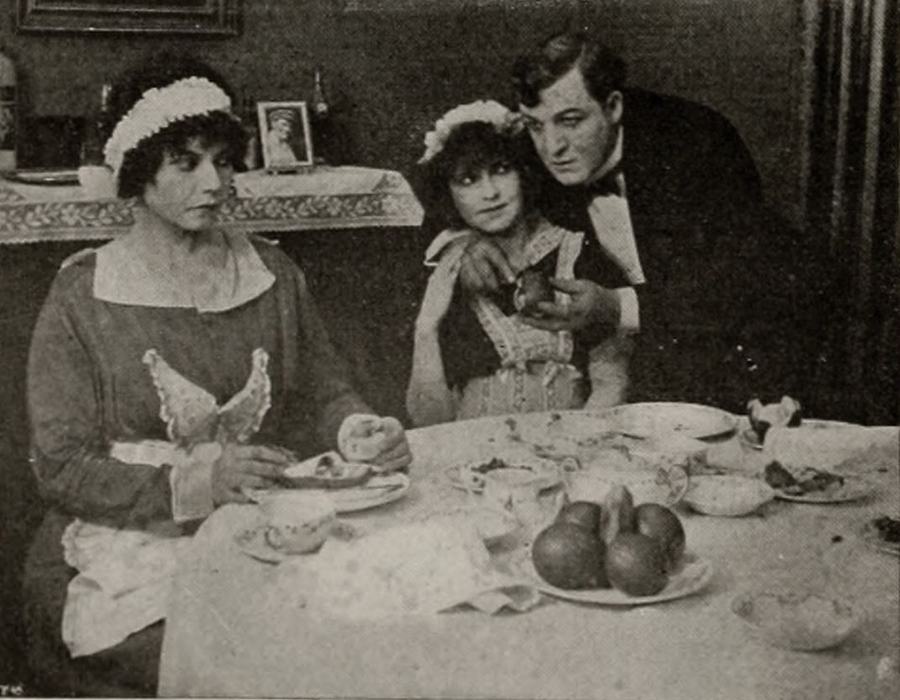
Scene from Honeymoon Hospital
Cinematic perspective: Exploring the visual vocabulary of Honeymoon Hospital (1926) through its definitive frames.
A Whirlwind of Wacky Woes: Deconstructing 'Honeymoon Hospital'
Honeymoon Hospital arrives as a curious relic, a silent-era comedy that, even by the standards of its time, likely stood out for its singular, almost obsessive focus on a single premise. Directed by the uncredited visionaries of an era defined by rapid cinematic experimentation, this film plunges its audience into a world where marital bliss is immediately hijacked by familial meddling and a bizarre allergic reaction. It’s a testament to the era’s willingness to push the boundaries of physical comedy, even if it meant sacrificing nuance for sheer, unadulterated farce.
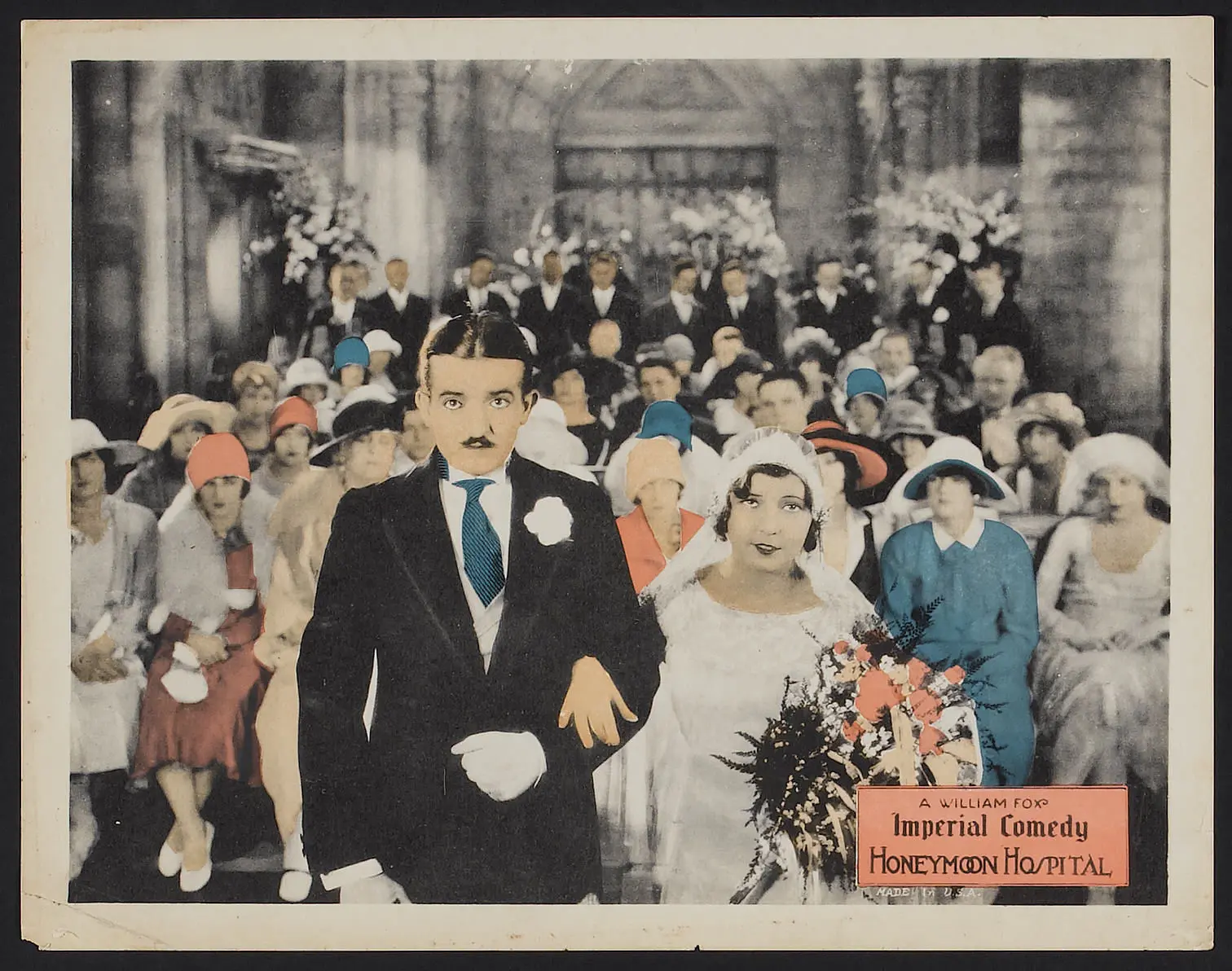
The film opens with a deceptively simple setup: a wedding. The groom, an unnamed but clearly put-upon gentleman, is the recipient of a rather unconventional wedding gift from his maiden aunts—a chest overflowing with various pills. This seemingly innocuous detail, a darkly comedic foreshadowing, sets the stage for the medical mayhem to come. The initial moments establish a tone of lighthearted domesticity, quickly shattered by the accidental snuff incident.
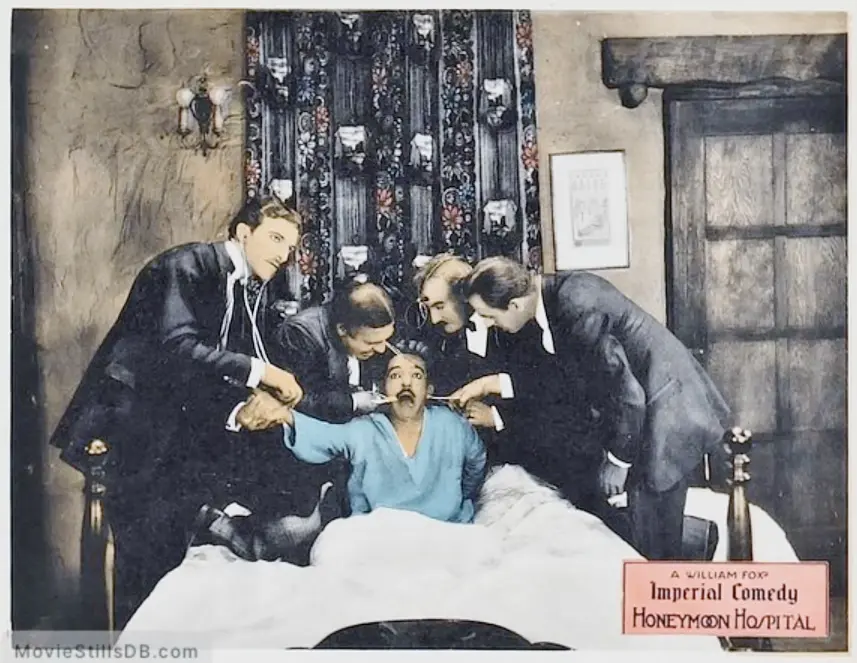
From this point, the narrative becomes a relentless pursuit. The groom, now prone to involuntary fits after a whiff of snuff, quickly learns that feigning illness is his only escape from the aunts’ overzealous attempts to 'cure' him. This central gag, while initially amusing, forms the entire backbone of the film, leading to a succession of increasingly absurd situations. The physical comedy, driven by Ernest Shields (presumably the groom), is the undeniable star here. His contortions, exaggerated collapses, and frantic dodges are the language of the film, communicating distress and desperation without a single spoken word.
The direction, though rudimentary by today's standards, effectively captures the escalating chaos. There's a clear understanding of sight gags and the power of visual repetition. The camera often maintains a static, wide shot, allowing the entire physical performance to unfold within the frame, a common technique of the time that prioritizes clarity of action over dynamic cinematography. This approach, while sometimes feeling theatrical, ensures that every frantic dash and every bewildered expression is clearly visible.
However, this commitment to a single comedic vein is also the film's Achilles' heel. The repetitive nature of the groom's antics, while a hallmark of silent slapstick, begins to grate. One can only watch a man pretend to faint so many times before the humor diminishes. It’s a classic example of a good idea stretched thin, perhaps due to the demands of a longer runtime than the gag could comfortably sustain. This is where Honeymoon Hospital truly shows its age, challenging modern viewers who expect more narrative twists and turns.
Scene from Honeymoon Hospital
Cinematic perspective: Exploring the visual vocabulary of Honeymoon Hospital (1926) through its definitive frames.
Performances and Pacing: A Silent Symphony of Silliness
The cast, particularly Ernest Shields as the beleaguered groom, carries the weight of the film almost single-handedly. His performance is a masterclass in silent-era physical comedy, requiring immense energy and a precise understanding of comedic timing. Every exaggerated twitch, every flailing limb, and every wide-eyed look of panic is meticulously crafted to elicit laughter. While the characters are broad archetypes, Shields imbues his role with a frantic energy that is both commendable and, at times, exhausting to watch.
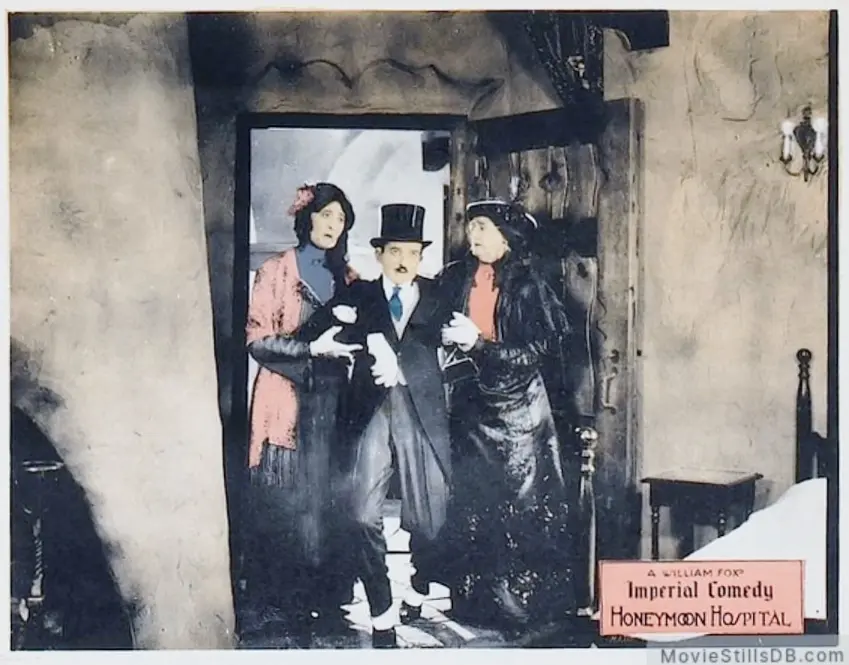
The maiden aunts, likely played by Ruth Handforth and Nora Cecil, are equally committed to their roles as well-meaning but utterly suffocating figures. Their relentless pursuit of the 'ailing' groom, armed with their chest of pills and an army of medical professionals, provides the primary antagonist force. Their stern expressions and determined strides are a perfect foil to the groom's increasingly desperate evasions. The dynamic between the three is the engine of the film's humor, a classic setup of an individual trying to escape the clutches of well-intentioned tyranny.
Barbara Luddy, as the bewildered bride, offers a surprisingly poignant counterpoint to the slapstick. Her character's struggle to connect with her husband, who is constantly either having a fit or pretending to have one, injects a touch of pathos into the proceedings. While her role is largely reactive, her expressions of confusion and frustration are perhaps the most relatable element of the entire film. She is the audience's surrogate, navigating the bizarre logic of this honeymoon gone wrong. Her attempts to reach her husband, constantly thwarted by the aunts and doctors, highlight the isolation within the comedic chaos.
The pacing of Honeymoon Hospital is undeniably a product of its time. Silent films often relied on longer takes and a slower build-up of gags, allowing the audience to fully absorb the visual information. For contemporary viewers, this can feel like watching a play unfold rather than a rapidly edited film. There are moments where the comedic beats could benefit from tighter editing, but to judge it by modern standards would be anachronistic. It’s important to appreciate the film within its historical context, where the novelty of moving pictures itself was a significant draw.
The tone, despite the constant 'illness,' remains light and farcical. There's never a true sense of danger or genuine concern for the groom's health, which allows the audience to fully embrace the absurdity. It’s pure escapism, a world where the biggest problem is an overabundance of care and a misplaced sneeze. This lightheartedness is consistent throughout, preventing the film from ever straying into genuinely uncomfortable territory, a common trait of early comedies designed for broad appeal.
Scene from Honeymoon Hospital
Cinematic perspective: Exploring the visual vocabulary of Honeymoon Hospital (1926) through its definitive frames.
Cinematography and Lasting Impressions
The cinematography, typical of the era, is functional rather than artistic. The camera is largely static, capturing the action in medium to wide shots, prioritizing clarity and the staging of physical comedy. There are no elaborate tracking shots or complex camera movements; the focus is entirely on the performers and their actions. Lighting is generally flat, ensuring visibility, and the sets, while minimal, effectively convey the domestic and medical environments. While it lacks the visual flair of later cinematic periods, it perfectly serves the film's primary goal: to showcase the physical comedy.
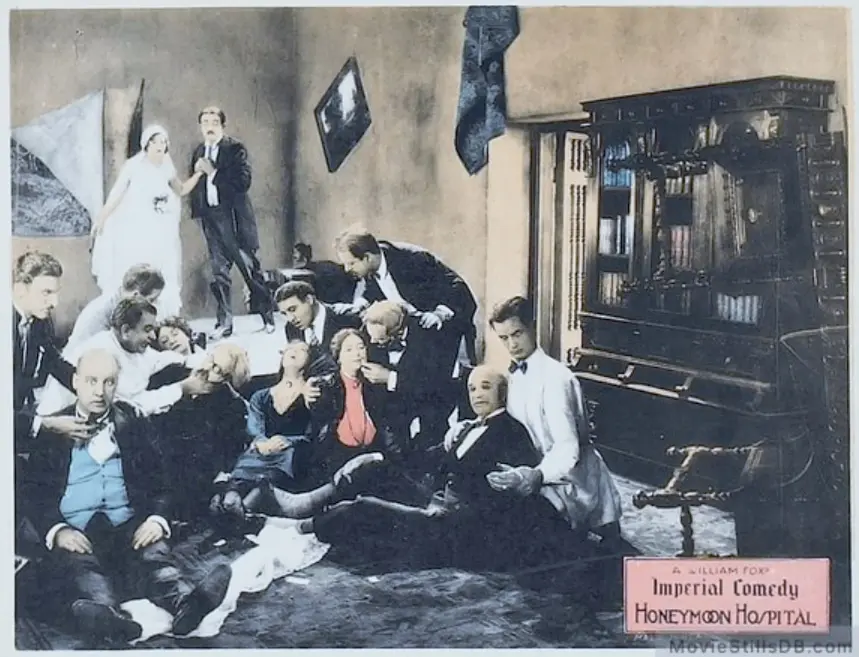
One particular scene that exemplifies this is the sequence where the various doctors and chiropractors descend upon the household. The sheer number of medical professionals, all with their own peculiar methods and expressions, creates a visual cacophony. The camera holds steady, allowing the viewer to take in the absurdity of multiple 'experts' prodding and poking the unwilling groom, who is constantly trying to slip away. It's a comedic ballet of mistaken diagnoses and desperate evasions, a highlight of the film's physical humor.
The film’s most unconventional observation, for me, is the underlying commentary on societal anxieties around health and medical intervention. The aunts' gift of a 'chest of pills' and their immediate, overwhelming response to the groom's supposed illness speaks volumes about a cultural predisposition towards remedies and a distrust of natural processes. It’s a surprisingly dark comedic touch, hinting at a broader societal obsession with quick fixes and expert opinions, even when unwarranted. This accidental social commentary elevates the film beyond mere slapstick, lending it a subtle layer of depth that might not have been intentionally placed there by its creators.
Comparing it to other films of its time, Honeymoon Hospital sits comfortably alongside other early farces like Nimrod Ambrose or A Bit of Jade, which also relied heavily on misunderstanding and physical gags. However, its singular focus on the 'illness' plotline gives it a slightly more concentrated, if occasionally exhausting, comedic thrust. While it might not have the narrative ambition of a drama like The Payment, it certainly holds its own as a representative example of early comedic filmmaking.
Is This Film Worth Watching?
Yes. But it’s flawed. It's a fascinating artifact. It works as a historical document. It offers genuine, if sporadic, laughs. It showcases early physical comedy. It’s a unique viewing experience.
For anyone interested in the evolution of cinematic comedy, Honeymoon Hospital provides valuable insights. It demonstrates how early filmmakers crafted humor using limited resources, relying heavily on the expressiveness of their actors and the simplicity of their gags. It’s a foundational text, a stepping stone in the journey from vaudeville to sophisticated narrative comedy.
Key Takeaways
Best for: Film historians, silent film enthusiasts, and those with a high tolerance for repetitive slapstick.
Not for: Viewers seeking modern pacing, sophisticated humor, or deep character arcs.
Standout element: Ernest Shields' tireless physical performance as the groom, a true showcase of silent-era comedic acting.
Biggest flaw: The singular, repetitive nature of the central gag, which overstays its welcome and leads to narrative exhaustion.
Pros and Cons
Pros:
Historical Significance: Provides an excellent example of early 20th-century slapstick comedy and filmmaking techniques.
Committed Physical Comedy: The actors, particularly the lead, fully commit to the exaggerated movements and expressions required for silent farce.
Unique Premise: The idea of a honeymoon derailed by feigned illness and overbearing relatives is inherently comedic and still resonates in its absurdity.
Accidental Social Commentary: Offers an intriguing, if unintentional, glimpse into societal attitudes towards health and medicine of the era.
Charming Simplicity: Its straightforward approach to humor can be refreshing in its directness, free from complex subplots.
Cons:
Repetitive Gags: The central joke, while funny initially, is stretched too thin across the runtime, leading to diminishing returns.
Slow Pacing: Typical of its era, the film's deliberate pacing can be a significant hurdle for modern audiences accustomed to faster cuts and narrative momentum.
Lack of Character Depth: Characters are largely archetypes, serving the plot rather than offering complex emotional journeys.
Limited Cinematic Sophistication: The direction and cinematography are basic, focusing on functionality over artistic innovation, which might underwhelm some viewers.
Niche Appeal: Its specific brand of humor and historical context means it won't appeal to a broad contemporary audience.
Verdict
Honeymoon Hospital is more than just a film; it’s a time capsule. It's a genuine, albeit imperfect, piece of cinematic history that showcases the raw energy of early slapstick comedy. While its single-minded devotion to one gag can be wearying, and its pacing undoubtedly tests modern patience, there's an undeniable charm in its commitment to absurdity. It stands as a testament to the foundational elements of screen humor, demonstrating how filmmakers once relied on pure physical performance and simple misunderstandings to elicit laughter.
For the discerning cinephile or the dedicated student of early cinema, Honeymoon Hospital is an essential, if not always exhilarating, watch. It’s a film that demands contextual viewing, an appreciation for what it represents rather than what it might have become. It's not a 'masterpiece' in the conventional sense, nor is it a 'cinematic journey' that will sweep you off your feet. It is, however, a fascinating, often peculiar, and occasionally brilliant glimpse into the genesis of screen comedy. Approach it with an open mind and a historical lens, and you might just find yourself chuckling at the ridiculous plight of a groom who just wanted a peaceful honeymoon.