DbcultAccessing Vault...
5.9/10
Senior Film Conservator
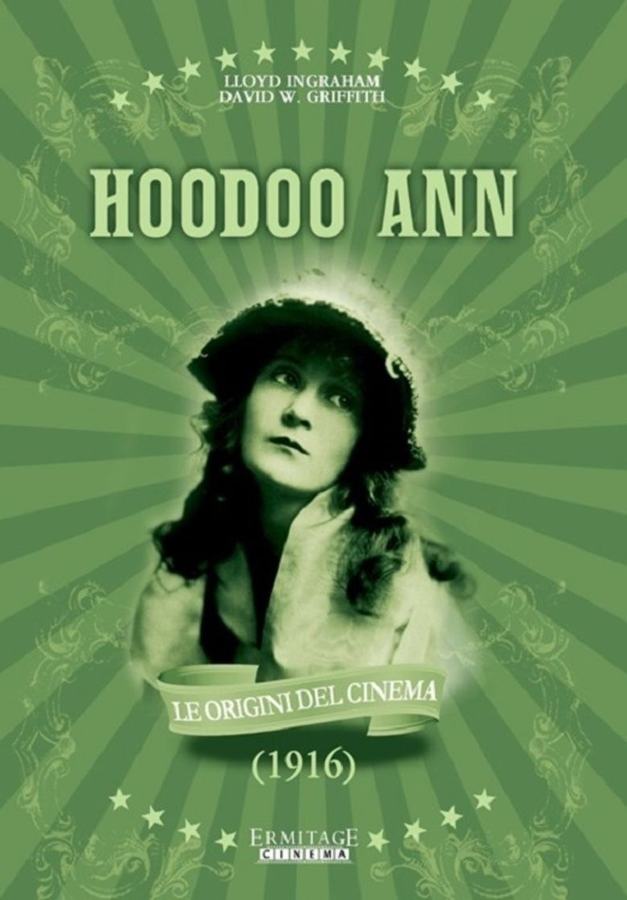
A definitive 5.9/10 rating for a film that redefined the boundaries of cult cinema. Hoodoo Ann remains a cornerstone of transgressive art.
Stepping into the world of D.W. Griffith’s Hoodoo Ann is to immerse oneself in a fascinating tapestry of early cinematic ambition, a narrative that deftly weaves together threads of childhood innocence, deeply held superstitions, and the relentless human quest for belonging. This 1916 production, while perhaps not as widely discussed as some of Griffith's more monumental epics, nonetheless offers a compelling window into his evolving directorial prowess and his profound ability to elicit nuanced performances from his favored ensemble. It’s a film that, despite its century-old vintage, resonates with a timeless quality, exploring themes that continue to echo in contemporary storytelling. The central premise, built around a young orphan girl’s conviction that she is cursed by a 'hoodoo' until marriage, provides a rich psychological landscape for exploration, allowing the narrative to delve into the intricate interplay between self-perception and external circumstances. Griffith, ever the orchestrator of human emotion, uses this belief not merely as a plot device but as a lens through which to examine the profound impact of internal convictions on one's life trajectory, particularly for a character as vulnerable and impressionable as Ann.
The film opens with Ann, portrayed with heartbreaking vulnerability by the remarkable Mae Marsh, navigating the harsh realities of orphanage life. Her belief in the 'hoodoo' isn't just a childish fancy; it's a deeply ingrained conviction, a coping mechanism perhaps, that frames her entire existence. Marsh, a muse for Griffith, brings an almost ethereal quality to Ann, her expressive eyes conveying volumes of unspoken fear and yearning. The early scenes establish her isolation, not just physical, but psychological, as her peculiar belief sets her apart from her peers. When tragedy strikes, and the orphanage is consumed by fire – a dramatic set piece that Griffith stages with his characteristic flair for spectacle and emotional urgency – it becomes a pivotal moment, both literally and symbolically. This catastrophic event, while devastating, paradoxically opens the door to a new chapter for Ann, thrusting her into the uncertain but potentially redemptive embrace of a childless couple. This transition from institutionalized despair to the possibility of familial warmth is handled with a delicate touch, highlighting Griffith's understanding of human resilience and the enduring hope for a better tomorrow, even amidst profound loss.
The adoption marks a significant shift in Ann's life, introducing her to an environment vastly different from the austere confines of the orphanage. Here, she encounters the boy-next-door, portrayed by Robert Harron, another frequent collaborator with Griffith, whose youthful charm and earnestness provide a perfect foil to Ann's guarded innocence. Their burgeoning romance is depicted with a tender, almost innocent purity, characteristic of Griffith’s romantic sensibilities. It’s a relationship that promises to challenge Ann’s deeply held 'hoodoo' belief, suggesting that love, genuine connection, might be the true antidote to her perceived curse. The film excels in portraying these quieter moments of budding affection, allowing the audience to witness the subtle thawing of Ann’s defenses as she tentatively allows herself to experience joy and companionship. These scenes are a testament to Griffith's skill in crafting intimate emotional landscapes, even within the broader strokes of a silent melodrama. The visual storytelling, relying heavily on close-ups and carefully composed frames, allows Marsh's nuanced expressions to communicate the complex internal world of a girl teetering on the brink of happiness, yet still tethered by a lingering, irrational fear.
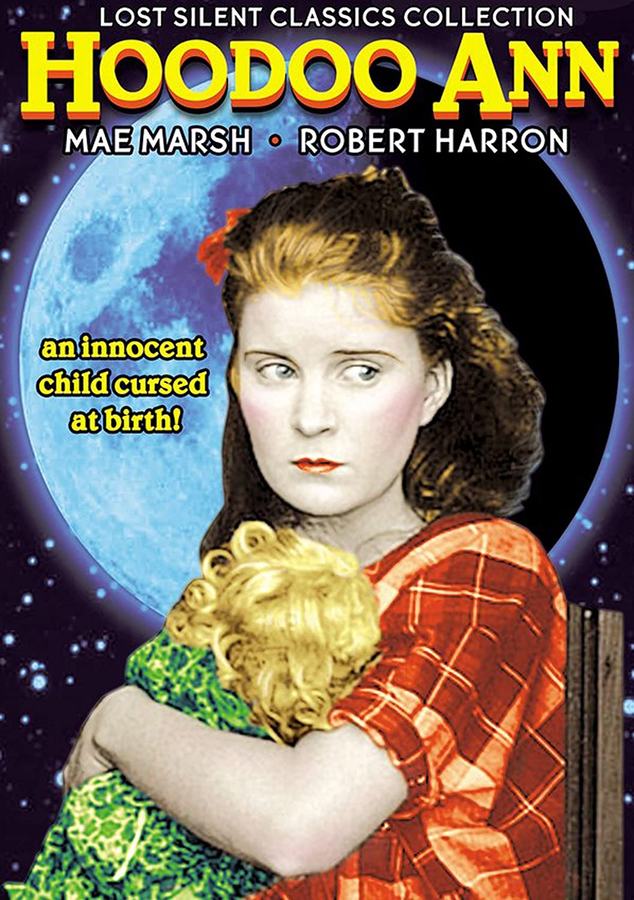
However, Griffith, ever the master of dramatic tension, doesn't allow Ann's newfound happiness to remain untroubled for long. The discovery of a loaded gun introduces a stark, unsettling element into the narrative, a potent symbol of impending danger and the fragility of peace. This pivotal moment serves as a catalyst, threatening to unravel the delicate fabric of Ann’s new life and to reignite her deepest fears about the 'hoodoo.' The gun, in its stark presence, is not just a prop; it embodies the lurking specter of violence and misfortune that Ann has always believed herself destined to encounter. It forces her, and by extension the audience, to confront the very real possibility that her self-fulfilling prophecy might indeed come to pass. This narrative turn allows Griffith to explore the psychological weight of superstition, demonstrating how an unfounded belief can manifest real-world anxieties and influence actions. The dramatic irony is palpable: is it the hoodoo itself, or Ann's unwavering belief in it, that truly orchestrates the unfolding events? This question lies at the very core of the film’s intellectual intrigue, elevating it beyond a simple tale of an orphan girl.
Mae Marsh's performance as Ann is, without hyperbole, a tour de force. She navigates the character's emotional spectrum with remarkable dexterity, from the initial despair and quiet resignation of the cursed orphan to the hesitant joy of first love and the terror of impending doom. Her ability to convey such profound internal states through gesture, facial expression, and body language is a testament to her extraordinary talent, solidifying her status as one of the silent era's most compelling actresses. One cannot help but draw parallels to her other acclaimed roles under Griffith, where she similarly embodied a delicate blend of fragility and inner strength. Robert Harron, as the earnest love interest, provides a grounded, reassuring presence, his performance complementing Marsh's more volatile emotional landscape. The supporting cast, including the formidable Madame Sul-Te-Wan, brings a rich authenticity to the various societal archetypes Griffith so often explored. Sul-Te-Wan, in particular, often imbued her characters with a powerful, almost mystical presence, adding layers of cultural depth to the film’s exploration of superstition, even if her role here is more understated than in some of her other collaborations with Griffith.
Griffith's directorial hand is evident throughout Hoodoo Ann, showcasing his signature techniques and his unparalleled understanding of cinematic storytelling. His use of parallel editing, pioneered in films like The Marked Woman and perfected in later works, is employed to build tension and to juxtapose different narrative threads, keeping the audience engaged. The film benefits from his meticulous attention to detail in set design and costuming, which, while perhaps less grand than in an epic like The Perfect Thirty-Six, still effectively establishes the period and atmosphere. His mastery of lighting to create mood and emphasize emotion is also on full display, from the stark shadows of the orphanage to the softer, more romantic glow of Ann’s new home. Griffith understood that silence, in cinema, could be more eloquent than speech, and he leveraged visual cues and the power of suggestion to convey complex emotions and narrative developments. The pacing, though deliberate, never lags, each scene contributing meaningfully to the overall arc of Ann’s journey, culminating in a dramatic resolution that is both satisfying and thought-provoking.
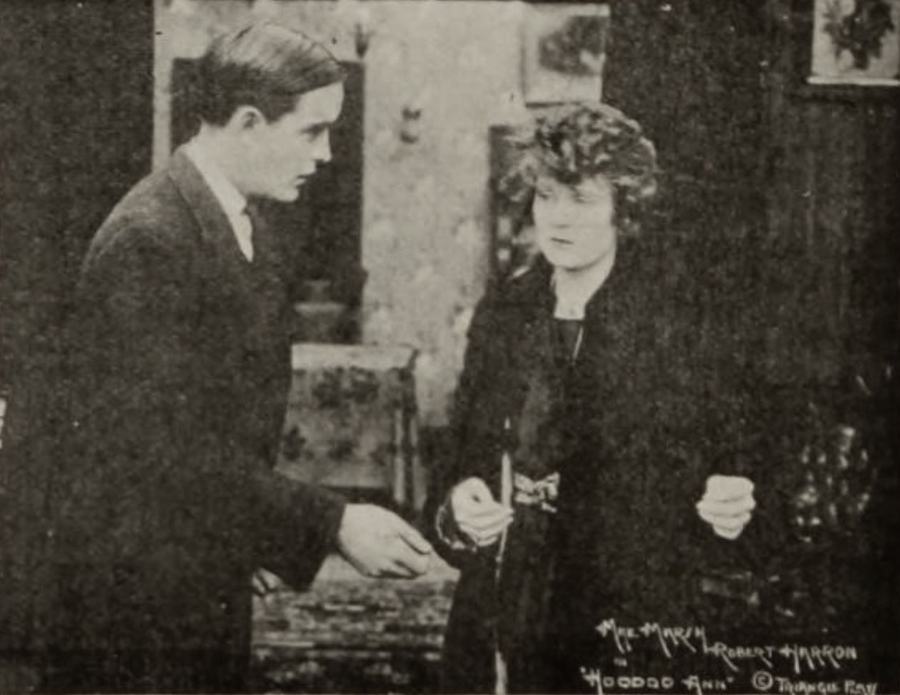
The exploration of superstition in Hoodoo Ann is particularly compelling. It delves into how beliefs, even irrational ones, can profoundly shape an individual’s perception of reality and influence their actions. Ann’s 'hoodoo' isn't just a quaint quirk; it’s a source of genuine anxiety and self-doubt, a psychological barrier that she must overcome. This theme resonates with broader societal anxieties of the time, where folklore and nascent psychological understanding often intertwined. Griffith, through Ann’s character, implicitly asks whether fate is predetermined or if our beliefs actively construct our destinies. This intellectual undercurrent elevates the film beyond mere melodrama, inviting deeper contemplation. While not as overtly allegorical as some of his grander statements, the film subtly critiques the self-limiting power of fear and inherited belief systems. It suggests that true liberation comes not from external circumstances, but from an internal shift in perspective, a realization that one's future is not dictated by ancient curses but by courage and the capacity for love. This is a profound message, delivered with characteristic Griffithian earnestness.
The film’s climax, triggered by the discovery of the gun, propels Ann into a crisis of faith and courage. This incident forces her to confront her 'hoodoo' head-on, testing her newfound happiness and her burgeoning love. The tension in these scenes is palpable, a testament to Griffith’s ability to orchestrate high drama. The resolution, without revealing too much, is characteristic of Griffith’s often optimistic, if sometimes morally didactic, worldview. It emphasizes the triumph of good over perceived evil, and the redemptive power of love and self-belief. It’s a conclusion that, while perhaps adhering to the conventions of the era, still feels earned through the emotional journey of its protagonist. The film, in its entirety, serves as a testament to the power of human connection and the resilience of the spirit, even when confronted by deeply ingrained fears. It reminds us that sometimes the greatest battles are fought within ourselves, against the specters of our own making. This internal struggle, so beautifully articulated by Marsh, is what gives Hoodoo Ann its enduring emotional weight.
In the grand pantheon of silent cinema, Hoodoo Ann occupies a distinct and valuable place. It showcases Griffith’s unparalleled ability to craft emotionally resonant narratives, even with a relatively simple premise. It’s a film that, while lacking the epic scope of something like The Beloved Vagabond or the sprawling societal commentary of Manhattan Madness, nevertheless delivers a powerful, intimate story. The performances, particularly Marsh’s, are exemplary, offering a masterclass in silent screen acting. For modern viewers, it offers a fascinating glimpse into the social anxieties and narrative conventions of the early 20th century, all filtered through the lens of one of cinema’s most influential pioneers. It’s a reminder that compelling storytelling doesn't always require elaborate special effects or complex dialogue; sometimes, the most profound tales are those that explore the depths of the human heart and the enduring power of belief, for good or ill. The film’s lasting legacy is in its sensitive portrayal of a young woman's journey from fear to self-acceptance, a narrative arc that transcends the specific superstitions of its time to touch upon universal truths about hope, love, and the courage to forge one's own destiny. It’s a quiet gem, deserving of continued appreciation and study, not just as a historical artifact, but as a vibrant piece of cinematic art that continues to speak volumes about the human condition.
The technical artistry on display, even for a film of its era, is noteworthy. Griffith’s innovative use of camera angles, close-ups to emphasize emotional states, and cross-cutting to heighten suspense were revolutionary for his time and are clearly evident here. These techniques, which would become standard cinematic grammar, were still being refined and explored, and Hoodoo Ann serves as a valuable case study in their application. The visual storytelling is consistently strong, with each frame thoughtfully composed to advance the narrative or deepen character understanding. The contrast between the bleakness of the orphanage and the warmth of Ann’s adopted home is not just a change of scenery but a visual representation of her internal transformation. The moments of quiet reflection, often punctuated by a subtle shift in Marsh's expression, speak volumes, demonstrating how Griffith could extract profound meaning from seemingly simple gestures. This mastery of visual nuance is a hallmark of his best work and is certainly present in this understated yet powerful drama, ensuring that its emotional beats land with precision and impact. It stands as a testament to the early days of filmmaking, when every shot, every cut, was a deliberate step in inventing a new language of storytelling.
Ultimately, Hoodoo Ann is more than just a historical curiosity; it is a compelling human drama that explores themes of identity, belonging, and the power of belief with a sensitivity and depth that belies its age. Mae Marsh’s performance is a luminous anchor, guiding the audience through Ann’s emotional labyrinth with grace and authenticity. Griffith, as director, orchestrates a narrative that is both melodramatic and psychologically insightful, proving that even his lesser-known works hold significant value for film enthusiasts and scholars alike. It’s a film that encourages introspection, prompting us to consider the curses we place upon ourselves and the transformative power of genuine connection and self-acceptance. Its enduring relevance lies in this universal appeal, reminding us that the struggles of an orphan girl in 1916 against a perceived 'hoodoo' are not so different from the internal battles we face today. A true testament to the artistry of silent cinema, this film deserves a place in any serious discussion of early American filmmaking and its lasting impact on the cinematic landscape. It’s a potent reminder that the human heart, with all its fears and hopes, remains the most captivating subject for any storyteller, regardless of the era or the medium. The journey of Ann, from a child shackled by superstition to a young woman embracing her future, is a narrative triumph, beautifully executed and profoundly moving.
IMDb 6
1931
Community
Log in to comment.