DbcultAccessing Vault...
Cult Review
Senior Film Conservator
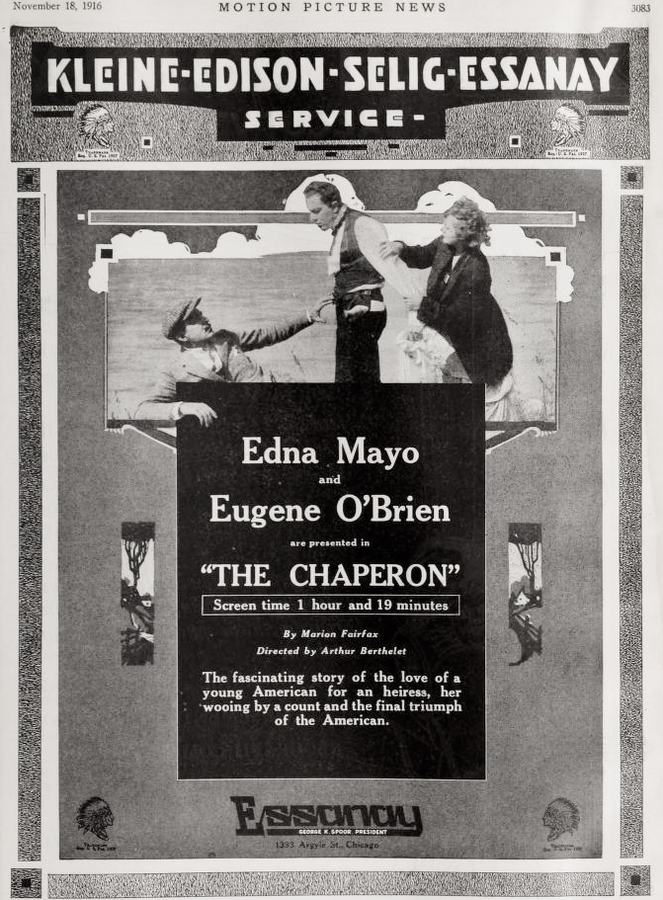
In the pantheon of early American cinema, specifically the transitional period of 1916, few films encapsulate the neurotic intersection of wealth, masculinity, and social performance as poignantly as The Chaperon. Directed with a keen eye for the absurdities of the upper crust, this film serves as a fascinating precursor to the sophisticated screwball comedies of the 1930s, yet it remains firmly rooted in the melodramatic sensibilities of its time. The screenplay, penned by the legendary Marion Fairfax and H.S. Sheldon, navigates the treacherous waters of class anxiety with a dexterity that often eludes its contemporaries like Moral Suicide or the more overtly moralistic A Question of Right.
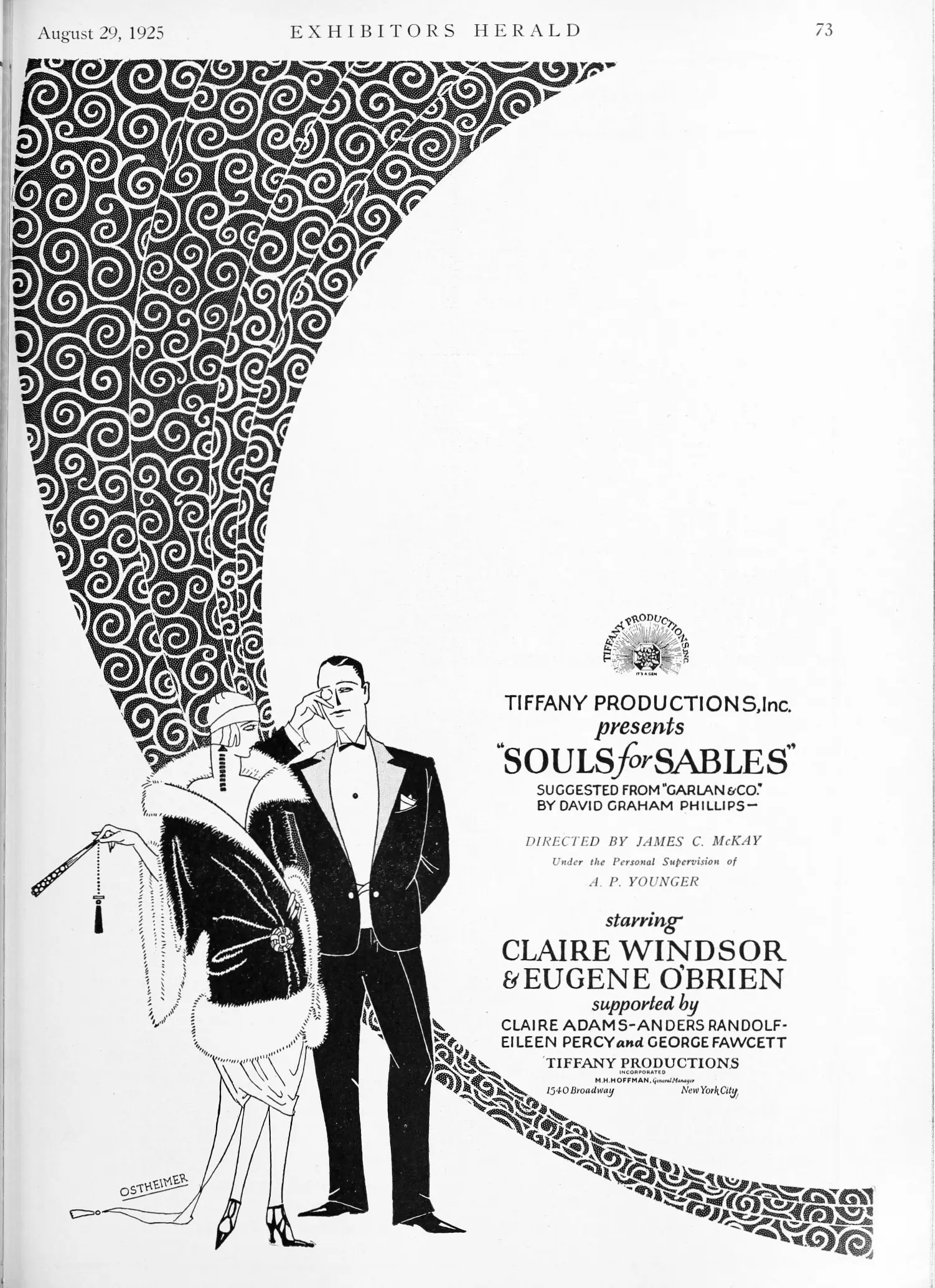
At the heart of the conflict lies Jim Ogden, portrayed by Eugene O'Brien with a brooding intensity that borders on the pathological. Ogden’s refusal to marry Madge Hemmingway (Edna Mayo) is not born of a lack of affection, but rather a crippling sense of fiscal inferiority. This 'poverty complex' among the burgeoning middle class was a recurring trope in silent cinema, reflecting a society grappling with the Gilded Age's shadow. By breaking the engagement, Ogden sets in motion a domino effect of emotional catastrophes. Unlike the protagonists in Lea, who often find themselves victims of external fate, Ogden is the architect of his own misery. His pride is a wall that Madge cannot climb, leading her to the impulsive, and ultimately disastrous, marriage to Count Van Tuyle.
The introduction of the Count, played with a slithering, aristocratic menace by Sidney Ainsworth, introduces a continental cynicism to the proceedings. Madge’s flight to Europe and subsequent return 'minus her husband' is a silent film shorthand for a failed domesticity that was often explored in films like Rags. However, 'The Chaperon' deviates from the standard victim narrative by thrusting Madge into a position of unexpected authority.
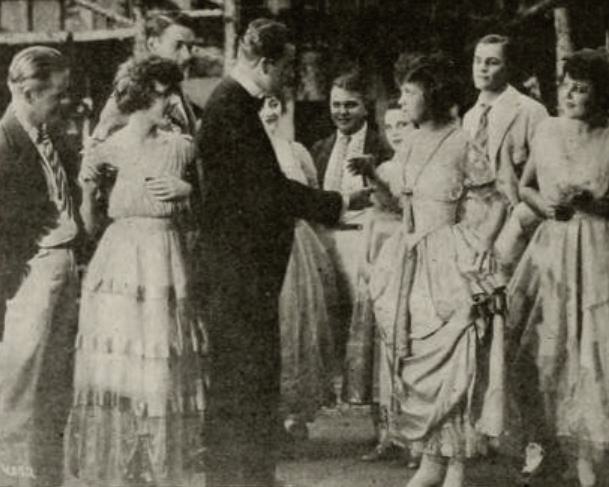
The middle act of the film is where Fairfax’s wit truly shines. The conceit of Madge, a woman fleeing her own marital wreckage, being installed as the 'chaperon' for the four Coombs daughters is a masterstroke of dramatic irony. The Coombs household is a microcosm of youthful rebellion, where every daughter is embroiled in a 'summer flirtation' that threatens to upend the family’s social standing. This reflects a shift in cultural mores similar to the themes found in Southern Pride, where the old guard struggles to contain the burgeoning desires of the new generation.
The departure of the domestic staff—the cook, the butler, and the chauffeur—serves as a metaphor for the total collapse of societal structure. In the absence of the working class to maintain the facade, the upper-class characters are forced into a raw, unmediated existence. This 'state of nature' is further emphasized when Jim Ogden arrives at the camp. The canoe, a symbol of leisure and romantic escapism, becomes the vehicle for their ultimate confrontation with reality.
When Jim and Madge are marooned on a barren island after their craft strikes a rock, the film enters a different tonal register. The island functions as a liminal space, removed from the judgmental eyes of the city and the chaotic flirtations of the Coombs camp. It is here that the lexical diversity of the performances must carry the weight of the narrative. Edna Mayo conveys a complex blend of resentment and lingering devotion, while O'Brien's Ogden must reckon with the consequences of his earlier abandonment. This sequence echoes the isolation found in Mrs. Slacker, but with a focus on romantic reconciliation rather than patriotic duty.
"The barren island is not merely a geographic location; it is the psychological landscape where the ghosts of their past engagement must be exorcised before a future can be envisioned."
The arrival of the Count and Mrs. Hemmingway the following morning brings the social world crashing back into their temporary Eden. The Count’s suspicion is not the jealousy of a lover, but the possessiveness of a creditor. His confrontation with Ogden is a clash of two different types of masculinity: the entitled, decaying aristocracy of the Old World versus the stubborn, self-made ego of the New. This conflict is a staple of the era, seen in varying forms in The War of the Tongs and Less Than Kin.
Perhaps the most cynical, yet realistic, aspect of 'The Chaperon' is its resolution. In many silent dramas, such as Patria or Den retfærdiges hustru, the climax involves a moral reckoning or a grand heroic gesture. Here, the 'hero' is Mrs. Hemmingway, the mother who views the entire ordeal through the lens of a balance sheet. Her promise to 'effect a settlement' with the Count is a chilling reminder that in this world, freedom and love are commodities that can be purchased if the price is right. It is a pragmatic end to a romantic struggle, suggesting that while Jim and Madge may find happiness, it will be a happiness subsidized by the very wealth Jim initially feared.
The state of the Coombs daughters upon their mother's return—all four engaged—serves as a comedic counterpoint to the central drama. It suggests that the 'chaperon' failed in her duty to protect their virtue but succeeded in facilitating their social advancement. This chaotic house, devoid of servants and filled with 'sorry sights,' is a far cry from the pristine diplomatic environments of A Diplomatic Mission or the industrious fervor of Doing Their Bit.
Visually, the film utilizes the natural beauty of the lake country to contrast with the rigid interiors of the Hemmingway and Coombs estates. The use of deep focus in the camp scenes allows the viewer to observe the various flirtations occurring simultaneously, creating a sense of bustling, uncontained energy. This technique is more sophisticated than the staging found in A Gentleman from Mississippi, showcasing the rapid evolution of film language in the mid-1910s.
The performances are uniformly strong. Edna Mayo avoids the trap of the 'damsel in distress,' instead portraying Madge as a woman of agency who, while making mistakes, possesses the fortitude to escape the Count’s boat and leave the men to their primitive brawling. This modern edge is reminiscent of the characters in On Dangerous Ground or the spirited leads in The Eyes of Julia Deep.
In conclusion, The Chaperon is a vital artifact of silent cinema that challenges the notion of the era as one of simple moral binaries. It is a film about the messiness of human relationships, the absurdity of social expectations, and the cold reality of the economic forces that underpin them both. While the 'happy ending' is achieved through a financial transaction, the emotional journey of Jim and Madge remains resonant. It reminds us that even in 1916, the path to true love was often blocked not by villains, but by the mirror.
Reviewer's Note: The 1916 release of 'The Chaperon' stands as a testament to Marion Fairfax's ability to blend social critique with engaging narrative structures, a skill that would later make her one of the most sought-after writers in Hollywood.
IMDb —
1919
Community
Log in to comment.