DbcultAccessing Vault...
Cult Review
Senior Film Conservator
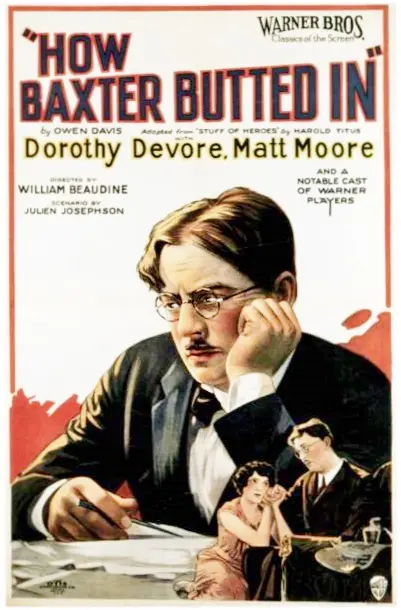
Short answer: yes, but with significant caveats. How Baxter Butted In is a fascinating window into early 20th-century filmmaking, particularly for those with a keen interest in silent cinema, its narrative conventions, and the nascent exploration of psychological themes on screen. This film is absolutely worth watching if you are a film historian, a student of early cinematic techniques, or someone who appreciates the unique charm and expressive power of silent storytelling. However, if your cinematic palate leans exclusively towards modern, fast-paced narratives with complex character arcs and sound design, you might find its pacing and stylistic choices challenging.
It's a film that demands a certain level of engagement and an understanding of its historical context, making it less suitable for a casual viewer seeking immediate gratification. Consider it less a blockbuster and more a meticulously preserved artifact offering insight into the foundations of the art form.
The early 20th century was a fertile ground for exploring the inner lives of ordinary people, and How Baxter Butted In, despite its seemingly simple premise, taps into a universal human experience: the power of escapism. The film introduces us to Henry Baxter, a character so unremarkable in his office life that his very existence seems to blur into the background. He’s the archetypal 'little man,' a clerk whose dreams are far grander than his reality. This portrayal, even in its broad strokes, offers a surprisingly relatable foundation for the narrative, inviting viewers to empathize with his plight before whisking them away into his fantastical triumphs.
The film’s strength lies in its willingness to dive headfirst into Henry’s subjective world. It doesn't just hint at his fantasies; it fully visualizes them, offering a stark contrast between the drab, oppressive reality of his workplace and the vibrant, heroic landscapes of his imagination. This early cinematic foray into a character's internal monologue, albeit through visual metaphor rather than spoken word, is remarkably ambitious for its time.
In silent cinema, the burden of communication falls squarely on the actors' physicality and facial expressions. Turner Savage, as Henry Baxter, carries this burden with a commendable blend of earnestness and broad theatricality. His portrayal of Henry in the real world is a masterclass in conveying timid resignation. Every slump of his shoulders, every furtive glance towards Beulah (Dorothy Devore), and every flinch under Higgins' (Matt Moore) gaze speaks volumes about his character's internal struggle. Savage makes Henry's quiet desperation palpable, making his eventual imaginative triumphs all the more satisfying for the audience.
When Henry transitions into his fantasy sequences, Savage transforms. His posture straightens, his eyes gleam with newfound confidence, and his gestures become grander, heroic. This dichotomy is crucial and Savage nails it, making the audience believe in both the meek clerk and the daring adventurer. One particular moment that stands out is a scene where Henry, in reality, fumbles a stack of papers, his face a mask of mortification, only for the next cut to show him, in fantasy, effortlessly disarming a villain with a flourish. This juxtaposition, driven by Savage's distinct performances in each realm, is the film's beating heart.
Dorothy Devore, as Beulah, embodies the idealized object of Henry's affection. While her character is, by necessity, somewhat one-dimensional – a beautiful, unattainable muse – Devore brings a certain grace and charm to the role. Her expressions are often subtle, conveying a quiet dignity that justifies Henry's adoration. She isn't just a pretty face; there's a hint of inner life that makes her more than a mere plot device, even if the script doesn't allow for extensive exploration of it. Her reactions to Higgins’ boorishness, for instance, are understated yet effective, showing a quiet disdain that aligns with Henry’s own feelings.
Matt Moore's Higgins is the perfect foil: a caricature of a bully, yet played with enough conviction to feel genuinely antagonistic. Moore relishes the role, using exaggerated sneers and domineering postures to establish Higgins as the clear villain of Henry's daily grind. His performance is loud and aggressive, providing a stark contrast to Savage's more subdued Henry. The way he shoves Henry aside at the water cooler, for example, is a small but impactful gesture that immediately establishes their power dynamic.
And then, there's Cameo the Dog. An unexpected yet delightful addition to the cast, Cameo's presence is more than just a novelty. The dog often serves as a silent, loyal companion to Henry, a grounding force in his reality, and occasionally, a catalyst for his fantasies. The inclusion of an animal actor in a significant role speaks to the early cinema's willingness to experiment and find new ways to inject charm and relatability into its narratives. The dog’s quiet presence in the office, often observing the human drama, adds a layer of unexpected warmth.
The direction of How Baxter Butted In, attributed to a collaborative effort in terms of writing and adaptation, showcases the evolving language of cinema in the 1920s. The film adeptly navigates the tricky terrain between reality and fantasy, a common trope in early cinema, but executed here with a surprising degree of clarity. The transitions between Henry’s mundane existence and his vivid daydreams are handled with a fluidity that prevents confusion, a testament to the directorial choices in editing and visual cues. Often, a simple dissolve or a change in lighting is enough to signal the shift, transporting the audience alongside Henry.
The pacing, a frequent criticism of silent films for modern audiences, is actually quite effective within its own context. The real-world segments are deliberately slow, emphasizing Henry’s ennui and the drudgery of his life. This deliberate sluggishness serves a narrative purpose, building sympathy and making the abrupt, action-packed fantasy sequences feel all the more exhilarating. The film understands the power of contrast. For example, a lengthy scene showing Henry meticulously filing papers or being reprimanded by Higgins feels almost suffocating, setting up the subsequent fantasy sequence where he's galloping on horseback, saving Beulah from peril, as a breath of fresh air.
One debatable opinion is that while the fantasy sequences are entertaining, they sometimes feel a little too detached from Henry’s core psychological struggle. While they offer catharsis, they occasionally dilute the potential for deeper exploration of his real-world resilience or growth. The film prioritizes spectacle over a nuanced character arc, which, while understandable for the era, might leave some modern viewers wanting more internal development.
The cinematography, while adhering to the technical limitations of its time, effectively serves the film's dual narrative. The office scenes are often shot with a utilitarian straightforwardness, emphasizing the cramped, uninspiring nature of Henry’s environment. Lighting is generally flat, mirroring the mundane. However, when the film shifts to Henry’s fantasies, there's a noticeable change. The lighting often becomes more dramatic, with starker contrasts to highlight the heroic figures and dangerous situations. The sets for these sequences, though clearly studio-bound, are designed to evoke adventure and romance, from faux castles to rugged outdoor backdrops.
The costume design also plays a significant role in defining the two worlds. Henry’s real-world attire is nondescript, blending him into the office furniture. In his fantasies, he dons heroic outfits – a cowboy, a knight, a swashbuckler – instantly transforming his persona. Beulah, too, transitions from practical office wear to elegant gowns or damsel-in-distress attire. This visual shorthand is crucial for a silent film, immediately communicating character and context without the need for extensive intertitles.
The tone of How Baxter Butted In is predominantly one of gentle comedy mixed with escapist fantasy. There’s a melancholic undercurrent in Henry’s real-world struggles, but it never descends into true tragedy. Instead, the film maintains a lighthearted, optimistic spirit, suggesting that even the most downtrodden can find solace and heroism within their own minds. This optimistic tone, even in the face of unrequited love and bullying, is quite charming and contributes to the film's enduring appeal as a historical piece.
This film works because it taps into a universal desire for validation and escape, beautifully illustrating the power of imagination as a coping mechanism in a world that often feels indifferent. It fails because its reliance on broad character archetypes, while effective for silent cinema, limits the depth of psychological exploration that a modern audience might expect. You should watch it if you appreciate the historical context of early cinema and enjoy narratives that prioritize visual storytelling and thematic simplicity over complex plot mechanics.
Absolutely, but with a specific lens. How Baxter Butted In offers a unique opportunity to witness the early development of cinematic language, particularly in its handling of subjective reality and fantasy. It’s a testament to the ingenuity of filmmakers working without sound, relying purely on visual storytelling, acting, and editing to convey complex ideas.
For silent film enthusiasts, it's a delightful example of the genre's capacity for lighthearted escapism. For those new to silent films, it could be a gentle introduction, provided you approach it with an open mind and an appreciation for its historical context. It's a film that asks you to slow down, to observe, and to immerse yourself in a different era of storytelling. Its charm lies not in its groundbreaking narrative complexity, but in its earnest execution of a timeless theme.
While How Baxter Butted In may not be a household name alongside other silent era giants, it holds its own as a delightful and historically significant piece of filmmaking. It's a charming exploration of the human need for escape, delivered with the earnestness and visual flair characteristic of its time. It’s a film that, for all its simplicity, manages to resonate with a universal truth: sometimes, the most heroic battles are fought within the confines of our own minds. I would argue that its enduring appeal lies precisely in its unpretentious embrace of fantasy, a quality that feels refreshingly honest even a century later. It doesn't try to be more than it is, and in that, it finds its quiet strength. It's a film that deserves to be seen by those who appreciate the foundational artistry of cinema, offering both entertainment and a valuable historical lesson.
IMDb 7
1930
Community
Log in to comment.