DbcultAccessing Vault...
4.7/10
Senior Film Conservator
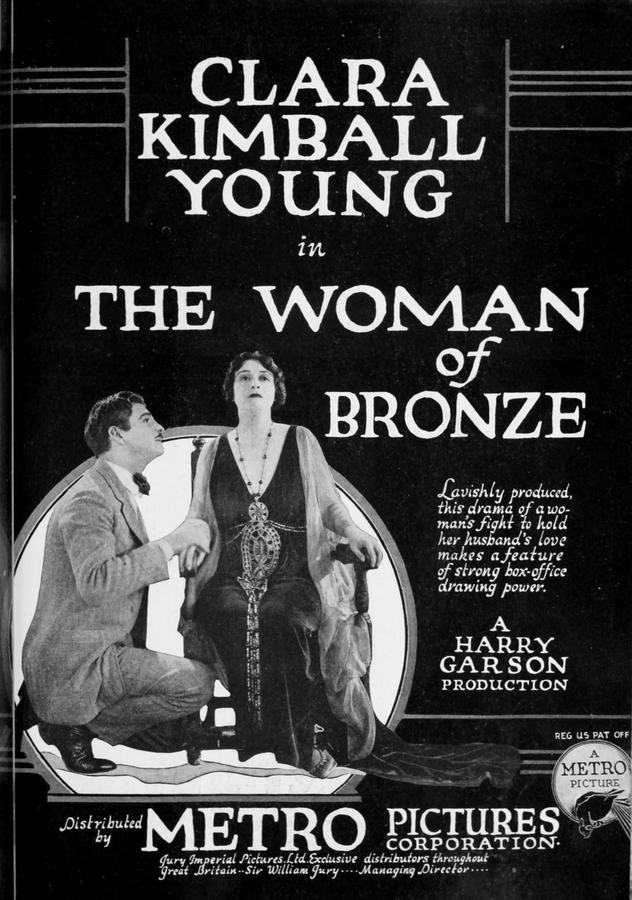
A definitive 4.7/10 rating for a film that redefined the boundaries of cult cinema. The Woman of Bronze remains a cornerstone of transgressive art.
Step into the shimmering, often tumultuous, world of early 20th-century cinema, where emotions were writ large across the screen, and the absence of spoken dialogue only amplified the visceral impact of human drama. Among the myriad narratives spun during this fertile period, The Woman of Bronze (1923) emerges as a particularly resonant exploration of artistic fervor, marital fidelity, and the destructive power of illicit desire. Directed with a keen eye for psychological nuance, this silent film delves into the life of Leonard Hunt, a sculptor whose pursuit of greatness inadvertently unravels the very fabric of his domestic existence. It's a story that, despite its century-old vintage, continues to echo with timeless themes of ambition, betrayal, and the elusive nature of true happiness.
At its core, The Woman of Bronze is a searing portrayal of an artist's soul, torn between the demands of his craft and the responsibilities of his heart. Leonard Hunt, portrayed with a compelling blend of artistic temperament and moral weakness by John Bowers, is initially presented as a man on the cusp of significant recognition. His wife, Vivian (Clara Kimball Young), a figure of elegant determination, acts as his primary advocate, urging him to compete for a prestigious, million-dollar prize to create a Victory Memorial commemorating the First World War. This initial premise sets the stage for a narrative that explores not just the creation of art, but the very human costs associated with its genesis. The memorial, intended to honor sacrifice, ironically becomes the catalyst for a profound personal sacrifice within Hunt's own life.
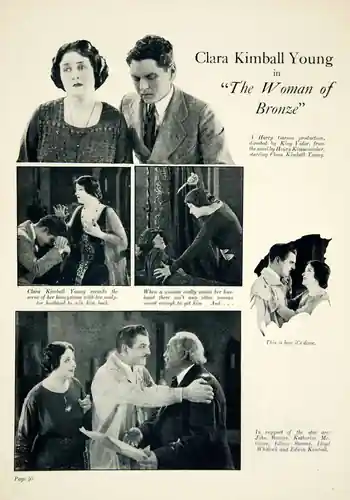
The introduction of Sylvia Morton (Kathryn McGuire) as Hunt's model for the memorial piece is where the narrative truly ignites. Sylvia is not merely a subject; she is a muse, embodying the raw, untamed inspiration that Hunt seemingly lacks in his conventional marriage. The studio, a sanctified space for artistic endeavor, quickly transforms into a clandestine arena for burgeoning romance. The silent film medium, with its reliance on expressive gestures and poignant close-ups, brilliantly conveys the unspoken chemistry and the gradual, insidious development of their affair. The subtle glances, the lingering touches, the shared intensity over the evolving sculpture—all conspire to create an atmosphere thick with forbidden desire, rendering the dialogue cards almost superfluous in their emotional clarity.
Clara Kimball Young, a luminary of the silent screen, delivers a performance of remarkable depth as Vivian. Her initial support for her husband's ambition slowly gives way to a dawning, agonizing realization of his infidelity. Vivian's attempts to salvage her marriage are depicted with a heartbreaking blend of desperation and dignity. Her proposal of a second honeymoon, an escape from the city and the siren call of the studio, is a poignant, albeit ultimately futile, gesture. This sequence masterfully portrays the chasm that has opened between husband and wife, a void that no amount of rekindled romance can bridge. Hunt's inability to forget Sylvia, even amidst the picturesque solace of a renewed marital vow, underscores the depth of his infatuation and the tragic inevitability of his departure.
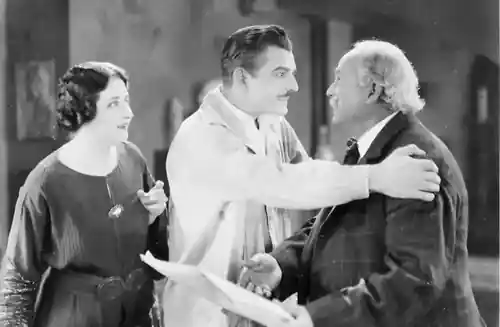
The subsequent confrontation between Vivian and Sylvia is arguably the film's most electrifying moment. It is a testament to the power of silent cinema that such raw emotion—jealousy, betrayal, and a primal instinct for self-preservation—can be conveyed without a single spoken word. Vivian's threat, a stark promise to kill Sylvia unless she relinquishes Hunt, is not merely melodramatic; it is the desperate act of a woman pushed to the brink, her world crumbling around her. This scene, fraught with tension and moral ambiguity, forces the audience to grapple with the complexities of human motivation. Is Vivian a villain, or a victim driven to extremes? The film deftly avoids simplistic categorization, presenting characters who are flawed, passionate, and ultimately, profoundly human.
The narrative then leaps forward, presenting Hunt's eventual return, a figure transformed by remorse and regret. His plea for forgiveness, accompanied by the news of Sylvia's marriage to another, serves as a bitter culmination of his choices. This resolution, far from offering a tidy happy ending, instead reinforces the enduring consequences of impetuous passion. The 'woman of bronze' of the title could easily refer not just to the memorial sculpture, but to the hardened, unyielding hearts shaped by the crucible of this tragic love triangle. The film masterfully avoids a simplistic moralizing tone, instead presenting a nuanced portrayal of human fallibility and the often-irreversible impact of our desires.
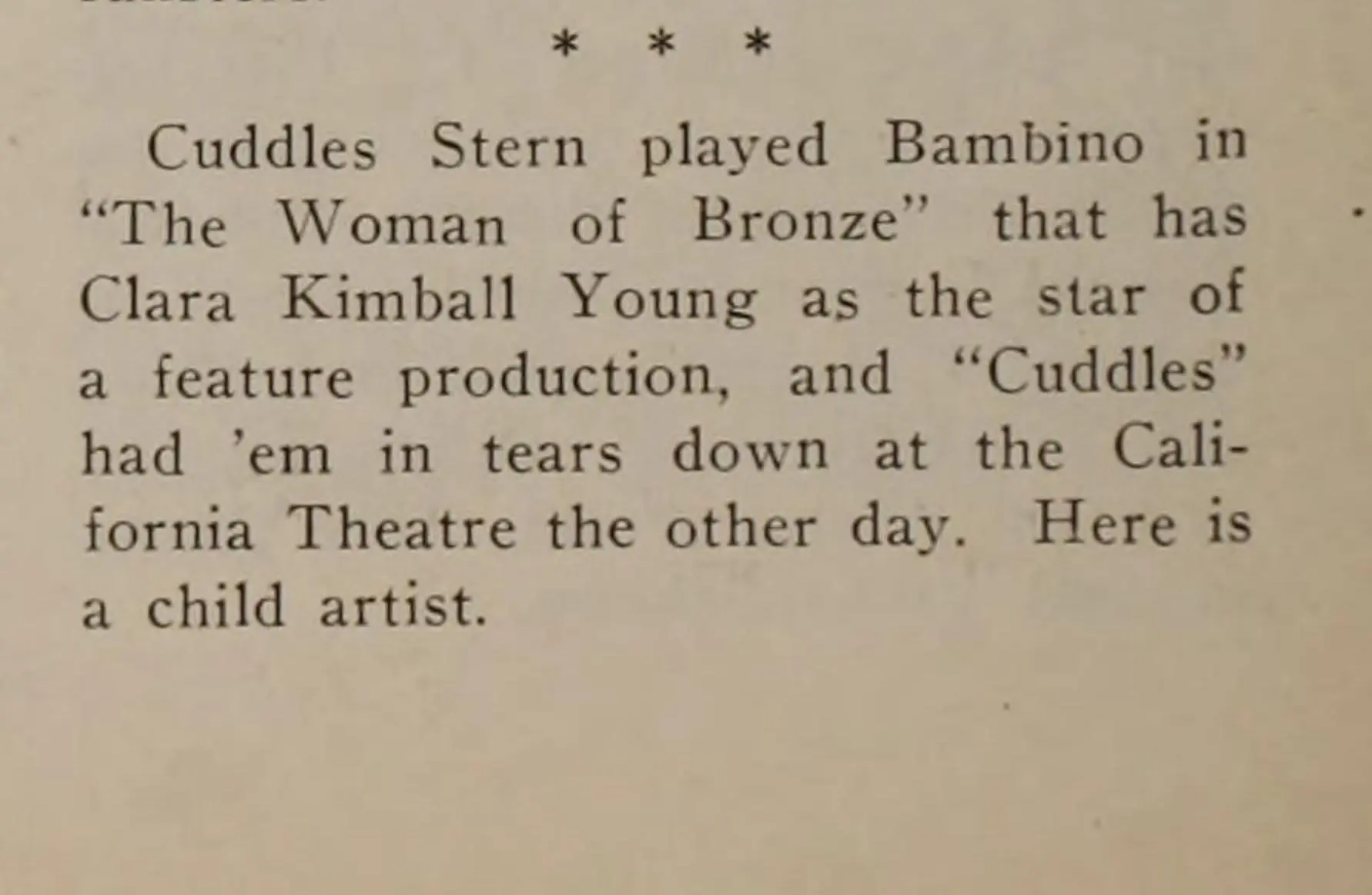
The screenplay, crafted by Louis D. Lighton, Henry Kistemaekers, and Hope Loring, demonstrates a sophisticated understanding of dramatic structure and character development. They manage to imbue the plot with a sense of inevitability while still allowing for moments of genuine surprise and emotional upheaval. The pacing, a crucial element in silent film, is handled with an expert hand, allowing scenes to breathe and emotions to register fully before moving on. The visual storytelling, characteristic of the era, is particularly effective in conveying the internal turmoil of the characters, relying heavily on facial expressions, body language, and carefully composed shots.
The ensemble cast truly elevates The Woman of Bronze beyond a mere melodrama. John Bowers, as Leonard Hunt, navigates the treacherous waters of artistic ego and personal weakness with commendable conviction. His portrayal of a man consumed by an almost adolescent infatuation, yet genuinely tormented by his actions, is nuanced. Kathryn McGuire, as Sylvia, brings a captivating blend of vulnerability and allure to her role as the muse turned lover. Her performance deftly communicates the complex position of a woman caught between her own burgeoning feelings and the devastating impact on another's marriage.
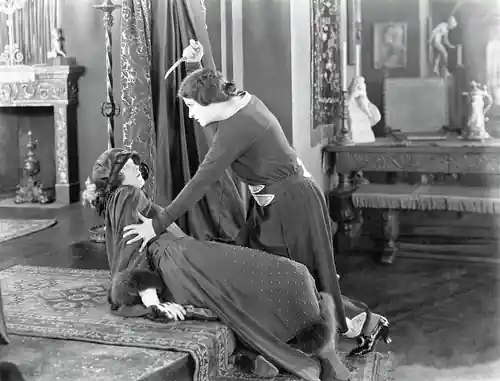
However, it is Clara Kimball Young who truly anchors the film. Her Vivian is a tour de force of silent acting. From the initial glimmer of pride in her husband's talent to the crushing weight of betrayal and the fierce determination to fight for her marriage, Young conveys a formidable range of emotions. Her performance is a masterclass in conveying inner turmoil through subtle gestures and powerful expressions. One might draw parallels between her character's desperate struggle to maintain her domestic sphere and the societal expectations placed upon women in films like The Woman Between Friends, where female characters often navigate complex relational dynamics within restrictive social frameworks.
While The Woman of Bronze stands strongly on its own merits, it also provides an intriguing lens through which to view the broader cinematic trends of its time. The film's preoccupation with marital infidelity and its dramatic consequences was a common theme in silent dramas, reflecting societal anxieties and evolving moral codes. Films like Notoriety or even the more action-oriented The Social Buccaneer, though different in genre, often explored characters grappling with societal expectations and the fallout of their choices. The heightened emotionality, characteristic of the period, is expertly deployed here, ensuring that the audience is fully immersed in the characters' plight.
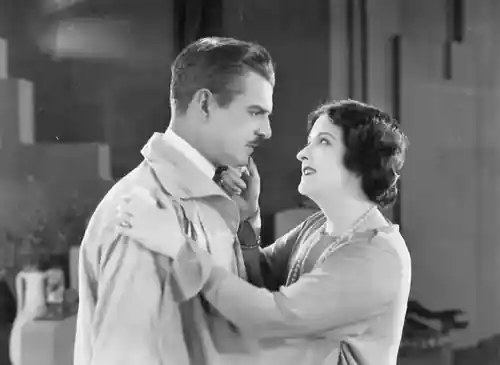
The visual language of silent cinema, often underestimated today, is powerfully articulate in The Woman of Bronze. Directors from this era, unburdened by dialogue, honed their ability to tell stories through composition, lighting, and the raw expressiveness of their actors. The contrast between the sterile grandeur of the sculptor's studio and the intimate, emotionally charged moments within it is particularly striking. The use of light and shadow often mirrors the internal states of the characters, casting a literal gloom over scenes of despair or illuminating moments of intense emotion.
In conclusion, The Woman of Bronze is more than just a historical artifact; it is a compelling piece of cinematic artistry that speaks to enduring human predicaments. Its exploration of the artist's temperament, the complexities of marital bonds, and the devastating ripple effects of personal choices remains as potent today as it was a century ago. The film serves as a powerful reminder of the rich storytelling capabilities of the silent era, demonstrating how compelling narratives and profound emotional experiences could be crafted without the aid of spoken words. For cinephiles and casual viewers alike, it offers a window into a pivotal period of film history, showcasing the talents of its cast and crew in delivering a drama that resonates with timeless themes.
The film's ultimate message, perhaps, is not one of condemnation but of understanding the intricate dance between passion and responsibility. Leonard Hunt's journey, from aspiring artist to remorseful lover, is a stark portrayal of how the pursuit of an ideal, whether artistic or romantic, can lead to unforeseen and often tragic consequences. It's a poignant meditation on the human heart's capacity for both soaring inspiration and profound self-destruction. The Woman of Bronze, much like the memorial it depicts, stands as a monument—not to war, but to the enduring, often tumultuous, landscape of the human soul. It's a film that deserves to be rediscovered and appreciated for its timeless artistry and its unflinching look at the complexities of love and loss.
IMDb 6.5
1923
Community
Log in to comment.