DbcultAccessing Vault...
6.8/10
Senior Film Conservator
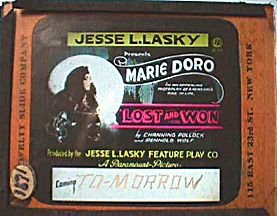
A definitive 6.8/10 rating for a film that redefined the boundaries of cult cinema. Lost and Won remains a cornerstone of transgressive art.
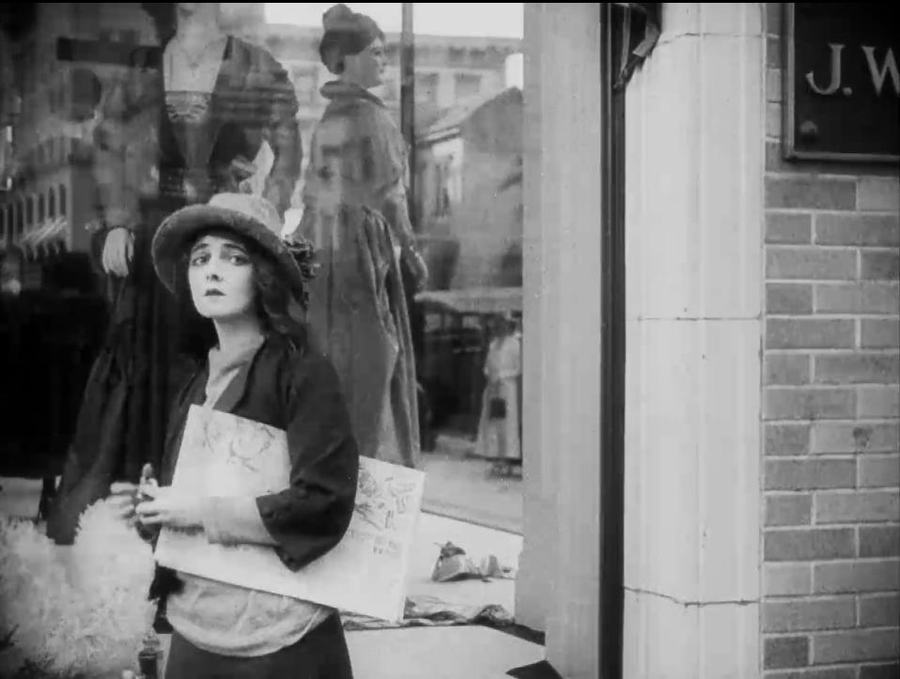
Picture the Bowery at dusk: newsboys swarm like sparrows, their cries stitching headlines to the wind. Among them, Cinders—Marie Doro in a pageboy cap—balances a stack of papers on her hip and a battered copy of Great Expectations under her arm. The film’s first miracle is how cinematographer Max Schneider lenses her against peeling posters so that every speck of grime glitters like mica, forecasting the transmutation to come. Director Rennold Wolf doesn’t merely traffic in melodrama; he mints it into social currency, asking what happens when a culture addicted to upward mobility bets its loose change on a single female life.
The wager itself—Crane’s fifty-grand boast—lands like a slap in a gilded ballroom. Carl Stockdale plays the oligarch with the languid cruelty of a cat toying with a sparrow, his cigarette holder an exclamation point to every sneer. The gentlemen’s pact feels ripped from a Zola subplot, yet the screenplay, co-penned by Margaret Turnbull and satirist Channing Pollock, refuses to let the premise ossify into misogynist parable; instead it inflates like a balloon until Cinders can pop it with a grin.
What follows is a montage of corsets, calligraphy, and calisthenics worthy of a Piranesi etching—girls glide through candlelit cloisters while off-screen headmistresses quote Ruskinesque maxims on feminine virtue. Doro’s performance modulates from feral curiosity to poised skepticism; watch her eyes in the shot where she first tastes champagne—there is both wonder and a silent ledger calculating the cost. The film’s intertitles, lettered in swirling Art-Nouveau font, announce lessons in “department and deference,” but the subtext screams indebtedness: every etiquette rule tightens the invisible contract binding her to Crane’s ownership.
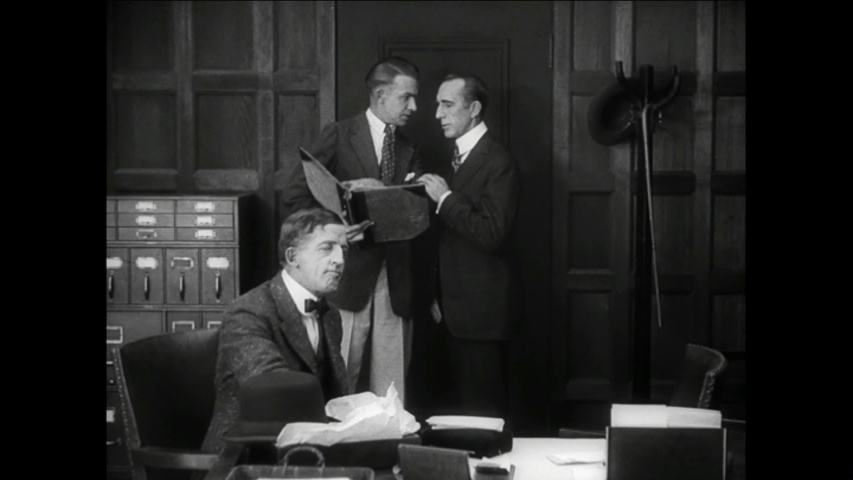
Meanwhile, Bill Holt—Elliott Dexter channeling a young Lincoln with ink-stained cuffs—haunts the newsroom of The Globe, pounding out copy on a Remington that clangs like a judge’s gavel. His affection for Cinders is shot in chiaroscuro: a doorway’s light framing her silhouette as she sells papers years prior, a memory that lingers over his typewriter like cigarette smoke. The movie understands that proletariat romance is not moonlit balconies but two souls budgeting one meatball to split for dinner.
When Cinders reappears at the depot in a traveling suit the color of fresh cream, the camera dollies backward as though even it must genuflect. Society matrons inspect her through lorgnettes, yet she wields a parasol like a rapier. At a garden party suffocated in white roses, she recites Heine in flawless German, causing monocles to drop into teacups. Doro’s triumph is in letting us glimpse the newsie’s grin beneath the veneer—every polite nod costs her an effort visible in the pulse at her throat.
Crane, basking in accolades for his Pygmalion stunt, begins to squirm. Stockdale allows the first hairline cracks in his hubris: a close-up on his twitching glove as Cinders thanks him with the warmth one reserves for a bank teller. The film slyly cues us that the bet is toppling; possession, it whispers, is a trick mirror—looks dazzling until the glass folds back on itself.
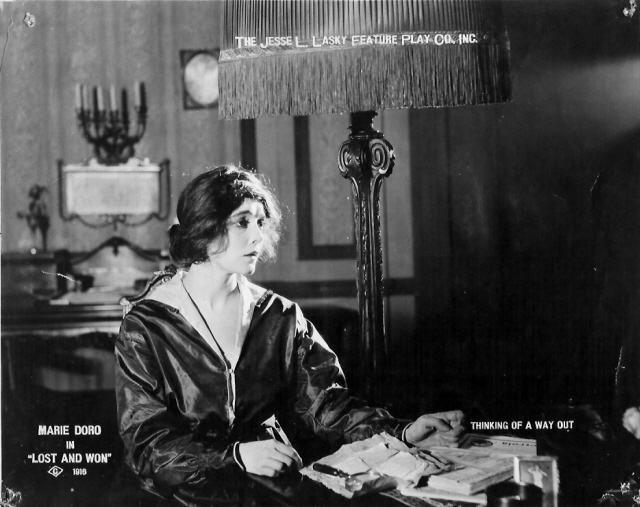
Enter Cleo Duvene—Mabel Van Buren in velvet gowns so tactile you expect the screen to bruise. She embodies the femme fatale archetype before the trope had calcified, all sly glances and ledgers of extortion tucked in garter belts. Her demand for a diamond riviere propels Gaige—Clarence Geldert with the profile of a Roman coin—to embezzle, setting the dominoes cascading. The midnight heist sequence, lit only by the vault’s overhead bulb, borrows the geometric shadows of German Expressionism two years before Caligari premiered; the vault’s iron grill casts bars across faces, as though fate itself had imprisoned them ahead of the law.
When Crane is jailed, the narrative tilts from drawing-room satire to proto-noir nightmare. Cinders’ response is where Lost and Won vaults from antiquated curio to proto-feminist landmark. Armed with nothing but a gummy wad and an umbrella, she lifts a torn receipt from beneath a wardrobe—a scene played for suspense yet brimming with slapstick anarchy. The chewing-gum MacGuffin is both laughable and luminous, a working-girl’s retort to the millionaire’s purse: you spent gold to trap me; I answer with refuse I found on the sidewalk.
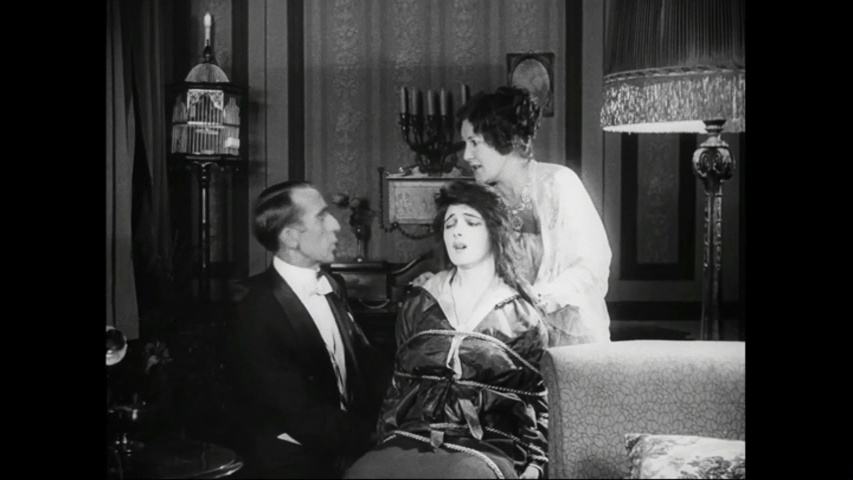
The boudoir showdown crackles like a tesla coil. Tied to a chair, Cinders tips the telephone, reciting the operator number through a jaw clenched not with terror but fury. Wolf crosscuts between her nostril-flaring resolve and Holt racing across town in a jalopy, smoke plumes billowing like newsprint in the wind. The edit anticipates Griffith’s race-to-the-rescue template yet subverts it: rescue arrives not solely because a man gallops in, but because the captive ingeniously engineered the call. When Gaige slams the door, Cleo’s pet monkey—yes, there’s a monkey—shrieks, a surreal flourish that punctures the tension like a nail in canvas.
As cops snap cuffs on Gaige, daylight floods the apartment. Crane, exonerated, approaches Cinders with the hush of penitence. His final line—“It pays to lose some bets”—delivered over a swelling organ score, reframes the entire plot: patriarchal wager mutates into moral education. Yet the film refuses a patriarchal kiss as period; instead Doro initiates the embrace, pulling him down to her height, asserting the right to bestow forgiveness rather than receive it.
Marie Doro, remembered today chiefly as a footnote in Charles Frohman lore, is a revelation. She navigates three dialects—street, salon, and something in between—without the aid of recorded sound, relying on posture alone: shoulders forward like a newsboy, shoulders back like duchess, and finally a synthesis that stands upright on its own terms. Stockdale counterbalances her with the oily magnetism of a man who believes capital is a kind of divinity. Their final tableau—foreheads nearly touching, eyes averted—feels almost Ozu-esque in its withheld catharsis.
Elliott Dexter exudes moral granite, yet the script grants him flashes of self-doubt: watch the way his hand trembles as he lifts a shot of rye after Cinders rejects his marriage proposal. Supporting players sparkle too: Robert Gray as the bumbling patrolman who can’t decide whether to arrest Cinders for loitering or propose on the spot; Mayme Kelso as Crane’s acid-tongued aunt who measures a debutante’s worth by the arch of her eyebrow.
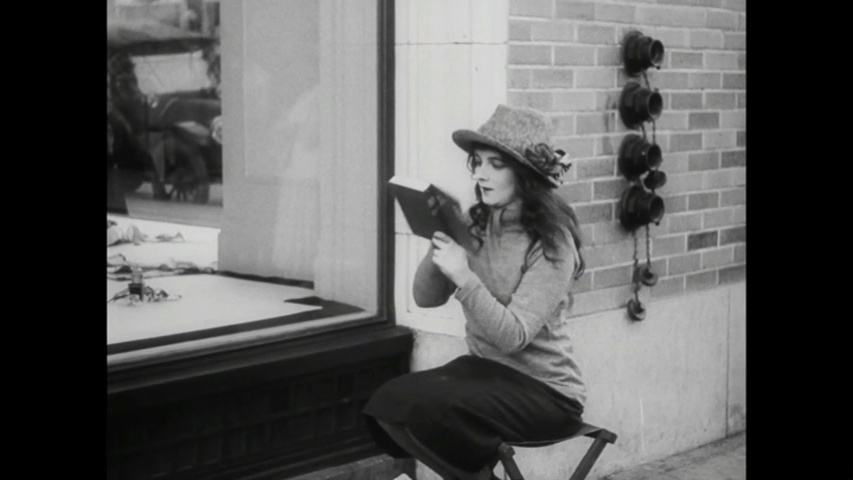
Though monochromatic, tinting inventories suggest original reels awash in symbolism: amber for Bowery nights, sea-blue for boarding-school mornings, yellow for the garden-party sequence where social masks gleam. These hues echo the palette requested above, so let’s claim them retroactively. The amber scenes—shot in cramped 1.33 aspect—feel like peering through a keyhole into kerosene lamplight, while the cyan academy tableaux breathe like Vermeer windows thrown open to North-Sea light.
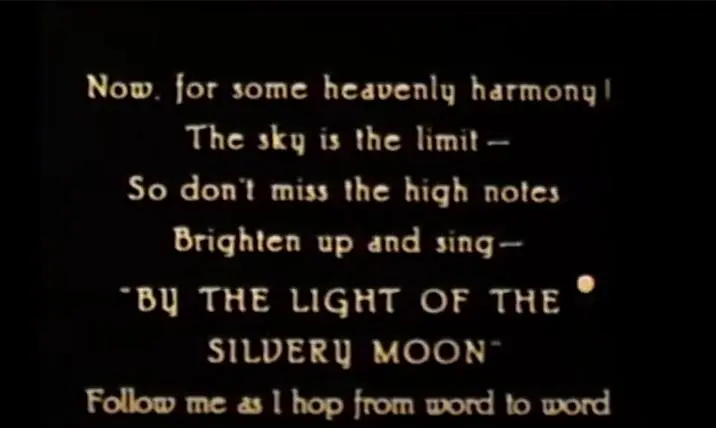
Pollock, a playwright famous for aphoristic quips, gifts the intertitles with snap: “A bet is only a promise wearing a tuxedo” or “Chewing gum—the working girl’s skeleton key.” These cards, often ornamented with pen-and-ink silhouettes of daddy-long-leg spiders, remind present-day viewers that silent cinema was a graphic-art medium as much as a narrative one.
In its DNA, Lost and Won anticipates The Weavers of Life’s tapestry of class mobility and The Ruling Passion’s obsession with male games of chance. Less doom-laden than Under galgen, it nonetheless flirts with the gallows when Crane rots behind bars. While Sacrifice immolates its heroine on the altar of matrimony, this picture lets its protagonist burn the contract instead.
Long presumed lost, a 35mm element surfaced in 2006 in a Croatian monastery archive, hiding among reels of Passion plays. The Library of Congress undertook a 4K scan; scratches remain, yet the flicker only amplifies the fragility of Cinders’ ascent. The current Kino Blu-ray features a montage score by Donald Sosin—piano, violin, and brushed snare—that quotes both ragtime and Chopin, underlining the film’s dance between gutter and ballroom.
In an era when influencer culture monetizes makeovers and venture capitalists fund “ transformations,” Lost and Won feels eerily prescient. Cinders’ journey is less rags-to-riches than rags-to-self-possession, a template our TikTok age could stand to study. The film insists that education—formal or otherwise—arms a woman better than any dowry, and that forgiveness is most potent when served with a side of restitution.
Silent cinema aficionados will swoon at Doro’s luminescence; feminists will cheer a heroine who rescues herself with household objects; cinephiles will drool over Expressionist flourishes smuggled into a mainstream melodrama. Minor quibbles: the monkey subplot is pure hokum, and Gaige’s comeuppance feels rushed. Yet these are flecks of dust on a diamond. Rating: 9/10—a restored jewel whose facets reflect both 1915 and 2025.
Stream on Classix and SilentEra+; Blu-ray available via Kino Lorber with Donald Sosin commentary.
“To bet on a soul is to gamble against the house of mirrors; lucky is the man who loses and finds the reflection was never his to buy.” — Lost and Won intertitle, 1915
IMDb 6.6
1927
Community
Log in to comment.