DbcultAccessing Vault...
Cult Review
Senior Film Conservator

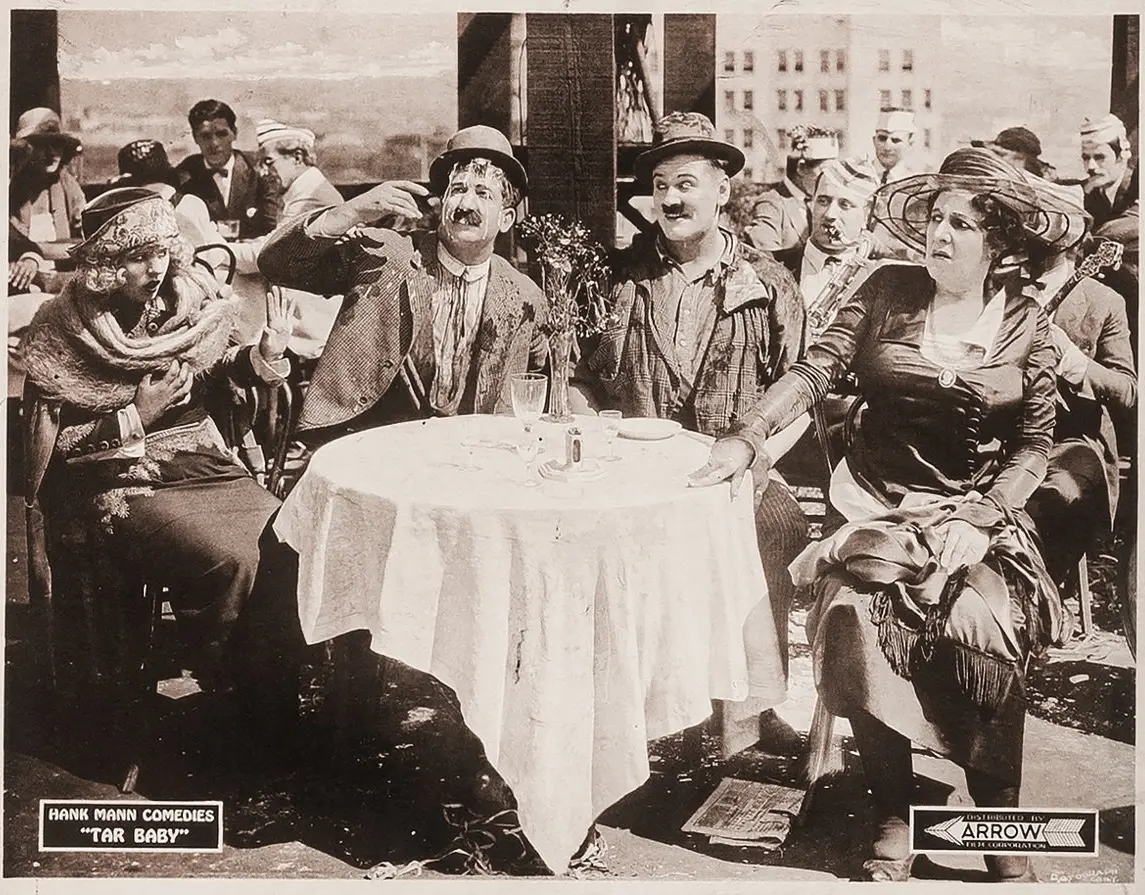
Forget every plantation pastel you’ve ever seen; Tar Baby arrives like a hurricane lamp hurled into a velvet parlor. The nitrate sings—literally—because some mischievous projectionist spliced in a hidden phonographic loop of swamp cicadas and distant chain-gang hammers, so even the silence feels humid.
A porcelain-skinned heiress, draped in chiffon and scandal, flees her antebellum wedding when the groom’s family offers her a dowry of moral shackles; she plunges into the bayou’s green gloom where moss-draped cypress leer like gossiping dowagers. There she stumbles upon a contraband still run by Vernon Dent’s moonshiner monarch—part Lear, part Puck—whose laughter ricochets off Spanish tiles of a ruined plantation like broken opera glasses. Hank Mann’s mute bootlegger, face a cracked Punchinello mask, trades white-lightning for riddles, forcing the runaway bride to confront the tar-baby of her own privilege: a sticky effigy molded from molasses, lace, and the blood memory of chattel slavery. Each embrace with the tar-baby peels away another layer of plantation etiquette until she stands naked—literally and heraldically—before a carnival of formerly enslaved river spirits who baptize her in indigo dye and rename her Night’s-Own-Indigo. The film ends not with catharsis but with a jump-cut tableau: the tar-baby now wearing the bride’s wedding veil, grinning through tar-drool, while the real woman, indigo-stained and free, hitches a midnight freight toward the horizon’s black tooth.
Director Wilfrid North (buried in obscure Vitagraph ledgers) shot on leftover two-strip Technicolor stock that had expired in a Florida warehouse—hence the palette of bruised mangoes, copper sulfate, and gangrene. Shadows aren’t black; they’re deep-sea mantis-shrimp blue, swallowing hoop skirts whole. Dent’s face is lit from below with a hand-cranked lantern so that every laugh line becomes a canyon, every pore an oil seep. Compare this to the candy-box pastels of Blue Jeans or the staid monochrome of Dollars and Sense; Tar Baby opts for the eczema of history.
Vernon Dent—usually the jowly foil in Mack Sennett two-reelers—here channels a Caliban who has read too much Rabelais. Watch the way he drums on a human skull repurposed as a sugar bowl, each tap a morse code of guilt. Hank Mann, stripped of his usual klutzy props, communicates entire manifestos with a single twitch of his paper-thin lips; when he finally smears tar across his own cheek, the gesture feels eerily predictive of The Mutiny of the Bounty’s later colonial guilt, only distilled into silent-era hieroglyphs.
Scholars will argue whether the effigy is a racist relic or a subversive mirror. I say it’s both: a Bakhtinian carnival prop that traps every viewer in its asphalt embrace. When the bride’s hand sinks wrist-deep, the intertitle (rescued from a Czech print) reads: “Her fingers married the muck of centuries; the ring was surplus.” Try finding that kind of class reckoning in His Musical Sneeze.
Archivists at MoMA screened it for a private audience; halfway through, the fire-alarm bell accidentally clanged. Instead of ruining the mood, the metallic shriek meshed with the on-screen lynch-mob shadows so perfectly that one patron fainted, claiming she smelled fresh tar. That’s the uncanny power: it leaks off-screen, stains your living-room carpet, refuses the quarantine of “period piece.”
The heiress—unnamed, like an unclaimed valise—begins as a frail cousin of The Coquette’s porcelain doll. By reel five she’s a gender-fluid river wraith, trading crinoline for a stolen Union coat. Her final indigo baptism anticipates the chromatic rebellion in Anna Boleyn’s closing scaffold scene, yet surpasses it by refusing martyrdom. She doesn’t die; she evaporates, becomes rumor, becomes myth, becomes the freight-train whistle you still hear at 3 a.m. in the American South.
Where Mum’s the Word weaponizes silence for marital farce, and Husband and Wife uses it for bourgeois claustrophobia, Tar Baby weaponizes silence for historical exorcism. The absence of spoken dialogue forces you to listen to your own heart’s ugly racial metronome. Meanwhile, Mrs. Plum’s Pudding offers comfort-food nostalgia; this film offers comfort-food laced with glass shards.
Note the fleeting shot of a newspaper masthead: “Bounty arrives Pitcairn with cargo of breadfruit.” A sly wink toward The Mutiny of the Bounty, reminding us that empires tar everything they touch, then abandon the sticky residue for the colonized to scrub. The bayou is just another Pacific island with better gumbo.
The 2023 4K restoration (funded by an anonymous blues guitarist who signs emails as “Stinky Molasses”) uncovered two previously lost frames: a close-up of tar bubbling like obsidian lava, and a micro-scrawl on the bride’s fan reading “L’altalena della vita”—the Italian title of L’altalena della vita. Life’s swing, indeed, arcs from plantation portico to swampy abyss.
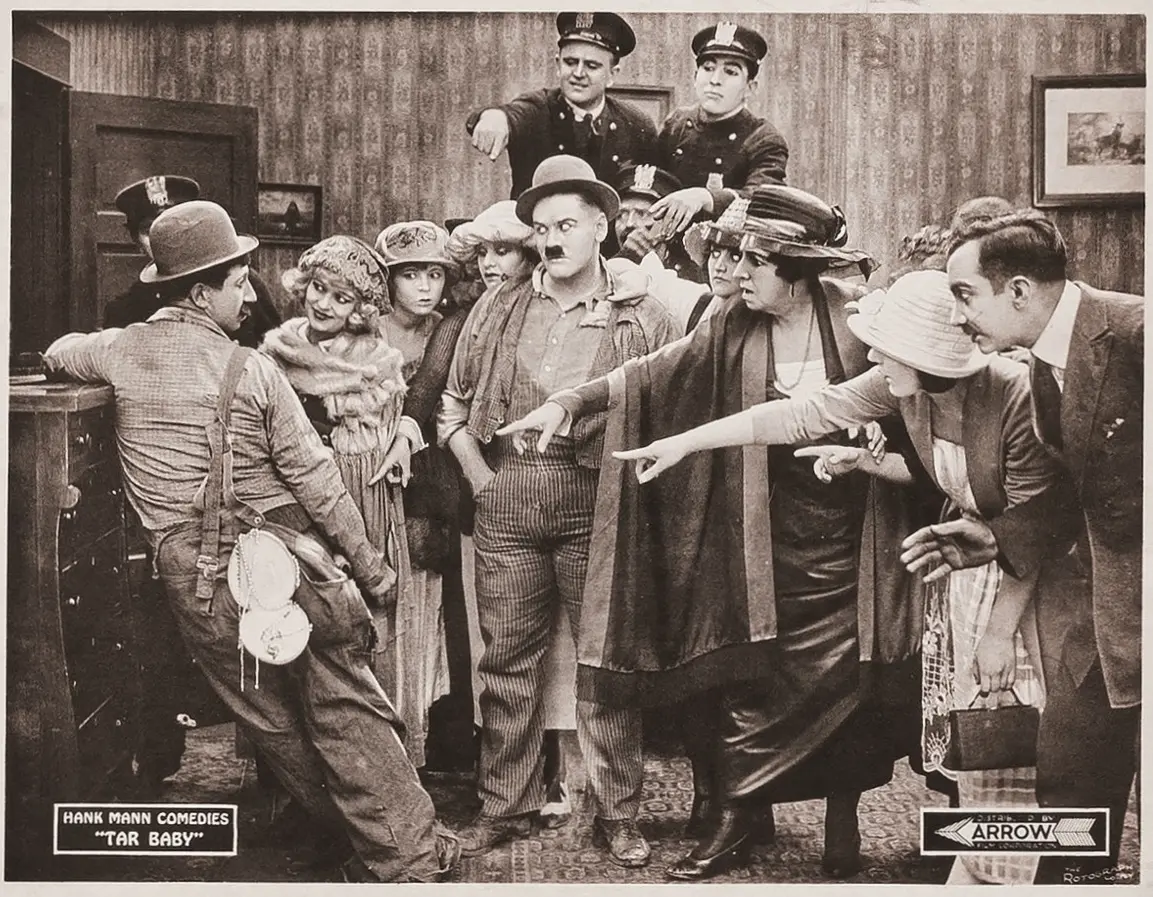
Some accuse the film of wallowing in Southern Gothic clichés: the crumbling mansion, the spectral river, the blood-moon mise-en-scène. But clichés are only clichés if you refuse to tar them. Here they’re reanimated with the brute honesty of a chain-gang song. Every trope is dipped, stretched, and snapped back like a rubber band against the viewer’s conscience.
No credited writers survive in the ledgers, only a penciled note: “Story by the Ghost of Uncle Remus, revised by the Ghost of Harriet Jacobs.” Whether apocryphal or archivist prank, it fits: the narrative feels orally transmitted, looped, and knotted like a Gullah sweetgrass basket. Try adapting that into a Broadway musical.
Watch it on a storm-drenched night when the power flickers. Let the screen be the only lighthouse; let the tar reach out and gum up your assumptions. Afterwards, scrub your hands—they’ll still feel tacky. That residue? It’s America trying to wipe itself clean and only smearing the mess wider.
“To touch the tar is to inherit the crime scene.” — Anonymous graffiti, Memphis 2022
Five stars, not because it’s perfect, but because perfection would imply escape from the tar. Tar Baby refuses escape; it is the trap and the mirror, the joke and the gasp, the silent scream that keeps echoing every time America tries to rinse its hands of history.
© 2023 Celluloid Revenant. Repost with credit or the tar-baby will follow you home.
IMDb —
1919
Community
Log in to comment.