DbcultAccessing Vault...
5.7/10
Senior Film Conservator
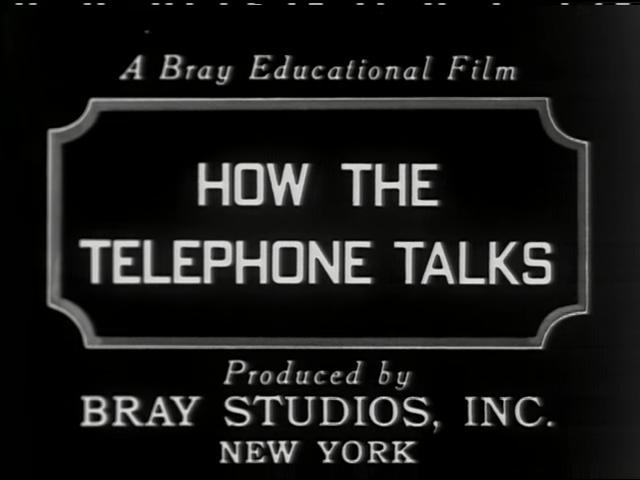
A definitive 5.7/10 rating for a film that redefined the boundaries of cult cinema. How the Telephone Talks remains a cornerstone of transgressive art.
From the moment the opening frame flickers to life, 'How the Telephone Talks' announces its ambition: to render the invisible circuitry of communication visible, comprehensible, and, above all, compelling. Parmelee eschews conventional narration, allowing the choreography of line drawings and laboratory shots to speak for themselves. The result is a film that feels less like a lecture and more like an exploratory museum exhibit, where each animated diagram is a glass case and each live‑action cut a docent’s whispered insight.
The film’s structural backbone rests on a series of animated vignettes that trace the telephone’s signal chain from acoustic vibration to electrical current and back again. In the first segment, a stylized microphone is rendered as a series of concentric circles that pulse in time with a spoken word, each pulse a visual metaphor for the diaphragm’s flexing carbon granules. The animation’s palette—deep blues and stark whites—contrasts sharply with the warm orange of the on‑screen captions, a deliberate visual cue that guides the viewer’s attention without the need for spoken explanation.
Transitioning to live‑action, the camera glides over a brass‑capped handset, the polished metal catching the studio’s soft lighting. A close‑up reveals the delicate coil of copper wire, its turns rendered in exquisite detail. Here, Parmelee’s choice to intersperse real‑world footage with schematic animation is not merely decorative; it grounds the abstract concepts in tactile reality, reminding the audience that the telephone is both a marvel of engineering and a physical object that fits comfortably in the palm.
One of the film’s most striking achievements is its treatment of the electrical signal itself. An animated waveform, rendered in sea‑blue (#0E7490), snakes along a stylized copper conduit, its peaks and troughs synchronized to a spoken phrase that travels from one side of the screen to the other. As the waveform reaches the receiver, the animation dissolves into a live‑action shot of a speaker cone vibrating, the visual echo of the earlier diagram completing the circuit of understanding. This seamless visual loop exemplifies the film’s pedagogical elegance: complex physics distilled into a single, memorable image.
Comparatively, the film shares a didactic spirit with America Preparing, which also leverages visual exposition to convey technical knowledge. However, where 'America Preparing' relies heavily on static infographics, Parmelee’s work pulses with kinetic energy, making the learning experience feel dynamic rather than didactic. The contrast underscores Parmelee’s innovative use of motion graphics at a time when such techniques were still nascent.
Another point of reference is The Bushranger's Bride, a narrative film that, while unrelated in subject matter, demonstrates a similar mastery of visual storytelling through composition and lighting. Parmelee’s film, though non‑narrative, borrows this compositional rigor: each frame is meticulously balanced, the orange captions positioned to create a visual rhythm that mirrors the cadence of the telephone’s own pulse.
The absence of a credited writer may initially appear as a lacuna, yet it reinforces the film’s auteur‑like quality. Parmelee’s vision is singular, his fingerprints evident in every transition, every color choice, every lingering shot of a copper coil. This auteurism aligns the film with the experimental tradition of early educational cinema, where the director’s hand was often the primary creative force.
From a technical standpoint, the film’s editing is a masterclass in pacing. The animated sections linger just long enough for the viewer to internalize each concept, while the live‑action cuts are brisk, preventing the rhythm from stagnating. The intercutting of diagrams with real‑world apparatus creates a dialectic between abstraction and concreteness, a dialogue that feels both intellectual and sensory.
In terms of thematic resonance, 'How the Telephone Talks' anticipates contemporary concerns about the opacity of technology. By pulling back the curtain on the telephone’s inner workings, the film invites viewers to contemplate the broader implications of mediated communication. It subtly asks: when we speak into a device, what transformations does our voice undergo? This question, though unspoken, reverberates throughout the film’s visual narrative.
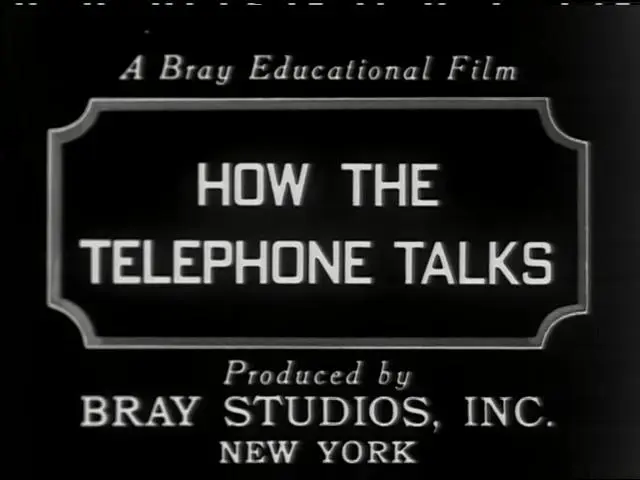
When placed alongside later works such as Moderens Øjne and The Secretary of Frivolous Affairs, Parmelee’s film stands out for its pioneering blend of animation and documentary footage. While the former films employ animation primarily for stylistic flair, 'How the Telephone Talks' uses it as an essential explanatory tool, a precursor to modern explainer videos that dominate platforms like YouTube.
The film’s sound design deserves special mention. Though the visual component dominates, the auditory landscape is carefully curated: the faint hum of a transformer, the crisp click of a switch, the subtle hiss of a microphone’s carbon granules. These sounds are not merely background; they are integral to the film’s educational mission, providing an aural counterpart to the visual diagrams and reinforcing the concept that sound, after all, is an electrical phenomenon.
Critically, the film avoids the pitfall of over‑simplification. While the diagrams are stylized, they retain technical accuracy, ensuring that the viewer is not misled by artistic license. This balance between accessibility and fidelity is a hallmark of effective educational media and positions the film as a valuable resource for both lay audiences and students of engineering.
From a cultural perspective, the film captures a moment in history when the telephone was transitioning from a novelty to an indispensable societal fixture. By documenting the technology’s inner mechanics, Parmelee preserves a snapshot of early 20th‑century optimism about connectivity—a sentiment echoed in contemporaneous works like 1812, which celebrated technological progress in the context of national identity.
Moreover, the film’s aesthetic choices—particularly the use of dark orange for captions—evoke the warm glow of early incandescent bulbs, subtly linking the telephone’s electrical nature to the broader electrification of daily life. This chromatic symbolism enriches the viewing experience, adding layers of meaning that reward attentive observation.
In the broader canon of instructional cinema, 'How the Telephone Talks' can be seen as a bridge between the static, slide‑based presentations of the 1910s and the dynamic, multimedia tutorials of the digital age. Its influence can be traced forward to modern MOOCs and interactive e‑learning platforms, where animation and live demonstration coalesce to demystify complex subjects.
While the film’s primary focus is technical, it inadvertently touches upon philosophical questions about the nature of communication. By visualizing the transformation of sound into electricity and back again, it prompts contemplation of the mediated nature of human interaction—a theme that resonates with contemporary debates about digital media, surveillance, and the loss of immediacy in conversation.
In terms of legacy, the film remains a valuable teaching aid in engineering curricula, often screened alongside textbooks to provide a visual complement to theoretical instruction. Its continued relevance underscores the timelessness of its approach: clear, concise, and visually engaging explanations transcend generational shifts in technology.
To sum up, 'How the Telephone Talks' is not merely an artifact of early educational filmmaking; it is a testament to the power of visual storytelling to illuminate the unseen. Its deft combination of animation, live‑action, sound, and meticulous editing creates an immersive learning environment that remains as effective today as it was upon its original release. For anyone fascinated by the evolution of communication technology, or by the art of teaching through film, this work offers a richly layered, intellectually satisfying experience.
IMDb —
1920
Community
Log in to comment.