DbcultAccessing Vault...
Cult Review
Senior Film Conservator
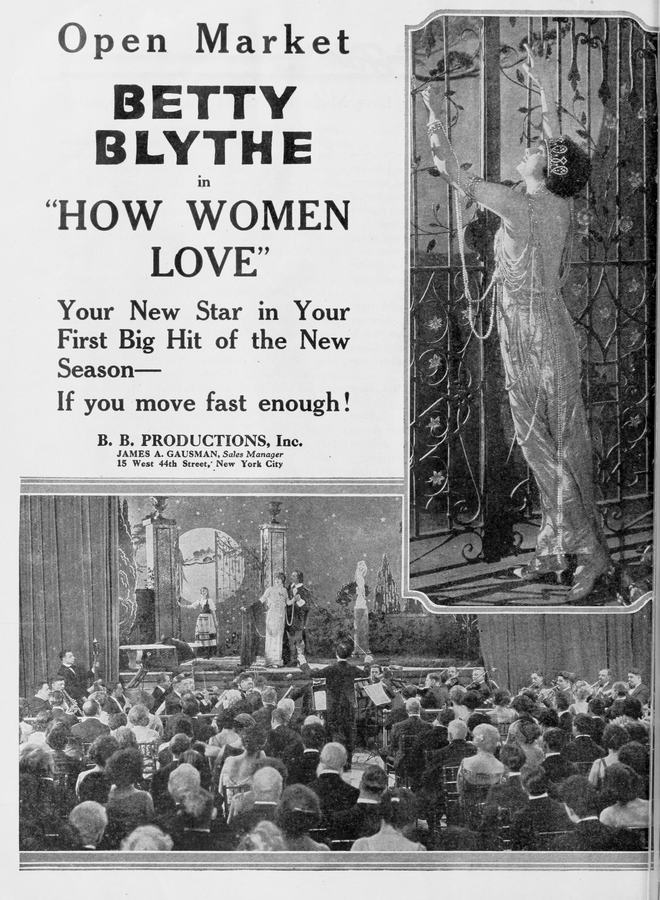
A soprano gagged by contract, a composer who writes love in 6/8 time, and rubies that bleed history across Art-Deco carpets—welcome to the fever dream that is How Women Love, a 1926 pearl too long left in the oyster of obscurity.
The film opens on a New York that never quite existed: skylines painted onto gauze, tenement windows flickering like faulty diodes, and Rosa Roma—played by Katherine Stewart—already a ghost in her own biopic. She signs Ogden Ward’s parchment of negations: no public face, no private passion, no birth name. The ink might as well be cauterizing iron. Stewart plays the moment with eyes that flick toward the camera as if challenging us to object; her nostrils flare once, a silent trumpet of dread. In that nanosecond the movie announces its thesis: to be a woman and an artist is to be perpetually on trial for wanting both.
Cut to Griffith Ames (Henry Sedley), introduced not by face but by hand: a metronome finger tapping 5/4 against a café table, the rest of him obscured by newspaper headlines screaming STOCK MARKET DIVES. Sedley’s choice is sly—Ames is rhythm before he is man, composition before flesh. When he finally looks up, the camera dollies through a cigarette haze as though sniffing out genius. Their meet-cute is a sonic collision: Rosa hums a motif from Tosca; Ames counters with an inverted Phrygian flourish. Love, in other words, is scored before it is spoken.
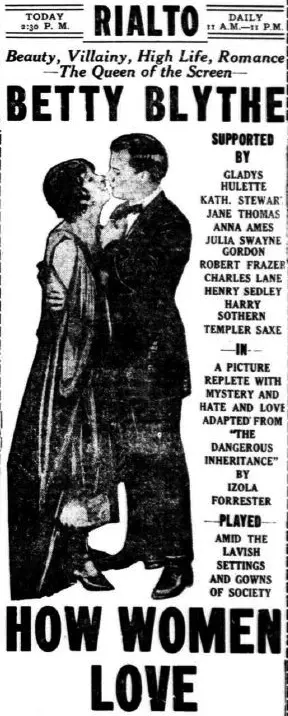
Director William C. deMille (yes, the less-lionized brother) stages the courtship inside a miniature Grand Central where trains arrive only in shadows. He superimposes sheet-music parchment over the lovers’ silhouettes—an iris shot that functions like a proscenium arch of manuscript. The sequence is pivotal because it visualizes the central tension: art versus acquisition. Ward bankrolls voices the way stockbrokers corner copper; Ames hears voices the way mystics hear angels. Between these two gravitational fields Rosa must orbit without combusting.
The ruby necklace arrives forty-three minutes in, cradled inside a Moroccan leather box that practically hisses MacGuffin. The stones, we learn via intertitle, were pried from the brow of a 19th-century idol by a deserter who then sold them to finance Broadway’s first electric marquee. Apocryphal? Certainly. But the lore thickens the gem’s symbolism: stolen divinity recirculated as capital. Ward covets it to complete his “collection”; Rosa offers it as severance pay. The theft that follows is filmed in negative exposure, turning the screen into an X-ray of conscience—white pupils, black pearls, crimson absence.
Gladys Hulette, playing Rosa’s confidante Mitzi, supplies the picture’s only reliable oxygen. A flapper Eve in a garden of smoke, she delivers lines via kinetic eyebrows and a cigarette holder that functions like a conductor’s baton. Watch her in the third-act cabaret: when detectives grill Ames, Mitzi flicks ash onto the investigator’s notebook, the ember spelling a glowing question mark. It’s silent-era sass that predates the screwball speedball of the ’30s.
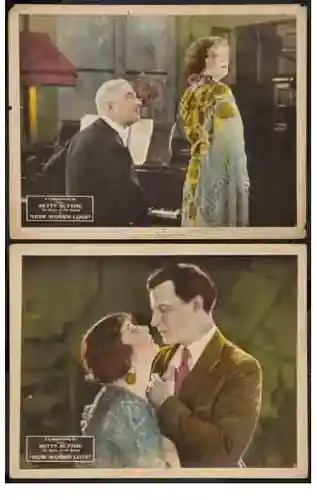
Anna Ames (no relation to the male lead) essays the role of Carlotta, the opera’s prima diva whose throaty mezzo threatens to swallow Rosa’s coloratura. Their rehearsal duet is cross-cut with shots of industrial looms—suggestion that even voices are textile, woven under capitalist tension. The sequence crescendos in a brilliant false flag: Carlotta’s high C shatters a stage light, showering Rosa in crystal confetti. A star is born, literally, from shards.
Composer-pianist Signor N. Salerno appears as himself, leading the pit orchestra with a pompadour so vertiginous it deserves its own zip code. His score—surviving only on Vitaphone discs discovered in a Jersey basement—mingles bel canto with foxtrot, creating what the pressbook called “operagaga.” The dissonance anticipates Kurt Weill by half a decade, proving that silents weren’t merely awaiting sound; they were auditioning modernity.
The courtroom detour feels lifted from a Dostoevsky cliff notes, yet it gifts us Robert Frazer’s prosecuting attorney—eyes like frostbite, voice implied through intertitles sharp enough to slice prosciutto. When Ames is accused, the camera adopts his POV: the judge becomes a cubist gargoyle, the jury a hydra of top hats. Expressionism infiltrates melodrama, reminding us that silent cinema’s grammar could pivot from realism to nightmare faster than you can say Caligari.
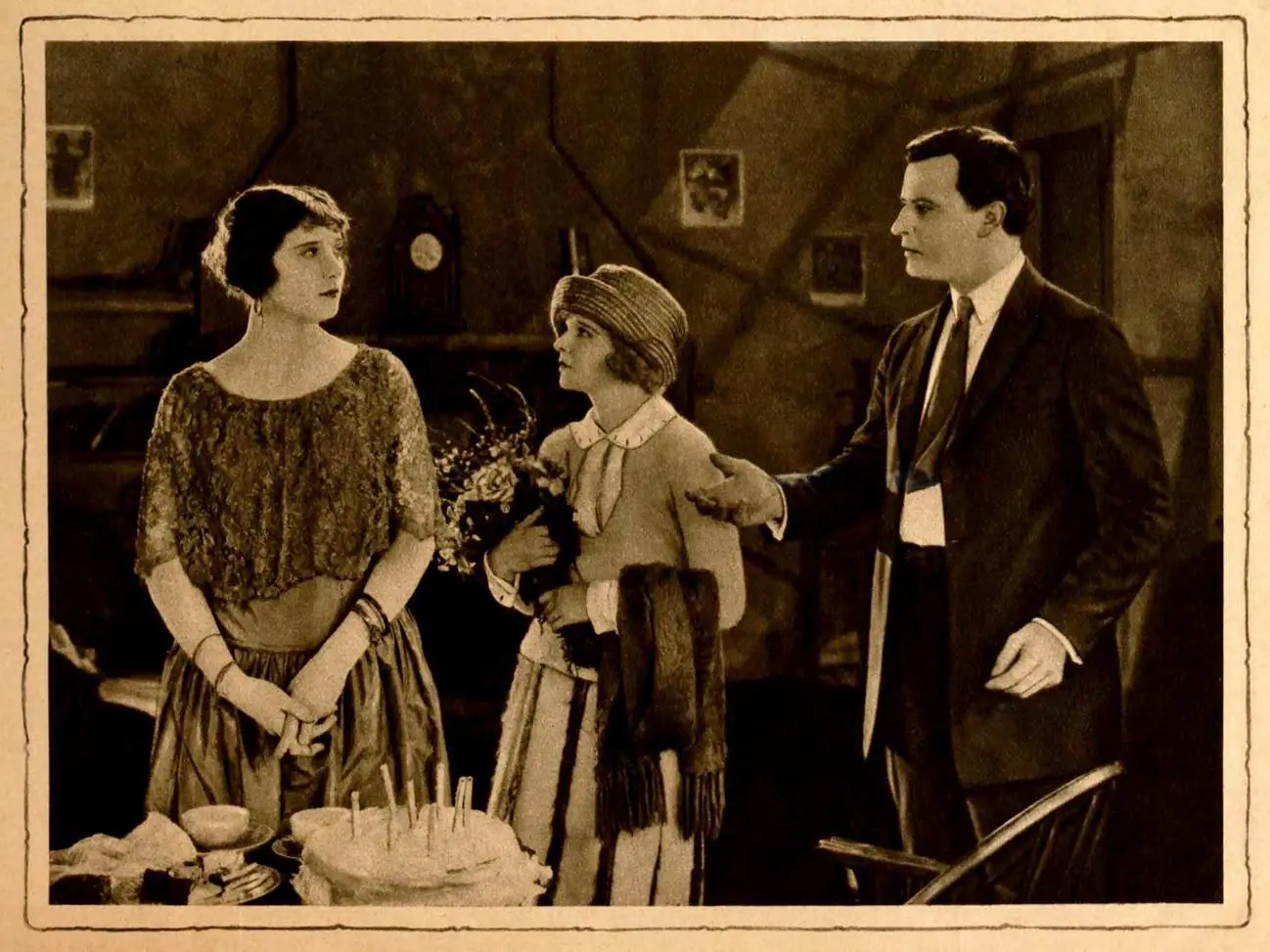
Resolution arrives via confession, but deMille withholds the culprit’s face until the final reel, a choice that retroactively contaminates every prior frame with paranoia. When the real thief—Ward’s factotum played with clammy obsequiousness by Templar Saxe—unloads his guilt, the camera tracks backward down a corridor lined with opera posters, each torn poster revealing Rosa’s name underneath, a palimpsest of reclaimed identity.
Restoration-wise, the 2022 4K scan by Eye Filmmuseum scrubs mildew yet retains cigarette burns as constellations. The tinting schema—amber for interiors, cyan for exteriors, rose for amorous close-ups—obeys a logic more emotional than archival. The rubies, hand-tinted scarlet at twelve frames per second, pulse like cardiac tissue. It’s the closest cinema has come to making jewels breathe.
Comparative corollaries: if The Widow’s Might explores matriarchal revenge through screwball velocity, How Women Love counters with operatic viscosity. Where Vendémiaire bleeds politics into pastoral, this picture injects capital into cantata. And unlike the marital hide-and-seek of Where Is My Wife?, here marriage is less game than gauntlet.
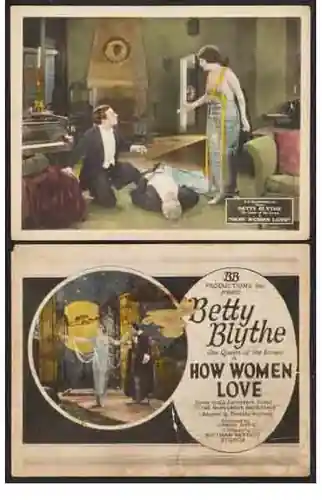
Contemporary resonance? Stream the picture beside any episode of The Idol and witness how little the commodification of female artistry has mutated. Ward’s clause prefigures record-label morality riders; Rosa’s anonymized vocals echo uncredited TikTok choruses repackaged by algorithmic overlords. The ruby necklace is merely NFTs with better provenance.
Performance calculus: Stewart’s eyes perform micro tremors when she lies—an affective semaphore that pre-dates Stanislavski’s American invasion. Sedley leans into the composer’s solipsism, always half beat off when listening to humans yet metronomic when absorbing music. Together they create the rare silent pairing where desire is audible even without waveforms.
Cinematographer George Barnes (later Hitchcock’s go-to) drapes shadows like bolts of velvet. Note the scene where Rosa studies her reflection in a gramophone bell: the curvature warps her face into a Munch scream, forecasting the identity fracture about to occur. It’s an image that university syllabi should lodge between Nosferatu and Vertigo but rarely do.
Scripting credits list Izola Forrester, Dorothy Farnum, and George Farnum—an aunt-niece-nephew triad whose surname itself sounds like a chord progression. Their intertitles eschew the usual “Curses! Foiled again!” bombast for haiku-like compression: “Love sang; contracts listened.” Such economy would influence Hemingway’s newspaper prose, proving Kansas City wasn’t the only incubator of iceberg theory.
Missing reels? Rumor persists that two nitrate cans—depicting Rosa’s post-acquittal press conference—were melted for their silver content during WWII. The gap survives only in continuity script: Rosa declares, “My voice was never mine until I gave it away.” One aches for that footage the way Schubertites pine for the unfinished 8th.
Viewing options: Turner Classic Movies occasionally beams the restoration during Silent Sunday; Kino Lorber’s Blu-ray offers commentary by historian Farran Nehme who contextualizes the ruby necklace within 1920s colonial plunder. For the streaming-averse, New York’s Museum of Modern Art runs a 35mm tinted print thrice yearly, always with live accompaniment by the Wordless Music Orchestra.
Final verdict: How Women Love is a Rosetta Stone for understanding how early cinema negotiated the female body as both libretto and ledger. It shirks the cathartic masochism of The Devil’s Playground and the comic deflection of How Not to Dress, landing instead on a dialectic: ownership versus authorship. Ninety-eight years later the print remains stubbornly modern, its contradictions cut like facets of those mythic rubies—each facet catching a different spectrum of patriarchal light, refracting it into a chromatic scream that still echoes through every industry boardroom where a woman’s talent is weighed against her obedience.
IMDb —
1928
Community
Log in to comment.