DbcultAccessing Vault...
Cult Review
Senior Film Conservator
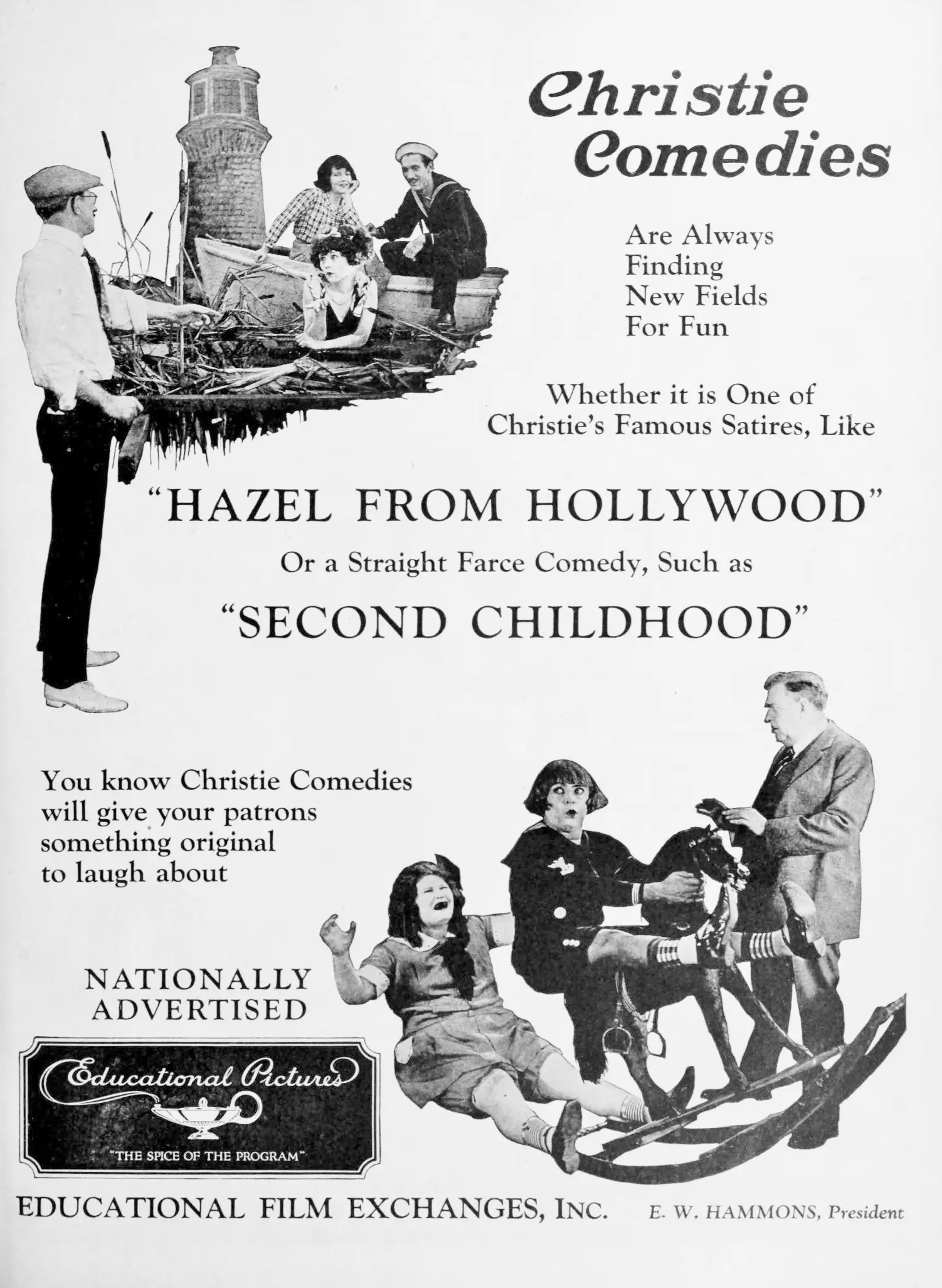
When the silent era birthed a cascade of pratfalls and pantomime, few films dared to interrogate the very mechanics of pretense as boldly as Second Childhood. Directed by the understated Frank Roland Conklin, the picture positions itself at the crossroads of slapstick and social satire, inviting viewers to witness a laborer’s reluctant metamorphosis into an infant prodigy. The premise, deceptively simple, unfolds with a kinetic energy that feels both timeless and startlingly contemporary.
At the heart of the narrative lies Jimmie (Earle Rodney), a down‑to‑earth everyman whose earnest demeanor makes him the perfect pawn in Jack’s (Bobby Vernon) elaborate scheme. Jack, a smooth‑talking opportunist, has convinced his wealthy uncle that he is the caretaker of a non‑existent son, Oscar, whose supposed medical needs demand a regular allowance. The film’s inciting incident occurs when Jack, realizing his ruse teeters on the brink of exposure, implores Jimmie to don the mantle of infanthood.
Rodney’s performance oscillates between exaggerated infant gestures and moments of palpable anxiety, creating a layered portrait of a man forced to inhabit a role that contradicts his very essence. The audience watches as Jimmie, armed with a pacifier and a pair of oversized booties, navigates a world designed for the truly helpless. Each scene is meticulously staged: a kitchen where Jimmie must feign a gaggle of baby babble while avoiding the ever‑watchful gaze of the uncle, a garden where a tumble‑down fence becomes a metaphor for the fragile boundary between truth and artifice.
Rodney’s physical comedy is a masterclass in timing. He leverages the camera’s static framing to accentuate the absurdity of an adult’s clumsy attempts at infantile grace. When he attempts to crawl across a polished parquet, his limbs flail in a choreography that feels both deliberate and spontaneous, eliciting laughter while underscoring the underlying desperation of his charade.
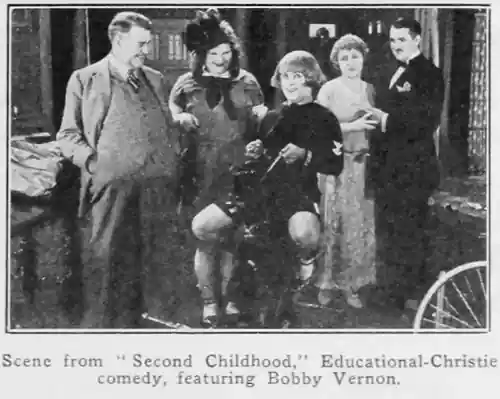
Bobby Vernon, as Jack, provides a counterpoint of slick confidence. His eyes constantly flicker between the uncle and his accomplice, conveying a cunning that words could never articulate. The chemistry between Rodney and Vernon is palpable; their silent exchanges—glances, sighs, a shared shrug—communicate volumes about the precariousness of their alliance.
Supporting players such as Babe London (the compassionate housemaid) and Charlotte Stevens (the skeptical aunt) enrich the tapestry. London’s expressive eyebrows and delicate hand gestures add a tender layer of empathy, while Stevens delivers a stern, almost matronly presence that keeps the audience guessing whether she will uncover the deception.
Conklin’s direction embraces the constraints of black‑and‑white cinematography, using contrast to amplify emotional beats. Shadows stretch across the set, framing Jimmie’s exaggerated movements, while bursts of light highlight moments of revelation. The cinematographer employs close‑ups sparingly, opting instead for medium shots that allow the audience to observe the full scope of the physical comedy.
One particularly striking sequence occurs in the uncle’s study, where a series of rapid cuts—each framed in stark chiaroscuro—depicts Jimmie’s frantic attempts to hide a broken vase while maintaining the illusion of infantile innocence. The rapid pacing, juxtaposed with the static, oppressive backdrop of the study, creates a palpable tension that feels almost modern in its execution.

Beyond its comedic veneer, Second Childhood offers a subtle critique of early twentieth‑century consumerism and the exploitation of familial bonds for financial gain. Jack’s manipulation of his uncle mirrors a broader societal tendency to weaponize sentimentality for profit. Jimmie’s reluctant participation underscores the moral ambiguity inherent in survival within a capitalistic framework.
The film’s title itself—Second Childhood—evokes the notion of regression, a forced return to a state of dependency. It asks whether adulthood truly liberates, or merely replaces one set of shackles with another. The audience is left to contemplate whether Jimmie’s eventual surrender to the role represents a tragic capitulation or a cunning adaptation.
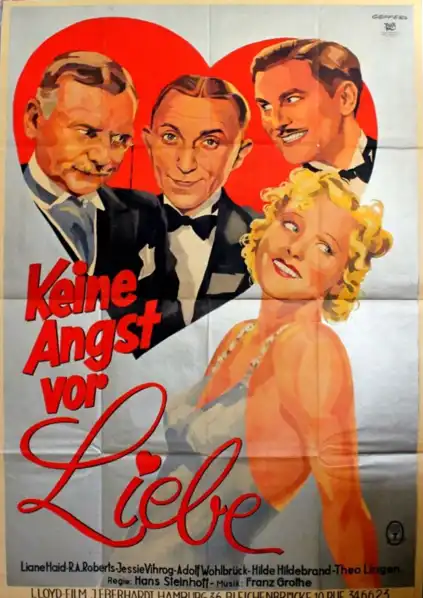
When situating Second Childhood amidst its silent‑era peers, parallels emerge with Freie Liebe, where romantic idealism collides with societal expectations, and The Two Twins, which also exploits mistaken identity as a comedic engine. However, unlike the overt farce of Sunshine Nan, Conklin’s film embeds its humor within a more nuanced moral landscape, making the laughter feel earned rather than gratuitous.
In terms of narrative structure, the film bears a faint resemblance to The Price of Innocence, where a protagonist’s deception spirals into unforeseen consequences. Yet, while The Price of Innocence leans toward melodrama, Second Childhood maintains a buoyant, almost mischievous tone throughout its runtime.
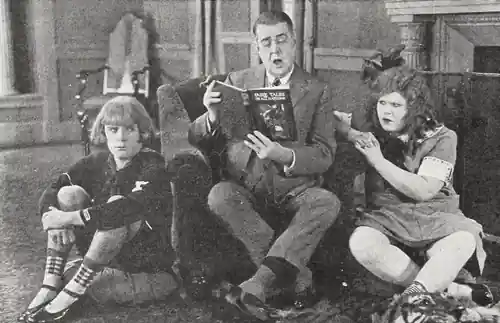
The set design is deceptively simple, relying on everyday domestic spaces that feel authentic to the era. Props—such as a rattling toy, a cracked bottle, and a meticulously crafted crib—serve dual purposes: they anchor the narrative in realism while providing visual gags. The film’s editing is crisp; transitions are smooth, allowing the comedic rhythm to flow without jarring interruptions.
Music, though absent from the silent frame, would have likely been accompanied by a live piano or organ in theatres, underscoring the emotional beats. Modern restorations often pair the footage with a period‑appropriate score, enhancing the viewing experience without detracting from the original intent.
Although Second Childhood remains a relatively obscure entry in the silent canon, its exploration of identity fraud resonates in today’s digital age, where personas can be fabricated with a few clicks. The film anticipates contemporary dialogues about authenticity, the commodification of personal narratives, and the ethical quagmires of deception for financial gain.
For scholars of early cinema, the work offers a valuable case study in how humor can be wielded as a vehicle for social critique. Its influence can be traced in later comedies that blend slapstick with satirical undertones, such as the Marx Brothers’ oeuvre and even certain modern indie productions that toy with the absurdity of adult‑child role‑reversal.
In sum, Second Childhood stands as a testament to the ingenuity of silent‑era filmmakers who could convey complex ideas without uttering a single word. The film’s blend of physical comedy, moral ambiguity, and visual storytelling creates an experience that feels both nostalgic and startlingly fresh. Whether viewed as a historical artifact or as a timeless commentary on human opportunism, the movie rewards attentive viewers with layers of meaning that extend far beyond its modest runtime.
For those seeking a deeper dive into the era’s cinematic landscape, consider exploring related titles such as Words and Music By or Five Nights, each offering complementary perspectives on the interplay between comedy and societal critique.
IMDb —
1919
Community
Log in to comment.