DbcultAccessing Vault...
5.2/10
Senior Film Conservator
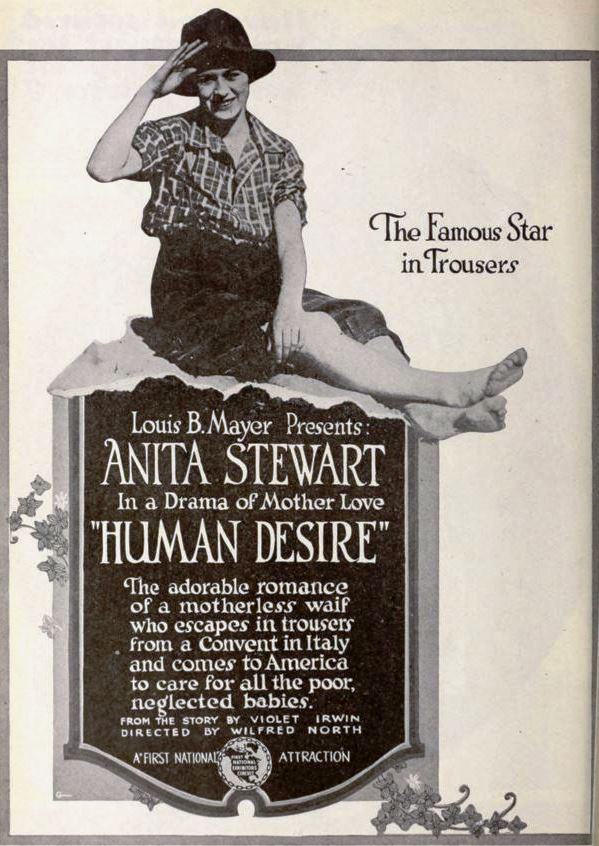
A definitive 5.2/10 rating for a film that redefined the boundaries of cult cinema. Human Desire remains a cornerstone of transgressive art.
In the annals of early cinematic art, certain films, even those partially lost to the relentless currents of time, leave an indelible mark through their sheer thematic ambition and raw emotional power. ’Human Desire’, a 1919 production starring the luminous Anita Stewart, stands as a testament to this enduring legacy. Far from a mere melodrama, it’s a profound meditation on maternal instinct, spiritual conviction, and the often-brutal collision of ideals with the unyielding realities of the world. Directed by J. Gordon Edwards, though the print is rare, its narrative skeleton, meticulously crafted by writers Violet Irwin and Edward J. Montagne, speaks volumes of a storytelling prowess that transcended the nascent limitations of the medium.
The film introduces us to Bernice, cloistered within a serene convent in Naples, Italy. Her existence is one of quiet contemplation, yet beneath this placid exterior churns a deep, almost mystical longing. This yearning is not for earthly love or material wealth, but for the profound connection embodied by motherhood, sparked by her contemplation of a statue depicting the infant Christ in the arms of the Madonna. It’s a beautifully conceived genesis for her character, establishing her motivations on a plane far removed from mundane desires. This isn't just a girl who wants a baby; it's a soul imbued with a sacred, almost spiritual, maternal drive, a concept that immediately elevates the narrative beyond simple romance.
When news reaches her of infants suffering and dying from hunger and neglect in America, Bernice's spiritual passion for babies coalesces into a concrete, altruistic mission. This revelation acts as a powerful catalyst, propelling her from the sheltered, ordered world of the convent into the chaotic, indifferent expanse of the modern world. Her decision to abandon her vows, to don the guise of a boy – a choice both pragmatic for travel and symbolically potent in its shedding of traditional feminine roles – underscores the depth of her resolve. It’s a remarkable act of self-effacement, placing the welfare of unknown children above her own comfort, safety, and even her identity. This selfless plunge into the unknown resonates with the dramatic urgency seen in films like ‘Where Are My Children?’, which similarly grappled with societal responsibilities towards the young, albeit from a different angle of social reform.

Her arrival in New York is a jarring descent from spiritual idealism into stark urban reality. Destitute and alone, Bernice’s trials amplify the film's commentary on the harsh underbelly of American society, a theme often explored in the social dramas of the era. It is in this crucible of hardship that she encounters Robert Bruce, an artist whose creative vision is perhaps as unfulfilled as Bernice's maternal longing. He sees in her not a waif, but a muse – a perfect embodiment for his painting of the Madonna. The irony is poignant: Bernice, inspired by the Madonna, now becomes her artistic representation, her innate purity and spiritual grace shining through her threadbare disguise.
The development of their relationship is handled with a delicate touch, evolving from professional necessity to profound emotional connection. As Bernice poses, a deeper intimacy blossoms, fueled by shared vulnerability and mutual respect. Anita Stewart, portraying Bernice, excels in conveying this burgeoning affection, her expressive eyes and subtle gestures communicating volumes without the aid of spoken dialogue. Vernon Steele, as Robert Bruce, brings a nuanced portrayal of an artist captivated not just by beauty, but by the soulful depth of his model. Their love, however, is a forbidden one, a clandestine affair shadowed by the societal conventions of the time and, more pressingly, by the unseen presence of Robert’s wife.
The narrative takes a sharp, melodramatic turn with the sudden appearance of Robert’s wife, a character embodied by Naomi Childers. Her arrival shatters the fragile sanctuary Robert and Bernice have built. The confrontation is swift and brutal, a stark reminder of the social order that governs their lives. Bernice, once again, finds herself cast out, driven into the harsh streets, her dreams of love and purpose momentarily crushed. This segment of the film highlights the vulnerability of women in that era, particularly those without social standing or protection, a theme also explored in films like ‘The Widow’s Might’, which often depicted women navigating a precarious social landscape.
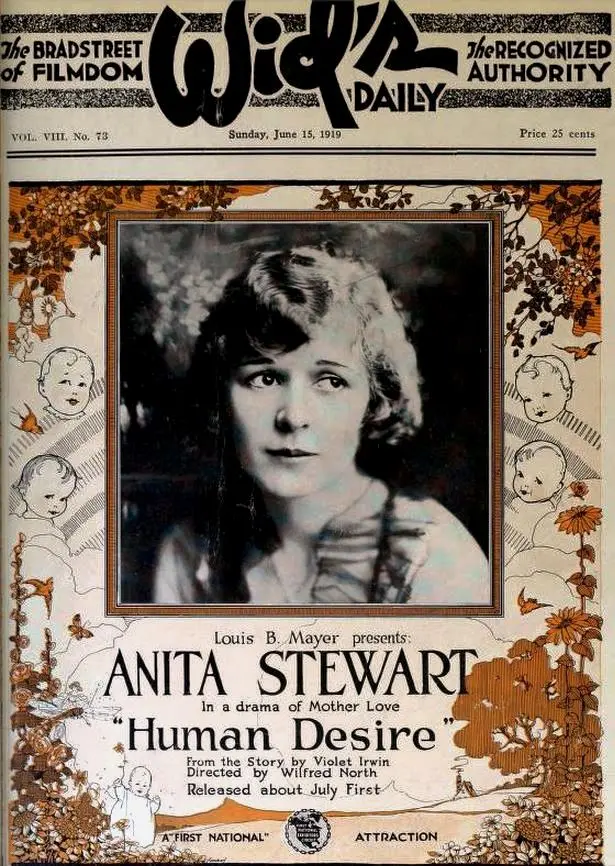
Her subsequent trials are a testament to her unwavering spirit. The film, through Bernice’s suffering, underscores the relentless nature of adversity, yet also her remarkable resilience. This period of the narrative is crucial, showcasing Bernice’s strength beyond her initial idealism, proving her capable of enduring profound hardship without relinquishing her core humanity. The screenplay by Violet Irwin and Edward J. Montagne masterfully builds tension, creating a palpable sense of injustice and empathy for Bernice’s predicament. The silent screen, often reliant on exaggerated gestures, here achieves a powerful effect through Stewart's restrained yet deeply felt performance, allowing the audience to truly feel her despair and determination.
The resolution arrives with a dramatic, albeit convenient, twist of fate: Mrs. Bruce dies in an automobile accident. While some might critique this as a narrative contrivance, typical of the era's melodramas, it serves a crucial purpose within the film’s thematic framework. It frees Robert from his marital bonds, allowing him to openly pursue his love for Bernice. This tragic event, while sudden, feels less like a deus ex machina and more like the hand of destiny, aligning with Bernice’s earlier spiritual motivations. It’s as if the universe, having tested her resolve, finally grants her the earthly happiness that complements her spiritual aspirations.
Their eventual marriage is not merely a happy ending; it represents the culmination of Bernice's journey from spiritual yearning to fulfilled love, from self-effacement to self-realization. It’s a testament to the idea that genuine desire, when rooted in purity of heart and purpose, can ultimately overcome societal obstacles and personal tribulations. The film, through this resolution, suggests a harmonious balance between the sacred and the secular, where profound human connection can elevate and complete the individual.
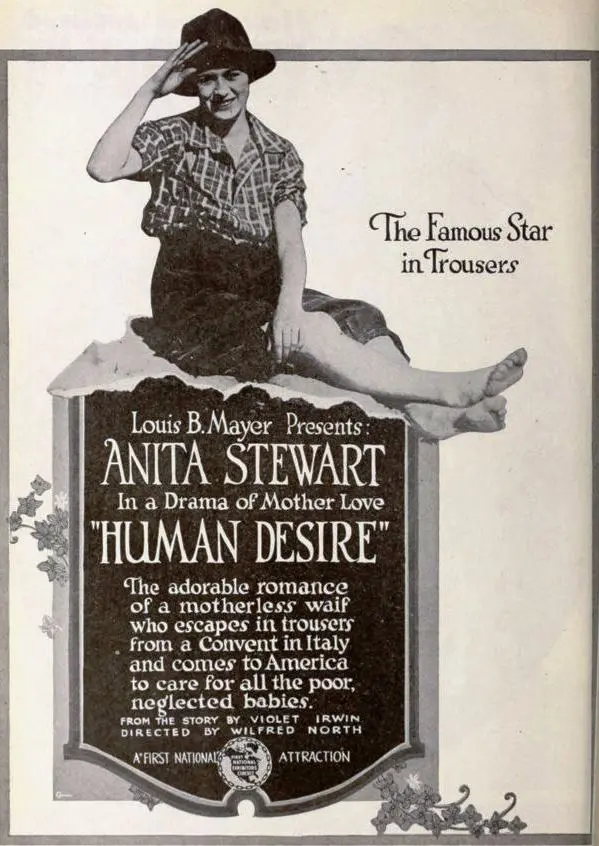
Anita Stewart, a prominent star of the silent screen, delivers a performance of remarkable depth and nuance. Her portrayal of Bernice is not merely a series of reactions but a consistent embodiment of a character driven by an inner light. Her ability to convey profound emotion – from spiritual reverence to abject despair, from burgeoning love to quiet resilience – without uttering a single word is a masterclass in silent acting. Her expressive face, particularly her eyes, communicates volumes, drawing the audience into Bernice’s internal world. This emotional transparency was a hallmark of Stewart's appeal, setting her apart in an era that sometimes favored broader, more theatrical gestures. Her nuanced approach could be favorably compared to the subtle power of performers in dramas like ‘The Little Liar’, where character depth was paramount.
Vernon Steele, as Robert Bruce, provides a strong, empathetic counterpart. His artistic sensitivity and growing affection for Bernice are conveyed with sincerity, making their forbidden romance believable and poignant. Naomi Childers, as the estranged wife, effectively embodies the societal antagonist, her presence creating palpable tension. The supporting cast, including Templar Saxe, Hattie Delaro, Eulalie Jensen, and Conway Tearle, contribute to the rich tapestry of the film's world, each playing their part in Bernice's arduous journey.
J. Gordon Edwards' direction, while adhering to the conventions of the era, skillfully uses visual storytelling to advance the narrative and convey emotion. The contrast between the serene convent and the bustling, often harsh, streets of New York is visually striking, emphasizing Bernice’s transition. The use of close-ups to capture Stewart's emotive expressions is particularly effective, drawing the audience into her inner turmoil and triumphs. The film's cinematography, though details might be sparse due to the film's age, would have been crucial in establishing mood and character, relying heavily on lighting and composition to articulate the story's emotional beats.
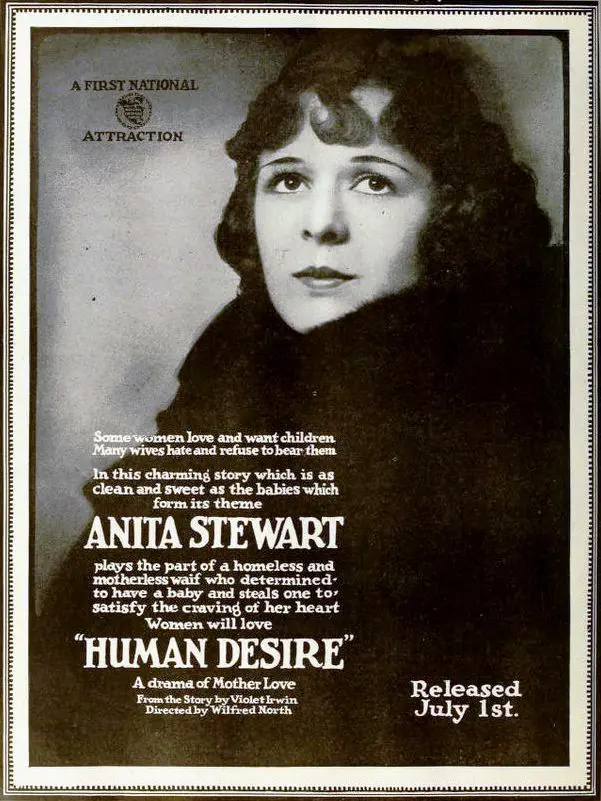
Beyond its surface as a romantic drama, ’Human Desire’ delves into several profound themes. The most overt is the nature of maternal instinct – not merely as a biological imperative, but as a spiritual calling. Bernice’s desire for children transcends personal gratification; it is an urge to nurture, to alleviate suffering, to embody a sacred ideal. This theme resonates deeply, particularly in an era grappling with social welfare and the plight of orphaned children. The film subtly critiques societal indifference by highlighting Bernice’s extraordinary efforts to address issues that society often overlooked.
Furthermore, the film explores the clash between spiritual idealism and worldly pragmatism. Bernice’s journey from the convent to the streets of New York is a metaphorical descent from a world of pure intentions into one of harsh realities, where her noble aspirations are met with destitution and social condemnation. Yet, her spirit remains unbroken, suggesting that true conviction can endure even the most trying circumstances. This enduring spirit is a powerful message, one that speaks to the resilience of the human soul in the face of adversity.
The narrative also touches upon the restrictive nature of societal expectations, particularly for women. Bernice’s cross-dressing, her illicit love, and her eventual ostracization all highlight the narrow confines within which women were often expected to operate. Her ultimate triumph, however, suggests a breaking of these chains, a victory for individual desire and authentic love over rigid social norms. This aspect of the film could be fruitfully compared to the social critiques present in works such as ‘Wives of Men’, which also explored the complex dynamics and expectations placed upon women within marital and societal structures.
Despite its age and the challenges of preservation that silent films often face, ’Human Desire’ remains a compelling and significant work. It is a film that, through its ambitious narrative and powerful performances, transcends its melodramatic roots to offer a profound exploration of human nature. It speaks to the universal longing for purpose, for connection, and for the fulfillment of one’s deepest, most fundamental desires. The journey of Bernice, from a sacred inspiration to a worldly trial and eventual triumph, is a timeless narrative of resilience, love, and the enduring power of the human spirit.
For those interested in the rich tapestry of early cinema, and particularly in the nuanced artistry of silent film, ’Human Desire’ offers a fascinating glimpse into an era where storytelling relied purely on visual artistry and the emotive power of its performers. It’s a film that, even a century later, continues to resonate with its exploration of themes that remain deeply relevant to the human condition: the yearning for connection, the courage to follow one’s convictions, and the ultimate triumph of love over adversity. Its legacy lies not just in its historical significance, but in its ability to stir the soul and provoke contemplation on the very essence of what it means to be human.

IMDb 7.2
1931
Community
Log in to comment.