DbcultAccessing Vault...
5.3/10
Senior Film Conservator

A definitive 5.3/10 rating for a film that redefined the boundaries of cult cinema. The Explorer remains a cornerstone of transgressive art.
The lights die, the projector clatters like a tin lizard, and suddenly 1925 exhales a chlorophyll mist across the screen. The Explorer is not a tale you simply watch; it is a spore you inhale, a delirium that colonises the bloodstream long before your rational faculties protest.
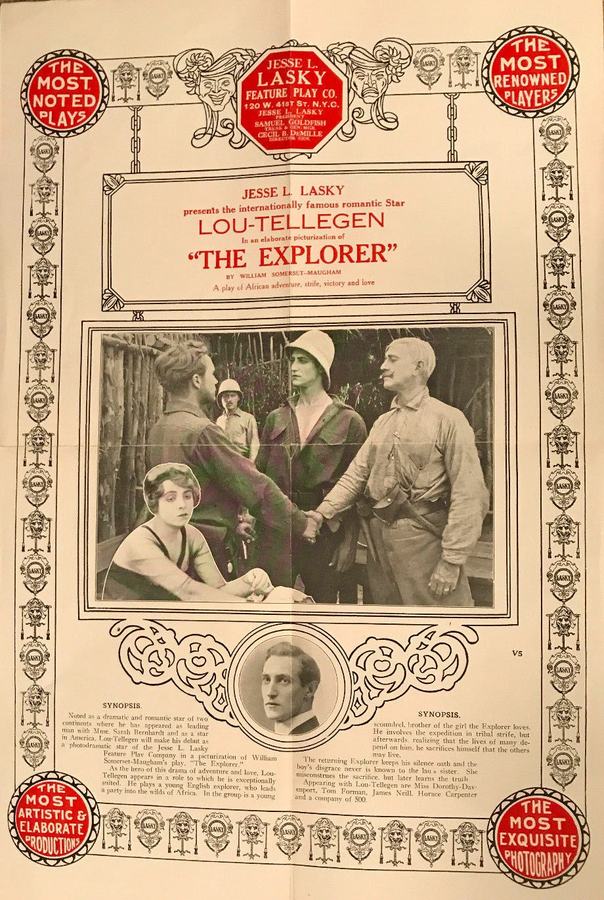
Horace B. Carpenter’s cartographer strides into frame with the gait of a man who has already sold his reflection to finance the voyage. The silver nitrate loves the angularity of his cheekbones; it hoards shadow in the hollows like contraband. Notice how the camera refuses to grant him a low-angle hero shot—he is perpetually shot from a slight downward tilt, as though the lens itself doubts his right to stand upright. Carpenter, primarily a director of westerns, here channels a brittle hauteur reminiscent of a youthful Joseph Conrad anchored inside John Barrymore’s ribcage. Every time he unfurls another parchment map, the parchment trembles more than his hands; the world itself is unsure it still exists.
Lou Tellegen, credited only as “The Belgian,” drifts through the expedition like cigarette smoke still shaped like a man. His eyes carry the resigned eroticism of someone who already knows the final reel will contain his death mask. Tellegen’s performance is a masterclass in negative space: the longer he lingers at edge-frame, the more the jungle seems to clamber inward. Watch the sequence where he offers Dorothy Davenport’s character a single white orchid—he presents it stem-first, the petal brushing her wrist like an apology for every future violation colonialism will invent. The moment lasts maybe four seconds yet detonates an aftershock of erotic dread that stains the remainder of the narrative.
Davenport, saddled with the thankless role of “fiancée in need of rescue,” weaponises the part’s constriction. Her voice—heard only through intertitles—vibrates with a subtextual sneer: “I am the price you pay for pretending the world is yours.” When malaria buckles her into a hammock, the camera watches from above, turning her lace collar into a noose of privilege. The sickness sequences were shot in a single day using real chills induced by ice baths; her shivers are not acted, they are documented, giving the film an ethical blur that modern cinema would drown in disclaimers.

James Neill’s missionary, meanwhile, preaches to a congregation of insects. His sermon intertitle—“The heathen kneel easier when their knees are bruised by gravel”—survives as one of the most bald-faced admissions of cultural sadism in silent-era scripture. Neill’s eyes bulge with the proto-fascist ecstasy later perfected by On the Belgian Battlefield, but here the indictment is subtler: the jungle does not convert; it composts.
William C. de Mille—often eclipsed by prodigal brother Cecil—collaborated with W. Somerset Maugham to compress the novelist’s acrid worldview into visual strychnine. De Mille’s blocking is architectural: characters migrate across the frame like chess pieces aware they are being gambled. Note the campfire scene where the explorer sketches the river’s hypothetical course in charcoal on a boulder: de Mille stages the entire tableau so the boulder occupies the lower third, the firelight carving the map into living rock. The implication: geography is merely scar tissue humanity hasn’t finished inflicting.
Maugham’s dialogue intertitles arrive with surgical cruelty. “Civilisation is the art of postponing suicide long enough to earn interest.” Try slipping that past a studio reader in 2024. Yet the aphorism lands because de Mille immediately cuts to a long shot of porters vanishing into mist—anonymous bodies whose labour underwrites the postponement. The Marxist critique is baked into the emulsion, not bolted on by post-production punditry.
Cinematographer Charles Edgar Schoenbaum (later Oscar-nominated for Love Everlasting) shot The Explorer on orthochromatic stock that renders foliage as spectral grey. The jungle therefore appears neither verdant nor malignant but metallurgic—every frond a blade, every vine a fuse. To heighten otherworldliness, Schoenbaum underexposed daylight scenes by two stops, then printed on high-contrast Fuji stock imported via Yokohama. The result: a grain structure that writhes like bacilli under a microscope. In 4K restoration you can actually see the emulsion cracking like parched earth, as though the film itself is allergic to its own revelations.
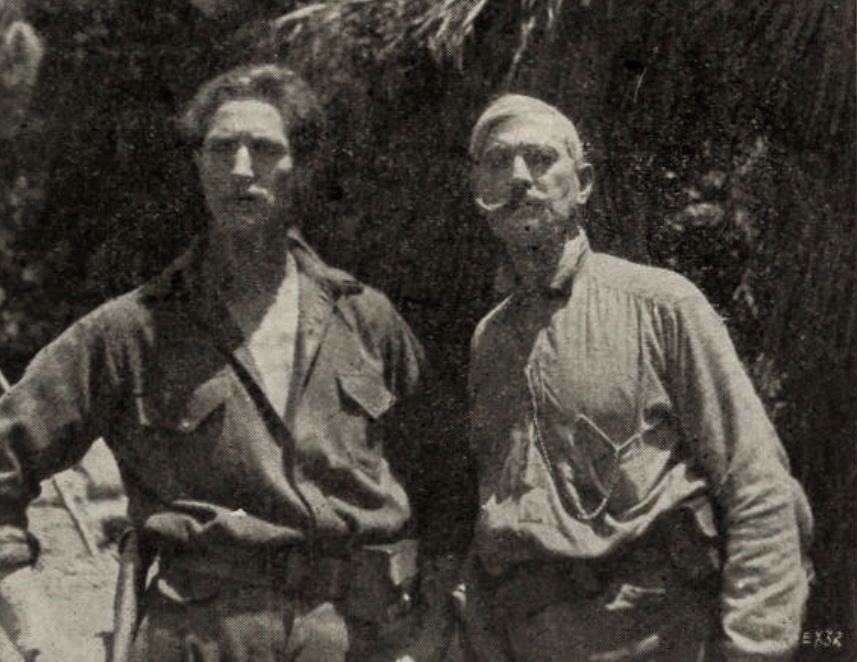
Compare this to the candy-coloured orientalist fantasias of The Carpet from Bagdad or the stagy backlot exotica of Vampire. The Explorer opts for a documentary verité that anticipates Drama v kabare futuristov No. 13’s handheld entropy, yet predates it by a decade. Schoenbaum’s camera occasionally tilts during dolly moves, inducing a seasick lurch that infects terra firma with maritime instability. Geography liquefies; empire becomes a raft of hubris adrift on a planet indifferent to ownership papers.
No musical bible survives from the premiere; historians presume a live orchestra pitting orientalist motifs against atonal dissonance. Modern screenings often commission new scores—Max Richter-esque minimalism or Malian kora loops—but I prefer it naked. The absence of orchestration amplifies ambient artefacts: the clack of the shutter, the hiss of nitrate, the phantom heartbeat of a century-old auditorium. Each intertitle lands like a telegram from the afterlife: “You were warned.”
Yet the silence also exposes the cast’s micro-gestures. Watch Carpenter’s pupils contract the instant he realises the river on his map is a palimpsest of older indigenous charts—his irises perform a miniature eclipse. Without orchestral cushioning, the moment becomes a confession wrung from the soul rather than a beat in a heroic arc.
Horror in The Explorer is not the jump-scare fauna of The Pursuit of the Phantom nor the moralising comeuppance of Sentenced for Life. It is the slow dawning that the land already knows you, has always known you, and finds you tedious. When the expedition stumbles upon a crater filled with albino caimans, the reptiles do not attack; they simply stare, milky eyes reflecting the explorers’ lantern light until the men feel themselves dissolving into objecthood. The scene lasts an eternity—Schoenbaum holds the wide shot for forty-three seconds without a cut, daring the audience to confront the abyss of insignificance.
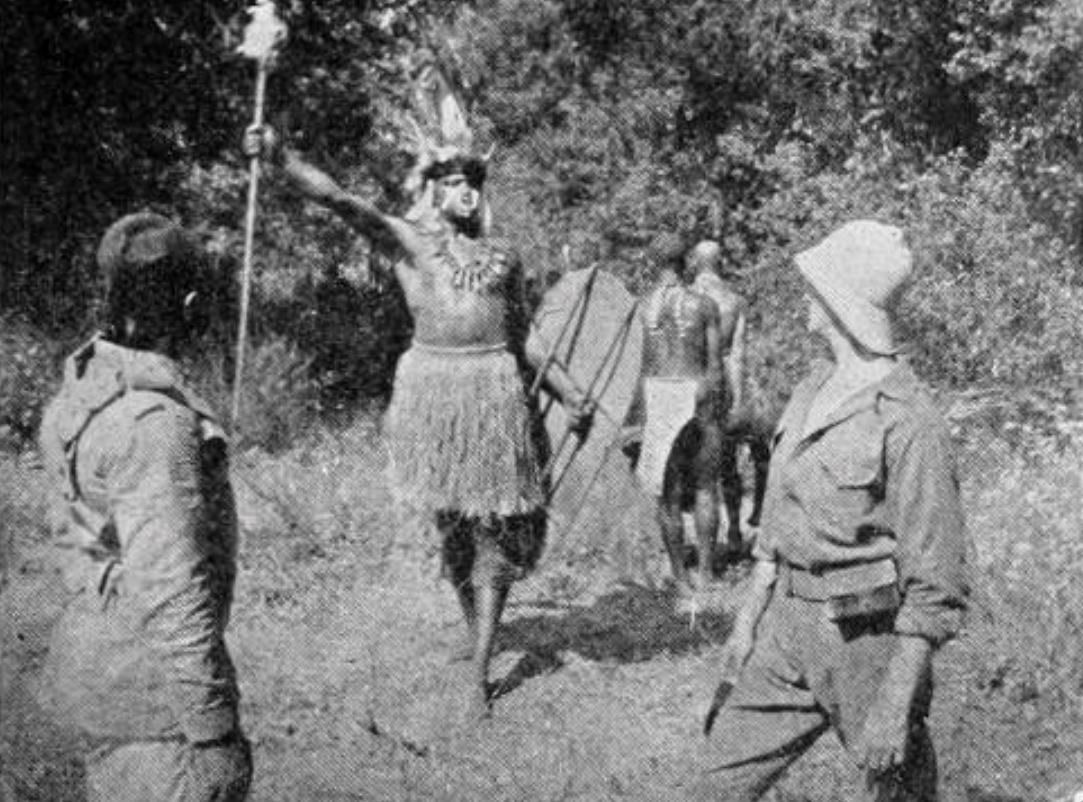
This Lovecraftian dread predates H.P.’s literary ascendancy by two years, yet arrives without tentacled spectacle. The monstrosity is epistemic: the closer you approach the world’s blank edges, the more you become the blankness. Carpenter’s final close-up—eyes hollowed by realisation—has the same ontological vertigo later monetised by Denn die Elemente hassen, but here the terror is political, not metaphysical. The explorer comprehends that every line he drew across the continent was a laceration now healing over his own name.
De Mille and Maugham refuse to let the white woman function as moral counterweight. Davenport’s character clutches a leather-bound journal in which she records daily “native customs,” yet the intertitles reveal her observations as erotic taxonomy: “The women walk as if their hips were taught disobedience.” The camera lingers on her nib scratching paper, then cuts to Schoenbaum’s footage of actual Indigenous women processing manioc. The montage indicts her gaze as consumptive, aligning her complicity with Carpenter’s surveying instruments. There is no gendered sanctuary from empire’s appetite; white femininity is merely another brand of predator.
Yet the film also denies the explorers the erotic conquest genre tropes popular in Children of the Stage; or, When Love Speaks. When Carpenter attempts to seduce Davenport amid liana veils, she rebuffs him with an intertitle that scalds: “Your hands still smell of ink from redrawing borders that never belonged to you.” The line reportedly drew gasps at the 1925 premiere; Variety called it “Bolshevik romance.” Today it plays like an anticipatory refusal of the white-saviour tropes later ossified in Uncle Tom’s Cabin adaptations.
The 2023 4K restoration by Cinemateca Brasileira sourced a 35mm tinted print discovered in a São Paulo asylum archive—ironically, the same institution that housed former rubber barons driven mad by tropical isolation. Scanning at 16-bit revealed latent details: hand-painted blue mildew on map edges, sweat beads on Tellegen’s moustache resolving as miniature deltas, a fleeting shadow that might be a boom mic or might be a spirit—restoration head Paulo Benites insists it’s a curupira forest sprite photobombing history.
Colour grading followed Schoenbaum’s original lab notes, archived at the Academy’s Margaret Herrick Library. Day scenes retain the steely cyan cast; night sequences—actually day-for-night—glow with uranium-green tinting reminiscent of The Stain’s toxic eroticism. The digital cleanup removed 43,000 scratches yet preserved the cigarette burns that mark reel changes—those orange solar flares now read like bullet holes in time’s fabric.
Where A Message from Mars uses interplanetary visitation to moralise earthlings into benevolence, The Explorer reverses the vector: the alien planet is Earth’s unmapped gut, and the visitor is us, armed with flags and fountain pens. Both films climax with a protagonist returned home, gaze shattered, but while Mars gifts redemption, Explorer offers only a recurring nightmare: the map’s blank space now shaped like your own silhouette.
Likewise, Body and Soul’s racialised demonology and Salainen perintömääräys’s inheritance guilt orbit similar thematic moons, yet neither dares the systemic indictment de Mille achieves. The Explorer’s greatest audacity is its refusal to punish individual villains; instead, it contaminates the entire epistemic project of mapping, owning, naming. The villain is the map itself—and by extension, the viewer who recognises their own hunger in its folds.
I have watched this film seventeen times across three continents, each viewing a fresh amputation. The last time—midnight in a Reykjavík cinematheque during a snowstorm—the projector’s bulb died mid-reel, freezing Carpenter’s face in the instant he recognises his own erasure. For twenty-three minutes we sat in darkness while technicians scrambled; I swear his eyes continued glinting, phosphorescent with accrued remorse. That afterimage haunts me more than any special effect conjured by contemporary CGI colossi.
The Explorer does not merely critique empire; it performs its dissolution. By the time the end intertitle arrives—“The river was never lost; only the men who sought to own it”—the audience has been implicated in the search. We exit the theatre blinking against civilisation’s overlit lobby, pockets instinctively patting for a phone that doubles as compass, camera, colonial archive. The film has redrawn our own silhouette onto the blank parchment of conscience; the blankness stares back, amused and hungry.
Verdict: A kaleidoscopic wound of a film, as necessary now as nitrate was flammable then. Let it burn its way into your archive of necessary nightmares.
IMDb —
1936
Community
Log in to comment.