DbcultAccessing Vault...
Cult Review
Senior Film Conservator
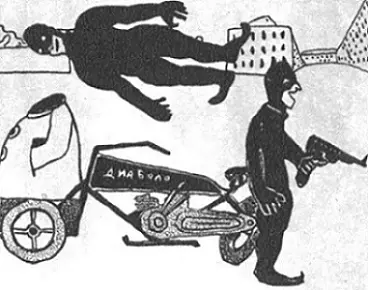
Dziga Vertov's Humoresques is an enigmatic, beguiling work, a fragmentary yet captivating cinematic poem that extols the Soviet Union's fledgling successes. This partially extant animation film, crafted by one of the most innovative filmmakers of the early 20th century, offers a mesmerizing glimpse into a bygone era, refracting the epoch's ebullience and revolutionary fervor through a prism of humor and pathos.
The film's narrative, such as it exists, appears to be a loose concatenation of vignettes, each celebrating a different facet of Soviet life and culture. Vertov, a pioneer of documentary and experimental cinema, employs a dizzying array of techniques, from caustic satire to lyrical, poetic reverie, to conjure a kaleidoscopic portrait of a nation in flux. Though Humoresques is now largely lost, its surviving fragments retain an undeniable potency, offering a tantalizing glimpse into Vertov's singular creative vision.
In Humoresques, Vertov draws upon his characteristic 'Kino-Eye' approach, utilizing the camera as an instrument of social commentary and critique. By masterfully juxtaposing disparate images and ideas, Vertov forges an incisive, humorous critique of Soviet society, targeting the pretensions and follies of the era's burgeoning bureaucracy. This incisive analysis, redolent of the works of contemporaries like Smile Please's director, injects Humoresques with a remarkable sense of tension and release, underscoring the film's status as both a paean to Soviet triumphs and a searching critique of its limitations.
When contextualized alongside other works of the period, such as Greater Than Fame and Der Weltspiegel, Humoresques assumes a pivotal position within the canon of early 20th-century cinema. Vertov's distinctive 'essayistic' approach, which seamlessly integrates elements of documentary, fiction, and propaganda, yields a work of remarkable eclecticism and innovation. This formal hybridity notwithstanding, Humoresques remains an affecting, deeply personal work, one that persuasively demonstrates Vertov's lifelong commitment to cinematic experimentation and social critique.
A comparison with films like Behind the Mask and Tarnish serves to illuminate Humoresques' distinctive tonal and thematic concerns. While these works often privilege darkness and foreboding, Vertov's film is characterized by its ebullience and wit, qualities that align it with a broader tradition of cinematic revues and tableaux, exemplified by The Storm and Wolfe; or, the Conquest of Quebec. This dialogical relationship with other films of the era underscores Humoresques' status as a cultural touchstone, a work whose influence can be discerned in a wide range of cinematic and artistic contexts.
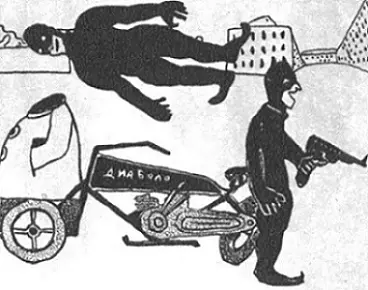
One of the most striking aspects of Humoresques is its use of animation as a means of social commentary and critique. Vertov's innovative deployment of this relatively new technology yields a work of remarkable visual beauty, one that showcases the director's gift for graphic design and montage. The film's surviving fragments reveal a dizzying array of visual effects and experimentation, techniques that were likely employed to convey the dynamism and optimism of Soviet society during this period.
In Humoresques, Vertov also demonstrates a keen awareness of the psycho-social dynamics underlying Soviet culture, particularly in its representations of youth and idealism. The film's focus on the emerging values and aspirations of a new generation serves as a powerful counterpoint to the cynicism and disillusionment that often characterized Western perceptions of Soviet society during this period. By foregrounding the hopes and dreams of Soviet youth, Vertov offers a nuanced, deeply empathetic portrayal of a nation in transition.
In conclusion, Humoresques is a landmark work of early 20th-century cinema, one that persuasively demonstrates Dziga Vertov's innovative spirit and aesthetic radicalism. Though Humoresques is now largely lost, its surviving fragments retain an undeniable potency, offering a tantalizing glimpse into Vertov's singular creative vision. As such, it remains an essential reference point for scholars and cinephiles interested in the evolution of cinematic language and the art of Dziga Vertov.
For those interested in exploring Vertov's oeuvre further, Ihr großes Geheimnis and The Accomplice offer valuable insights into the director's artistic development and thematic preoccupations. Meanwhile, films like Gloria's Romance, Children of Dust, and Lord Loveland Discovers America provide a useful counterpoint to Humoresques, highlighting the diversity and complexity of early 20th-century cinematic culture.
IMDb —
1935
Community
Log in to comment.