Summary
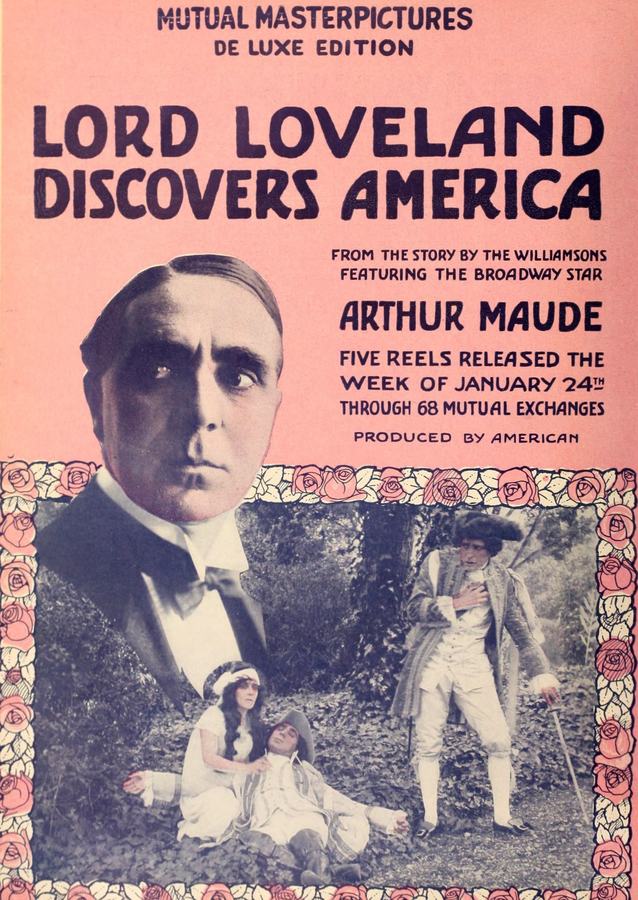
A scion of British aristocracy, Lord Loveland, finds his ancestral coffers depleted and his estate besieged by a relentless phalanx of creditors. Under paternal counsel, he embarks upon an audacious transatlantic voyage, his clandestine mission: to secure an American heiress, thereby salvaging his lineage from financial ignominy. A last-minute switch of vessels, executed with an almost reckless disregard for communication, sets in motion a cascade of identity confusion. Simultaneously, his aggrieved valet, a year's wages outstanding, seizes the opportunity for audacious deception, assuming the peer's distinguished persona back in England.
Upon his arrival in the bustling metropolis of New York, the authentic Lord Loveland is confronted with the stark reality of his impecunious state—a paltry forty cents in his pocket. His attempts to leverage a letter of credit are met with incredulity and rejection by the banking establishment, which, misled by the impostor's exploits, brands him a charlatan. Ejected from his opulent hotel, his luggage impounded, the nobleman is cast adrift in an alien land, utterly bereft. A plea for assistance to a purported friend is rebuffed, the friend too falling victim to the widespread misapprehension of his identity.
Despondency descending, the Lord retreats to the verdant solace of Central Park. Here, a spontaneous act of heroism—the thrilling rescue of a beleaguered mongrel puppy—unexpectedly forges a profound bond with Bill Willing, an amiable, down-on-his-luck elder. Willing, a veritable fount of streetwise benevolence, shepherds the dispossessed peer to a humble lodging where his meager forty cents miraculously suffices for two beds. The following morning unveils another facet of Willing's ingenuity: securing sustenance at Alex's restaurant through the creation of captivating, hand-drawn advertisements for the day's fare.
Remarkably, Lord Loveland, still clad in his anachronistic evening attire and monocle, secures employment as a waiter at Alex's. His aspirations are modest: accumulate sufficient funds for passage back to his beleaguered British Isles. However, the peculiar spectacle of a monocled aristocrat serving tables proves irresistible fodder for Tony Kidd, an astute New York reporter. Kidd's sensational exposé transforms Alex's restaurant into a daily spectacle, drawing throngs, among whom is Leslie Dearmer, a discerning playwright with whom Loveland shared a fleeting acquaintance during their transatlantic crossing.
A sudden, calamitous kitchen explosion transforms the mundane into the heroic. Lord Loveland, with remarkable sangfroid, extinguishes the conflagration, restoring order and averting panic. This moment of crisis, however, is swiftly followed by another downturn: a perceived romantic entanglement with Izzy, Alex's daughter, costs him his newfound employment. He then descends further into the theatrical demimonde, joining a low-budget "10-20-30-cent" troupe, relegated to minor roles.
Fate, however, intervenes with a flourish. Miss Dearmer, seeking to litigate against the troupe for copyright infringement, encounters the nobleman once more. A mutual recognition, followed by Loveland's candid recounting of his trials, leads to her offering him a position as her chauffeur. Their daily drives cultivate an unspoken affection, which culminates in Loveland's impassioned declaration of love. His ardor, alas, momentarily eclipses his driving prudence; their automobile veers off course, crashing violently. Upon regaining consciousness amidst the wreckage, Miss Dearmer finds herself cradled in his arms, and in that moment of vulnerability and shared peril, they pledge their eternal devotion.
The capricious currents of fortune at last turn in Loveland's favor. A serendipitous confluence of events unravels the identity imbroglio, reinstating him to his rightful aristocratic station. With his honor redeemed, his love secured, and his spirit renewed, the once-beleaguered Lord Loveland finds enduring happiness in America, his desire to return to the shores of Britain irrevocably diminished.
Synopsis
Lord Loveland in England is besieged by his creditors and consults his mother as to what he should do. He is advised to go to America and marry an heiress. He plans to sail on a certain ship, but at the eleventh hour changes his plans and departs on another vessel without informing his relatives of the change. Meanwhile, In England, his valet, annoyed at not having been paid a year's wages, impersonates Lord Loveland. At New York's most expensive hotel Lord Loveland discovers he has but forty cents in his pocket. He goes to bank and presents his letter of credit, but the bank determines that he is a bogus Lord and will not honor the draft. Disgusted, Lord Loveland returns to his hotel, where he finds he has no credit. He is ejected and his baggage is held in lieu of the bills he has already accumulated at the hostelry. Lord Loveland is alone in a strange world and with forty cents in his pocket. He applies to a friend for aid, but the friend, thinking the card presented is that of the bogus Lord Loveland. refuses to even see the visitor. Disheartened and disgusted, the nobleman betakes himself to Central Park, where through the thrilling rescue by Lord Loveland of a mongrel puppy, he forms a fast friendship with one Bill Willing, a likable old man out of work. Willing takes Lord Loveland to a cheap hotel where his forty cents is more than sufficient to procure two beds. In the morning he takes the English peer to a restaurant where in payment for meals, Willing draws artistic signs which advertise the day's tempting viands at Alex's restaurant. Lord Loveland, attired in evening clothes and monocle, has no trouble in getting employment as a waiter. He hopes thus to earn sufficient funds to pay his passage back to the dear old British Isles, but Tony Kidd, an enterprising New York reporter, learns of the monocled waiter and writes a story for his paper. Crowds come daily to Alex's restaurant to be waited on by this unique garcon. Among them is Leslie Dearmer, a woman playwright with whom Lord Loveland had become acquainted on shipboard. There is an explosion in the kitchen and the guests flee panic-stricken from Alex's restaurant. Lord Loveland becomes a hero when he extinguishes the blaze and causes the guests to return to their tables. Later, he loses his job through the apparent affection he has for Izzy, who is Alex's daughter. He takes up with a 10-20-30-cent troupe of theatrical players with whom he plays minor parts. Miss Dearmer seeks out the manager of Lord Loveland's troupe, intending to sue that individual for the use of one of her copyrighted plays. She calls and is surprised when her gaze meets that of the British nobleman. To her, the Lord relates his plight and she engages him as her chauffeur. The nobleman falls head over heels in love with his fair employer. The two are out for a spin when the Englishman summons up courage and declares his love. So ardent does he become in his proposal that he fails to heed the path his automobile is taking. The machine leaves the road, crashes into a tree and both occupants are thrown violently from their seats. When consciousness returns, Miss Dearmer is in Lord Loveland's arms, and the two plight their troth. The tide of Lord Loveland's fortunes have turned, By a combination of circumstances, he becomes recognized as the real Lord Loveland and he is restored to the position which is rightfully his. Henceforth, all is love and happiness and the nobleman has no desire again to see dear old Britain's shores.
Review Excerpt
"
In the annals of early cinema, few narratives capture the delightful absurdity and poignant humanity of a man utterly displaced as vividly as "Lord Loveland Discovers America." This cinematic journey, a charming relic from a bygone era, invites us to ponder the mutable nature of identity when stripped bare of its societal accoutrements. Our protagonist, the titular Lord Loveland, is introduced not in a moment of aristocratic triumph, but rather amidst the ignominy of financial ruin..."