DbcultAccessing Vault...
Cult Review
Senior Film Conservator
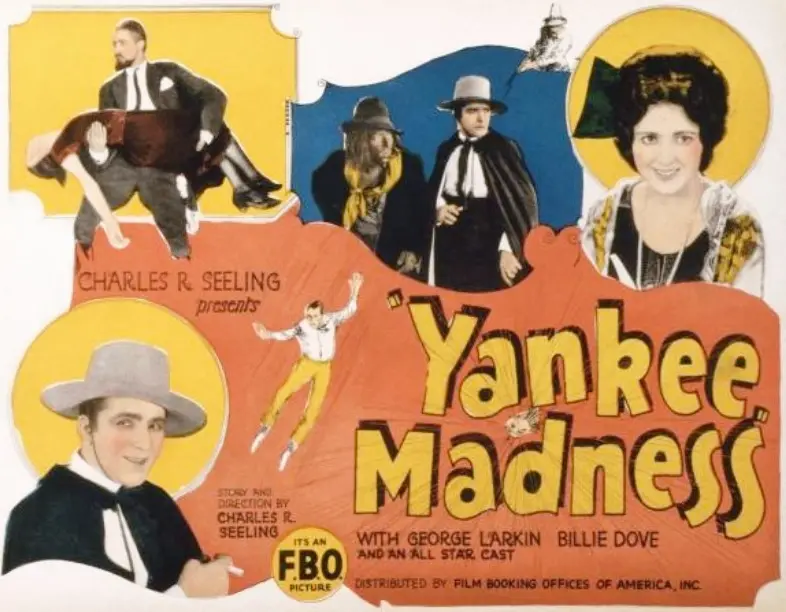
Yankee Madness, released in 1919, is a historical drama set against the backdrop of a Central American revolution. The film's plot is a blend of romance, adventure, and political intrigue, making it a compelling narrative that invites viewers to immerse themselves in a world of tension and emotion.
Richard Morton, played by George Larkin, is en route to Sevilla, a bustling city in Central America, where he plans to manage his father's ranch. His journey takes an unexpected turn when he rescues a beautiful and enigmatic girl named Dolores, played by Billie Dove, from bandits. This act of chivalry sets the stage for a series of events that will challenge Richard's preconceptions and lead him into a complex web of political dealings.
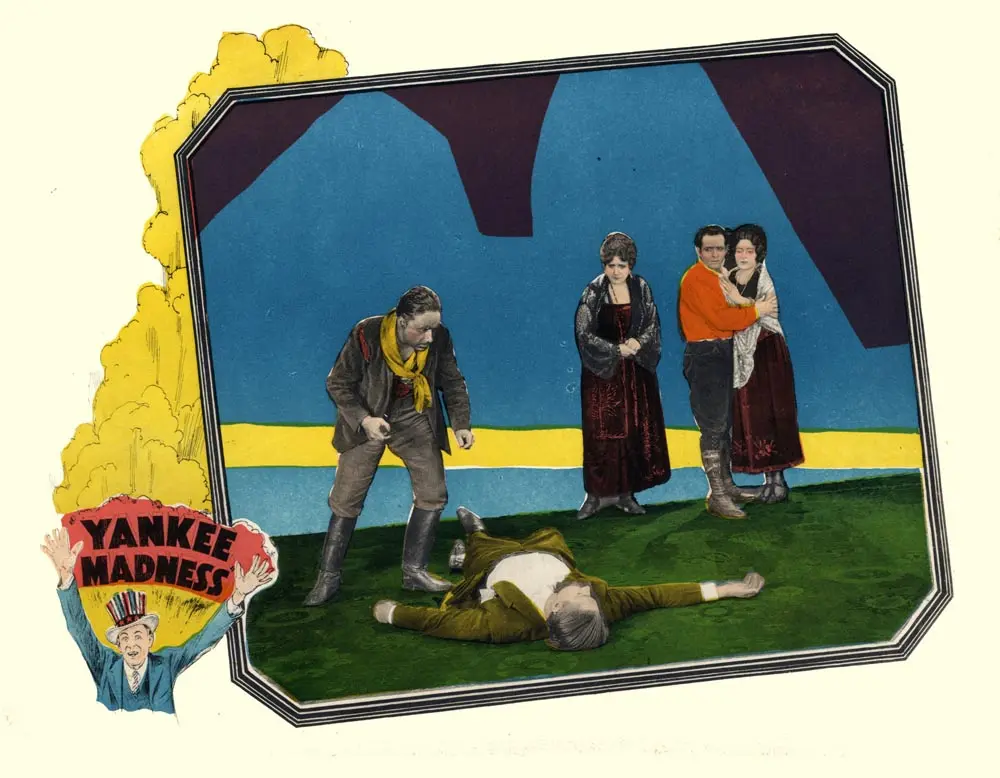
Upon arriving in Sevilla, Richard finds his father under intense attack by revolutionist forces. The city is in turmoil, and the political landscape is shifting rapidly. Richard, initially intending to focus on his father's ranch, finds himself drawn into the conflict, both out of a sense of duty and a growing realization of the importance of the situation.
The protagonist's involvement in the revolution is not just a passing interest but a pivotal moment in the film. His actions, driven by a mix of loyalty and a desire to protect the city and its inhabitants, place him at the center of a dramatic sequence where he saves President Dominguez, played by J.L. Powell, from his enemy, Rodolfo Emanon, portrayed by Earl Schenck. This rescue is a turning point, not only for Richard but also for the city of Sevilla and its political future.
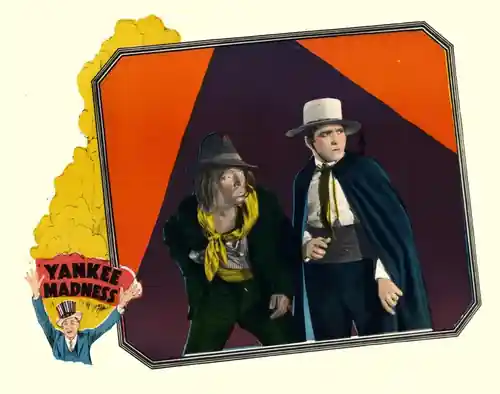
As the plot unfolds, it becomes clear that Dolores, whom Richard had intended to marry, is the president's daughter. This revelation adds a layer of complexity to their relationship, adding a personal dimension to the political drama. The film explores the moral and ethical dilemmas that arise from being caught between personal desires and the responsibilities of leadership.
The cinematography and direction of Yankee Madness are noteworthy. The film's setting in Central America is captured vividly, with scenes that evoke a sense of place and time. The use of costuming and set design contributes to the authenticity of the period, making the viewer feel as if they are part of the historical milieu. The film's pacing is well-balanced, seamlessly transitioning from romantic moments to intense action sequences.
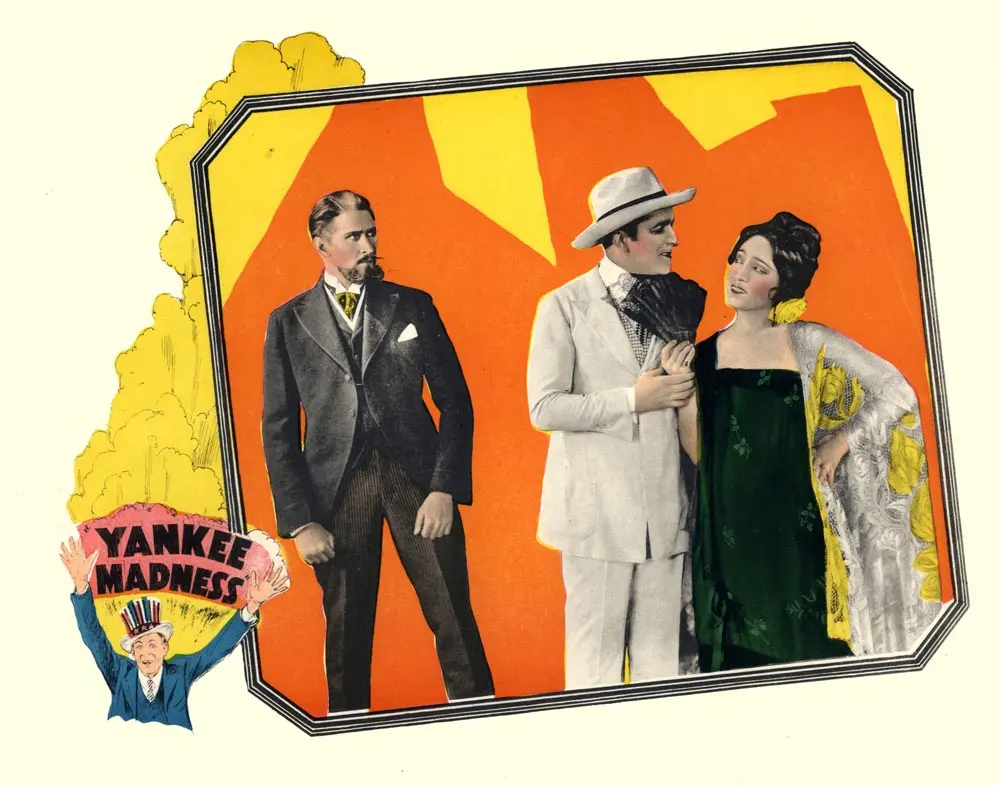
While Yankee Madness is a silent film, its dialogue, conveyed through expressions and body language, is remarkably effective. The performances of the lead actors, particularly George Larkin as Richard Morton and Billie Dove as Dolores, are nuanced and emotionally resonant. Their chemistry on screen is palpable, making their characters’ journey believable and engaging. The supporting cast, including Arthur Millett, Earl Schenck, and J.L. Powell, also delivers solid performances, adding depth to the narrative.
The writing, penned by Charles R. Seeling and George H. Plympton, is tightly constructed, ensuring that every scene serves a purpose in advancing the plot or developing the characters. The screenplay deftly balances the romantic elements with the political and action-oriented aspects of the story, creating a rich tapestry of narrative that keeps the audience engaged throughout.
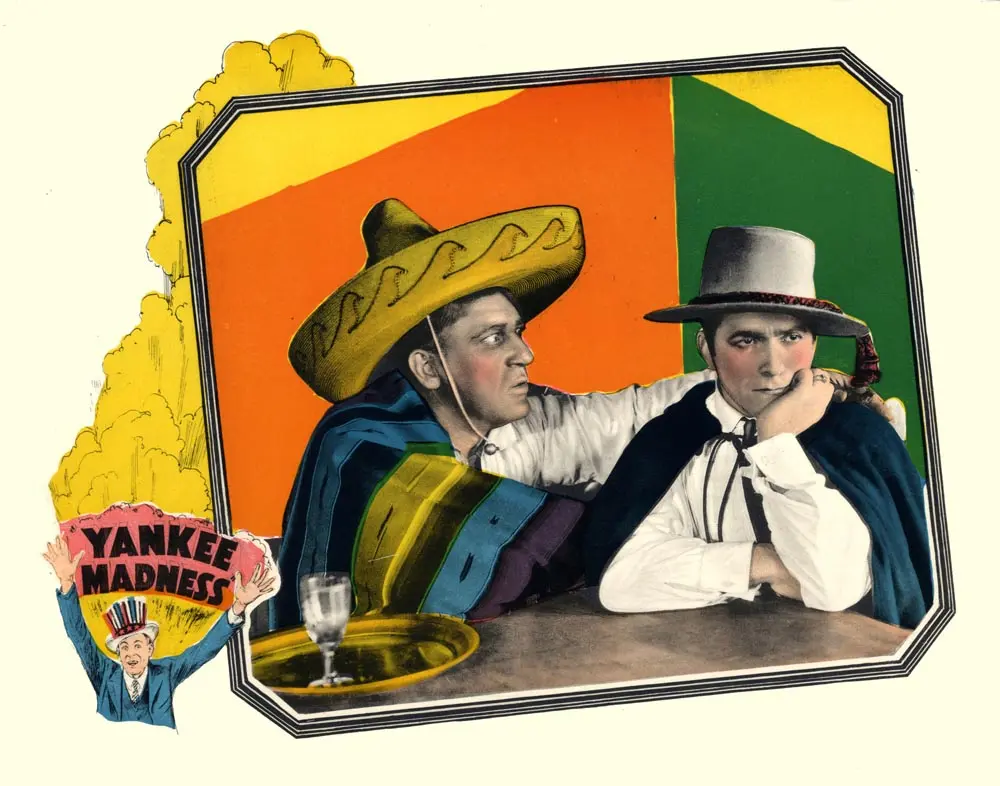
Yankee Madness stands out among other films of its era, including Pace That Kills and Madame Du Barry. Its unique blend of romance, adventure, and political intrigue sets it apart, making it a fascinating piece of early cinema. The film's exploration of themes such as loyalty, personal sacrifice, and the complexities of political involvement make it a timeless tale that resonates with modern audiences.
For those interested in historical dramas, this film offers a glimpse into a period of Central American history that is often overlooked in mainstream narratives. The meticulous attention to detail in the film's production and the compelling performances of the actors make Yankee Madness a must-watch for enthusiasts of silent films and those interested in exploring the intersection of personal and political narratives.
Yankee Madness is a film that challenges viewers to consider the broader implications of individual actions within the context of larger political and social movements. It is a testament to the enduring power of storytelling and the ability of cinema to capture the human experience in all its complexity.
IMDb 5.6
1937
Community
Log in to comment.