DbcultAccessing Vault...
6.3/10
Senior Film Conservator
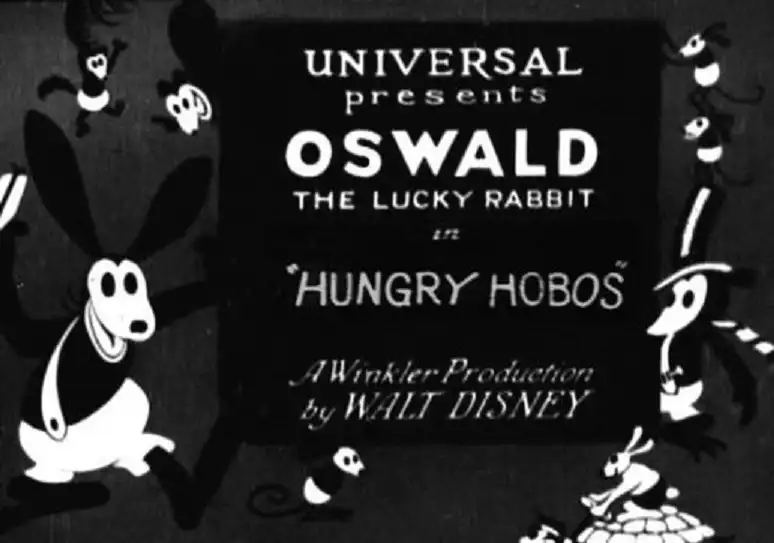
A definitive 6.3/10 rating for a film that redefined the boundaries of cult cinema. Hungry Hoboes remains a cornerstone of transgressive art.
Okay, so, is Hungry Hoboes worth tracking down today? If you're into the raw, unhinged energy of early animation, absolutely. If you’re looking for something with a modern narrative or even a coherent plot, you’ll probably find it a bit much. This one’s for the animation historians and the curious.
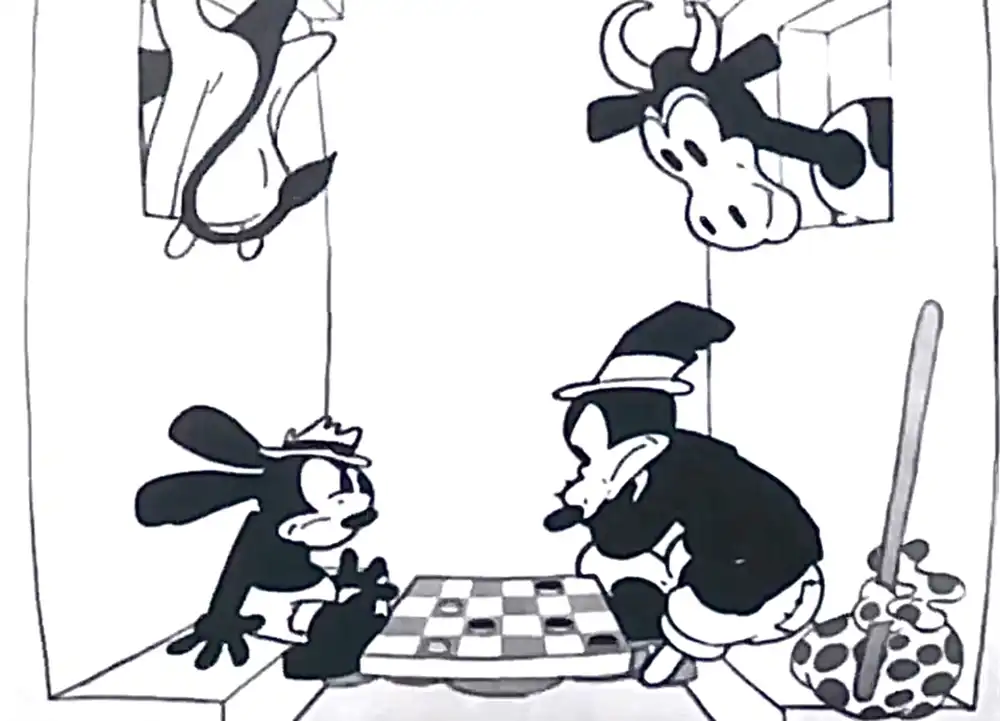
Right from the start, you're tossed onto a freight train with Oswald and Putrid Pete. It’s not just a few animals; it’s a whole menagerie. A pig, a cow, a turkey – all just… there.
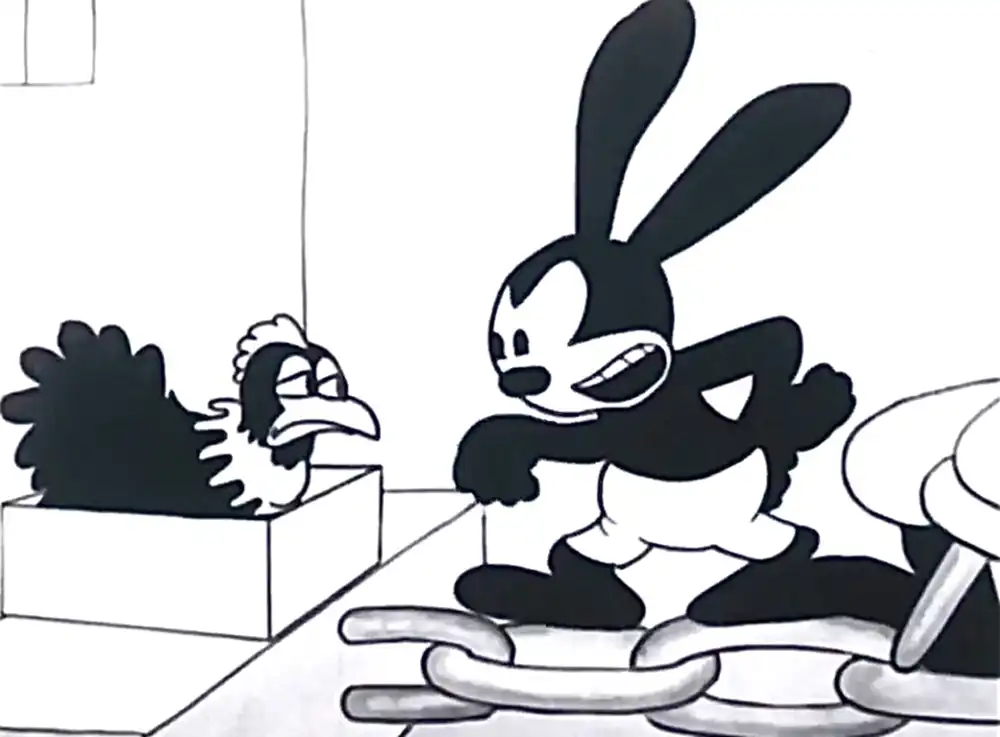
The whole premise quickly shifts to them trying to cook. And not just any cooking. They’re trying to make a meal *out of the very animals sharing their car*. There's a moment where they're trying to milk a cow, then chop up a chicken, all in this incredibly frantic, almost desperate way.
The pacing is just bonkers. It's like every gag is thrown at you one after another without a breath. You barely register one visual pun before the next one is flying by. It feels less like a story and more like a fever dream of sight gags.
There's a specific shot of Pete trying to wring a turkey's neck that's just… something else. It’s so aggressively slapstick, almost violent, in a way cartoons wouldn't quite do later on. You sort of wince a little.
Then the cop shows up. And he is relentless. No gentle warning, just immediate, full-tilt pursuit. It really ramps up the already manic energy.
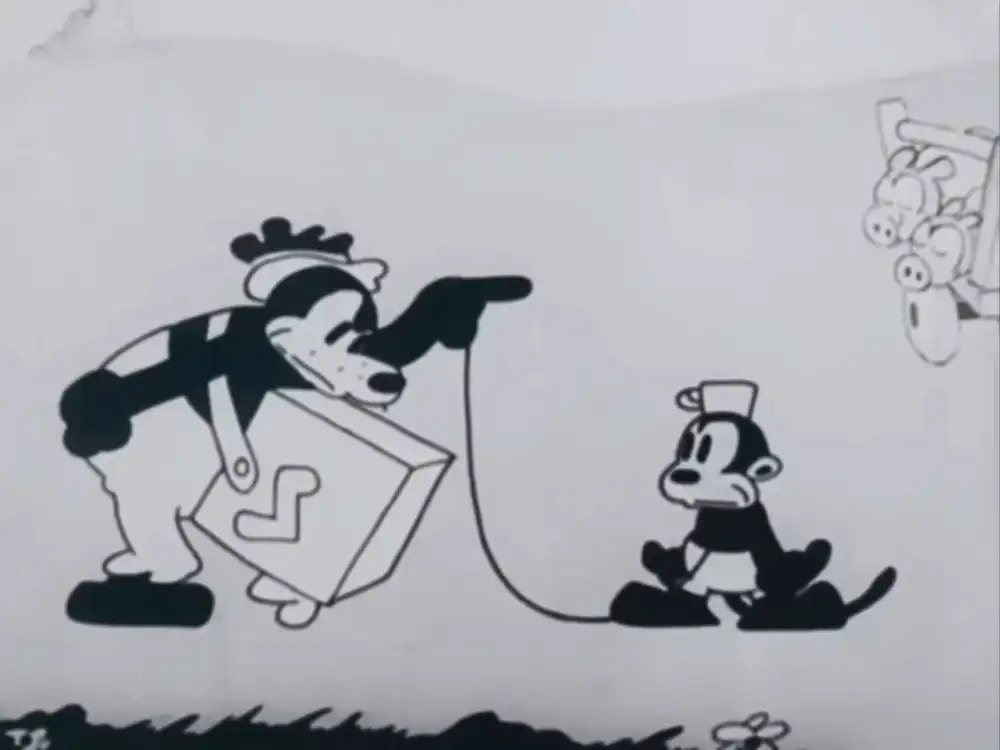
The disguise bit, when they become a hurdy-gurdy man and a monkey, is pretty clever. It’s a classic cartoon trope, but here, it feels so quick and spontaneous. Like they just thought of it right then.
You can see the roots of so many later cartoon ideas in this short. The transformations, the elastic physics, the sheer audacity of the gags. It’s all there, in this incredibly raw form.
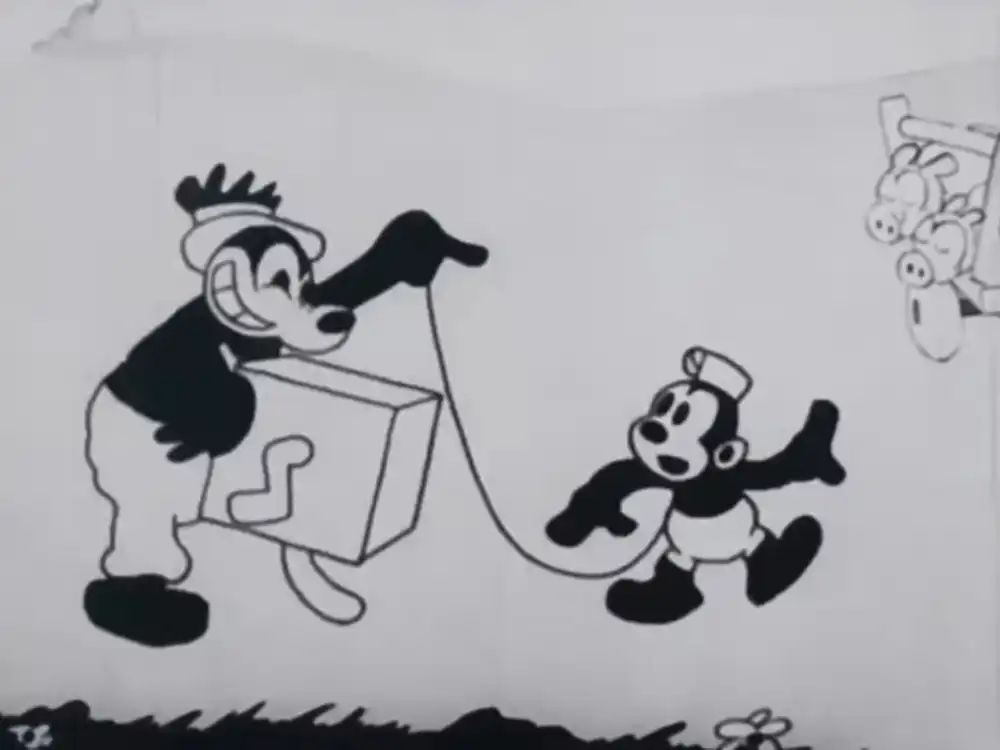
Some of the background details are just sketched in, barely there. It gives everything this very immediate, almost improvisational feel. Like they were making it up as they went along, which, for 1928, probably wasn't far off.
The animation itself, while primitive by today's standards, has this wonderful fluidity. Oswald's ears, especially, are always moving, always expressing something. It's a small detail, but it makes him feel so alive.
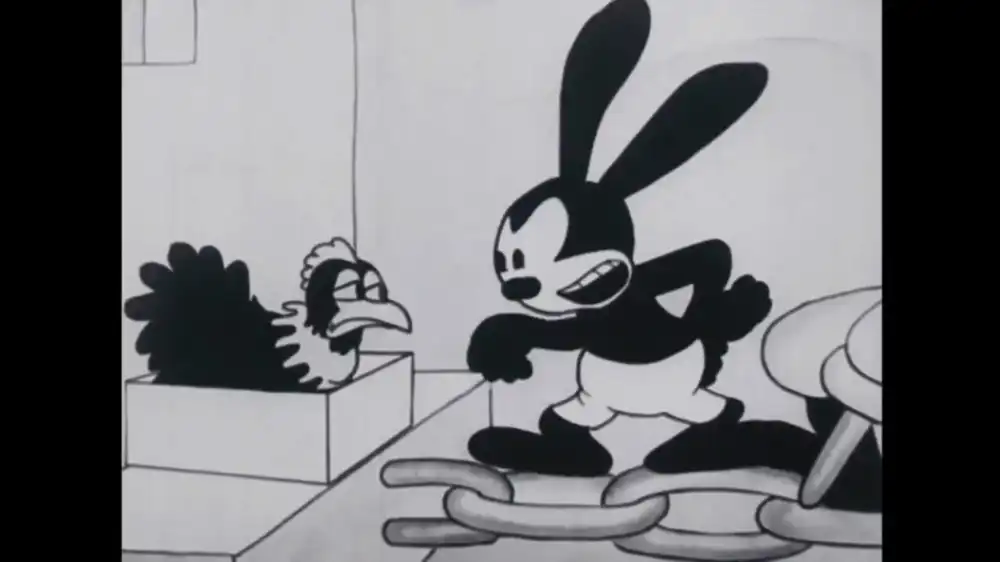
The audience experience is probably one of mild bewilderment mixed with appreciation for the sheer audacity. It’s not necessarily funny in a modern sitcom way, but it's *fascinating*.
There's a strange tonal shift sometimes. One minute it's lighthearted animal antics, the next it’s almost The Paleface-level chase intensity. It doesn’t quite settle.
Overall, it’s a vital piece of animation history. Not a masterpiece, maybe, but a wonderfully chaotic blueprint. It shows just how much creative energy was bursting out of those early studios, even if it hadn't quite figured out how to slow down and tell a story yet.
IMDb 6.3
1931
Community
Log in to comment.