DbcultAccessing Vault...
Cult Review
Senior Film Conservator
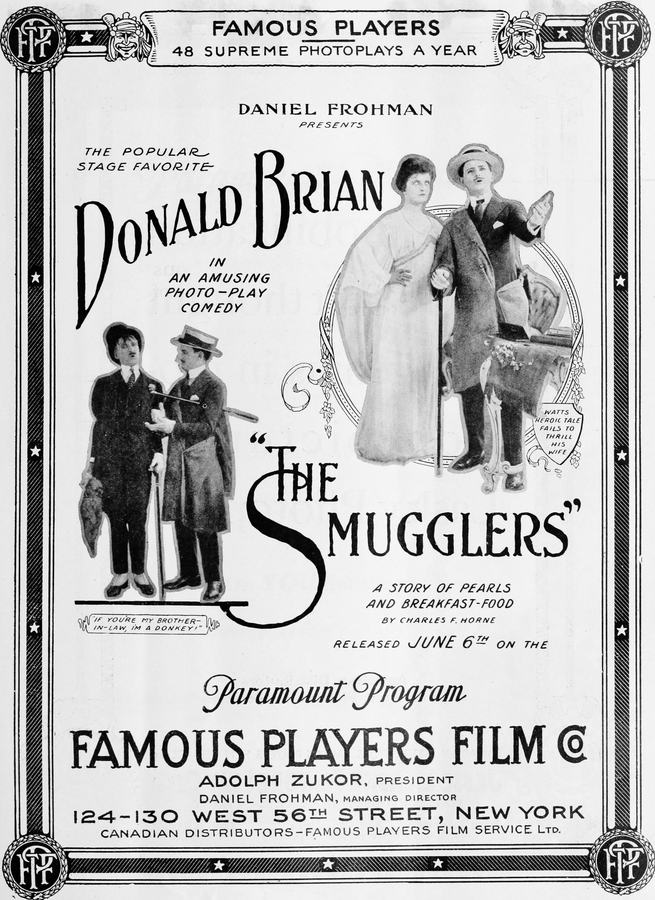
The cinematic landscape, particularly in an era often dismissed for its nascent narrative sophistication, occasionally throws forth a work that transcends its contemporaries, carving out a niche of profound thematic resonance and compelling character study. Charles F. Horne’s The Smugglers stands as one such indelible creation, a film that, upon re-examination, reveals layers of psychological depth and atmospheric mastery rarely attributed to its period. Far from a mere genre exercise, this is a stark, unvarnished portrait of human desperation, painted against the brooding canvas of a remote coastal community. It’s a narrative that eschews simplistic morality, plunging instead into the murky waters of survival where right and wrong become indistinguishable from the pervasive fog that clings to Blackwater Cove.
Horne, a writer of immense subtlety, crafts a story that feels both intimately personal and broadly allegorical. He understands that true drama often arises not from grand gestures, but from the quiet erosion of principle under the relentless pressure of necessity. The film’s protagonist, Margaret Greene, brought to life with an arresting blend of fragility and nascent steel by Margaret Greene herself, is the beating heart of this narrative. Her existence is a testament to the grinding poverty that afflicts Blackwater Cove, a village where the sea, once a bountiful provider, has turned fickle, offering only meager sustenance. Greene’s portrayal of Margaret is a masterclass in understated pathos; her eyes, often downcast, betray a weariness that speaks volumes of her burdens – an ailing mother, Alma Tell, whose delicate health is a constant source of anxiety, and a younger sibling, Betty Dodsworth, whose innocent dependence magnifies Margaret’s responsibilities. This is not the glamorous struggle of a protagonist seeking adventure, but the grim, daily fight for existence, a struggle that resonates with the raw authenticity of films like The Miner's Daughter, which similarly depicted the relentless toll of economic hardship on working-class families.
The arrival of Cyril Chadwick, portrayed with a chilling magnetism by Cyril Chadwick, acts as the catalyst for the village’s descent into illicit trade. Chadwick is no mustache-twirling villain; he is a man of calculated charm and predatory insight, a figure who preys on the vulnerabilities of a community starved of hope. His promises of quick riches, delivered with an almost messianic fervor, are a siren song to the desperate men of Blackwater. Chadwick’s performance is a nuanced study in manipulation, his smile a thin veneer over a core of ruthless opportunism. He represents the corrosive influence of external forces on an already fragile ecosystem, much like the deceptive allure of wealth in Through Fire to Fortune, where characters are driven to extreme measures by the promise of prosperity. Horne's writing for Chadwick is particularly sharp, demonstrating how easily despair can be weaponized against those with the least to lose.
Donald Brian, as the returning war veteran, offers another compelling facet of the film’s moral landscape. Brian’s character, haunted by the brutal realities of the trenches, initially carries an almost palpable aura of disillusionment, his moral compass battered but not entirely broken. His resistance to Chadwick’s illicit enterprise is admirable, a last bastion of integrity in a crumbling world. However, the film meticulously charts his agonizing descent, driven by the profound need to provide for his own impoverished family. Brian’s performance is a poignant exploration of how even the strongest moral convictions can buckle under the weight of overwhelming circumstance. The subtle interplay between his lingering idealism and the harsh realities he faces is reminiscent of the internal struggles seen in The Awakening of Bess Morton, where characters grapple with difficult choices that redefine their sense of self. The film excels in showing, rather than telling, the emotional toll of such compromises.
The ensemble cast further enriches this intricate tapestry. Rita Bori, as Chadwick’s cunning associate, injects a dose of spirited ruthlessness, her loyalty to Chadwick unwavering, yet subtly hinting at her own complex motivations. Her interactions with Brian add a layer of tension, showcasing her skill in exploiting vulnerabilities. Alma Tell, as Margaret’s ailing mother, provides the emotional anchor for Margaret’s desperation, her quiet suffering a constant reminder of the stakes involved. Betty Dodsworth’s portrayal of the younger sister, though brief, is impactful, her innocence magnifying the moral darkness that threatens to engulf Blackwater Cove. And Harold Vosburgh, as the diligent but underfunded coastal patrol officer, serves as the external threat, a symbol of a distant, often ineffective justice system trying to penetrate the insular world of the smugglers. His relentless pursuit, often fruitless, underscores the difficulty of enforcing law in a community united by desperation, echoing themes found in films like Frank Gardiner, the King of the Road, where the lines between law and outlaw are often blurred by societal context.
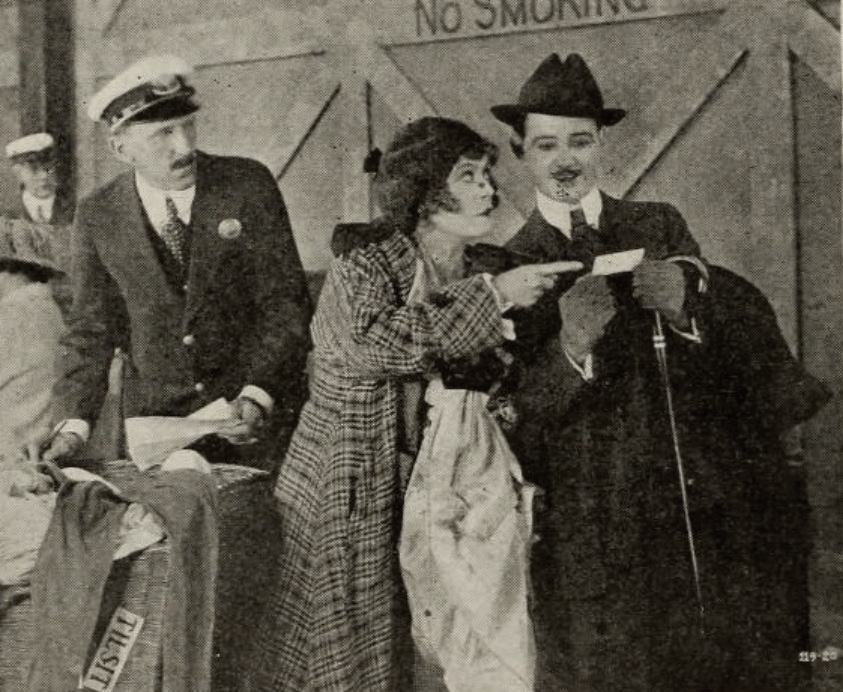
Horne’s directorial vision for The Smugglers is nothing short of masterful. The film utilizes its coastal setting not merely as a backdrop, but as an active character, its brooding atmosphere permeating every frame. The perpetual fog, the crashing waves, the desolate beaches – all contribute to a sense of isolation and impending doom. The cinematography, particularly in its use of light and shadow, is exquisite, evoking a sense of noir before the genre was even formally defined. Shadows stretch long and menacingly, obscuring faces and intentions, creating a visual metaphor for the moral ambiguities at play. Close-ups on the weathered faces of the villagers convey their unspoken struggles, their desperation etched into every line and furrow. The pacing is deliberate, allowing the psychological tension to build slowly, inexorably, towards its devastating climax. This meticulous attention to visual storytelling elevates the film beyond a simple crime drama, positioning it as a profound character study, much like the atmospheric tension sustained throughout Hearts of Oak.
The screenplay by Charles F. Horne is a marvel of efficiency and emotional depth. Despite the constraints of the era’s storytelling conventions, Horne manages to craft a narrative that feels remarkably modern in its exploration of moral relativism. There are no clear heroes or villains, only individuals caught in a web of circumstance, making choices that are understandable, if not always justifiable. The dialogues, though sparse, are loaded with subtext, revealing character and advancing plot with precision. The narrative arc of Margaret, from passive observer to reluctant participant and ultimately to a desperate saboteur, is handled with immense sensitivity and realism. Her transformation is not a sudden epiphany but a gradual, painful accretion of choices, each one pushing her further into the moral gray. The film’s climax, a desperate act of sabotage against Chadwick’s operation, is not a triumphant moment of justice, but a wrenching act of self-preservation that leaves Margaret, and the audience, contemplating the true cost of survival. It's a conclusion that challenges conventional notions of heroism, leaving a lingering sense of unease that few films manage to achieve, much like the unsettling questions posed by The Question.
The themes explored in The Smugglers are timeless and universally resonant. At its core, it is a powerful examination of economic hardship driving moral compromise. The film posits that when societal structures fail, individuals are forced to create their own systems of survival, however illicit. It delves into the nature of loyalty, both to family and community, and how these loyalties can be twisted and exploited. The allure of quick wealth, juxtaposed against the slow, arduous grind of honest labor, is a central tension that permeates the entire narrative. Furthermore, the film subtly critiques the indifference of the wider world to the plight of isolated communities, highlighting how their desperation can be easily exploited by those with power and resources. This social commentary, woven seamlessly into the dramatic fabric, gives the film an enduring relevance, echoing the societal critiques embedded in works like Common Ground.
One cannot discuss The Smugglers without acknowledging its profound influence on subsequent cinematic efforts dealing with similar themes. While perhaps not widely recognized in popular discourse, its DNA can be traced in later, more celebrated works of coastal noir and crime dramas. The film's unflinching gaze at the human cost of illicit trade, its nuanced characterizations, and its atmospheric brilliance set a high bar. It’s a film that demands active engagement from its audience, inviting contemplation on the nature of good and evil, and the thin, often permeable line that separates them. The performances, particularly by Greene, Brian, and Chadwick, are exceptional, delivering emotional depth that transcends the technical limitations of early cinema. They imbue their characters with a raw, visceral humanity that makes their struggles profoundly relatable. The film’s legacy, though perhaps understated, lies in its brave exploration of moral ambiguity and its refusal to offer easy answers.
The collaborative genius of Horne and his cast creates a world that feels lived-in and authentic, where every creaking boat and every whispered conversation carries weight. The sound design, even in its implied form, is critical; one can almost hear the mournful cries of gulls, the relentless pounding of the surf, and the hushed anxieties of a village teetering on the brink. This immersive quality is a hallmark of truly great cinema, transporting the viewer entirely into its meticulously crafted reality. The film’s ability to evoke such a powerful sense of place and mood, even without the advanced technological tools of later eras, speaks volumes about the artistry involved. It’s a testament to the power of storytelling and visual composition over mere spectacle. The way the film uses its environment to reflect internal states is particularly striking, a technique that would be refined in countless films thereafter, including the evocative landscapes of Scotland.
In conclusion, The Smugglers is a film that deserves far greater recognition than it typically receives. It is a powerful, melancholic, and deeply intelligent work that challenges viewers to confront uncomfortable truths about human nature and societal pressures. Charles F. Horne, through his masterful direction and astute writing, along with the unforgettable performances from Margaret Greene, Donald Brian, and Cyril Chadwick, delivers a cinematic experience that lingers long after the final frame. It is a vital piece of film history, a precursor to the gritty realism that would define later genres, and a poignant reminder that the most compelling stories often emerge from the darkest corners of human experience. This is not merely a film about crime; it is a profound meditation on survival, morality, and the enduring resilience—and tragic compromises—of the human spirit. Its enduring power lies in its refusal to preach, instead opting to present a complex reality with unflinching honesty, leaving its audience to grapple with the unsettling implications of its stark, ambiguous resolution. It stands as a testament to the fact that even in an era often overlooked, true artistry can shine through, illuminating the shadows of the human condition with an almost unbearable clarity. For those seeking cinema that challenges and provokes thought, The Smugglers remains an essential, haunting watch, a true gem unearthed from the annals of film history.
IMDb 5.4
1928
Community
Log in to comment.