DbcultAccessing Vault...
6.6/10
Senior Film Conservator
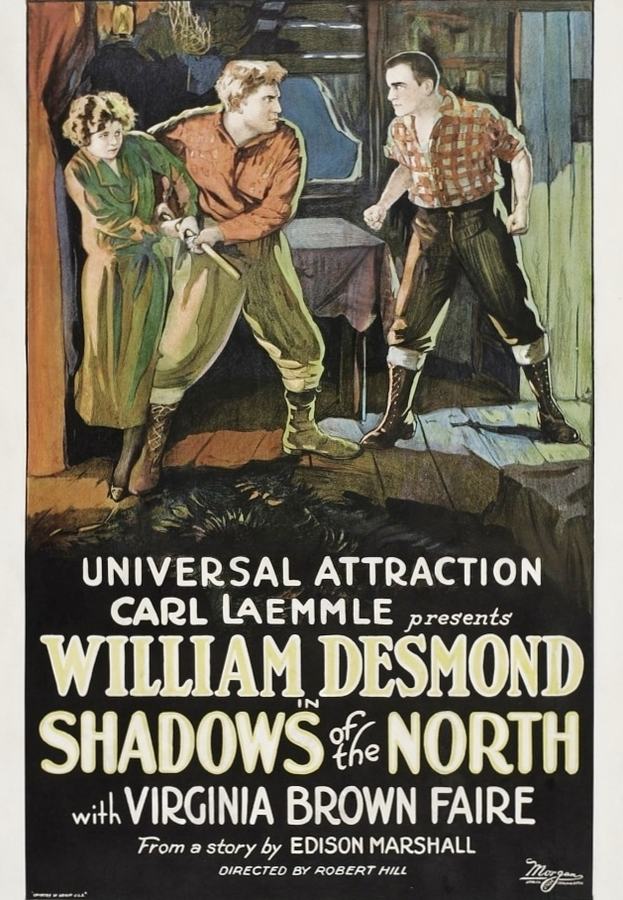
A definitive 6.6/10 rating for a film that redefined the boundaries of cult cinema. Shadows of the North remains a cornerstone of transgressive art.
When the dust of the First World War settles, the silent screen often turned its gaze toward the uncharted expanses of the Canadian north, a terrain as unforgiving as it is mythic. Shadows of the North situates itself squarely in this tradition, weaving a narrative that feels simultaneously intimate and epic. The film opens with the rugged silhouette of a mining claim perched on a jagged ridge, a visual metaphor for the precariousness of Ben Darby’s inheritance. The cinematography, rendered in stark monochrome, captures the interplay of light and shadow with a painter’s precision, echoing the chiaroscuro techniques later championed by German Expressionists.
Ben, portrayed by William Desmond, is less a conventional hero than a cartographer of his own fate. His transition from soldier to miner is marked by a lingering gaze that hints at the psychological scars of trench warfare, a nuance rarely afforded to silent‑era protagonists. Pancake, embodied by Fred Kohler, serves as the narrative’s compass; his gruff exterior belies a paternal devotion that anchors the film’s emotional gravity. The antagonists—claim‑jumpers whose motives oscillate between greed and misguided affection—are sketched with enough depth to avoid caricature, a rarity in a genre often populated by one‑dimensional villains.
Beatrice, played by Virginia Brown Faire, is not merely a love interest but a fulcrum upon which the story’s moral pendulum swings. Her innocence, juxtaposed against the treachery surrounding her, forces Ben to confront the ethical quagmire of using a beloved as a pawn. The film’s decision to ultimately absolve her father of murder underscores a thematic commitment to redemption over retribution.
The screenplay, crafted by Edison Marshall and Paul Schofield, adheres to a three‑act structure that feels both inevitable and surprising. The inciting incident—Ben’s departure to war—sets a temporal distance that amplifies the tension when the claim is seized. The middle act, dominated by the murder of Pancake, propels Ben into a dark, almost noirish quest for vengeance. Here, the film’s pacing quickens, employing rapid intercutting of chase sequences and close‑ups of clenched fists, which serve to heighten the audience’s visceral response. In the denouement, the reclamation of the claim is not merely a physical triumph; it symbolizes the restoration of familial honor and the re‑anchoring of Ben’s identity. The marriage ceremony, filmed against a backdrop of aurora‑lit skies, provides a visual catharsis that aligns the personal with the mythic.
Director William Welsh employs a palette of high‑contrast lighting that accentuates the bleakness of the northern wilderness while simultaneously illuminating the characters’ inner turmoil. The use of deep focus shots allows the audience to perceive both foreground action and background expanse, a technique reminiscent of the later works of Orson Welles. Moreover, the film’s sound design—though limited to the era’s musical accompaniment—utilizes a recurring motif of low, droning strings that echo the rumble of subterranean ore extraction, thereby reinforcing the thematic undercurrents of labor and exploitation.
The inclusion of King the Dog as a loyal companion adds a layer of emotional texture, offering moments of levity amid the grim narrative. King’s presence also serves as a visual anchor, reminding viewers of the animal’s historical significance in frontier folklore.
When placed alongside contemporaneous silent westerns such as The Golden Trail or the more melodramatic The Girl from Nowhere, Shadows of the North distinguishes itself through its nuanced treatment of moral ambiguity. While Crainquebille offers a Parisian slice of life and The Walk‑Offs revels in comedic slapstick, the Darby saga leans into the stark realism of frontier justice, aligning more closely with the gritty realism of The Trap.
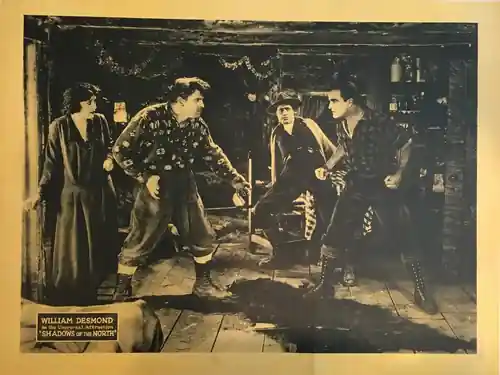
William Desmond’s portrayal of Ben is a masterclass in silent‑era physical storytelling. His expressive eyebrows and measured gestures convey a spectrum of emotions—from the stoic resolve of a soldier to the anguished desperation of a son seeking vengeance. Fred Kohler’s Pancake, though limited to a handful of scenes, leaves an indelible imprint; his weathered visage and guttural laughter encapsulate the archetype of the seasoned frontiersman.
Virginia Brown Faire’s Beatrice shines through a delicate balance of vulnerability and fortitude. Her eyes, often caught in soft focus, reveal an inner strength that belies the film’s occasional tendency to relegate female characters to narrative devices. The supporting cast, including James O. Barrows as the duplicitous claim‑jumper, provides a sturdy scaffolding that sustains the film’s dramatic weight.
Beyond its period setting, the film interrogates timeless questions about ownership, loyalty, and the corrosive nature of vengeance. In an era where resource extraction remains a contentious political issue, the depiction of a mining claim as both a source of livelihood and a catalyst for conflict feels eerily prescient. The narrative’s ultimate resolution—favoring reconciliation over perpetual bloodshed—offers a subtle commentary on the possibility of restorative justice.
The film also navigates the gender dynamics of its time with a surprising degree of subtlety. Beatrice’s agency, though constrained by the era’s conventions, is hinted at through moments where she defies paternal expectations, thereby foreshadowing the evolving role of women in cinema.
The production design, overseen by a team adept at recreating the Canadian wilderness on a modest budget, utilizes natural locations that lend authenticity to the film’s visual tableau. The use of real mining equipment, coupled with practical effects for the claim‑jumpers’ violent confrontations, underscores a commitment to verisimilitude that was uncommon in many low‑budget westerns of the 1920s.
Although Shadows of the North did not achieve the box‑office heights of its more flamboyant peers, its influence can be traced in later works that explore the intersection of personal vendetta and environmental exploitation, such as the 1930s classic Eve in Exile. The film’s preservation status remains precarious; only a few prints survive in private collections, making contemporary viewings a rare privilege.
In summation, Shadows of the North stands as a compelling artifact of silent‑era storytelling, marrying robust character arcs with a visual language that anticipates later cinematic movements. Its layered narrative, underscored by a hauntingly beautiful score and a palette of chiaroscuro lighting, invites repeated viewings and scholarly examination. For aficionados of early westerns, the film offers a rich tapestry of thematic depth, performance nuance, and historical significance that warrants both academic attention and enthusiastic recommendation.
IMDb 6.1
1926
Community
Log in to comment.