DbcultAccessing Vault...
Cult Review
Senior Film Conservator

There are films that whisper and films that roar, and then there are those rare cinematic gems like Hunters Bold that do neither, yet resonate with a profound, almost unsettling quietude. This isn't a spectacle of grand adventures or soaring triumphs, but rather an intimate, introspective glance into the human psyche when confronted with the raw, unvarnished realities of the natural world. The premise, deceptively simple, outlines the Spat family's decision to embrace the 'rod and gun' as a means of diversion, a seemingly innocent pursuit that, as the film unfolds, yields disastrous results to their own feelings. It's a narrative that compels us to ponder the true cost of our leisure, the often-unforeseen emotional tariffs exacted by activities we deem harmless.
In an era where cinema was still finding its voice, Hunters Bold carves out a niche by focusing less on external conflict and more on the intricate, internal landscapes of its characters. The Spat family, portrayed with a nuanced subtlety by Sidney D'Albrook, Frank Butler, and Laura Roessing, are not caricatures but rather relatable individuals whose journey into the wilderness becomes a mirror reflecting their own vulnerabilities. One might initially imagine a lighthearted romp, a comedic misadventure in the vein of early slapstick, but the film quickly disabuses such notions, steering instead into a more contemplative, almost melancholic territory. This pivot is what gives the film its enduring power, distinguishing it from countless contemporaries that aimed for simpler, more immediate gratification.
The decision to take up the rod and gun is presented as a collective family choice, perhaps born out of a desire for reconnection, a yearning to escape the mundane rhythms of their daily lives. But what exactly are they seeking diversion from? Is it the quiet hum of domesticity, the unspoken tensions, or merely a perceived lack of excitement? The film, with its economical storytelling, leaves much to our interpretation, a characteristic that only deepens its resonance. We are invited to speculate on the unspoken undercurrents that propel the Spats towards the wilderness, making their subsequent emotional unraveling all the more impactful. Their initial enthusiasm, likely tinged with a romanticized vision of outdoor life, stands in stark contrast to the grim reality that slowly encroaches upon their spirits. It’s a classic setup, echoing the foundational human impulse to seek solace or thrill in nature, only to discover a more profound, often uncomfortable truth about oneself.
As the Spats embark on their fishing expedition, the first cracks begin to appear. The tranquility of the water, far from offering peace, might instead amplify their internal disquiet. The act of fishing, often lauded as a meditative practice, here becomes a crucible. Is it the quiet contemplation that forces them to confront unresolved feelings? Or is it the stark reality of baiting a hook, waiting for a bite, and then pulling a struggling creature from its element? The film doesn't shy away from these implicit questions. We observe the subtle shifts in their expressions, the growing discomfort in their postures. Sidney D'Albrook's character, perhaps initially the most eager, might be the first to show signs of disillusionment, a flicker of unease in his eyes as he grapples with the ethical implications, however faint, of his actions. This isn't a grand moral treatise, but a deeply personal, almost visceral reaction to the act of taking life, even on a small scale.
The transition from fishing to hunting marks an escalation in their emotional distress. The gun, a tool of more immediate and profound consequence, brings with it a heavier weight. The pursuit of larger game, the sound of the shot, the sight of a fallen animal – these are experiences that transcend mere sport for the Spat family. They are confronted with the stark reality of mortality, of their own capacity for agency over life and death. It's here that the 'disastrous results' become most palpable. One might draw a thematic parallel to films where characters seek escape but find themselves mired in deeper trouble, though perhaps less overtly criminal than in Tainted Money. Instead, the consequences here are purely internal, a corrosion of the soul rather than a legal entanglement. The film avoids overt melodrama, preferring to let the quiet anguish of its characters speak volumes.
Laura Roessing's performance, in particular, might capture the escalating anxiety with remarkable subtlety. Her initial excitement could give way to a profound sense of regret or even guilt, her maternal instincts perhaps recoiling from the harshness of the hunt. Frank Butler's character, too, likely undergoes a similar transformation, his stoicism perhaps crumbling under the weight of unforeseen emotional burdens. The film's genius lies in its ability to convey this internal turmoil without extensive dialogue, relying instead on the powerful language of facial expressions, body language, and the stark contrast between the vibrant wilderness and the Spats' dwindling spirits. This silent eloquence is a hallmark of early cinema, and Hunters Bold utilizes it to devastating effect.
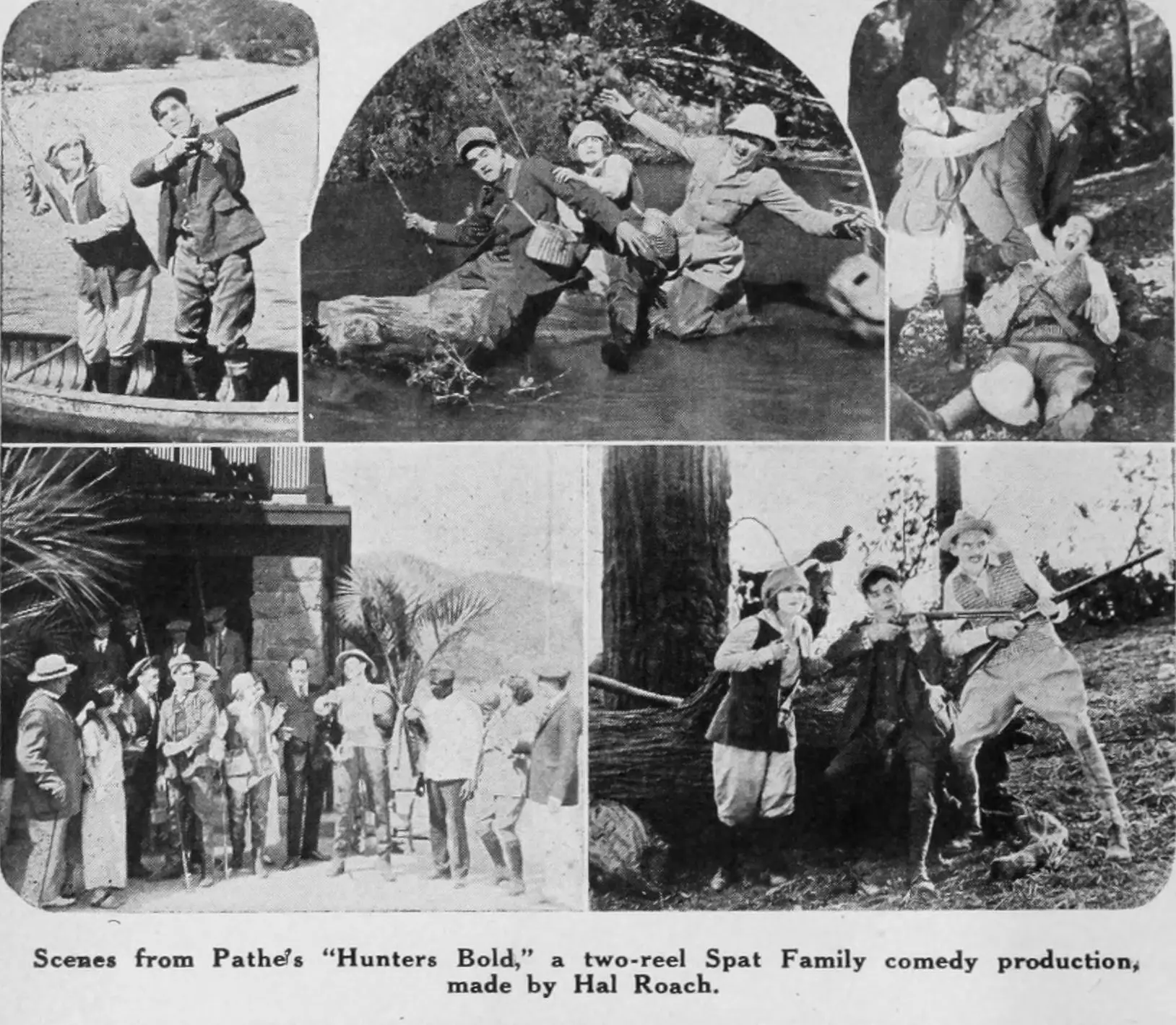
The psychological aftermath is where Hunters Bold truly distinguishes itself. The 'disastrous results to their own feelings' manifest not as a sudden outburst, but as a slow, creeping erosion of their contentment. Guilt, disillusionment, and a pervasive sense of alienation from the very nature they sought to embrace likely settle upon them. Their familial bonds, rather than being strengthened by shared experience, appear to fray under the strain of these newfound emotional burdens. The shared pursuit, intended to unite, instead serves to highlight individual sensitivities and moral quandaries, creating an unspoken chasm between them. It’s a poignant commentary on how attempting to force connection through an ill-suited activity can instead reveal deeper, more fundamental incompatibilities.
Consider the subtle ways the film might portray this fragmentation. Perhaps a shot where the family members, once walking in unison, now lag behind each other, lost in their own thoughts. Or a scene around a campfire, where silence, once comforting, now feels heavy with unspoken regrets. These visual cues, though simple, carry immense narrative weight, conveying the profound impact of their 'diversion.' The Spats return home not revitalized, but burdened, their understanding of themselves and their relationship with the natural world irrevocably altered. It's a journey not of discovery, but of unforeseen self-revelation, much like the unexpected turns in a narrative such as The Bottom of the Well, where characters find themselves in predicaments far beyond their initial expectations.
The performances of Sidney D'Albrook, Frank Butler, and Laura Roessing are central to the film's success in conveying this complex emotional landscape. D'Albrook, perhaps playing the patriarch, might project an initial bravado that slowly gives way to a quiet resignation, his eyes betraying a profound weariness. Butler, perhaps the more pragmatic or adventurous, could demonstrate a gradual hardening, a realization that some experiences are better left untried. And Roessing, likely the emotional core, might convey a spectrum of feelings from initial apprehension to outright distress, her expressions a window into the film's tragic heart. Their collective portrayal of a family unit undergoing such internal turbulence, particularly within the constraints of early cinematic techniques, is nothing short of masterful. They articulate the unspoken, giving voice to the characters' burgeoning anxieties and regrets through their nuanced physicality and expressive faces.
Thematic resonance of Hunters Bold extends far beyond its specific plot. It speaks to the broader human condition, our often-complicated relationship with nature, and the sometimes-misguided pursuit of happiness or diversion. Is true contentment found in conquering the wild, or in a more harmonious coexistence? The film suggests the latter, albeit through the painful lessons learned by the Spat family. It's a subtle critique of a certain brand of recreational activity that prioritizes sport over empathy, and a gentle reminder that our actions, even in leisure, carry ethical and emotional weight. This introspective quality sets it apart, inviting comparisons not to adventure films, but to more psychologically driven narratives, perhaps even touching on the quest for meaning found in films like The Seekers, though with a decidedly more sobering outcome.
From a cinematic craftsmanship perspective, the director's choices, even in a short film of this vintage, are remarkable. The framing of shots, the pacing of the narrative, and the subtle use of natural light all contribute to the film's melancholic atmosphere. There are no jarring cuts or overt special effects; instead, the camera acts as an unobtrusive observer, allowing the emotional drama to unfold organically. The wide shots of the wilderness, initially majestic, might slowly begin to feel isolating or even menacing as the Spats' spirits wane, mirroring their internal descent. Close-ups, if employed, would highlight the nuanced expressions of the actors, drawing the viewer into their private struggles. This deliberate, unhurried approach allows the audience to truly inhabit the Spats' emotional journey, making their 'disastrous feelings' a shared experience.
The enduring legacy of Hunters Bold lies in its timeless exploration of human vulnerability and the unexpected consequences of our pursuits. It poses questions that remain relevant today: What are we truly seeking when we turn to nature for diversion? And at what emotional cost do we engage with the world around us? The film doesn't offer easy answers, but rather a compelling, albeit somber, reflection on these perennial dilemmas. It stands as a testament to the power of early cinema to convey complex psychological narratives with remarkable depth and sensitivity. For those who appreciate films that delve beneath the surface, that provoke thought rather than merely entertain, Hunters Bold remains an essential, if quietly impactful, viewing experience, a profound meditation on the fragility of human feelings when pitted against the unyielding realities of the wild.
IMDb —
1924
Community
Log in to comment.