DbcultAccessing Vault...
6/10
Senior Film Conservator
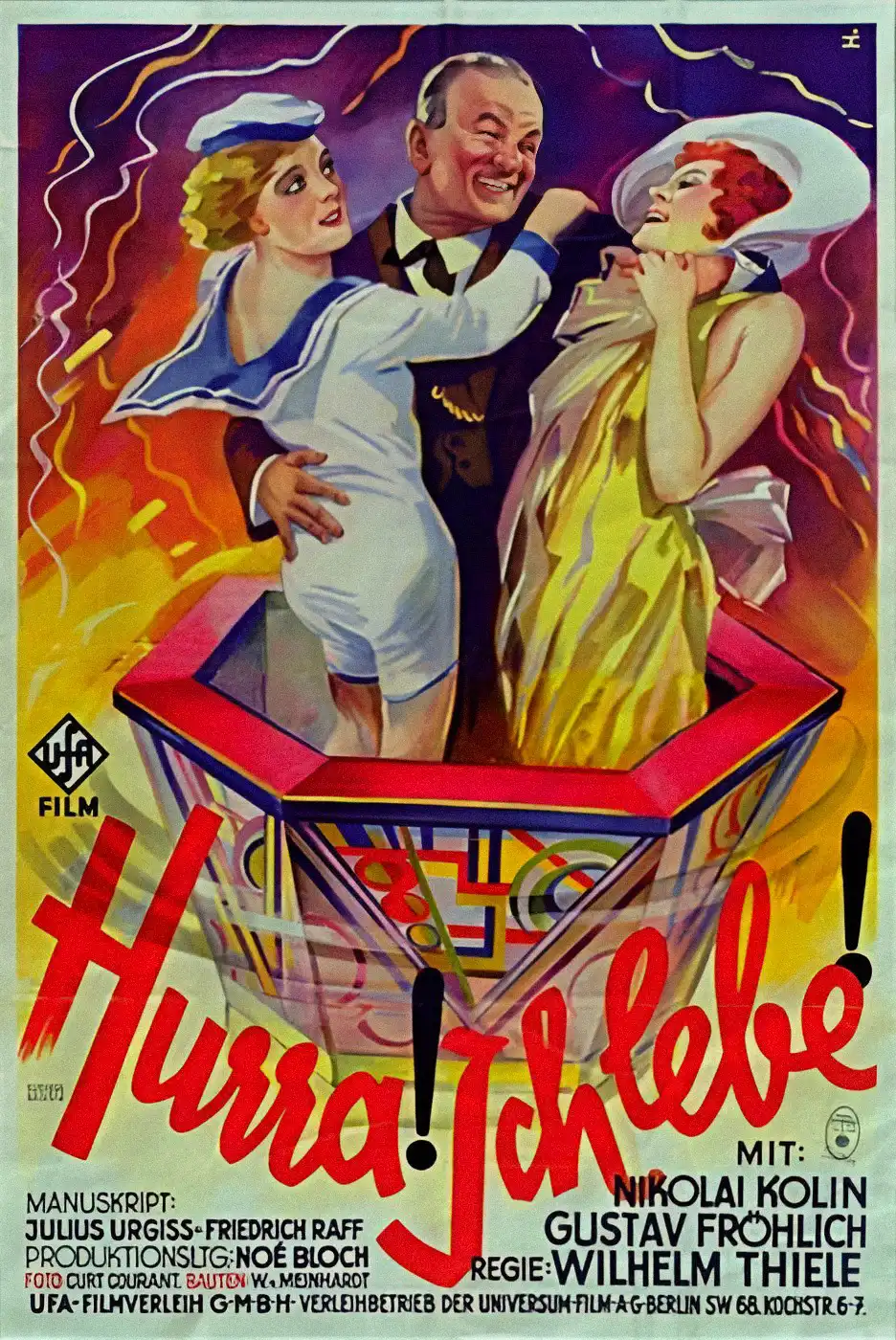
A definitive 6/10 rating for a film that redefined the boundaries of cult cinema. Hurra! Ich lebe! remains a cornerstone of transgressive art.
"Hurra! Ich lebe!" is one of those German silent films from the tail end of the era that feels like it’s trying to catch its breath before the talkies arrived. If you’re a silent film enthusiast, particularly one interested in the social dramas of the Weimar Republic, then yes, this is absolutely worth checking out. You'll find some genuinely interesting character work here, even if it feels a little uneven. If you're someone who struggles with silent cinema's conventions or expects a brisk, modern pace, you'll probably find stretches of it frustrating, maybe even a bit dull. It asks for patience, and not everyone will be willing to give it.
The actual plot of "Hurra! Ich lebe!" is pretty straightforward on paper: a woman, Maria (Walia Ostermann), presumed dead in the war, just... shows up again. Only her husband, Heinrich (Gustav Fröhlich), has moved on, married someone else, and is living comfortably on her inherited wealth. The core idea is strong, ripe for all sorts of social commentary and emotional turmoil. And for a good chunk of the film, it really does lean into that discomfort.
There’s a scene early on where Maria first sees her old home, now occupied by her husband and his new wife, Liane (Betty Astor). Ostermann plays it with this sort of haunted stillness. You can almost feel her trying to process what's happening, the weight of her own forgotten existence. It’s not a big, dramatic moment, but a quiet, internal one, and it lands. The direction here lets the camera sit with her, which is appreciated; it gives her space to just be in the moment.
But then, the movie starts to get a little... busy. There's a whole subplot involving a circus and a clown (Nicolas Koline) who befriends Maria. This is where the pacing starts to wobble. While Koline’s performance as the melancholic clown is genuinely affecting – he’s got these huge, expressive eyes that really pull you in – his segments often feel detached from the central drama. It’s like the film can’t quite decide if it wants to be a poignant study of loss and identity or a more melodramatic, almost farcical, tale of mistaken identity and hidden fortunes. The tonal shifts can be jarring. One minute you're deep in Maria’s quiet despair, the next you're watching a clown perform. It's a bit much.
Gustav Fröhlich, as Heinrich, is interesting. He’s not a villain, not really. He’s just a man who moved on. His initial reaction to Maria's reappearance is a mixture of shock and, honestly, a kind of panic. You see the wheels turning, not just about Maria, but about his new life, his new wife, his money. It’s a very human, if not entirely sympathetic, response. There's a moment when he's trying to talk to Maria, and he keeps glancing away, almost unable to meet her gaze. That small detail speaks volumes. He’s trying to be polite, but the guilt and the sheer inconvenience are written all over him.
The film's visual language is pretty standard for the time, though there are some nice touches. A few shots of Berlin at night, with the streetlights reflecting on wet pavement, give a good sense of place. But then you also get these slightly awkward close-ups where the actors seem to be waiting for their cue, holding a facial expression for just a beat too long. It’s not terrible, but it breaks the spell a little. You can almost feel the director saying "hold it, hold it."
And the costumes! Liane, the new wife, is always dressed in these rather extravagant outfits. They scream "new money" in a way that feels a bit on the nose, especially when contrasted with Maria’s more subdued, almost plain clothing once she’s back in society. It highlights the class difference Maria now faces, sure, but sometimes it feels like a caricature. There's one particular hat Liane wears, a feathered thing, that just dominates the frame in a couple of scenes. It’s hard to focus on the dialogue cards when that hat is practically its own character.
The chemistry, or lack thereof, between Maria and Heinrich after her return is also quite telling. There's no real spark, no lingering affection shown on his part. It's all obligation and discomfort. You feel more pity for Maria trying to connect than you feel for any lost love between them. Liane, on the other hand, seems genuinely fond of Heinrich, but her character is mostly there to represent the 'other woman' trope, without much depth. Betty Astor does what she can with it, but the script doesn't give her a lot to work with beyond being stylish and a bit naive.
The resolution, or lack thereof, is where the film really shows its age, or perhaps its ambition getting ahead of itself. It tries to tie things up neatly, but the emotional logic feels a bit strained. Without giving too much away, let’s just say that the sudden shifts in character motivation near the end don't quite track with what we've seen before. It feels rushed, like they ran out of film or decided to just wrap it up. The final scene, which aims for a kind of bittersweet triumph, mostly left me shrugging. It doesn't quite earn the "Hurra!" in the title.
Still, for its flaws, "Hurra! Ich lebe!" has a certain charm. It’s a document of its time, capturing anxieties about identity, wealth, and the lingering trauma of war. Walia Ostermann really carries the film, conveying so much with just a look or a subtle gesture. She’s the reason to watch it. The moments where she’s just allowed to be are the strongest. It's a film that asks you to forgive its unevenness for the sake of its more potent moments. And for silent film fans, that's often a worthwhile trade-off. It’s not a forgotten masterpiece, but it’s far from forgettable. If you enjoyed the domestic drama of something like Eheferien, but wanted a bit more social commentary mixed with your relationship woes, this might be up your alley.
IMDb 7
1933
Community
Log in to comment.