DbcultAccessing Vault...
Cult Review
Senior Film Conservator
There's an undeniable allure to the grand narratives of early cinema, particularly those that unflinchingly plunge into the depths of human morality, pitting virtue against vice with a stark clarity. Such is the enduring power of "Price of Treachery; Or, The Lighthouse Keeper's Daughter," a film that, despite its age, resonates with a timeless exploration of familial loyalty, desperate acts, and the long, winding road to redemption—or, for some, damnation. It’s a melodrama, yes, but one executed with a narrative drive and emotional heft that transcends mere theatricality, offering a poignant lens into the societal values and storytelling conventions of its era.
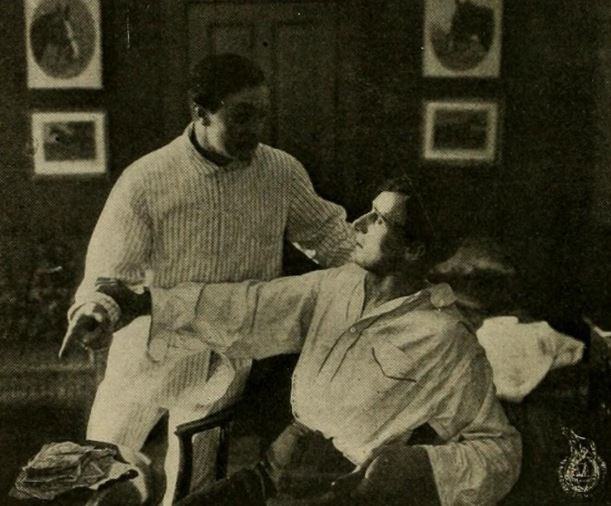
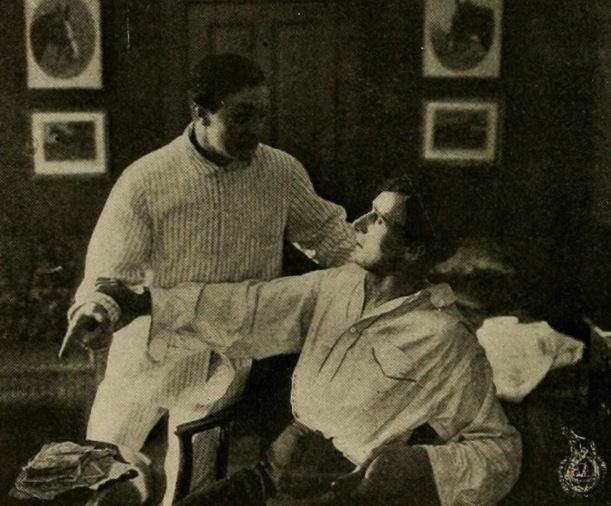
From its very opening, the picture establishes a foundational conflict rooted in the disparate characters of two brothers, Henry and Robert Williams. Henry, a man whose early life has evidently been a tapestry woven with questionable threads, finds himself entangled in the dire consequences of a forged check. The arrival of a letter, an ominous harbinger, demands immediate payment or threatens the full weight of legal retribution. This precipice of desperation drives Henry to a monumental transgression: breaking into his father's safe to steal the quarter's rents, a substantial sum freshly delivered by the overseer. It's a moment of profound moral failing, rendered all the more acute by its domestic setting. The film doesn't shy away from depicting the raw, ugly truth of Henry's character, setting him firmly on a trajectory of self-destruction.
However, the narrative pivots dramatically with the introduction of Robert, Henry's antithetical counterpart. Hearing the clandestine sounds of his brother's crime, Robert confronts Henry, who, overwhelmed by his guilt, breaks down and confesses. What follows is not an act of judgment, but one of astonishing, almost biblical, self-sacrifice. Robert, driven by an unwavering fraternal bond and an inherent sense of honor, urges Henry to confide in their father, promising his unwavering support. When Henry, paralyzed by fear and shame, refuses, Robert makes a choice that will irrevocably alter the course of his own life: he confesses to the theft himself, shielding his errant brother from the consequences of his actions. This extraordinary act of vicarious suffering is the beating heart of the film, a testament to selfless love that echoes through the subsequent events. Robert is summarily cast out, but not before a tender, clandestine moment with his mother, to whom he reveals the painful truth, ensuring that at least one soul understands the depth of his sacrifice. This initial setup is a masterclass in melodramatic exposition, establishing the stakes and the moral compass of its central figures with remarkable efficiency and emotional resonance. It sets a high bar for the emotional journey the audience is about to embark upon, reminiscent of the profound familial dilemmas explored in films like Robbery Under Arms, where loyalty and law often clash.
Four years unfurl, a chasm of time that separates the brothers and allows their divergent paths to solidify. Robert, through sheer diligence and an unblemished character, rises to become captain of the schooner "Harland." His journey has been one of quiet perseverance, his thoughts undoubtedly often drifting back to the home from which he was unjustly banished. His destination, the Isle of Peele, directly across from the mainland where his mother resides, becomes a symbol of potential reconciliation, a beacon of hope for forgiveness from his ailing father, unaware of the tragic twist of fate that has already claimed his life. This period of absence and growth for Robert stands in stark contrast to Henry's continued presence, hinting at a life less reformed, less honorable. The father's death, revealed only upon Robert's intended return, adds a layer of poignant tragedy, underscoring the irreversible consequences of Henry's initial deceit.
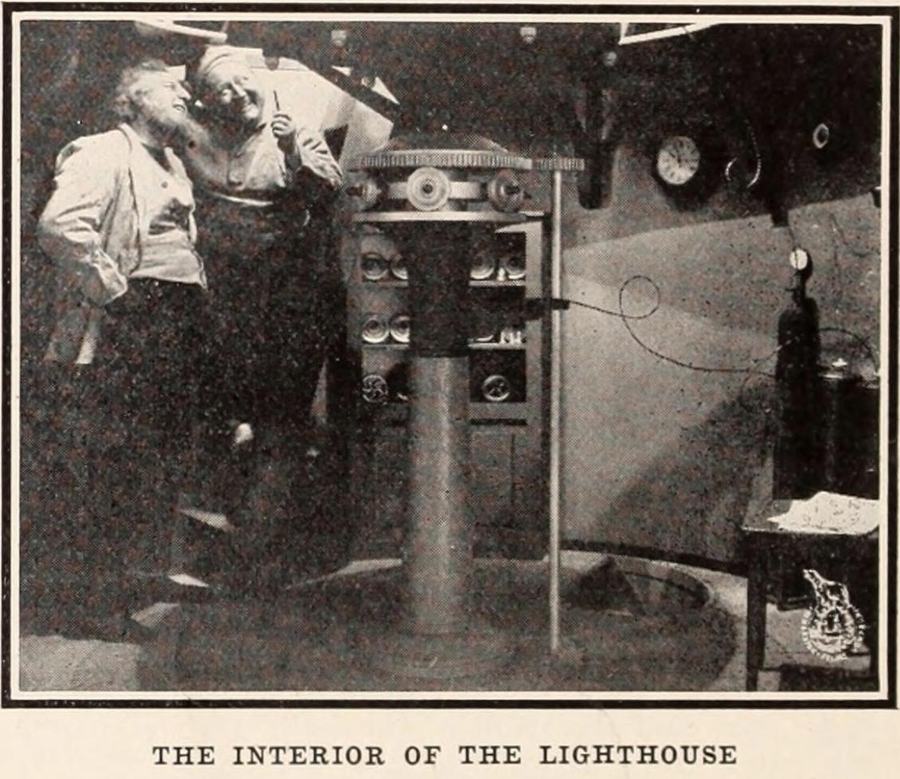
It is during this interlude that the narrative introduces Mary, the lighthouse-keeper's daughter on the Isle of Peele, a character whose purity and strength will become central to the unfolding drama. Henry, whilst out riding, encounters Mary and, immediately captivated by her beauty, succumbs to his base desires. His subsequent organization of a "shooting party" to the Isle of Peele is a transparent ruse, a thinly veiled attempt to gain proximity to Mary and pursue his ignoble intentions. This episode further paints Henry as a man unredeemed, his moral compass still broken, his actions driven by selfish impulse rather than genuine affection. The lighthouse, a symbol of guidance and safety, is about to become the stage for his renewed villainy, a cruel irony that the film exploits to great dramatic effect.
The film then elevates its dramatic tension with the arrival of a truly cataclysmic storm. This tempest is not merely a plot device; it is a force of nature that mirrors the internal turmoil of the characters and the external chaos of their lives. On the Isle of Peele, the storm compels Henry's party to seek refuge in the lighthouse-keeper's hospitality, inadvertently placing Mary in greater peril. Simultaneously, out at sea, the storm unleashes its full fury upon the "Harland," tossing the vessel about like a toy, rendering it utterly helpless. The lighthouse-keeper, a man of duty and courage, discovers the distressed ship. His subsequent actions—calling Mary to maintain the vital light and then bravely launching his boat into the raging sea for a rescue attempt—are a testament to his selflessness. This dual threat, both on land and at sea, expertly intertwines the fates of the main characters, amplifying the sense of impending doom and the fragility of human existence against the might of nature, a theme explored with similar intensity in films like Atlantis, where the sea's power dictates human destiny.
It is within the very sanctuary of the lighthouse, a beacon meant to guide and protect, that Henry reveals the true depths of his depravity. Finding Mary alone in the lamp house, he attempts to force his affections upon her. Her fierce resistance ignites a struggle, during which Henry is rendered unconscious. In his fall, he inadvertently shatters the oil supply tube, extinguishing the vital light. This act, born of lust and violence, is perhaps Henry's most egregious, directly imperiling not only Mary but also any vessel caught in the storm-ravaged waters, including, unbeknownst to him, his brother's ship. Mary's valiant defense against overwhelming odds solidifies her as a character of remarkable fortitude, a virtuous counterpoint to Henry's escalating villainy. The symbolism here is potent: the light of hope and safety literally broken by a man consumed by darkness.
Out on the tumultuous waves, the "Harland" succumbs to the storm's wrath. Robert, along with Tompkins, the cook, are the sole survivors. Faced with the terrifying prospect of their explosives-laden ship blowing up, they make the desperate decision to abandon ship, casting themselves into the churning, unforgiving sea. Their struggle against the elements is vividly portrayed, a harrowing fight for survival against overwhelming odds. After an arduous swim, they encounter the lighthouse-keeper, rowing valiantly towards them. The ensuing attempt to board his small boat, however, leads to another disaster: the boat overturns, plunging all three back into the icy depths. The film masterfully builds suspense through these escalating perils, each moment pushing the characters closer to the brink. Shortly after Robert and Tompkins desert their vessel, the "Harland" explodes in a spectacular, devastating fashion, a dramatic punctuation mark to the maritime disaster. This sequence, fraught with tension and peril, would have been a thrilling spectacle for audiences of the time, showcasing the film's ability to combine intimate character drama with large-scale action.

Miraculously, against all odds, Mary, having escaped the imperiled lighthouse, rushes to the beach just in time to aid her father in bringing the exhausted, half-drowned Robert ashore. He is carried to the lighthouse-keeper's home, where Mary and her father tenderly nurse him back to health. This period of recovery becomes a crucible for a burgeoning romance. Surrounded by the warmth and genuine kindness of his rescuers, Robert finds solace and, eventually, love. Falling deeply for Mary, he feels compelled to reveal his true identity and the painful history that led to his exile. His confession is a moment of vulnerability and trust, a testament to the depth of his feelings for Mary. He asks for her hand in marriage, and with it, for a new beginning, free from the shadows of his past. This transition from peril to domestic bliss, however temporary, provides a crucial emotional anchor, allowing the audience to invest in the blossoming love between Robert and Mary, a wholesome contrast to the darkness that still looms.
The narrative then swings back to the mainland, where news of the "Harland's" destruction reaches Robert's mother, plunging her into a serious illness, her grief compounded by the belief that her beloved, unjustly accused son is lost forever. Robert's subsequent crossing to the mainland to see her is a moment of profound emotional release. He is welcomed as one risen from the dead, a miraculous return that brings immense joy and a sense of closure to his mother. This reunion, however, is bittersweet, for the shadow of Henry's presence still lingers. Unbeknownst to Robert, Henry, still consumed by his twisted obsession with Mary, refuses to accept defeat. He conspires with two other unscrupulous individuals to abduct her, setting in motion the film's climactic, breathtaking sequence. This relentless pursuit of Mary by Henry underscores his unredeemable nature, his inability to learn from consequences or accept rejection. His character serves as a stark reminder of the enduring "price of treachery."
The abduction plot is a masterclass in escalating tension and dramatic payoff. Henry and his cohorts arrive at the Isle of Peele in a motorboat. They employ a deceptive note, luring Mary to the cliff's edge, a visually stunning and inherently dangerous location. Despite overwhelming odds, Mary fights valiantly, but is ultimately overpowered. However, fate, or perhaps a higher justice, begins to intervene. Tompkins, ever loyal and observant, having followed Mary, returns to alert Robert. Robert, rushing to the scene of the fray, arrives just as Henry, in the struggle, falls down the embankment. What follows is a relentless pursuit, Robert, unaware of the identity of the man he chases, closing in on Henry. He reaches him just in time to witness Henry's horrifying demise, swallowed by a bed of quicksand, utterly powerless to help. This moment is both shocking and poetically just, a visceral manifestation of the consequences of Henry's lifelong pattern of deceit and violence. The film doesn't offer him a moment of grace or redemption; his end is as bleak and desolate as his moral landscape. This dramatic climax, with its elements of chase, struggle, and a swift, irreversible punishment, exemplifies the visceral storytelling power of early cinema, much like the intense action sequences found in Zigomar contre Nick Carter, though with a distinct moral underpinning.
Meanwhile, the other two conspirators manage to bring Mary to the motorboat. Believing their capture secure, they retreat into the cabin, a fatal miscalculation. Mary, demonstrating incredible presence of mind and courage, seizes her opportunity. She leaps up, fastens the cabin door, effectively trapping her abductors, and with a surge of determination, turns the wheel, steering the boat back towards shore. Her ingenuity and bravery are truly remarkable, showcasing a heroine who is not merely a damsel in distress but an active agent in her own rescue. She arrives back at the shore just moments before Robert, who bursts in upon them with the terrible news regarding his brother. The juxtaposition of Mary's triumphant escape and Robert's tragic tidings creates a complex emotional tapestry, a blending of relief and sorrow. The following morning, Robert takes his fiancée, Mary, to his mother, who, having endured so much loss and uncertainty, confers upon the happy pair her heartfelt parental blessing. The film concludes with a sense of hard-won peace, a testament to the enduring power of virtue, love, and sacrifice, even in the face of immense treachery. It’s a resolution that, while providing a satisfying narrative arc, doesn’t erase the profound cost of the journey, leaving the audience with a lingering reflection on the intertwined fates of the Williams brothers and the light that ultimately prevails.
"Price of Treachery; Or, The Lighthouse Keeper's Daughter" is more than just a thrilling narrative; it’s a rich tapestry of themes that remain relevant. The central theme of sacrifice, embodied by Robert, resonates deeply. His willingness to forsake his own reputation and comfort for his brother, even when that brother is undeserving, speaks to a profound moral core. This selflessness is juxtaposed against Henry's relentless self-interest, creating a clear moral dichotomy that was a hallmark of early melodramas, where characters were often painted in stark blacks and whites. Yet, within this simplicity lies a powerful exploration of human nature's extremes. Robert's journey from outcast to respected captain, and finally to a loving husband, underscores the idea that virtue is ultimately rewarded, even if the path is fraught with immense hardship.
The film also masterfully utilizes its setting. The lighthouse, isolated and vulnerable yet essential, becomes a character in itself. It represents hope, guidance, and safety, a stark contrast to the dark intentions that threaten its very purpose. The sea, too, is a powerful presence, an untamed force that brings both peril and salvation. It is the stage for Robert's trials and triumphs, a symbol of the unpredictable nature of life. The dramatic storms and shipwrecks are not mere spectacle; they are integral to the plot, pushing the characters to their limits and revealing their true mettle. This engagement with natural forces gives the film an epic scope, elevating its domestic drama to something grander, much like the sweeping narratives of Burning Daylight which often feature protagonists battling both human adversaries and the unforgiving wilderness.
Mary, the lighthouse-keeper's daughter, is another compelling element. She is not a passive figure awaiting rescue but an active participant in her own destiny. Her courage in the face of Henry's assault, her quick thinking to save herself and others from the motorboat, solidifies her as a strong, independent heroine. Her character arc, from an innocent living in relative isolation to a woman who endures immense hardship and ultimately finds love, is central to the film's emotional core. She embodies resilience, a quality often celebrated in the heroines of the silent era, who, despite societal constraints, frequently displayed remarkable inner strength and agency, perhaps even more pronounced than in some of the more constrained portrayals seen in The Princess's Dilemma.
The film's exploration of justice is also noteworthy. While Robert suffers unjustly, Henry's eventual demise in the quicksand serves as a form of poetic justice, a consequence that is both swift and symbolic of his morally shifting ground. The narrative avoids a conventional legal resolution for Henry, instead opting for a natural, almost elemental, punishment that reinforces the idea that some wrongs cannot go unpunished. This kind of moral retribution was a common, and often satisfying, narrative device in early cinema, providing a clear delineation between good and evil and ensuring that audiences left the theater with a sense of cosmic balance restored.
In essence, "Price of Treachery; Or, The Lighthouse Keeper's Daughter" stands as a powerful example of early cinematic storytelling. It combines a gripping plot with well-defined characters, dramatic settings, and enduring themes of sacrifice, love, and justice. Its capacity to evoke strong emotions, to build suspense, and to deliver a satisfying, if bittersweet, resolution speaks to its lasting impact. It's a film that, even viewed through the lens of modern cinema, continues to illuminate the timeless struggles of the human heart and the unwavering light of hope against the darkest tides of treachery. Its narrative clarity and emotional directness make it a compelling watch, a vivid reminder of the foundational power of storytelling when stripped down to its most essential, dramatic elements.
Community
Log in to comment.