DbcultAccessing Vault...
6.5/10
Senior Film Conservator
A definitive 6.5/10 rating for a film that redefined the boundaries of cult cinema. Character Studies remains a cornerstone of transgressive art.
Is Character Studies worth your time today? Short answer: Yes, but only if you view it as a historical artifact rather than a narrative film. This is a technical flex from the silent era that belongs in a museum of special effects rather than a standard movie marathon. This film is for the dedicated silent cinema historian and the fan of early practical effects; it is absolutely not for anyone seeking a plot, character development, or emotional resonance.
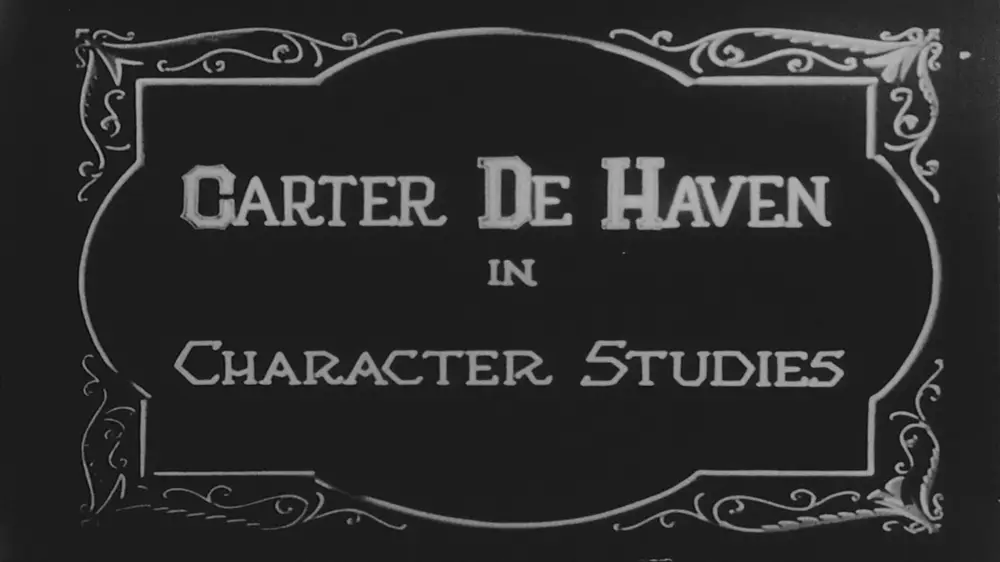
At its core, Character Studies is a high-concept vaudeville act captured on celluloid. Carter DeHaven, a man whose name has largely faded into the background of film history compared to the titans he mimics here, attempts the impossible: becoming the entire Hollywood A-list of 1924. It is a bold, somewhat narcissistic, and technically fascinating experiment that predates modern digital face-swapping by nearly a century. But does it work as a piece of entertainment? That depends entirely on your patience for repetition.
Is this film a forgotten masterpiece? No. It is a technical demonstration that happens to be recorded. To understand why it exists, one must understand the 1924 landscape. Hollywood was obsessed with its own image, and DeHaven found a way to capitalize on that narcissism.
The film opens with DeHaven at a dressing table, a classic theatrical trope that signals the 'transformation' about to occur. This isn't just about makeup; it's about the architecture of the face. When DeHaven shifts into Buster Keaton, he doesn't just put on a pork pie hat. He drains the life from his eyes. He adopts that singular, frozen stoicism that made Keaton the 'Great Stone Face.' It is a chillingly accurate mimicry of Keaton’s skeletal structure.
However, the mimicry is purely surface-level. While DeHaven captures the look, he cannot capture the soul. In a film like The Covered Wagon, we see the scale of the era's ambition through landscape and movement. In Character Studies, the ambition is internal and microscopic. DeHaven’s transition into Harold Lloyd is a perfect example. He nails the glasses and the 'boy next door' grin, but the frantic, optimistic energy that Lloyd brought to his features is missing. It feels like a wax museum coming to life—impressive, yet slightly hollow.
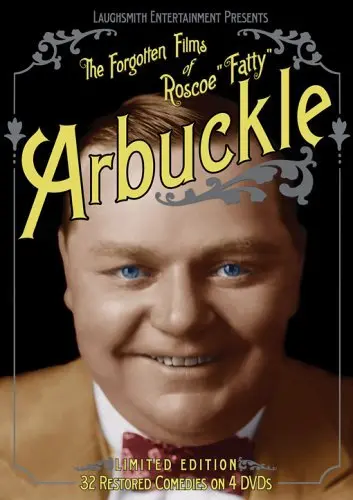
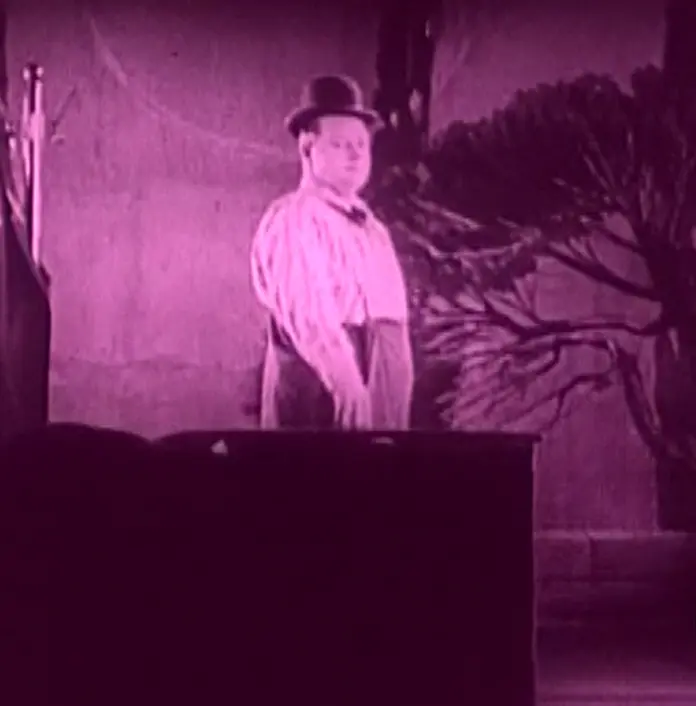
The most controversial segment is likely his portrayal of Roscoe 'Fatty' Arbuckle. Given that this was 1924, Arbuckle’s career had already been decimated by scandal. DeHaven’s inclusion of him is a fascinating choice. It suggests a lingering respect for Arbuckle’s craft within the industry, even as the public turned away. DeHaven uses padding and a specific facial roundness to achieve the look, but it feels more like a caricature than the others. It is punchy. It is brief. It is slightly uncomfortable to watch in a post-Hays Code context.
How did they do it? The cinematography is the real star here. Using precise double exposures and carefully timed dissolves, the film allows DeHaven to 'melt' into his characters. This isn't the crude cutting seen in lesser films of the time like Scars of Jealousy. This is high-level optical work. The camera remains static, but the layering of the film creates a seamless illusion of growth and shrinkage.
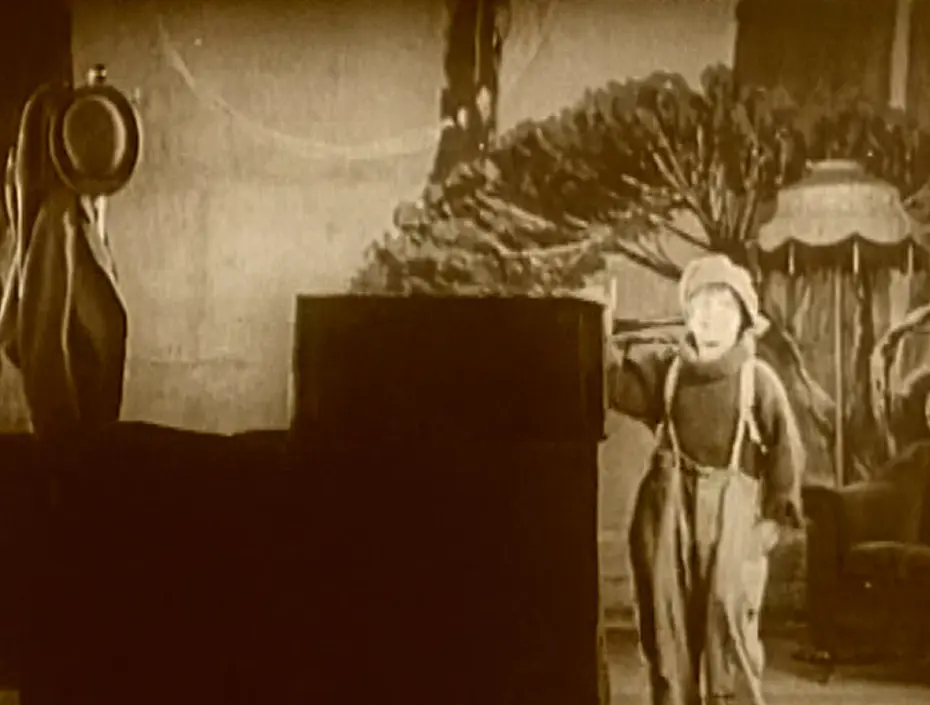
Consider the Jackie Coogan segment. DeHaven, a grown man, must transform into a child star. The film achieves this through a combination of costume changes and camera positioning that tricks the eye into perceiving a change in scale. It is a moment of pure cinematic magic. It works. But it’s flawed. The seams are visible if you look at the background grain, yet the audacity of the attempt is what matters.
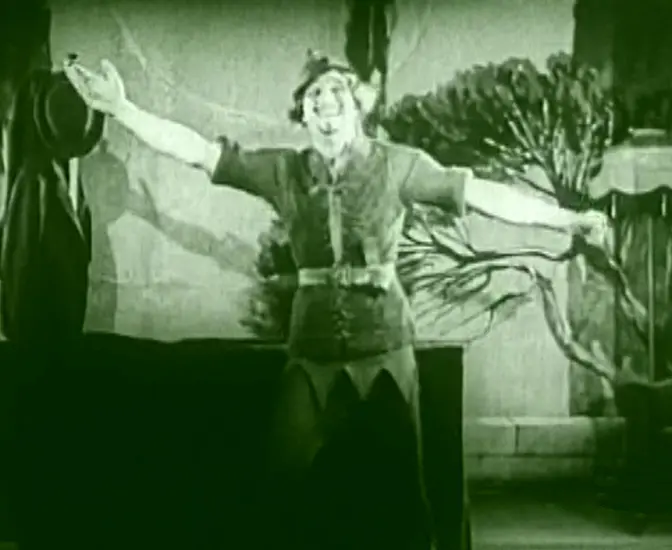
The lighting also deserves praise. To mimic Rudolph Valentino, the lighting shifts to a more high-contrast, moody palette. DeHaven adopts the heavy-lidded gaze and the slicked-back hair, and for a moment, the illusion is complete. He isn't just wearing a costume; he is manipulating the light to match the 'Latin Lover' aesthetic. This is a level of detail you don't see in standard comedies of the era like Dancing Daddy.
If you are looking for a story, stay away. There is no plot here. Character Studies is a glorified audition tape that was released to the public. However, if you are interested in the 'meta' history of Hollywood, it is a goldmine. It shows us exactly how these stars were perceived. DeHaven focuses on the most recognizable traits: Fairbanks’ mustache and stance, Keaton’s eyes, Lloyd’s glasses. It is a study in iconography.
Is it better than contemporary dramas like My Husband's Other Wife or Poor Innocent? You can't compare them. Those are narrative journeys; this is a static exhibit. It is more akin to a modern TikTok filter than a feature film. That doesn't make it bad, but it does make it niche. I found myself fascinated for the first five minutes and slightly bored by the tenth. The novelty wears thin because the film never evolves past its initial premise.
"DeHaven isn't just mimicking; he's colonizing these identities. It is a strange, parasitic form of tribute that feels both reverent and exploitative."
The technical precision of the double exposures is top-tier for 1924. DeHaven’s physical commitment to the roles is impressive; he clearly studied the movements of his peers extensively. It serves as a wonderful 'time capsule' of who the biggest stars were at that specific moment in time. It's short, so it doesn't overstay its welcome too much.
The lack of any framing story makes it feel like a series of disconnected clips. Some of the impressions, specifically Fairbanks, feel a bit like a caricature rather than a study. The film assumes the viewer has a deep knowledge of 1920s stars, which may alienate modern audiences who don't know who Jackie Coogan or Roscoe Arbuckle were.
There is something deeply unsettling about seeing DeHaven’s face morph into Valentino’s. It triggers a primitive 'uncanny valley' response. In an era where we worry about AI and deepfakes, Character Studies proves that the desire to subvert identity is as old as the camera itself. DeHaven was doing with makeup and mirrors what we now do with algorithms. It is a primal urge to see one person become many.
The film also highlights the 'typecasting' of the era. By boiling these actors down to a few physical traits, DeHaven shows how rigid the Hollywood star system had already become by 1924. If you had the glasses, you were the nerd. If you had the mustache, you were the hero. It’s a simplistic view of acting that films like The Vortex or Destroying Angel were trying to complicate, but DeHaven embraces the simplicity.
Character Studies is a fascinating, if repetitive, look at the art of the impression. It’s a technical marvel that lacks a heart. Carter DeHaven is a chameleon, but he’s a chameleon in a void. Watch it for the 'how did they do that?' factor, but don't expect to be moved. It is a cold, calculated, and brilliant piece of early Hollywood self-promotion. It’s a trick. A clever one, but a trick nonetheless. It remains a vital piece of the puzzle for anyone trying to understand the visual language of the silent era, standing alongside technical milestones like Remodeling Her Husband. In the end, DeHaven's performance is a tribute to the power of the image over the power of the individual.
IMDb 5.7
1928
Community
Log in to comment.