DbcultAccessing Vault...
6.6/10
Senior Film Conservator
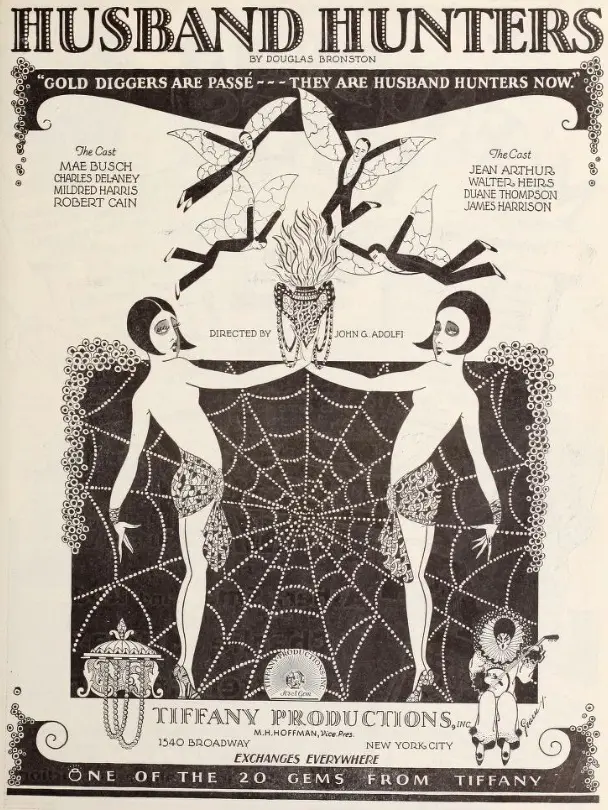
A definitive 6.6/10 rating for a film that redefined the boundaries of cult cinema. Husband Hunters remains a cornerstone of transgressive art.
Short answer: yes, but with significant caveats. This 1927 silent drama offers a fascinating, if sometimes ponderous, window into early cinematic storytelling and societal mores, making it a compelling watch for specific audiences.
This film is absolutely for silent film enthusiasts, film historians, and anyone deeply interested in the evolution of female roles and pre-Code era morality on screen. It is decidedly not for casual viewers accustomed to modern pacing, intricate sound design, or those seeking a purely escapist, lighthearted experience.
Early in the content, it's crucial to establish its standing:
This film works because of its surprising character depth for the era, particularly in how it portrays the complex motivations behind 'gold-digging,' and the understated yet powerful performance by a young Jean Arthur.
This film fails because its pacing can feel glacial to a modern audience, and some of its moralizing resolutions now appear overly simplistic, undermining the more nuanced social commentary it occasionally stumbles upon.
You should watch it if you appreciate the historical context of cinema, enjoy character studies over rapid plot progression, or are keen to see early work from a future Hollywood icon.
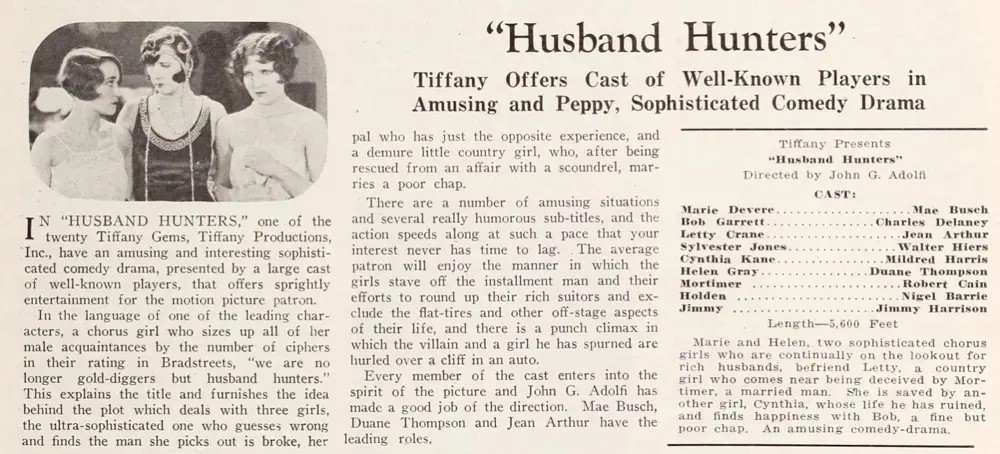
"Husband Hunters" navigates a familiar, yet enduring, narrative landscape: the pursuit of love and security, often conflated with wealth. The film introduces us to a pair of savvy urbanites, adept at maneuvering the social scene for financial gain through advantageous marriages. Their world is one of calculated charm and strategic alliances.
Into this sophisticated, somewhat cynical, environment steps Lettie, a naive country girl, portrayed with a captivating innocence. Her arrival marks a shift in dynamic, as the seasoned 'hunters' take her under their wing, ostensibly to guide her through the labyrinthine rules of their world.
Lettie soon finds herself drawn into the orbit of a charismatic, wealthy playboy. His allure is undeniable, yet beneath the surface lies a history of manipulation and heartbreak. The film, in this regard, doesn't shy away from presenting the darker side of superficial attractions, even if its resolution leans towards the conventional.
The turning point arrives not through Lettie's own sudden enlightenment, but through the intervention of a woman whose life was irrevocably damaged by the very same playboy. This narrative choice adds an interesting layer, suggesting a network of victims and a shared female experience against a common male antagonist.
Ultimately, Lettie's journey culminates in her rejection of the gilded cage, opting instead for a future with an honest, working-class man. It’s a classic silent film trope, certainly, but one that resonates with a timeless appeal about authenticity over artifice. The film, in its quiet way, argues for genuine connection over transactional relationships.
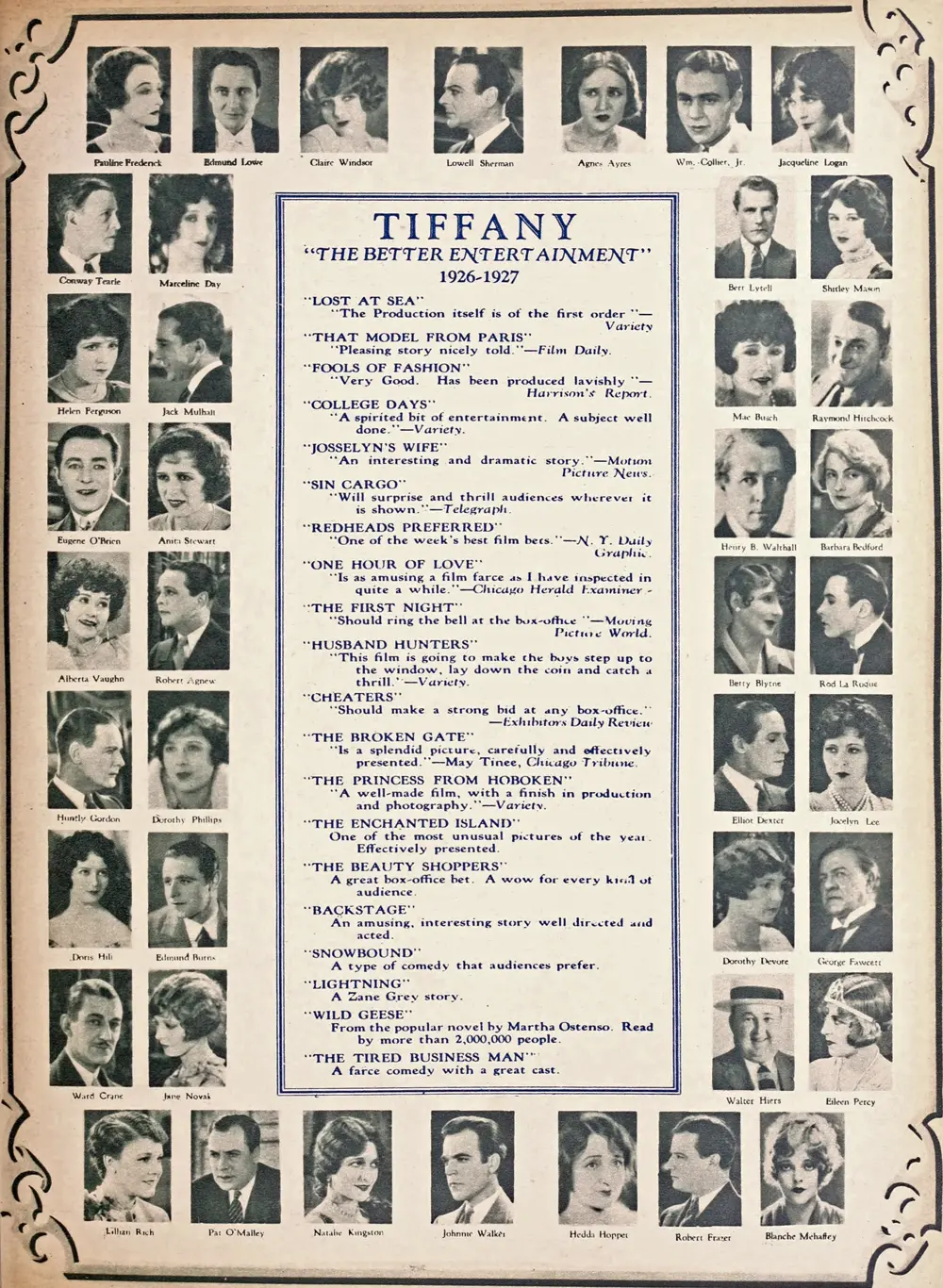
The strength of any silent film often rests squarely on the shoulders of its performers, and "Husband Hunters" is no exception. While the ensemble delivers, it is the burgeoning talent of Jean Arthur that truly elevates the material, offering glimpses of the nuanced star she would become.
Duane Thompson, as the earnest country girl Lettie, carries much of the film's emotional weight. Her transformation from wide-eyed innocence to a woman disillusioned yet ultimately empowered is handled with a remarkable sincerity. There’s a particular scene where she silently observes the playboy's casual disregard for another woman's feelings; her subtle shift in expression, a tightening of the jaw, a slight downturn of the lips, speaks volumes without a single intertitle. It’s a masterclass in silent film acting, conveying internal conflict with precise physicality.
James Harrison, as the deceptive playboy, embodies the archetype of the charming villain. His performance is broad, as was common for the era, but effective in conveying a superficial magnetism that masks a deeper callousness. He plays the role with a certain swagger, a calculated nonchalance that makes his eventual comeuppance feel earned.
Nigel Barrie and Mildred Harris, as the more experienced 'gold-diggers,' provide a fascinating counterpoint to Lettie's purity. Their performances, while sometimes leaning into melodrama, are crucial in establishing the film's social context. They are not simply villains; they are products of their time, navigating a world with limited options for women. Harris, in particular, brings a theatrical flair to her character, making her schemes both transparent and entertaining.
However, it is Jean Arthur, even in a supporting role, who leaves the most lasting impression. Her portrayal of the wronged woman who intervenes is imbued with a quiet dignity and a palpable sense of past suffering. Her eyes, even in the grainy black and white, convey a depth of emotion that transcends the often simplistic narrative. It’s a testament to her inherent talent that she manages to steal scenes with such understated power, hinting at the future comedic timing and dramatic gravitas that would define her career.
The directorial choices in "Husband Hunters" firmly place it within the stylistic conventions of late 1920s American cinema. The film, directed by Fred Fisher, doesn't necessarily break new ground in terms of visual storytelling, but it effectively utilizes the tools available to convey its narrative and themes.
The cinematography, while not groundbreaking, is competent and serves the story well. There are moments where the lighting is particularly effective in highlighting character emotions or creating a sense of atmosphere. For instance, the contrast between the brightly lit, opulent party scenes and the more somber, shadowed moments of revelation or despair is a classic technique employed with reasonable skill here.
Camera work is largely static, relying on medium shots and close-ups to capture facial expressions – a necessity in silent film. However, there are occasional tracking shots that add a sense of movement and dynamism, particularly during the more bustling social gatherings, allowing the audience to feel more immersed in the scene. One notable example might be a shot that follows Lettie as she navigates a crowded ballroom, emphasizing her initial awe and eventual discomfort.
The use of intertitles is standard, guiding the audience through dialogue and plot points. While some films of this era experimented more with visual storytelling to reduce intertitles, "Husband Hunters" leans on them quite heavily. This can sometimes interrupt the flow, but it also ensures clarity, which was paramount for broader audiences.
The set design and costuming are period-appropriate, offering a valuable visual document of the Jazz Age. The opulent interiors of the rich playboy's home stand in stark contrast to the simpler, more modest settings, effectively reinforcing the film's class distinctions and the allure of wealth that drives much of the plot. These visual cues are essential in a film devoid of spoken dialogue, communicating status and aspiration.
Pacing is often the most challenging aspect for modern viewers approaching silent films. "Husband Hunters," like many of its contemporaries, operates at a speed that requires patience. The narrative unfolds deliberately, allowing scenes to breathe and emotions to register through prolonged visual cues rather than rapid-fire dialogue.
The film's tone oscillates between lighthearted social commentary and more serious moralizing. Initially, there's a playful, almost comedic, element to the 'gold-digging' premise, presenting it as a clever game. However, as Lettie's story progresses, the tone shifts, becoming more earnest and didactic, particularly in its eventual condemnation of the playboy's actions and its championing of honest love.
This shift, while perhaps intended to deliver a clear moral message, can feel somewhat jarring. The film struggles to maintain a consistent comedic or dramatic rhythm. There are moments of genuine tension and emotional resonance, but these are sometimes diluted by stretches that feel overly explanatory or drawn out. For example, the build-up to the playboy's exposure feels protracted, despite the emotional weight of the reveal.
One could argue that this fluctuating tone is a reflection of the transitional period in filmmaking, where narratives were still finding their voice, balancing entertainment with moral instruction. The film's attempt to critique societal pressures on women, while ultimately resolving into a conventional 'true love conquers all' ending, is an interesting tension. It works. But it’s flawed.
The film's moral compass, while clear, feels decidedly of its time. The idea that women might pursue wealth out of necessity rather than pure greed is hinted at, but ultimately overshadowed by the conventional happy ending for the virtuous protagonist. This makes for a predictable, though not entirely unsatisfying, conclusion.
Yes, for the right audience. "Husband Hunters" is a valuable historical document, showcasing early silent film techniques and societal attitudes.
It provides a compelling look at female agency (or lack thereof) in the 1920s.
The film is an important early showcase for Jean Arthur's talent.
However, its slow pacing and dated moralizing might deter general audiences.
"Husband Hunters" is not a lost masterpiece, nor does it redefine the silent film genre. What it is, however, is a surprisingly engaging and historically significant artifact. Its greatest asset is undoubtedly the luminous presence of Jean Arthur, whose early performance foreshadows the incredible career that lay ahead. Her ability to convey profound emotion with such subtle grace is a compelling reason to seek this film out.
While its pacing demands a certain level of commitment from the viewer and its moral framework feels distinctly of its era, the film offers a valuable window into the social anxieties and romantic ideals of the late 1920s. It’s a film that, despite its occasional narrative stumbles, manages to resonate with timeless themes of ambition, deception, and the enduring search for authentic connection.
For those with an appreciation for silent cinema and a curiosity about the foundations of Hollywood storytelling, "Husband Hunters" is more than a mere curiosity; it's a worthwhile, if imperfect, journey into cinematic history. Just don't expect the rapid-fire narrative of something like The Moment Before; prepare for a more reflective, observational experience. It holds up, but only if you meet it on its own terms.
IMDb —
1924
Community
Log in to comment.