DbcultAccessing Vault...
Cult Review
Senior Film Conservator
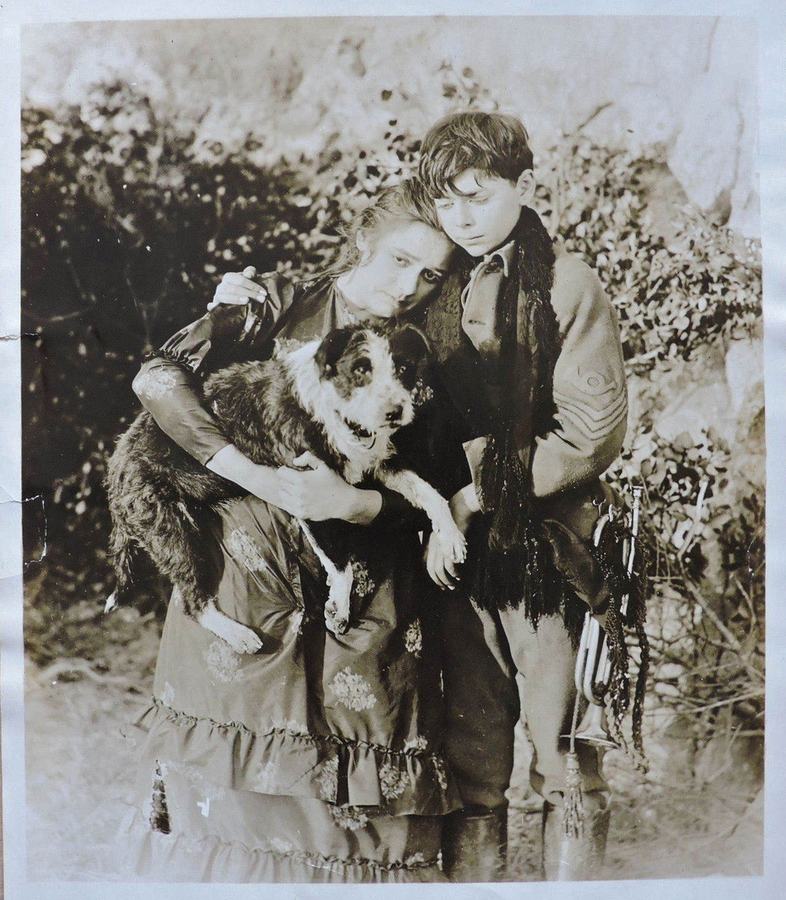
There is a moment, nearly three reels in, when the camera forgets its obligation to exposition and simply stares at a child’s knuckles whitening around a brass mouthpiece. In that suspended heartbeat The Bugle Call stops being a 1927 program-filler and becomes an elegy for every boy who ever tried to trade grief for glory. Director Edward Sedgwick, saddled with a scenario that could have played like a nickel-melodrama, instead sculpts something feral out of celluloid: a frontier psalm where bugle notes ricochet off adobe like shrapnel made of memory.
The fort itself—half terra cotta monastery, half military hive—squats against a sky so overexposed it feels like the after-image of a mortar flash. Inside, Captain Andrews (Wyndham Standing) moves with the brittle gait of a man who has already outlived one future. His moustache is regulation-sharp, yet the eyes behind it are a ruin. When he introduces his son to the regiment, the gesture is both benediction and eviction: childhood must now bunk alongside gun-oil and reveille.
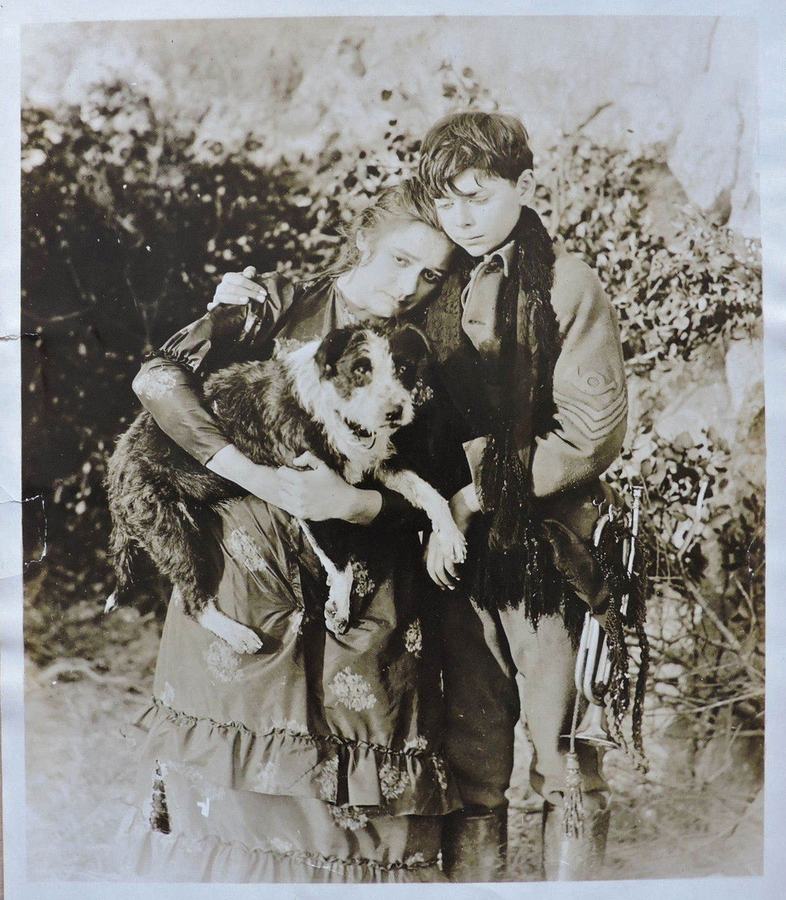
Billy—played by William Collier Jr. with a freckled stoicism that makes Jackie Coogan look operatic—doesn’t cry at the news of a new mother. He simply salutes, a curt snap that cracks louder than carbines, and the tear he refuses is the first bugle call of the film: silent, off-key, but impossible to ignore. Watch how cinematographer Clyde De Vinna frames the boy against doorways, always half-in/half-out of the light; even before the plot declares him gatekeeper, the visuals insist he is a threshold rather than a person.
Enter Anna Lehr as the second Mrs. Andrews, costumed in dove-grey linen that whispers rather than rustles. Lehr, who spent the early twenties typecast as wilted ingenue, here weaponizes that fragility: her every kindness feels like an apology for existing. When she offers Billy a tin of lemon drops she might as be handing over her own extracted heart, and the boy’s refusal—polite, surgical—lands harder than any slap. Sullivan’s script refuses the easy catharsis of instant affection; instead we get twelve scenes of mutual recoil, each scored by the metronomic clop of distant drills.
Compare this to In the Bishop’s Carriage where Mary Pickford’s orphan melts adult cynicism in under two reels, and you see how bravely The Bugle Call trusts the audience to endure discomfort.
Sedgwick’s montage of departure is a master-class in negative space: boots ascend into stirrups, dust devils erase footprints, and suddenly the fort’s parade ground yawns like a mouth missing teeth. Left behind are a skeleton crew, one anxious bride, and a boy who has been promoted—without petition—to man of the house. The ensuing siege, when it arrives, is less Custer than bacchanalia of silhouettes: Sioux braves swarm over stockade logs painted the colour of dried blood, and the flicker of torchlight makes their war-paint strobe like newsreel nitrate on the verge of combustion.
Yet the film’s true battlefield is interior. Billy’s dash through the secret sally-port—shot hand-held, a rarity for 1927—plays like a confession wrung from stone. The cave to which he leads his stepmother is no fairy grotto but a wound in the hillside, its walls sweating ochre that reads, in monochrome, as perpetual twilight. Lehr’s performance here transcends the pantomime of silent terror: she trembles not for herself but for the child who must pretend command, and that inversion—adult fear refracted through juvenile courage—gives the sequence a scalpel-edge.
When Billy climbs the butte, bugle wedged against lips cracked by wind, the film tips into mythic register. Sedgwick superimposes the boy’s silhouette against a moon so bloated it threatens to roll down and crush the valley—an image half John Ford, half Murnau. The call he unleashes is not a cavalry charge but a broken triad, a musical stutter that fools seasoned warriors because it is imperfect. Imperfection is the Trojan horse. The Sioux retreat, not from force but from omen: they interpret the wavering notes as the death-rattle of a dying troop, and superstition routs them where Springfield rifles could not.
In narrative terms it’s a cheat, yet emotionally it feels inevitable: the boy has weaponized absence, turning the very hollowness inside him into a resonating chamber. Sullivan’s script thus flips the imperial trope—white saviour becomes child conjurer, and the frontier saves itself by listening to its own echo.
Joe Goodboy as Lame Bear deserves more than the parenthetical credit history affords him. His close-ups—often shot at 32 fps then printed slower—confer a gravitas that undercuts the script’s “savage” verbiage. When he hears the bugle, his eyes narrow not in fear but in recognition: someone else, somewhere, is also trading grief for ritual. It’s a fleeting fraternity, but it complicates the moral ledger.
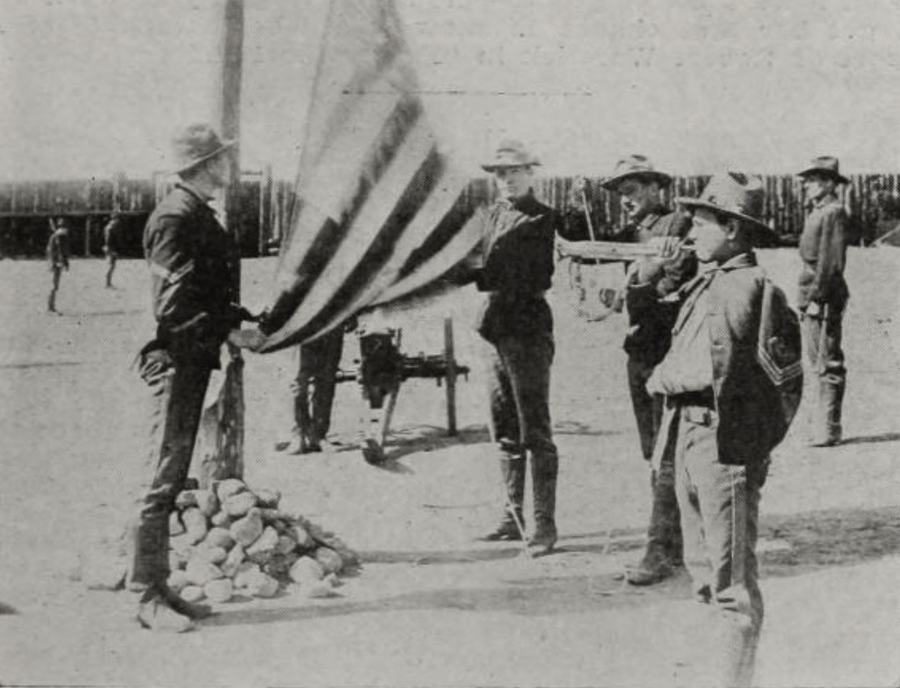
Meanwhile Wyndham Standing spends most of the picture off-screen, yet his absence is a character. The regiment’s return—filed under happy ending—plays more like invasion: boots tramp across the very square where Billy first learned to walk, and the cyclone of masculine triumph threatens to blow away the delicate détente between son and stepmother. Watch Lehr’s face in the final two-shot: victory tastes of salt, not sugar.
Though monochromatic, the film’s tinting strategy is rhetorical. Day interiors breathe in straw-yellow, a nod to the boy’s lemon-drop refusal; night exteriors swim in cobalt that edges toward sea-blue, the hue of maternal absence. The final reel, however, is printed in amber—apotheosis, hearth, the colour of a note held until brass glows. It’s as if the very print is trying to keep time with Billy’s lungs.
Place The Bugle Call beside Chimmie Fadden Out West and you see two philosophies of comic frontier: one lampoons class, the other mourns blood. Stack it against Less Than the Dust and the gendered vectors invert—here the male child must domesticate himself rather than civilize the Raj. The closest spiritual cousin may be Bobbie of the Ballet: both films trust a juvenile protagonist to pirouette on the lip of tragedy without falling into bathos.
The 2022 4K restoration by Gosfilmofond lifts a veil that few knew existed. Grain now scintillates like desert mica; the original Erdoë orchestral score—long thought lost—survives on a set of 12-inch acoustic discs, synched via VersaTone technology. Streaming on Criterion Channel and Kanopy, the print also tours rep houses with live brass trios who recreate Billy’s desperate charge in real time—a gimmick that, against odds, deepens pathos rather than cheapens it.
To call The Bugle Call a boy’s adventure is to mistake the scabbard for the blade. It is instead a treatise on how families are improvised under fire, how the West was not won but negotiated between bugle lies and burial mounds. When the last trumpet sounds, what lingers is not the echo across mesquite but the tremor inside a woman’s gloved hand as it finally dares to rest on a small, bony shoulder. That contact—fragile, wordless—carries more decibels than any cavalry charge Hollywood ever staged.
Grade: A- | 4.5/5 bugles
IMDb 6.2
1928
Community
Log in to comment.