DbcultAccessing Vault...
6.4/10
Senior Film Conservator
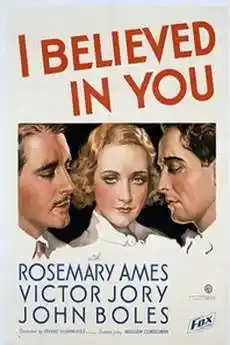
A definitive 6.4/10 rating for a film that redefined the boundaries of cult cinema. I Believed in You remains a cornerstone of transgressive art.
So, is I Believed in You worth digging up today? It’s a definite yes if you’re into those early talkies, especially ones where the main character really grows up on screen. You’ll probably enjoy it if you like stories about big city dreams and finding your own voice. But if you need flashy effects or super tight pacing, you might find parts of it a bit slow. It's not a thrill-ride, more of a thoughtful wander. 🚶♀️
The whole thing kicks off with Jim Crowl, this loud labor agitator guy, getting roughed up by miners. He lands at True Merrill’s place, a young woman who’s lived a pretty sheltered life with her recently deceased dad. True, oh True. She’s so naive, a real blank slate. Jim sees it, and honestly, it’s a bit uncomfortable how he just… starts filling her head. He talks about needing to experience "love, hate, and suffering" to be a real writer. It’s so clear he’s just using her, but she’s just soaking it all in. Like a sponge, really. 😔
Next thing you know, they're off to Greenwich Village in New York. The bohemian crowd there is a piece of work. You get Saracen Jones, the poet who probably hasn’t written a decent line in years. Then Russell Storm, the painter whose art nobody seems to want. And Vavara, the dancer. What a crew. True thinks they're all amazing, these "real" artists. But you can tell, even then, there’s something a little… off. Jim is supposedly with True, but you catch glimpses of him and Vavara together. The movie doesn't make a big deal out of it, just a quick look, and you know. It’s subtle, but it stings.
Things get messy fast. They all live in Russell’s apartment, then get evicted. Jim, ever the showman, decides to hold a sidewalk auction for Russell's paintings. It’s less an auction and more a platform for Jim to rant about society. And of course, it turns into a total brawl. Mayhem! 💥
This is where True really starts to show some fire. Michael Harrison, this wealthy dilettante, makes a snarky comment about buying a painting just to destroy it. And True? She just slaps him. Right across the face. Ten days in jail for that one, for her and Jim. That slap felt so good to watch, honestly. It’s like she finally found a bit of her own anger, not just parroting Jim’s ideas.
Michael, surprisingly, comes back. He apologizes to True, then calls her bohemian friends "phonies." Which, let’s be real, they kinda are. But True, still loyal, argues they haven't had the chances Michael’s crowd has. This leads to the big "deal." Michael offers to pay all her friends' expenses for six months. If even one of them makes good, or shows gratitude, he'll buy True a drink. If they all fail, she owes him. It’s a wild bet, a bit dramatic, but it sets up everything that follows. You just know how this is going to play out, right?
True, she’s so earnest. She actually sits down and writes a novel called I Believed in You. You can feel her pouring her heart into it. Meanwhile, her "artist" friends? They just squander the money. Every single penny. No surprise there. They just keep demanding more, like entitled kids. True finally snaps. She calls them fakers. It’s a gut-punch moment for her, seeing them for what they really are.
And then, the ultimate betrayal. She’s still clinging to Jim, still _believing_ in him. But she overhears him telling another woman the exact same sweet, manipulative things he told her. The same lines. 💔 Ouch. It’s a quiet scene, but the impact is huge. You can just see her world crumble.
She walks and walks, disillusioned, eventually ending up on a bridge. It’s a classic cinematic moment, almost too on-the-nose. But then, she hears these "voices from the past." It's a bit abstract, maybe her own conscience or memories finally clicking. But it works. She finds this new confidence. It’s like a light switch flips.
The ending is pretty satisfying. She marches into the publishers, Lang and Long – love those names, so direct – and gets a contract. And that first royalty check? She gives it to Michael, her repayment. He proposes, of course. But she says she has to go it alone for now. Maybe later. It’s a strong finish for her. She started as a blank page and became her own story. ✨
What really sticks with me is that transformation. True starts out so easily swayed, and by the end, she's standing on her own two feet, making her own choices. It’s not a perfect film, some of the dialogue feels a little too dramatic at times, and some of the bohemian friends are a bit cartoonish. But for a film of its era, it captures that journey of self-discovery pretty well. You feel for True, even when she's making questionable choices. You just want her to wake up. And when she does, it's a genuine relief.
All in all, if you're curious about stories from back then that focus on character over spectacle, give it a shot. It's got heart, even if some of the beats are a little predictable. It's a reminder that finding yourself can be a messy business. But totally worth it.
IMDb —
1919
Community
Log in to comment.