DbcultAccessing Vault...
Cult Review
Senior Film Conservator
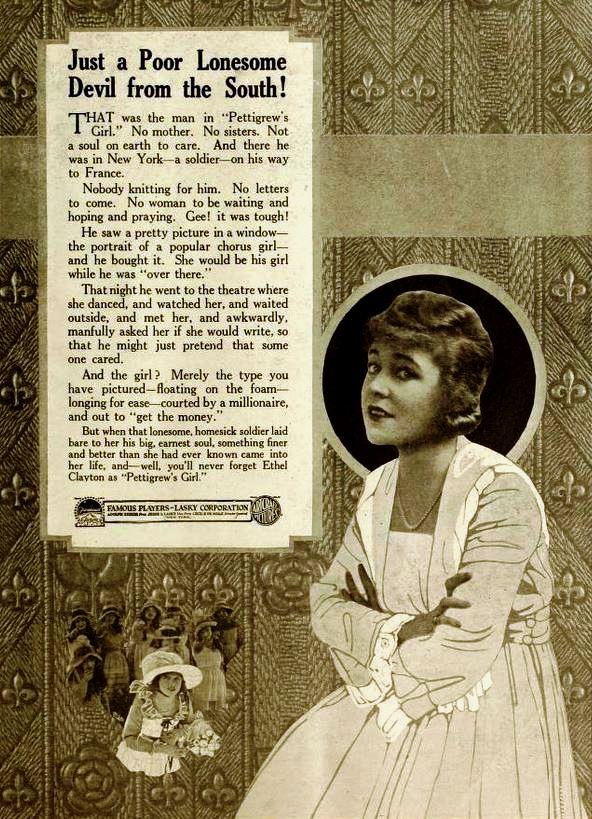
There's a peculiar magic to silent cinema, isn't there? A world where emotions are writ large on faces, where every gesture carries the weight of a thousand words, and where the narrative unfolds with an almost dreamlike quality, unburdened by dialogue. Stepping back into this era, we unearth a true gem: 'Pettigrew's Girl,' a film that, despite its age, resonates with a timeless dilemma. It’s not just a historical artifact; it’s a vibrant, beating heart of a story, a testament to the enduring power of love to upend even the most meticulously laid plans. For those who appreciate the nuanced storytelling of an era long past, or simply a compelling human drama, this picture, with its profound emotional core, offers a rich tapestry of experience.
Directed with a delicate touch, 'Pettigrew's Girl' plunges us into the life of Daisy Heath, played with captivating grace by Ethel Clayton. Daisy isn't just any chorus girl; she’s a woman on the cusp of a future others could only dream of, poised to marry a millionaire. This isn't a whimsical romance; it's a strategic alliance, a carefully calculated ascent to a life of comfort and social standing. Yet, the film, through its exquisite visual language, asks a vital question: what is the true cost of such an arrangement when the heart begins to sing a different tune? This isn't a simple tale of good versus evil, but rather a sophisticated exploration of choices, consequences, and the unexpected detours of destiny.
Ethel Clayton, a prominent figure of her time, imbues Daisy Heath with a remarkable depth. Her Daisy is not a naive ingenue, nor is she a cynical opportunist. Instead, she’s a woman of her time, acutely aware of the precariousness of her position. The world of a chorus girl, while glamorous on the surface, offered little long-term security. Marriage to a wealthy man, therefore, wasn't merely about luxury; it was about survival, respectability, and a definitive escape from the ephemeral nature of stage life. Clayton’s portrayal masterfully conveys this internal conflict. We see the flicker of ambition in her eyes, the quiet determination to secure her future, but also the wistful longing for something more authentic, a connection that transcends mere transactional security. Her performance is a masterclass in silent acting, relying on subtle shifts in expression, the tilt of her head, the unspoken language of her gaze to communicate volumes. She embodies the archetypal 'girl on the make' but elevates it with a profound sense of humanity, making her struggles universally relatable.
The millionaire, portrayed by Charles K. Gerrard, is not painted as a mustache-twirling villain, which is a credit to the nuanced storytelling of writers Dana Burnet and Will M. Ritchey. He represents a certain kind of stability, a predictable future, a life free from want. His appeal is undeniable in a world where economic hardship was a constant shadow. Yet, the film subtly highlights the emotional void within this arrangement, the absence of that intangible spark that defines true companionship. The contrast isn’t between right and wrong, but between different kinds of happiness, or perhaps, different definitions of a fulfilling life. Daisy's decision, therefore, becomes a battle between the head and the heart, a timeless struggle that transcends any particular era or social stratum.

Enter Pettigrew, the young Southern army private, brought to life with an endearing earnestness by Monte Blue. Blue, with his unassuming charm and genuine warmth, is the perfect foil to the millionaire's polished detachment. Pettigrew represents something wilder, less predictable, but infinitely more emotionally resonant. He offers not riches, but sincerity; not security, but a shared future built on mutual affection. His Southern origins add a layer of romanticism, hinting at a simpler, perhaps more honorable, way of life, far removed from the calculating world of New York society. The chemistry between Clayton and Blue is palpable, a quiet electricity that crackles across the screen, making their burgeoning connection utterly believable and deeply moving. It’s a testament to their performances that a simple glance or a shared smile can convey a profound sense of destiny unfolding.
The writers, Dana Burnet and Will M. Ritchey, craft a narrative that, while seemingly straightforward, delves into the complexities of human desire. They avoid melodrama, opting instead for a quiet, insistent portrayal of love's power to disrupt. The plot isn't about grand gestures but about the accumulation of small, meaningful moments that gradually shift Daisy's perspective. It’s a story about awakening, about recognizing what truly matters when stripped of societal expectations. This narrative approach allows the audience to truly invest in Daisy’s journey, to feel the weight of her choice, and to root for her ultimate happiness. The film doesn't preach; it observes, allowing the audience to draw their own conclusions about the nature of true love and contentment.
The direction of 'Pettigrew's Girl' is particularly noteworthy. In an era without spoken dialogue, the visual storytelling had to be exceptionally strong, and here, it excels. Every frame is meticulously composed to convey mood and meaning. Close-ups are used sparingly but effectively, drawing us into the characters' inner worlds. The pacing, while deliberate, never drags, maintaining a steady rhythm that builds emotional tension. The use of light and shadow, a hallmark of silent cinema, is employed to great effect, highlighting moments of joy and despair with equal eloquence. The film understands that sometimes, what is left unsaid is far more powerful than any spoken word, allowing the audience to project their own feelings and interpretations onto the narrative.
Compared to some of its contemporaries, 'Pettigrew's Girl' distinguishes itself through its understated elegance. While films like The Vixen might explore more overt expressions of female rebellion, or Blood Will Tell might lean into more dramatic moral quandaries, 'Pettigrew's Girl' finds its strength in the quiet revolution of a woman choosing her own path, not through defiance, but through an honest recognition of her heart's true compass. It's a more intimate rebellion, one that resonates deeply because it feels so profoundly personal. The film's strength lies in its ability to take a seemingly simple premise and infuse it with profound emotional stakes, making Daisy's journey feel both universal and deeply individual.
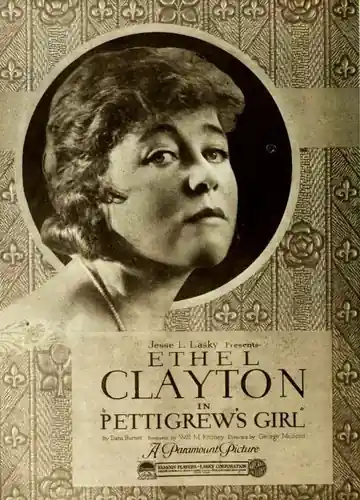
At its core, 'Pettigrew's Girl' is a powerful meditation on love versus security, a theme that remains as relevant today as it was a century ago. It explores the societal pressures placed upon women, particularly those from less privileged backgrounds, to 'marry well.' Daisy’s struggle is a poignant reminder of the limited choices available to many women of the era, and the courage it took to defy those expectations. Her story is a quiet anthem for self-determination, a gentle nudge towards the idea that true wealth lies not in material possessions, but in genuine human connection. The film's message is delivered without heavy-handedness, allowing the audience to absorb its implications organically through the unfolding drama.
The performances across the board are commendable. Jim Mason, though in a supporting role, adds texture to the narrative, contributing to the overall sense of a lived-in world. The ensemble works cohesively, each actor understanding the unique demands of silent film acting – where every gesture and facial expression must be precise and meaningful. There's an authenticity to their portrayals that draws you in, making you forget you're watching a film from a bygone era. This collective effort ensures that the emotional stakes always feel real, that Daisy’s predicament is never trivialized, and that the audience remains deeply invested in her ultimate choice.
One can draw parallels between Daisy’s quest for genuine connection and the romantic idealism often explored in films like The Perfect Lover, where the pursuit of an ideal partner often clashes with harsh realities. However, 'Pettigrew's Girl' feels more grounded, its idealism tempered by Daisy’s initial pragmatism. It's not a fantasy; it's a journey of self-discovery, where a woman learns to trust her own instincts over the dictates of society. Similarly, while films like His Convict Bride might explore societal judgment and redemption, 'Pettigrew's Girl' focuses on a more internal form of liberation, a liberation from self-imposed or societal expectations rather than legal ones. The film subtly critiques the superficiality of wealth, suggesting that true happiness cannot be bought, but must be found within oneself and with another.
'Pettigrew's Girl' is more than just a historical curiosity; it’s a compelling piece of cinematic art that speaks to universal human experiences. Its narrative simplicity belies a profound understanding of the human heart, making it a film that transcends the limitations of its silent format. For anyone interested in the evolution of storytelling, the power of non-verbal communication, or simply a beautifully rendered love story, this film is an absolute must-see. It serves as a powerful reminder that the struggles and triumphs of love have remained remarkably consistent across the decades, merely expressed through different artistic mediums.
The film's quiet power lies in its ability to evoke deep empathy for its protagonist. We understand Daisy’s initial motivations, and we celebrate her eventual choice, not because it’s the 'right' choice in a moralistic sense, but because it feels profoundly authentic to her journey. It’s a story about finding one's true north, about recognizing that sometimes the greatest risks lead to the greatest rewards. In an age saturated with noise, 'Pettigrew's Girl' offers a refreshing return to the purity of visual narrative, a chance to reconnect with the foundational elements of cinematic magic. Its legacy, though perhaps not as widely celebrated as some blockbusters of its time, is etched in the hearts of those who discover its understated brilliance.
So, if you find yourself yearning for a cinematic experience that speaks to the soul without uttering a single word, I implore you to seek out 'Pettigrew's Girl.' It's a poignant, beautifully crafted drama that will linger in your thoughts long after the final frame. It’s a testament to the fact that genuine emotion, expertly conveyed, requires no audible dialogue to be understood. The film is a whisper from the past, a gentle reminder that some stories, like true love, are eternal.

IMDb 6.6
1931
Community
Log in to comment.