DbcultAccessing Vault...
Cult Review
Senior Film Conservator
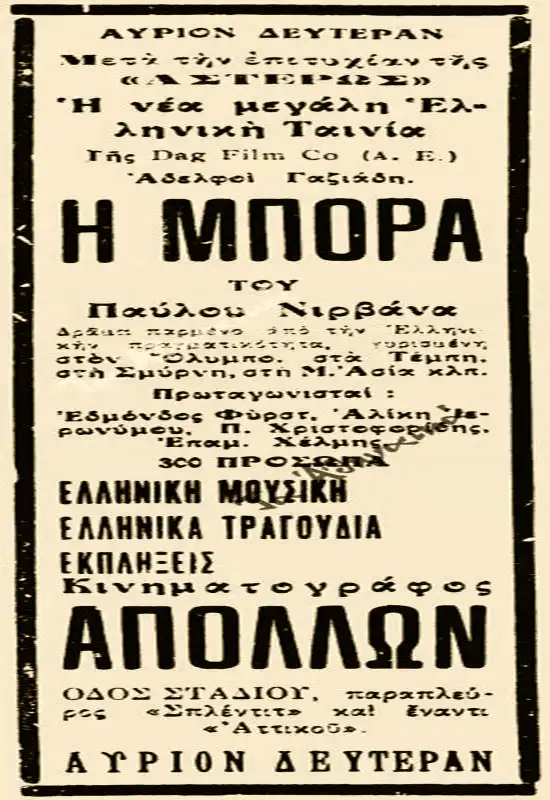
You should watch this if you are the type of person who likes digging through old archives for things that feel a bit haunted. If you need a clear plot with high-definition explosions, you are going to absolutely hate this. It is a 1922 silent film from Greece called I bora, and it feels exactly like its age.
It is basically about two soldiers stuck in the middle of nowhere during the Greco-Turkish war. One of them is dying. The other one has to figure out how to leave his friend behind without losing his mind.
The first thing you notice is the dust. I am not kidding, there is so much dust in every frame that you almost want to cough while watching it. It makes the whole thing feel very tactile and real, unlike those modern war movies where everyone has perfectly smudged dirt on their cheeks.
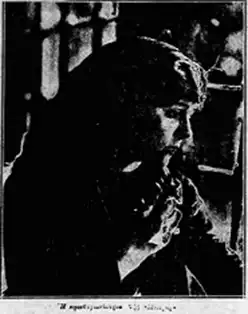
The wounded soldier tells his buddy to go home and take care of his wife. It is a classic setup, almost a cliché now, but here it feels heavy. There is no music to tell you how to feel, just the flickering of the black and white film.
Periklis Hristoforidis has a face that was built for silent cinema. His eyes do a lot of the heavy lifting when the subtitles (intertitles) aren't on screen. He looks tired. Not movie-star tired, but actually exhausted.
There is a specific moment where they are just sitting against a rock. The silence in the scene is so long it starts to feel a bit uncomfortable. You start noticing the way the shadows move on the ground behind them.
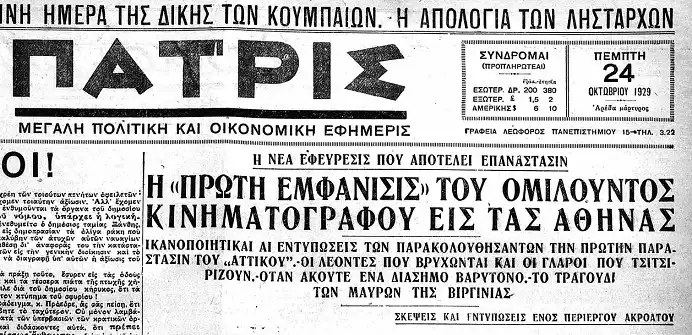
It is a lot slower than something like The Adventures of Kathlyn. That one is all about the next big thrill, but I bora just wants to sit in the misery for a while. It doesn't care if you are bored.
The landscapes are so empty. It reminds me a bit of the isolation in The Bottom of the World, but instead of ice, it is just burning sun and rocks. You can almost feel the heat radiating off the screen.
I found myself wondering about the extras in the background. They look like actual soldiers who were just told to stand there. Some of them aren't even looking at the camera; they are just staring off at the horizon like they want to go home.

The director, Dimitris Gaziadis, doesn't really do anything fancy with the camera. It just sits there and watches. Sometimes it feels like you are looking through a window that hasn't been cleaned in a century.
The promise about the wife is the part that sticks with you. It is not presented as this grand, noble thing. It feels more like a curse. Like, 'hey, I am dying, now you have to deal with my whole life for me.'
One of the reaction shots of Edmond First lingers for way too long. He just stares into the lens. It is supposed to be dramatic, but after ten seconds, it just gets weirdly personal.
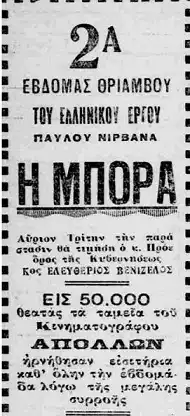
The costumes are definitely not from a wardrobe department. They look like they have been slept in for three weeks straight. There are rips in the fabric that don't look intentional.
I like that the movie doesn't try to explain everything. It assumes you know the politics of 1922. Since I don't know them perfectly, it felt like eavesdropping on a conversation in a language I only half-understand.
The title means "The Storm," which is funny because the movie is mostly very still. I guess the storm is internal. Or maybe I missed a scene because the print I saw was a bit jumpy.
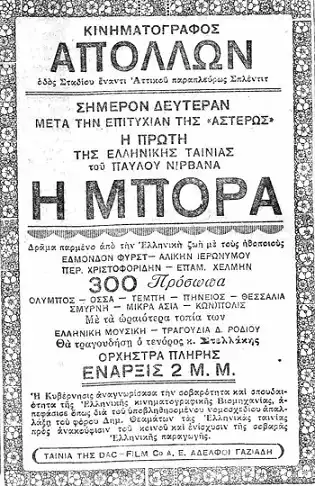
It is definitely more grounded than something like The Extraordinary Adventures of Mr. West in the Land of the Bolsheviks. That movie is a total trip, whereas this is just a long, sad walk.
There is a scene near the end where the lighting gets really harsh. It makes the actors look like ghosts. It is probably just bad film preservation, but it works for the mood.
If you are into the history of Greek cinema, this is a must. If you just want a story about guys in a war, you might find it a bit thin. But there is a soul in it that you don't see often anymore.
I kept thinking about the cameraman standing in that heat. He probably had a hand-cranked camera. You can see the slight variations in the frame rate when he gets tired.
It is a short film, or at least it felt short. But it stays in your head. Like a piece of grit in your eye that you can't quite get out.
The way the soldiers move is so different from modern actors. They have this stiff, formal way of standing. It makes the moments when they collapse feel much more violent.
Don't expect a happy ending. This isn't that kind of movie. It is just a snapshot of a very bad time in history.
Overall, I'm glad I watched it, even if it made me feel a bit dusty. It’s a real piece of film, with all the scratches and skips included. It's not perfect, but it's honest in a way that feels rare.
IMDb 6.6
1927
Community
Log in to comment.