DbcultAccessing Vault...
6.5/10
Senior Film Conservator
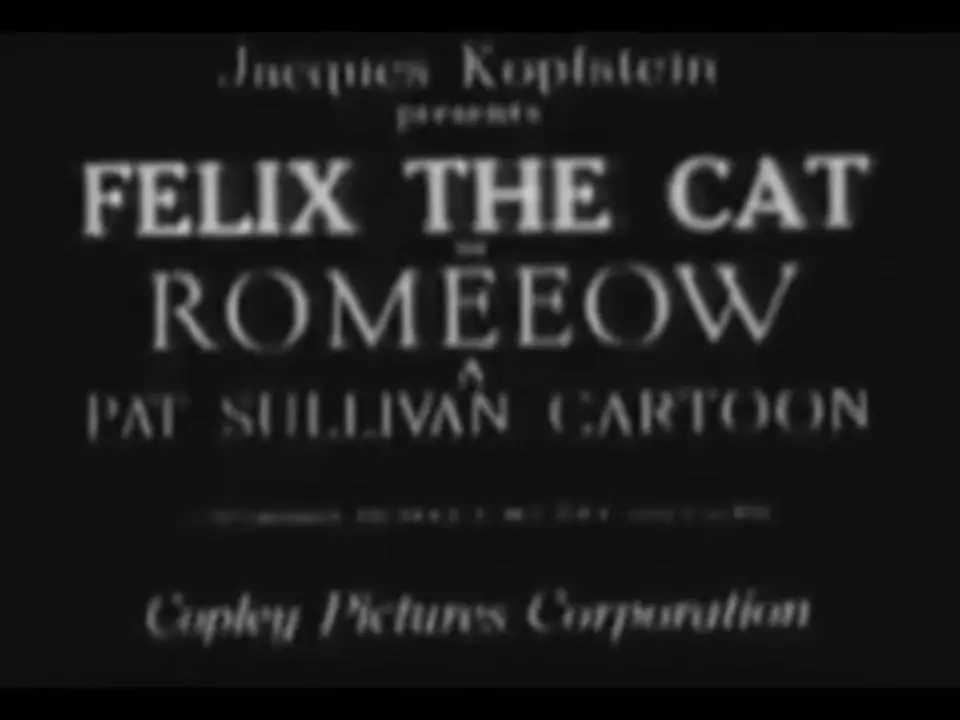
A definitive 6.5/10 rating for a film that redefined the boundaries of cult cinema. Felix the Cat as Romeeow remains a cornerstone of transgressive art.
Is Felix the Cat as Romeeow worth watching today? Short answer: yes, but with significant caveats.
This silent animation classic is an absolute must-see for animation historians, silent film enthusiasts, and those curious about the roots of character animation, but it will likely prove a challenging, if not tedious, experience for casual modern viewers accustomed to rapid pacing and complex narratives.
This film works because... it showcases early animation ingenuity, Otto Messmer's distinct character work, and a foundational example of character-driven comedy where the protagonist's personality drives the gags.
This film fails because... its humor is often simplistic and repetitive by modern standards, its pacing can feel glacial to contemporary audiences, and its narrative ambition is minimal, even for a short.
You should watch it if... you appreciate film history, enjoy dissecting early animation techniques, or are a devoted fan of Felix the Cat's enduring legacy and want to understand his origins.
For those who view cinema as an evolving art form, understanding its genesis is crucial. Felix the Cat as Romeeow, a product of the silent era, offers a direct window into the nascent stages of character animation. It’s a historical document as much as it is entertainment.
Its value isn't primarily in its laugh-out-loud moments for a 21st-century audience, but rather in its demonstration of what was possible with limited technology and boundless imagination. It’s a foundational text for anyone studying animation history or the development of popular culture icons.
However, if your primary goal is passive entertainment, a quick distraction, or a story with narrative depth, this short will likely disappoint. Its humor relies on visual transformations and simple cause-and-effect gags that have been refined and complicated many times over in the century since its release.
It demands an active, appreciative viewer – one willing to contextualize and interpret, rather than merely consume. It works. But it’s flawed. Its historical significance is undeniable, but its entertainment value is highly subjective and largely dependent on one's academic interests.
Messmer's interpretation of the Romeo and Juliet mythos is, to put it mildly, liberal. Felix, our titular 'Romeeow,' is less a star-crossed lover and more a determined, almost predatory, suitor. His objective is singular: to win Juliet. The complexities of feuding families, tragic misunderstandings, and poetic soliloquies are stripped away, leaving only the raw, primal drive of attraction.
This narrative simplification is both its charm and its limitation. It allows for a cascade of visual gags, each one an inventive attempt by Felix to overcome obstacles or simply impress his beloved. We see Felix transform, stretch, and manipulate his environment with a rubber-hose fluidity that was revolutionary for its time.
For instance, when Felix needs a ladder to reach Juliet’s balcony, he doesn't find one; he becomes one, his tail extending impossibly upwards. This isn't just a gag; it's a declaration of character. Felix is the master of his own reality, a proto-superhero whose powers are limited only by the animator's pen.
The 'plot' then, isn't a sequence of events leading to a climax, but rather a series of variations on a theme: Felix wants Juliet, and he will use every trick in his inkpot to get her. It’s a testament to the power of pure character animation, where the character's personality and actions are the story.
The film doesn't aim for emotional resonance or dramatic tension. Instead, it revels in the sheer joy of creation, of seeing a character defy the laws of physics and logic with a mischievous grin. It’s a spectacle of ingenuity, not a narrative masterpiece.
One could even argue that the film’s greatest strength lies in its refusal to take the Shakespearean premise too seriously. By reducing the epic romance to a simple chase, Messmer liberates Felix to be truly Felix, unburdened by the weight of literary expectation. This irreverence is surprisingly modern in its sensibility, a playful deconstruction before deconstruction was a critical term.
Otto Messmer’s contribution to early animation is incalculable, and Felix the Cat as Romeeow offers a compelling snapshot of his genius. The animation itself, while rudimentary by today's standards, is groundbreaking. Felix's design is iconic: a simple, stark black shape with expressive white eyes, allowing for maximum readability and flexibility on screen.
Messmer’s direction is evident in the clear staging of gags. There’s a deliberate rhythm to Felix’s movements, a pause for comedic effect before a sudden transformation or an unexpected twist. This isn't just random movement; it's carefully choreographed performance, even if the 'actor' is a drawing.
The 'acting' in this film comes entirely from the animation. Felix isn't just moving; he's thinking, reacting, and expressing a full range of emotions through his body language and facial contortions. His famous grin, his frustrated shrugs, his wide-eyed surprise – these are all carefully crafted moments that convey character without a single word of dialogue.
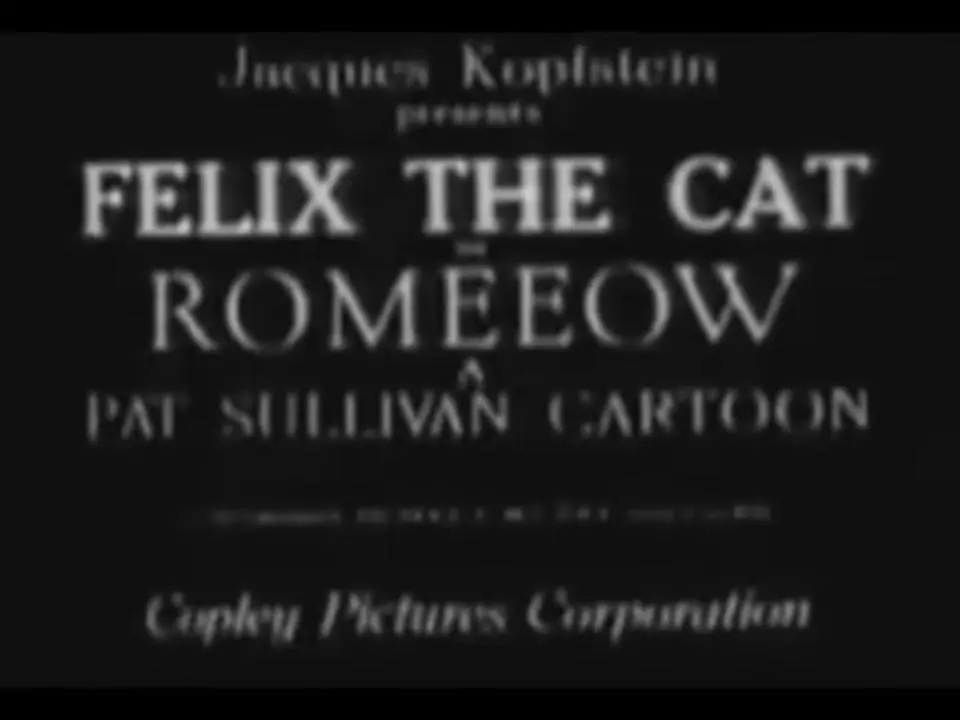
Consider the sequence where Felix attempts to serenade Juliet. His attempts to play a musical instrument are clumsy, leading to a visual gag where the instrument itself seems to rebel. This isn't just slapstick; it’s a character failing, but failing with an endearing, resilient charm that makes Felix so enduring. Messmer understood that character was paramount, even in a two-minute short.
The film’s visual composition, devoid of complex camera movements, relies on static frames that emphasize the action within. The 'cinematography' is, in essence, the art of the layout and the timing of the drawing. Every frame is a deliberate choice, designed to guide the viewer’s eye to the punchline. There’s a stark beauty in its simplicity, a directness that modern animation often loses in its pursuit of photorealism.
This early work also highlights the surrealism inherent in Felix’s world. Objects aren't fixed; they can change form, come alive, or be manipulated by Felix’s will. This isn't magic; it’s the logic of animation, a world where anything is possible. It’s a fascinating contrast to the more grounded, character-driven narratives that would emerge later in animation history. Felix’s world is a dreamscape, where the impossible is not only possible but expected.
The pacing of Felix the Cat as Romeeow is a critical point of contention for modern viewers. It is, by contemporary standards, slow. Gags are allowed to unfold deliberately, with ample time for the audience to register the setup and the punchline. This isn’t a flaw of the film itself, but rather a reflection of the viewing habits of its original audience. Silent films often relied on slower cutting and broader physical comedy to ensure comprehension without dialogue.
The tone is consistently light and whimsical. There's no real danger, no genuine threat to Felix’s pursuit, only minor inconveniences that he quickly overcomes with his characteristic ingenuity. This unwavering optimism is a hallmark of early Felix shorts, differentiating him from some of his later, more cynical animated brethren.
For example, if Felix falls from a great height, he simply bounces or transforms into something that cushions his fall. There are no lasting consequences, only temporary setbacks for comedic effect. This creates a comforting, almost childlike, world where problems are merely puzzles to be solved with a wink and a smile.
Comparing it to a contemporary short like Cleaning Up, one can appreciate the shared simplicity of narrative but also the unique visual language of animation versus live-action silent comedy. Animation, particularly Felix's brand, offered a freedom from physical constraints that live-action could never match, allowing for a more fantastical, less grounded humor.
The lack of sound, of course, plays a massive role in its tone. Without spoken dialogue or a synchronized score, the film relies entirely on visual cues and the viewer's imagination to fill in the auditory gaps. This can be jarring for those unaccustomed to silent cinema, but it also fosters a unique kind of engagement, prompting the viewer to actively participate in the film's creation of meaning.
It’s a tonal consistency that feels both antiquated and refreshingly pure. In an age of complex narratives and morally ambiguous protagonists, Felix's simple, unadulterated pursuit of his goal, fueled by pure, unadulterated silliness, is almost revolutionary in its straightforwardness.
Felix the Cat as Romeeow is more than just a standalone short; it's a vital piece in the larger mosaic of Felix the Cat's early career. Felix wasn't just a popular character; he was a global phenomenon, arguably the first truly international animated movie star. His early shorts, including this one, laid the groundwork for character animation as we know it.
The film exemplifies Felix's core attributes: his resourcefulness, his mischievous nature, and his iconic ability to use his tail as a tool or a thought bubble. These traits would be refined and expanded upon in countless subsequent shorts, such as Felix Minds His Business, solidifying his place in animation history.
What's truly surprising about films like Romeeow is how much creative freedom Messmer had. In an era where animation was often seen as a novelty, Felix was allowed to be truly experimental, pushing the boundaries of what a cartoon character could do. This paved the way for future animation giants, demonstrating that animated characters could carry a film, engage an audience, and even convey complex ideas, albeit through simple visual metaphors.
His influence extends far beyond mere popularity. Felix's rubber-hose animation style, his personality-driven gags, and his willingness to break the rules of reality directly inspired generations of animators. You can see echoes of Felix’s elasticity in everything from early Disney shorts to the zany antics of Looney Tunes characters.
This film, then, isn't just a relic; it's a living artifact that demonstrates the fundamental principles of character animation that are still relevant today. It reminds us that sometimes, the simplest ideas, executed with ingenuity and personality, can have the most profound and lasting impact. The silent era, often overlooked by casual viewers, was a crucible of innovation, and Felix was undoubtedly one of its brightest stars.
It's a foundational text, a testament to the power of a simple line drawing to convey emotion, action, and enduring charm. Without these early experiments, the animated world we know today would look very, very different. Felix's early adventures are less about the plots themselves and more about the sheer joy of seeing a character come alive, defying gravity and logic with effortless grace.
Felix the Cat as Romeeow is an undeniable artifact of animation history. Its value lies not in its ability to entertain a broad modern audience, but in its profound historical significance and its demonstration of early animation's boundless potential. It's a foundational text, a testament to Otto Messmer's genius, and a crucial stepping stone in the evolution of character animation.
For those willing to approach it with an academic lens, or simply a deep appreciation for where animated storytelling began, it offers a fascinating, if quaint, glimpse into the past. It's a film that demands contextualization and patience, rewarding the discerning viewer with insights into the birth of a global icon.
However, for the average Netflix browser, it’s a tough sell. Its deliberate pace, simple gags, and lack of dialogue will likely test the limits of attention spans. It’s a film to be studied and appreciated, rather than merely consumed. Essential viewing for some, an acquired taste for most. Dive in if you're curious about the roots of the art form; otherwise, you might find its charm too subtle for modern sensibilities.
IMDb —
1934
Community
Log in to comment.