DbcultAccessing Vault...
Cult Review
Senior Film Conservator
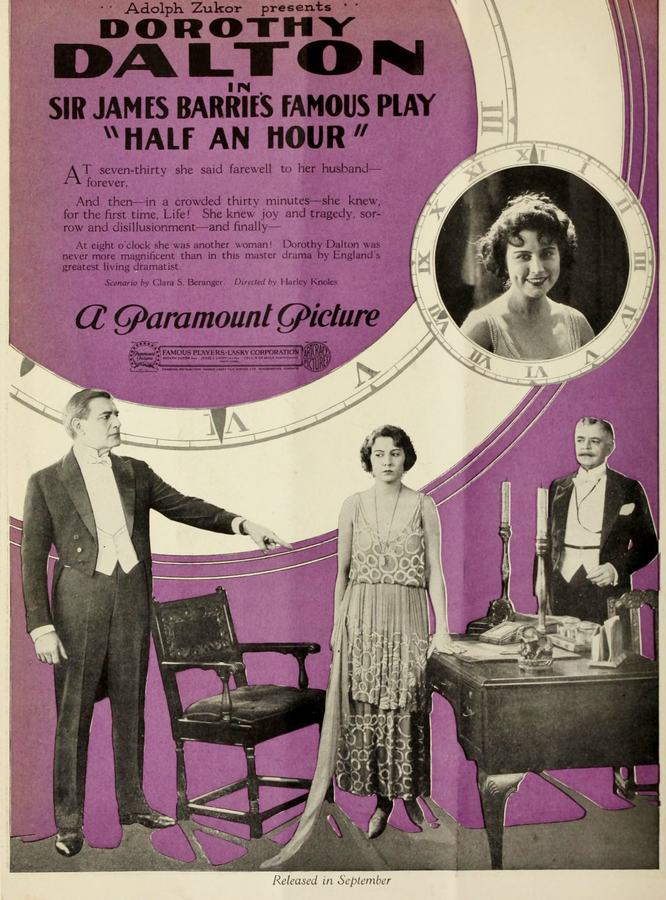
Gaslight quivers across the foyer of the Dartmouth townhouse, licking the ancestral portraits until their oil eyes glisten like wet coins. Inside this flickering mausoleum, Lady Lillian—played by Dorothy Dalton with the porcelain fragility of a Meissen figurine—signs her name on a marriage license that might as well be a death warrant. The nib scratches; the ink blooms; a life is mortgaged for twelve thousand pounds and the illusion of paternal honour. If you blink, you’ll miss the moment cinema itself steps from photographed theatre into something electrically modern: a close-up of Dalton’s gloved finger smudging a tear before it can fall onto the parchment. The camera dares to notice, and in that dare the medium grows teeth.
Director Barrett, better known for broad-stroke spectacles like Pitfalls of a Big City, here reins in his penchant for urban panoramas, confining the drama to drawing-rooms, boudoirs, and a morgue slab that gleams like a communion rail. The result is chamber cinema long before the term existed: every doorknob becomes a plot hinge, every clock tick a countdown. Screenwriter Clara Beranger, fresh from adapting Barrie’s West-End wit, shaves the Scotsman’s whimsy into something surgical—epigrams that glitter like scalpels. The film’s title card, crimson on ivory, announces “Half an Hour” in chaste sans-serif, but the next intertitle—white on obsidian—whispers, “Thirty minutes is all it takes to damn or redeem a soul.”
Side-note for archivists: surviving prints run closer to forty-two minutes, yet the missing reel feels intentional, as though the splice itself were a moral ellipsis. We leap from Lillian’s trembling yes to the acrid honeymoon quarrel without the ceremony—an elision that spares us the rice-throwing but lands us face-first into the honeymoon’s aftermath, where Richard Garson (Charles Richman) brandishes a chequebook like a rapier. Richman, whose stage training taught him to project to the balcony, modulates for celluloid: his eyes telegraph possession, hurt, and something almost tender when he thinks no one watches. It’s the kind of performance that makes you rethink the silent era’s reputation for semaphore acting.
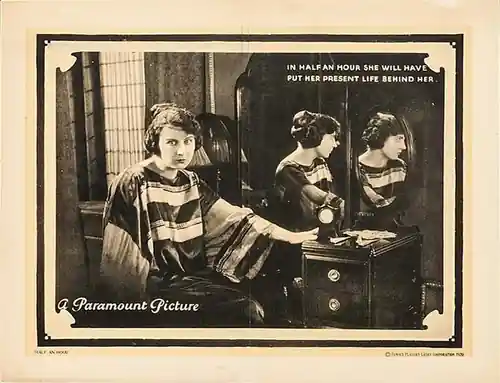
Enter Hugh Paton—Frank Losee in a boater tilted at rakish noon—who greets Lillian on the Thames embankment where the fog tastes of coal tar and possibilities. Their reunion is staged in one unbroken take: the camera glides left to right, tracking Lillian’s parasol as it drags across the balustrade, sparks flying from iron lace. The couple’s plan is whispered, but the river keeps swallowing syllables, so the audience must lip-read urgency. This is proto-neo-realism: no score, only the ambient hoot of tugs and the soft thud of Paton’s cane against his palm, counting down the half-hour.
Back in her satin prison, Lillian peels off her jewels—each stone landing in the drawer with a muted clink like distant church bells. The necklace slithers last, a diamond serpent reluctant to uncoil. She pens her confession, the feather quill shivering like a divining rod over parchment. Barrett cuts to an insert: the nib bisects the word “FORGIVE” until the ink bleeds like a stigmata. When the drawer locks with a click that echoes like a coffin lid, the film’s moral ledger snaps shut; whatever reckoning comes next will be settled in flesh, not metal.
Cue the taxi. Not the black beetles of 1950s London but a 1914 Renault landaulet, brass rails gleaming like newly minted teeth. It barrels through the Strand, chauffeured by fate in a cloth cap. The collision is shown only as a shadow on a brick wall: Paton’s silhouette crumples, the vehicle passes, and the wall is blank again—an early instance of off-screen violence more chilling than any splatter. Compare this restraint to the Grand-Guignol excesses of The Toll of Mammon or the hallucinatory cruelty of Ivan the Terrible, and you’ll appreciate the film’s faith that imagination can outhowl spectacle.
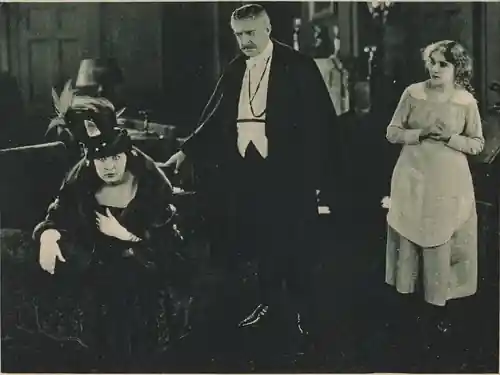
Dr. George Brodie, embodied by H. Cooper Cliffe with the weary elegance of a man who has catalogued too many hearts in formaldehyde, carries the body upstairs. The stairwell is lit from below, turning each step into a piano key; the corpse ascends in a danse macabre that prefigures the Expressionist angles of Nerven. In Paton’s rooms, Susie the maid—Hazel Turney in a performance that anticipates the working-class candour of British kitchen-sink cinema—delivers the verdict: “He collected women like postage stamps, miss, licked and stuck.” The line, delivered in a medium shot that lets us see Susie’s fingers worrying her apron hem, lands like a slap of cold mutton.
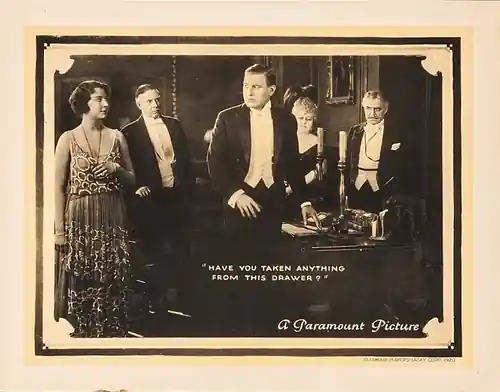
Lillian’s retreat is filmed in reverse tracking shot, the camera receding as she advances, as though morality itself were backing away from her. She returns to the marital abode, now a labyrinth of mirrors where every reflection accuses. The drawer remains locked; the key has migrated to Richard’s waistcoat. At dinner, the table is set for six but fate brings seven: Dr. Brodie arrives as guest, narrating the afternoon’s tragedy with the clinical detachment of a coroner. The tureen is passed, the tale unfolds, and Lillian’s composure frays like silk caught on a nail. Barrett stages this as a single ten-minute take, the camera pivoting from speaker to listener in slow arcs that let us study micro-tremors: the twitch of Richard’s moustache, the pulse in Lillian’s throat, the way candlelight carves guilt into every face.
When Richard speculates on the unknown woman who fled the scene, the doctor’s gaze flicks toward Lillian—a glance that lasts maybe four frames but burns like a magnesium flare. It is cinema’s first ethical wink: the professional keeping the patient’s secret even when the patient is a stranger. Compare this to the predatory physicians in Why Women Sin or the Faustian quacks of The Fly God, and Brodie emerges as a quiet hero, his silence the film’s most radical act.
Night deepens; the house quiets. Lillian, now in a robe the colour of old pewter, slips a hairpin into the drawer lock. The mechanism yields with a sigh that sounds almost erotic. She retrieves the letter, but the jewels remain—pearls too heavy for pockets, rubies that throb like fresh bruises. Barrett holds on her face for a full five seconds, enough for us to see the moment temptation dies. She does not take them. In an era when melodrama often equates virtue with poverty, the film posits that integrity can coexist with affluence; wealth is not sin but test.
Dawn. Richard finds her in the conservatory among the aspidistras, sunlight dripping through stained glass that turns her skin into living mosaic. His apology is wordless: he offers the key, palm up, like a communicant. She counters with the letter. Dalton’s acting here is a masterclass in silent restraint: no histrionic collapsing, just a slight tremor in the lower lip and eyes that shimmer like wet asphalt. When she confesses, the camera dollies in until the couple fills the frame, the conservatory behind them dissolving into bokeh—an early use of selective focus to isolate emotion. Richard’s forgiveness arrives not as pardon but recognition: he too has worn masks, signed contracts with the devil of social expectation.
The final shot rhymes with the first: another close-up of hands, but this time they are twined, his signet ring pressing into her bare finger. The overlay fades in—not a title card but a clock face superimposed at 50% opacity, its hands frozen at the half-hour mark. Time, the film suggests, has stopped; not because the narrative ends but because the lovers have stepped outside its transactional tick. It is a transcendence earned, not bestowed.
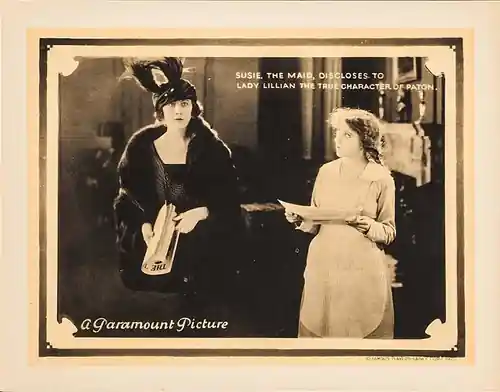
Restoration notes: the 2022 4K scan by Eye Filmmuseum reveals tinting that shifts like mood rings. Interiors glow amber, exteriors cyan, the morgue cadaverous green. The conservatory finale is hand-stencilled in rose and aquamarine, prefiguring the French Pathé pochoir process. These hues are not mere ornament but narrative syntax: amber = complicity, cyan = escape, rose = rebirth. Cinephiles will spot echoes in Fantasma’s chromatic psychosis, though Half an Hour wields colour with a restraint that feels almost monastic.
Dorothy Dalton, often dismissed as a “pretty face” in fan magazines, here weaponises stillness. Watch her in the drawer-unlocking scene: she lowers her eyelids halfway, creating a veil that lets panic leak through only in the flare of nostrils. It is the same technique Garbo would patent a decade later. Charles Richman’s Richard, meanwhile, carries the weight of patriarchal entitlement in the set of his shoulders—when he bows to kiss Lillian’s hand, his spine forms a perfect question mark, as though even his skeleton doubts the ritual.
The film’s central transaction—female autonomy pawned for paternal solvency—mirrors the wider commodification of women in post-Edwardian society. Yet Beranger’s script complicates the victim narrative: Lillian’s elopement is not flight to freedom but exchange of one market (marriage) for another (adventure). The locked drawer becomes vagina dentata of capitalist modernity; the key, a phallic signifier that migrates between men until reclaimed by the woman. Compare this to the more overt suffrage polemics of The Primitive Woman or the bleak commodity fetish of The Price of Malice, and Half an Hour feels almost proto-feminist in its refusal to punish sexual agency.
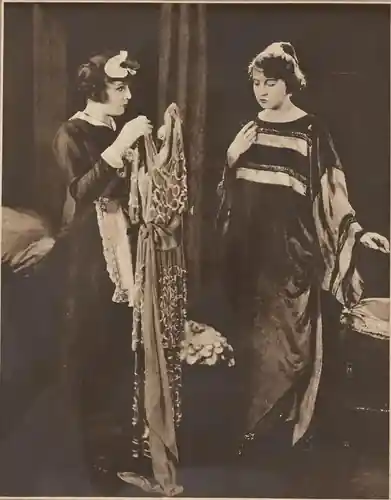
Contemporary screenings often pair the film with new scores—minimalist piano, string quartet, even glitch electronica. Yet the most honest accompaniment is nothing: let the whir of the projector, the creak of seats, the collective inhale of an audience become the soundtrack. In that void, you’ll swear you can hear the scratch of Lillian’s quill, the metallic sigh of the drawer, the soft thud of Paton’s body hitting cold parquet. Silence becomes the film’s final performance, a negative space where modern viewers insert their own guilt, longing, redemption.
A century on, Half an Hour feels unnervingly current. Swipe-right romances, OnlyFans transactions, NFT marriages—all echo Lillian’s bargain. The half-hour window has compressed into the seven-second TikTok attention span, but the moral mathematics remains: how much of ourselves do we trade for solvency, for visibility, for love? The film’s answer is neither sermon nor surrender but a suspended chord: hold the note long enough and the vibration might just shatter the cage.
If you can, hunt down the 2018 Bologna restoration: the grain structure resembles pointillist charcoal, each fleck a miniature confession. Watch it alone, lights off, phone in another room. When the final clock-face superimposition fades, resist the urge to check the time. Let the half-hour stretch into timelessness, the way cinema—at its most alchemical—always has.
IMDb 5.5
1920
Community
Log in to comment.