DbcultAccessing Vault...
5.9/10
Senior Film Conservator
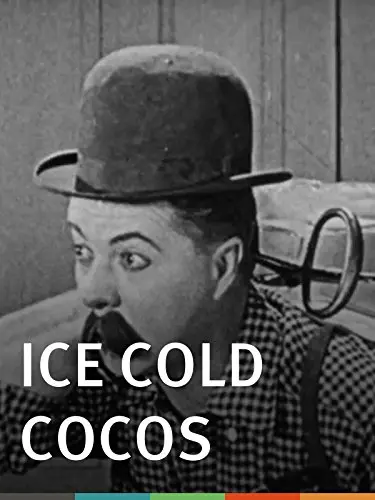
A definitive 5.9/10 rating for a film that redefined the boundaries of cult cinema. Ice Cold Cocos remains a cornerstone of transgressive art.
Is Ice Cold Cocos worth watching today? Short answer: yes, but with significant caveats for the modern viewer. This film is a delightful, if dated, romp for aficionados of early slapstick and silent cinema, yet it will likely test the patience of those unaccustomed to the era's unique comedic rhythms.
For those who appreciate the foundational elements of screen comedy, this 1926 short offers a fascinating glimpse into the craft of its time. However, if your cinematic palate demands rapid-fire pacing, intricate plots, or dialogue-driven humor, you might find its charm elusive.
Let’s cut straight to the chase about Ice Cold Cocos.
This film works because its physical comedy is genuinely inventive, leveraging the mundane act of ice delivery into a series of escalating farcical situations. Billy Bevan's presence, as always, is magnetic, a masterclass in silent-era charm and expressive physicality.
This film fails because its narrative is thin, even for a short feature, relying heavily on a singular romantic entanglement that quickly overstays its welcome. The pacing, while typical for the era, can feel sluggish by contemporary standards, with gags sometimes stretched beyond their comedic breaking point.
You should watch it if you appreciate the foundational elements of screen comedy and want to see a skilled silent performer at work, understanding that you’re engaging with a piece of film history rather than a contemporary blockbuster.
At its heart, Ice Cold Cocos is a testament to the enduring power of physical humor. Billy Bevan, a prolific and often underrated comedian of the silent era, anchors the film with his distinctive blend of earnestness and exasperation. Here, he plays Billy, one half of a makeshift ice-delivery duo, whose professional duties quickly take a backseat to his personal affections.
The setup is simple: two men, Billy and Andy (Andy Clyde, another silent comedy stalwart), masquerading as ice-delivery men in a quiet suburban setting. This premise immediately establishes a potential for chaos, as the mundane task of hauling ice blocks becomes a vehicle for slapstick. It’s a classic comedic trope, placing ordinary characters in slightly extraordinary circumstances, then watching the inevitable unraveling.
Billy’s infatuation with a newly-wed bride (Louise Carver) is the central driver of the plot. His attempts to woo her are both endearing and cringe-worthy, a delicate balance that Bevan manages with aplomb. He pours his limited funds into impressing her, a decision that underscores his impulsive, almost childlike devotion. This reckless abandon provides a humorous contrast to the more grounded, if equally bumbling, Andy.
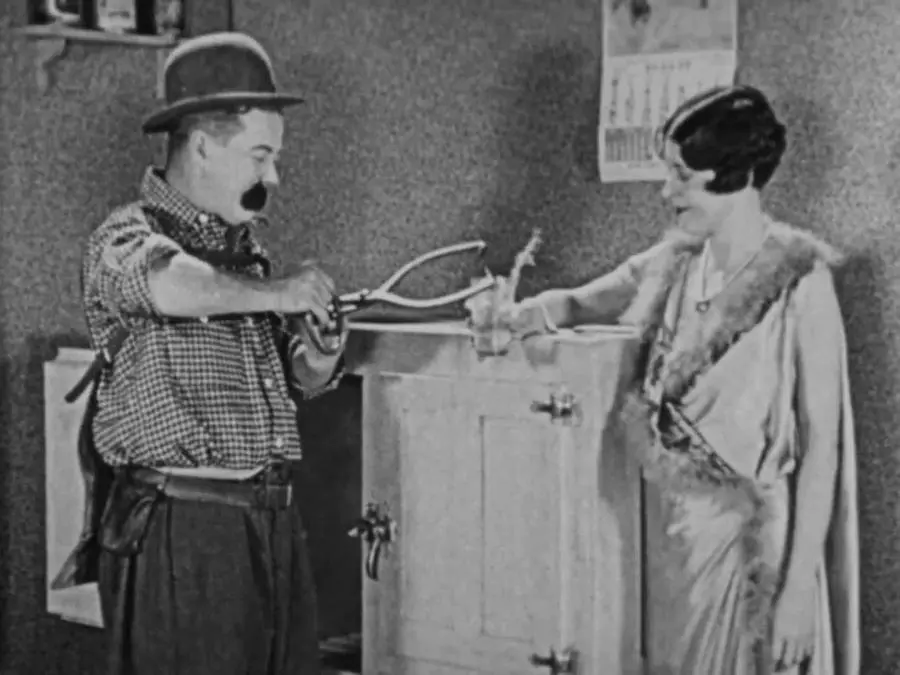
The bride’s husband, predictably, is not amused. This creates a simmering tension that runs beneath the surface of the film's lighter moments, promising a payoff that eventually arrives at a local skating contest. It's here, amidst the icy spectacle, that the various threads of the narrative converge, culminating in a sequence designed for maximum comedic impact.
Billy Bevan is the undeniable star of Ice Cold Cocos. His comedic timing is impeccable, a masterclass in how to convey complex emotions and intentions without a single spoken word. Consider his initial interactions with Louise Carver's bride: the subtle shifts in his facial expressions, the exaggerated gestures, the way his entire body language transforms from dutiful iceman to smitten suitor.
He doesn't just perform gags; he embodies the escalating desperation of a man hopelessly out of his depth. One particular moment that stands out is his attempt to appear suave while handling a massive block of ice, only to fumble it spectacularly. It’s a perfect blend of character-driven comedy and physical pratfall, showcasing his unique talent. Bevan understands that the humor often comes from the character's earnestness in the face of absurdity.
Andy Clyde, as the more pragmatic and often exasperated sidekick, provides an excellent foil. His reactions to Billy’s shenanigans are often understated but perfectly pitched, offering a grounding presence amidst the burgeoning chaos. His silent eye-rolls and resigned sighs speak volumes, demonstrating that effective silent comedy isn't always about grand gestures, but often about subtle, relatable reactions.
Louise Carver, as the object of Billy's affection, plays her role with a charming innocence that makes her desirable without making her complicit in Billy's increasingly questionable behavior. Her performance is less overtly comedic than Bevan's, but crucial for establishing the romantic stakes. Her subtle blushes and polite interactions fuel Billy’s misguided pursuit.
The direction, credited to Al Giebler, Phil Whitman, and Clarence Hennecke, demonstrates a clear understanding of silent comedy's mechanics. The film leverages wide shots to capture the full scope of its physical gags, allowing the audience to witness the intricate choreography of a tumbling ice block or a chaotic chase scene. This is particularly evident in the climactic skating rink sequence, where multiple characters are in motion, creating a delightful sense of controlled pandemonium.
Pacing, while sometimes feeling drawn out by modern standards, is deliberate. The build-up of Billy’s infatuation and the husband’s mounting anger is a slow burn, punctuated by discrete comedic bits. This allows the audience to fully grasp the escalating tension before it finally explodes. For instance, the repeated visual of Billy’s dwindling cash, shown through quick cuts to his hand counting fewer and fewer bills, effectively communicates his financial folly without needing dialogue.
The film’s tone is consistently lighthearted and farcical, never straying into genuine malice despite the husband’s justifiable anger. This adherence to a playful spirit is a hallmark of many silent comedies, ensuring that even when characters are in peril, the audience understands it's all in good fun. The humor derives from awkward situations and physical mishaps, not from character cruelty.
One unconventional observation about Ice Cold Cocos is how it uses the mundane, almost invisible, service of ice delivery as a Trojan horse for romantic and social disruption. The ice itself, a symbol of domestic convenience, becomes a prop for chaos, a slippery obstacle in the path of love and order. This elevates a simple premise into something surprisingly rich in comedic potential, proving that even the most ordinary elements can become extraordinary in the right hands.
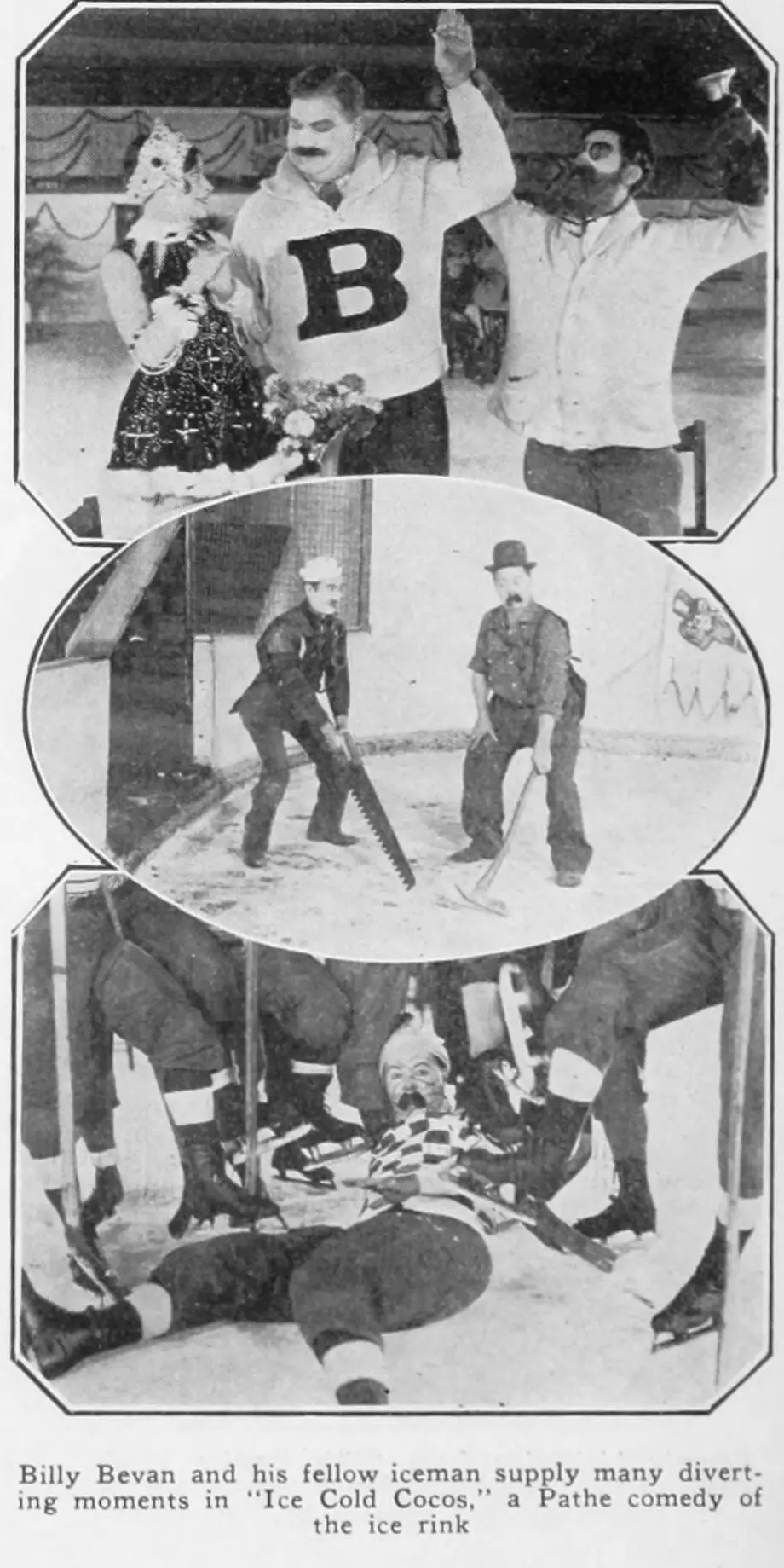
As a product of 1926, Ice Cold Cocos exhibits the visual characteristics typical of its era. The cinematography is straightforward, prioritizing clarity and the effective staging of physical comedy. While not pushing technical boundaries, the camera work is functional and serves the narrative well.
Lighting is generally flat, ensuring that all action is visible, which is crucial for slapstick where every movement contributes to the gag. Close-ups are used sparingly but effectively, often to emphasize Billy Bevan’s expressive face when delivering a particularly earnest flirtation or a look of bewildered frustration. The film makes excellent use of its practical sets, from the suburban streets to the bustling ice rink, to create believable backdrops for the comedic action.
The overall production design, while modest, effectively conveys the setting of a typical suburban town. The costumes are appropriate for the characters, further enhancing their roles within the comedic framework. The film's strength lies not in its visual grandeur, but in its ability to extract maximum comedic value from its relatively simple aesthetic.
It works. But it’s flawed. The limitations of silent film technology, particularly the reliance on intertitles for dialogue, can occasionally break the flow for modern viewers. While necessary, these text cards inevitably interrupt the visual rhythm that is so central to silent comedy's appeal. However, this is less a flaw of Ice Cold Cocos specifically and more a characteristic of the medium itself.
Yes, if you are a fan of classic silent comedies or wish to explore the roots of physical humor. It offers a solid, if not groundbreaking, example of the genre. The film is a valuable historical artifact. It showcases the talents of Billy Bevan. It’s a short, digestible piece of cinema history.
For those who rarely venture into pre-talkie cinema, Ice Cold Cocos serves as an accessible entry point. It’s short enough not to overstay its welcome, and the universal language of physical comedy transcends time. You don't need to be a film scholar to appreciate a man slipping on ice or getting into a comical tussle.
However, it’s crucial to approach it with the right mindset. This isn't a film designed for constant, gut-busting laughter by today's standards. It's more about appreciating the craftsmanship, the foundational gags, and the sheer expressive power of its performers. It’s a different kind of comedic satisfaction, one rooted in historical context and performance nuance.
Comparing it to other films of the era, such as the more elaborate productions like The General or the character-driven brilliance of Chaplin’s work, Ice Cold Cocos holds its own as a charming, if minor, entry. It might not redefine the genre, but it certainly contributes to its rich tapestry.
Ice Cold Cocos is a charming, if not groundbreaking, piece of silent cinema that serves as an excellent showcase for Billy Bevan's comedic talents. Its simple premise allows for a series of well-executed physical gags, culminating in a satisfyingly chaotic climax at the ice rink. While it demands a certain appreciation for the pacing and conventions of its era, its universal humor remains largely intact.
This film won't convert everyone to the silent film cause, but it certainly offers enough genuine laughs and historical insight to warrant a viewing for the curious. It’s a testament to the fact that even with limited resources and no spoken words, a compelling and funny story can be told. Consider it a delightful, if slightly chilly, dip into the origins of screen comedy. It's not The Human Tornado in terms of sheer energy, but it has a unique, understated charm all its own.
IMDb 6
1915
Community
Log in to comment.