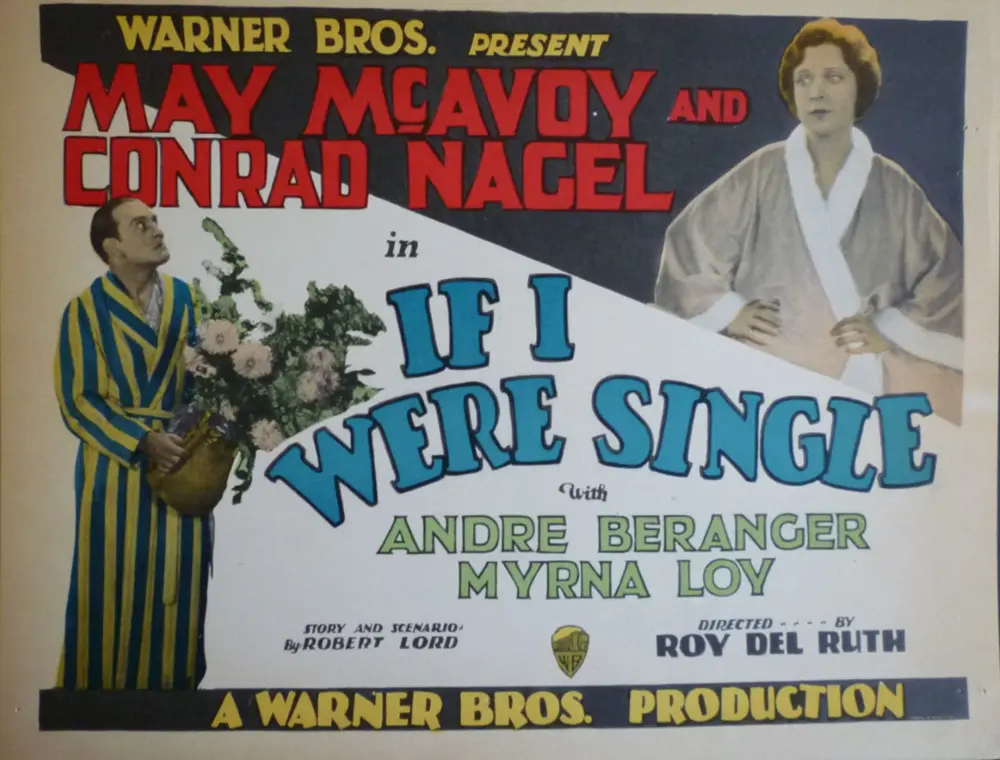
A definitive 5.8/10 rating for a film that redefined the boundaries of cult cinema. If I Were Single remains a cornerstone of transgressive art.
Is 'If I Were Single' worth revisiting in the modern era? Short answer: yes, but with significant caveats. This silent-era marital drama offers a curious glimpse into early Hollywood's take on socialite sabotage, making it a compelling watch for dedicated film historians and Myrna Loy completists. However, casual viewers seeking a universally engaging narrative might find its pacing and thematic simplicity challenging.
This film, a product of its time, serves more as an archival artifact than a timeless piece of cinema. It's a fascinating study in character archetypes and early star development, but it demands patience and an appreciation for the conventions of silent storytelling.
This film works because: It provides a rare opportunity to witness Myrna Loy's formative years as an actress, showcasing her versatility even in a villainous role, and offers an intriguing snapshot of 1920s societal mores and marital anxieties.
This film fails because: Its plot, while serving its purpose, is often simplistic and predictable, lacking the nuanced character development or profound emotional depth that might resonate more strongly with contemporary audiences.
You should watch it if: You are a devoted fan of silent cinema, a scholar of early Hollywood, or specifically interested in the career trajectory of its leading stars, particularly Myrna Loy.
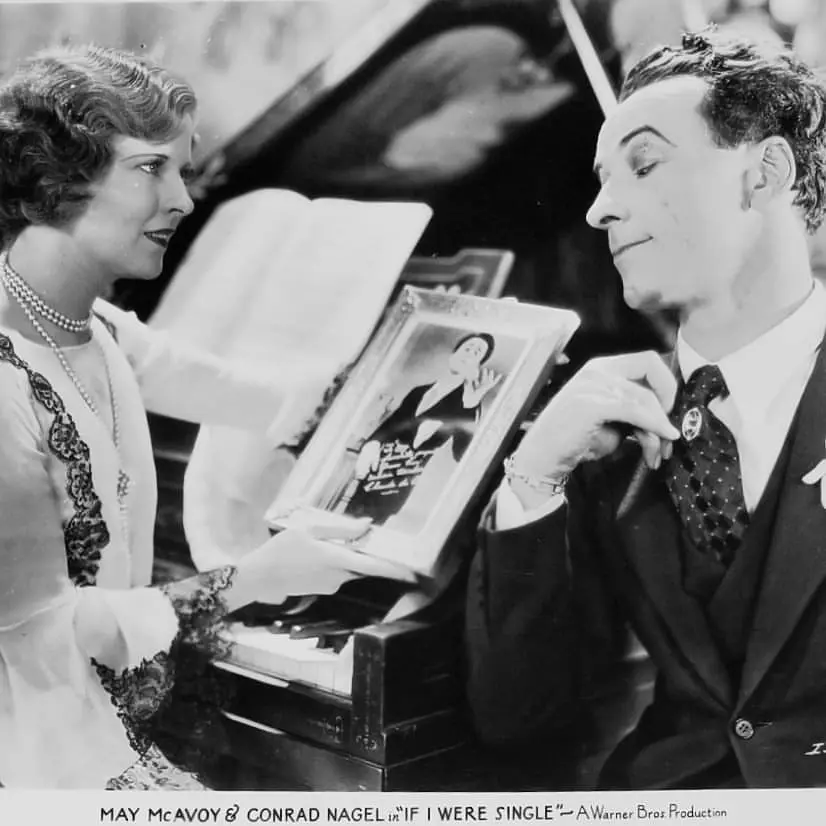
Scene from If I Were Single
Cinematic perspective: Exploring the visual vocabulary of If I Were Single (1927) through its definitive frames.
A Glimpse into Early Hollywood's Morality Plays
'If I Were Single' positions itself as a cautionary tale, a morality play dressed in the finery of the Jazz Age. The narrative, while straightforward, attempts to explore the fragility of marital bonds when confronted by external temptation and internal insecurities. It’s less about profound psychological insight and more about demonstrating the consequences of societal transgressions.
The film’s central conflict, driven by Joan Whitney’s deliberate attempts to break up the Howard marriage, speaks to a prevalent concern of the era: the sanctity of marriage against the backdrop of changing social liberties. The 'flirtatious best' of Joan isn't just a casual dalliance; it's an active, almost predatory, pursuit of disruption, a stark portrayal of a 'vamp' figure.
The subsequent 'light flirtation' by May with Claude, described as a 'light-in-the-slippers specimen,' adds another layer to this moral landscape. This detail, subtle yet loaded for its time, hints at a character who might be perceived as effeminate or even queer-coded, offering a glimpse into how such characters were subtly introduced and often implicitly judged within the narratives of early cinema.
It's a curious choice, one that, while likely intended to add scandal or comedic relief, inadvertently offers a window into the unspoken anxieties and societal stereotypes of the period. This secondary plot point, however brief, is arguably more compelling than the primary one, simply for its unconventional implications.
Myrna Loy: The Villain Before the Star
Myrna Loy, a name synonymous with sophisticated charm and wit in later decades, is almost unrecognizable here as the conniving Joan Whitney. This early role showcases her ability to command the screen, albeit in a capacity far removed from her iconic 'Thin Man' persona. Her performance is a testament to her nascent talent, demonstrating a clear understanding of silent film acting, where expressions and gestures carry the weight of dialogue.
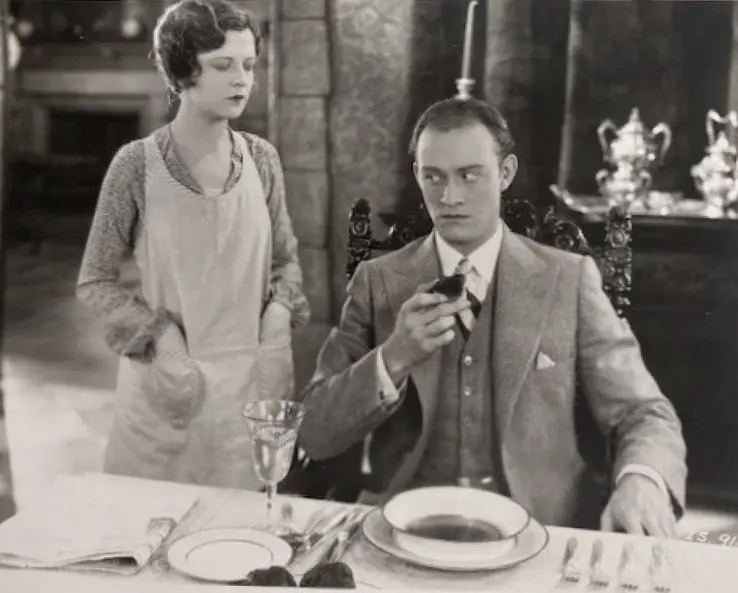
Scene from If I Were Single
Cinematic perspective: Exploring the visual vocabulary of If I Were Single (1927) through its definitive frames.
Loy, even as the antagonist, possesses an undeniable screen presence. One can observe the foundations of her later magnetism in the way she carries herself, the subtle shifts in her gaze, and the calculated movements that define Joan's manipulative nature. She doesn't just play a villain; she embodies a certain type of societal menace, a woman who uses her allure for destructive ends.
However, it’s also fair to say that her performance, while a curio, isn't truly great here; it's merely a sketch of what's to come. The role of Joan Whitney is largely two-dimensional, requiring Loy to inhabit a stock character rather than a deeply complex individual. Her portrayal, while effective within the silent melodrama framework, lacks the profound nuance and emotional depth that would define her later work.
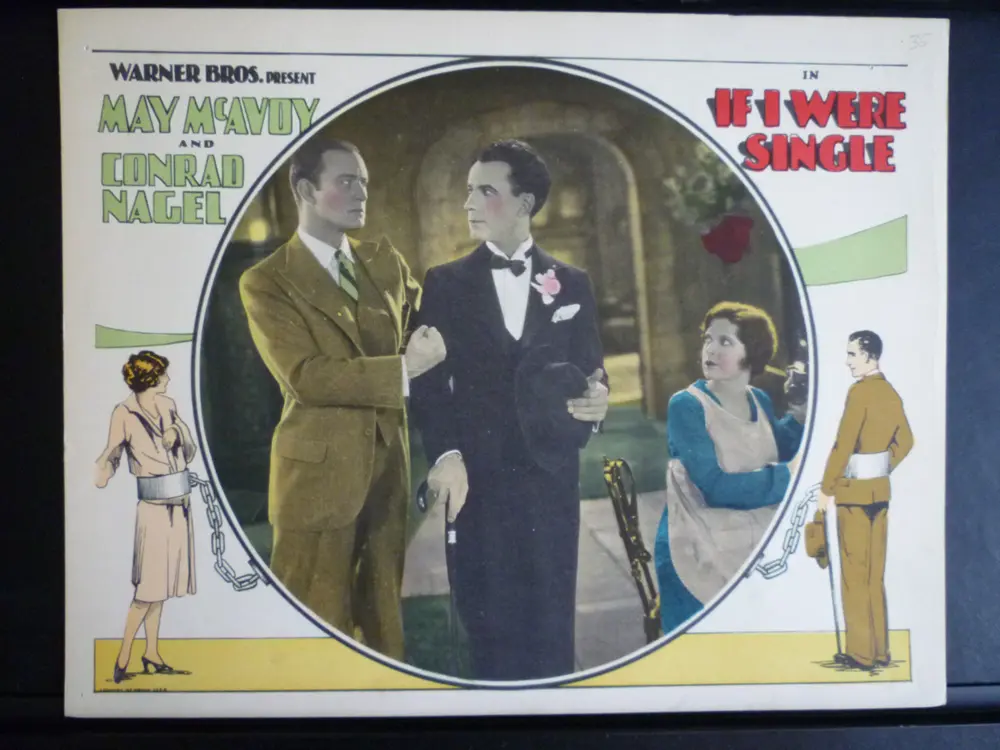
Conrad Nagel, as the conflicted husband Ted Howard, delivers a performance typical of the era – earnest, often overwrought, but effective in conveying internal turmoil through exaggerated gestures. May McAvoy, as the beleaguered wife May, embodies vulnerability and a certain innocence, making her a sympathetic figure caught in the machinations of others. Her 'light flirtation' with Claude, played by George Beranger, feels less like genuine desire and more like a desperate, almost retaliatory, act, highlighting her character's desperation rather than genuine agency.
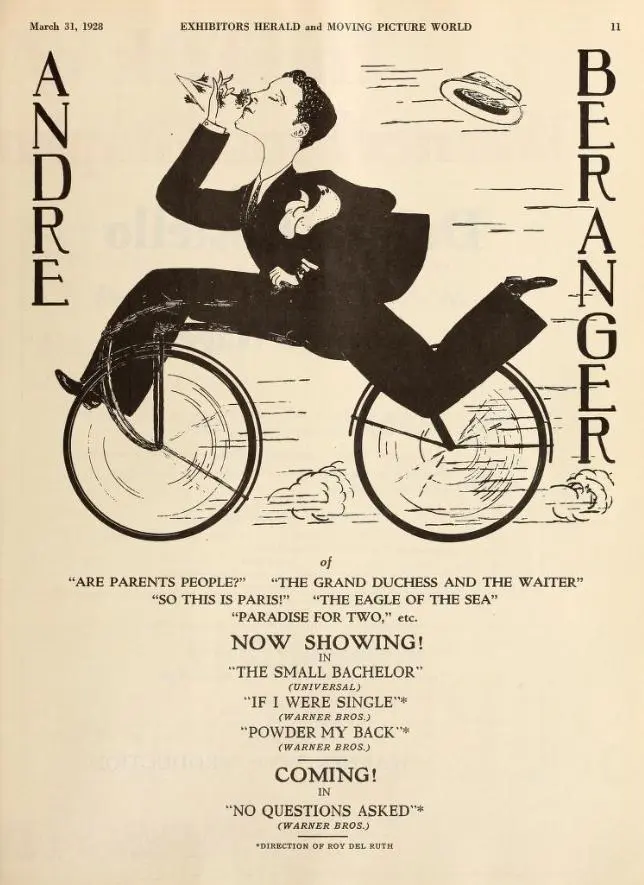
Beranger's portrayal of Claude is particularly noteworthy. His character, described as 'light-in-the-slippers,' is fascinating precisely because of the unspoken implications of the phrase. In a period rife with coded language, Beranger likely played into contemporary stereotypes, offering a performance that would have been understood by audiences of the time as hinting at a certain effeminacy or 'otherness.' It's a performance that, viewed today, raises more questions about societal perceptions than it answers about the character's motivations.
The Narrative's Frailties and Strengths
The plot of 'If I Were Single' is, by modern standards, a rather thin premise. A rich socialite trying to break up a marriage – it’s a trope that has been rehashed countless times since. Its strength lies not in its originality, but in its execution within the confines of silent film storytelling. The narrative progresses through a series of escalating confrontations and misunderstandings, relying heavily on visual cues and intertitles to convey emotional states and plot developments.
Scene from If I Were Single
Cinematic perspective: Exploring the visual vocabulary of If I Were Single (1927) through its definitive frames.
The film’s greatest frailty is its predictability. From the moment Joan Whitney sets her sights on Ted Howard, the audience can largely foresee the trajectory of the plot. There are few genuine surprises, and the resolution, while providing the expected moral rectitude, feels somewhat unearned. The emotional stakes, while visually emphasized, don't always translate into a truly gripping experience.
However, the subtle undercurrents of the plot offer a different kind of value. The film inadvertently documents anxieties about wealth, class, and moral decay. Joan Whitney represents a perceived threat from a privileged class, wielding her influence to disrupt the lives of others. This social commentary, though perhaps unintentional, gives the film a layer of depth beyond its superficial melodrama.
One particular scene, where Joan’s manipulative tactics almost succeed in driving May and Ted apart, feels genuinely tense. The close-ups on the distraught faces of May and Ted, juxtaposed with Loy’s smug satisfaction, effectively convey the emotional stakes without a single spoken word. It’s a moment where the silent film medium truly shines, relying on the power of visual storytelling to communicate raw emotion.
Direction and Cinematography: Silent Era Standards
The direction in 'If I Were Single,' while not groundbreaking, is competent and adheres to the established conventions of silent cinema. The film effectively uses framing and shot composition to highlight character interactions and emotional states. Close-ups are employed judiciously to emphasize reactions, particularly during moments of heightened drama or suspicion.
There's a noticeable reliance on traditional staging, with characters often positioned to maximize their visual impact and convey their relationships within the frame. The blocking is clear, ensuring that the audience understands who is interacting with whom, and what the emotional subtext of those interactions might be. The director manages to maintain a consistent visual rhythm, which is crucial for engagement in a film without dialogue.
Scene from If I Were Single
Cinematic perspective: Exploring the visual vocabulary of If I Were Single (1927) through its definitive frames.
The cinematography, typical of its time, utilizes stark black and white contrasts to create mood and atmosphere. Lighting is functional, often dramatic, especially in scenes designed to emphasize Joan’s villainy or May’s distress. While it lacks the artistic flourishes seen in more experimental silent films like Autour de la roue, it effectively serves the narrative, ensuring clarity and emotional impact.
One striking example is the use of shadows in scenes involving Joan Whitney. Her entrances and exits are often accompanied by subtle shifts in lighting, casting her in a slightly more menacing light, visually reinforcing her role as the antagonist. This simple yet effective technique helps to build her character without the need for extensive exposition.
Pacing and Tone: A Product of Its Time
The pacing of 'If I Were Single' will feel leisurely to contemporary viewers accustomed to rapid-fire editing and constant narrative propulsion. Silent films, by their nature, often embraced a slower, more deliberate rhythm, allowing audiences to absorb visual information and emotional cues without the distraction of dialogue. This film is no exception.
The narrative unfolds gradually, building tension through sustained scenes rather than quick cuts. This deliberate pace, while potentially challenging for modern audiences, allows for a deeper immersion into the visual storytelling. It forces the viewer to pay closer attention to facial expressions, body language, and the often poetic language of the intertitles.
The tone is overtly melodramatic, a hallmark of many silent dramas. Emotions are writ large, conflicts are clear-cut, and moral lessons are often explicitly delivered. The film doesn't shy away from portraying heightened states of distress, anger, or manipulation. The 'light-in-the-slippers' character of Claude, for example, is presented with a certain theatricality that aligns with this melodramatic tone, adding a touch of period-specific caricature.
Scene from If I Were Single
Cinematic perspective: Exploring the visual vocabulary of If I Were Single (1927) through its definitive frames.
This melodramatic tone, while authentic to the era, is where the film feels most dated. The earnestness of the performances and the straightforward moralizing can come across as quaint, even simplistic, to a modern sensibility. It works. But it’s flawed. The film’s sincerity, however, is undeniable, reflecting a time when cinema often served as a clear moral compass.
Is 'If I Were Single' Worth Watching Today?
For those with a keen interest in film history and the evolution of cinematic storytelling, 'If I Were Single' absolutely holds value. It's a crucial piece in understanding the early careers of actors like Myrna Loy and the narrative conventions of the silent era.
However, for the casual viewer, its appeal is limited. The slow pace and melodramatic style might not captivate an audience accustomed to modern film dynamics. It requires a specific appreciation for its historical context.
If you are curious about Myrna Loy's journey from villainess to beloved star, this film is an essential, if somewhat niche, viewing experience. It offers a unique window into a bygone cinematic age.
Key Takeaways
Best for: Silent film historians, Myrna Loy fans, scholars of early 20th-century social drama, and those interested in the evolution of cinematic tropes.
Not for: Viewers seeking fast-paced plots, complex character studies, or modern sensibilities in storytelling and character development.
Standout element: Myrna Loy's surprisingly effective, pre-code, villainous turn, offering a fascinating contrast to her later iconic roles.
Biggest flaw: A predictable, often simplistic narrative that struggles to resonate beyond its historical context, making it more of a curiosity than a compelling drama for contemporary audiences.
Pros and Cons
PRO: Valuable historical document of early Hollywood and silent film conventions.
PRO: Showcases Myrna Loy's early acting range and screen presence.
PRO: Offers insights into 1920s societal anxieties around marriage and morality.
PRO: George Beranger's 'light-in-the-slippers' character is an intriguing, if subtle, reflection of period stereotypes.
CON: The plot is largely simplistic and lacks significant originality or depth.
CON: Pacing can feel excessively slow for modern viewers, demanding patience.
CON: Melodramatic tone and exaggerated performances may not appeal to all.
CON: Character development is minimal, focusing more on archetypes than complex individuals.
Verdict
'If I Were Single' is more than just an obscure silent film; it's a valuable relic. While it may not stand shoulder-to-shoulder with the universally acclaimed masterpieces of the silent era or even the more polished works of Loy's contemporaries like those in The Unguarded Hour, it serves a distinct purpose. It offers a fascinating, if somewhat dated, look at moralizing drama and the burgeoning talent of one of Hollywood's future legends.
This film is not for everyone. It requires a specific lens through which to be appreciated – one that values historical context and the nuances of early cinematic expression over modern narrative demands. For those willing to engage with it on its own terms, 'If I Were Single' provides an intriguing, if not always thrilling, journey back to a pivotal moment in film history. It's a testament to the fact that even the less celebrated films can offer profound insights into the eras that produced them.