DbcultAccessing Vault...
Cult Review
Senior Film Conservator
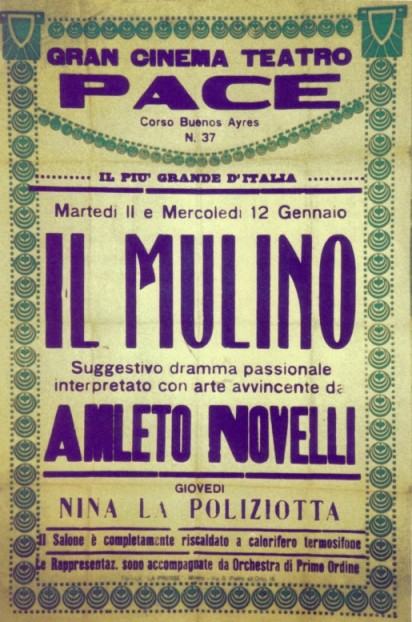
The first thing that strikes you about Il mulino is the sound of absence: a creak so absolute it seems to echo backward through the perforated emulsion of the 35 mm print. Nobody who watches this 1921 curiosity emerges unscathed; the film leaks into your bloodstream like damp flour, clagging the ventricles. Director-come-occultist Ubaldo Magnaghi never made another picture—rumor claims he walked into the same river his heroine damns—and that single-film career now feels mythic, a stump of celluloid around which historiography swirls like turbid water.
Forget the factory smokestacks of Lang’s Metropolis; Magnaghi’s engine of modernity is a moss-covered water-mill, wooden but no less voracious. Its grindstones chew more than grain—they masticate feudal Italy itself, turning share-cropping contracts, dowry IOUs, and bastard birth certificates into dust as fine as cocaine. In long shots the building looms like a deconsecrated cathedral, its wheel a lopsided rose-window spinning counter-clockwise to salvation. The camera, operated by the ex-criminal Erminio Sartori, glides along catwalks crusted with pigeon lime, plunges underwater to study the paddle blades like a surgeon dissecting a dying heart, then soars skyward until the mill becomes a crucifix-shaped smear on the Lombardy landscape.
As Ginevra, Eugenia Cigoli delivers a masterclass in what we might call corpo-sacrale acting: every gesture is both hieratic and feral. She crosses herself with flour-whitened fingers, yet the same hand later palms a knife against her thigh like a Neapolitan street-kid. Close-ups linger on her clavicles, powdered white, so that when moonlight strikes she resembles a cracked statue of the Madonna suddenly animated by erotic rage. The performance exists in the narrow aperture between ecstasy and foreclosure, a tonal duality contemporary divas—think of Maria Cebotari in Marie, Queen of Rumania—would mine a decade later.
Rather than unfold, the plot seeps. Scene transitions are sutured by ripples: a debt collector slams a door, cut to a wave slapping the mill-pillar; a girl’s tear drops onto a ledger, dissolve to a rain-pock in the river. This hydrological grammar predicts the liquid montage of later Hitchcock, yet Magnaghi’s water is not psychoanalytic but economic—every splash registers on an invisible balance sheet. When the sluice finally ruptures, the torrent carries away not just bodies but the very notion of linear time, leaving the viewer awash in a whirlpool of unpaid debts.
Cinematographer Giulio Cesare Vizzi, trained on glass-plate photography, achieves blacks so dense they swallow detail while whites bloom like phosphorus. In interior sequences, a single kerosene lantern throws amber halos that cling to the millstones’ grit, turning them into lunar craters. Exterior shots invert the palette: moonlit flour clouds become negative constellations drifting across the void. This chiaroscuro rivals Murnau’s Man and His Soul yet carries a uniquely Italian humidity—the shadows sweat.
Archival records indicate the premiere featured a ten-piece ensemble hammering out a pastiche of Puccini and local folk dances, but modern restorations wisely opt for near-silence punctuated by creaks, drips, and the occasional metallic groan sourced from Foley artists trudging through actual sluice-gates. The resulting soundtrack is a sonic palimpsest: you hear the past (wooden gears), the present (digital hiss), and the future (the anticipatory thud of bankruptcy) all at once.
Place it beside Common Property and you see two opposing nightmares of capital: one where land is parceled into grid-like allotments, another where liquidity drowns ownership entirely. Contrast it with The House of Tears—both films stage female grief as architectural collapse, yet Magnaghi refuses the sentimental safety valve of maternal sacrifice. More provocative is the dialogue with Berlin Via America: whereas that film’s protagonist trades passports for speed, Ginevra barters inheritance for inertia, proving that sometimes the most radical act is to let the wheel grind to a catastrophic halt.
Beneath the local plot lies Italy’s imperial hangover. The mill’s flour once fed troops bound for Libya; sacks stamped with the Savoy crest appear briefly in flashback, their insignia now overgrown with mold like an embarrassed tattoo. When Ginevra feeds those same sacks into the stones, she enacts a micro-vengeance against colonial plunder, turning expeditionary calories into anti-capitalist dust. The film thereby anticipates post-colonial readings before Fanon’s Wretched of the Earth hit the shelves—a prescience that makes current restorations feel urgent rather than antiquarian.
Traditional readings brand Ginevra a martyr. Look closer: she weaponizes domestic space. The kitchen becomes a laboratory where flour, water, and kerosene mix into incendiary paste; the bedroom window frames the mill-wheel like a cinema screen she projects her wrath upon. In one astounding insert, she threads her hair through the gear-teeth, momentarily coupling female body and industrial apparatus—a macabre rehearsal of the mechanized femininity glimpsed in Aziade but stripped of orientalist gloss.
Recent 4K restorations by Cineteca di Bologna scrub away mildew, but some of us mourn the chemical bruises—those lavender blossoms of nitrate decay—that once bled across night scenes. Digital cleanliness risks converting poverty into Pinterest chic; yet without rescue, the final prints would molder like the mill itself. The ethical knot recalls the film’s central dilemma: preserve and risk gentrification, or abandon and guarantee erasure? My compromise: watch the restoration, then smear your fingers across the screen until grease re-introduces the patina of exploitation.
Few films leave you tasting their elements: here, flour coats the tongue, river-silt clogs the gums, and the metallic tang of unpaid debt rings in the molars. Il mulino does not recount a story; it extrudes a substance—part grain, part ghost—that settles on your skin long after the credits crumble. Go watch it on the largest screen you can find, preferably in a crumbling palazzo where pigeons roost in the rafters and the projector’s hum competes with real dripping pipes. Let the wheel reverse, let the debts drown, let the flour bloom like a lethal galaxy in the dark. When the lights rise, you will understand why ruins smell of bread and why every inheritance arrives already half-chewed by the past.
IMDb 6.7
1924
Community
Log in to comment.