DbcultAccessing Vault...
6.1/10
Senior Film Conservator
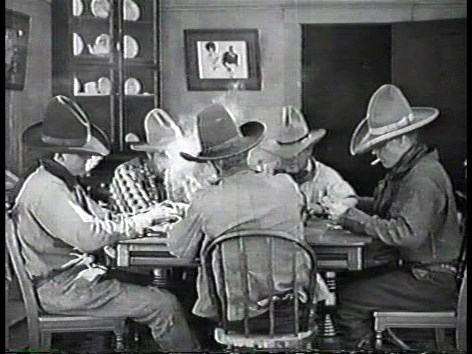
A definitive 6.1/10 rating for a film that redefined the boundaries of cult cinema. South of Santa Fe remains a cornerstone of transgressive art.
The silver screen of the early 20th century, often a mirror reflecting societal norms, occasionally dared to project visions that subtly, yet profoundly, challenged the prevailing order. South of Santa Fe, a cinematic artifact from a bygone era, stands as one such audacious endeavor, presenting a narrative that, even by today's standards, resonates with a quiet, revolutionary spirit. It’s a film that, despite its age, speaks volumes about the enduring struggle for recognition and leadership, particularly when it defies conventional expectations regarding gender.
At its core, the film unravels a story of unexpected empowerment set against the rugged, unforgiving backdrop of the American West. The premise is deceptively simple: a ranch owner, weary of the perpetual insubordination and rambunctious nature of his all-male cowboy crew, makes a decision that surely sent ripples through contemporary audiences. He appoints a young woman as their foreman. This isn't merely a plot device; it's a thematic declaration, a bold stroke that instantly positions the film as more than just another Western adventure. It becomes a crucible for examining prejudice, competence, and the sheer force of will required to shatter preconceived notions.
The protagonist, whose journey forms the emotional bedrock of the film, embodies a quiet defiance. Her initial appearance, likely met with incredulity by the hardened cowboys, sets the stage for a protracted battle of wills. This isn't a story of overt, fiery rebellion, but rather one of persistent, undeniable capability. The film, through its visual storytelling — a necessity in the silent era — must have masterfully conveyed the subtle shifts in power dynamics, the gradual erosion of skepticism, and the grudging respect slowly earned. We imagine scenes of her calmly assessing livestock, issuing directives with unwavering resolve, and perhaps even outperforming the men in tasks they considered their exclusive domain.
The challenge for any director tackling such a premise in the silent film era was immense. How do you convey the nuanced emotional landscape of a woman asserting authority over men who believe her unfit, without a single spoken word? It relied heavily on the expressive power of its cast. Anna Purdon, likely in the pivotal role of the young foreman, would have carried the immense burden of conveying strength, intelligence, and vulnerability through gesture and facial expression. Her performance would have been critical in making her character's improbable rise believable and her eventual acceptance, satisfying.
The ensemble cast, including Jack Richardson, George Chesebro, Texas Guinan, and Donna Wayne, would have been instrumental in populating this world with believable characters. Richardson and Chesebro, likely portraying some of the more obstinate cowboys, would have needed to embody the initial resistance and eventual, perhaps reluctant, admiration for the foreman. Their physicality, their scowls and eventual nods of approval, would have been key narrative drivers. Texas Guinan, known for her robust personality, might have injected a certain rugged charm or even played a more sympathetic, perhaps even protective, figure among the ranch hands, offering a counterpoint to the more overtly hostile elements.
The absence of credited writers, a common occurrence in early cinema where stories often evolved on set or were adapted from uncredited sources, places an even greater emphasis on the director's vision and the actors' interpretive skills. The narrative arc, from initial skepticism to eventual triumph, had to be communicated purely through visual storytelling and the raw emotional power of the performers. This collaborative alchemy, where every gesture, every glance, and every physical action contributes to the unfolding drama, is a testament to the unique artistry of the silent film era.
The Western genre, even in its nascent stages, was frequently a canvas for exploring themes of justice, survival, and the clash between civilization and wilderness. South of Santa Fe cleverly subverts some of these conventions by introducing an internal conflict that transcends the typical 'outlaw vs. lawman' trope. Here, the battle is less about bullets and more about breaking down gendered barriers. The vast, untamed landscape of the West serves as an apt metaphor for the social terrain the protagonist must navigate – wild, unpredictable, and resistant to change.
One can draw parallels to other films of the period that similarly explored societal frictions or the tenacity of the human spirit. While not directly comparable in plot, the sheer will of the characters in films like The Juggernaut or the moral quandaries presented in The Unpardonable Sin hint at a broader cinematic interest in challenging viewers. However, South of Santa Fe distinguishes itself by its specific focus on a woman's professional ascendancy in a domain traditionally reserved for men, an early cinematic commentary on breaking the glass ceiling of the dusty frontier.
The craftsmanship of early Westerns often lay in their ability to capture the grandeur of the landscape and integrate it into the narrative. The cinematography, even without the technological sophistication of later eras, would have been crucial in establishing the mood and scale of the ranch. Wide shots of cattle drives, close-ups of dusty faces, and the stark contrast of human endeavor against endless horizons would have been employed to great effect. The pacing, too, would have been a vital tool, building tension through lingering shots of the foreman's determined gaze or the cowboys' simmering resentment, culminating in moments of decisive action or quiet acceptance.
Consider how films like God's Country and the Woman utilized the natural environment not just as a backdrop, but as an active participant in the characters' struggles. South of Santa Fe, one imagines, would have similarly leveraged the vastness and inherent challenges of the Western setting to amplify the protagonist's uphill battle. The sun-baked plains, the dusty corrals, and the endless sky would have underscored both the isolation of her position and the monumental nature of her task.
What makes South of Santa Fe particularly compelling for modern viewers is its implicit social commentary. Long before the widespread discussions of gender equality in the workplace, this film presented a fictionalized, yet potent, argument for judging individuals based on merit rather than gender. It's a quiet testament to the idea that leadership qualities are not exclusive to one sex, an idea that was undoubtedly radical for its time. This makes it a fascinating precursor to later films that would more explicitly tackle feminist themes within various genres.
The film's exploration of a woman in a position of power invites comparison with other cinematic portrayals of strong, independent female characters, even if their spheres of influence differed. While Trixie from Broadway might have showcased a different kind of resilience in an urban setting, the underlying thread of a woman navigating and conquering male-dominated environments connects these narratives. Similarly, the dramatic tension arising from social expectations in films like Fine Feathers or Less Than Kin, while not identical, echoes the struggle against predefined roles.
The power of this film, even in retrospective analysis, lies in its ability to transcend its simple plot. It's not just about wrangling cattle; it's about wrangling perceptions. It's a story of an individual proving her worth in a world that instinctively doubted her. The success of the young foreman is not just a personal victory but a symbolic triumph, suggesting the permeability of gender roles even in the most entrenched and seemingly immutable environments.
Ultimately, South of Santa Fe serves as a fascinating artifact of early cinema, not just for its historical value but for its remarkably progressive narrative. It reminds us that even in the silent era, filmmakers were capable of crafting stories with profound social implications. It’s a compelling argument for revisiting these often-overlooked gems, to understand the roots of cinematic storytelling and to appreciate how nascent forms of expression could convey complex ideas with such clarity and emotional impact.
This film, like others of its time such as The Lost Chord or Appearance of Evil, contributes to a rich tapestry of early filmmaking that often pushed boundaries in subtle ways. It's a testament to the enduring power of narrative to challenge, to entertain, and to provoke thought, regardless of the technological limitations of its creation. The legacy of South of Santa Fe lies not just in its pioneering plot, but in its silent, yet insistent, voice advocating for a world where capability, not gender, dictates one's place in the saddle.
Re-discovering such a film is akin to unearthing a forgotten blueprint for social progress, demonstrating that the seeds of modern discourse were sown in unexpected places, even amidst the dusty trails and rugged individualism of the cinematic West. Its quiet revolution, played out through the expressive faces of its cast and the stark beauty of its setting, continues to resonate, inviting us to reflect on the nature of leadership and the enduring fight against entrenched prejudice. It solidifies its place as more than just a historical curiosity; it's a vital piece of cinematic history that speaks to contemporary struggles with surprising clarity and power.
IMDb —
1918
Community
Log in to comment.