DbcultAccessing Vault...
6.8/10
Senior Film Conservator
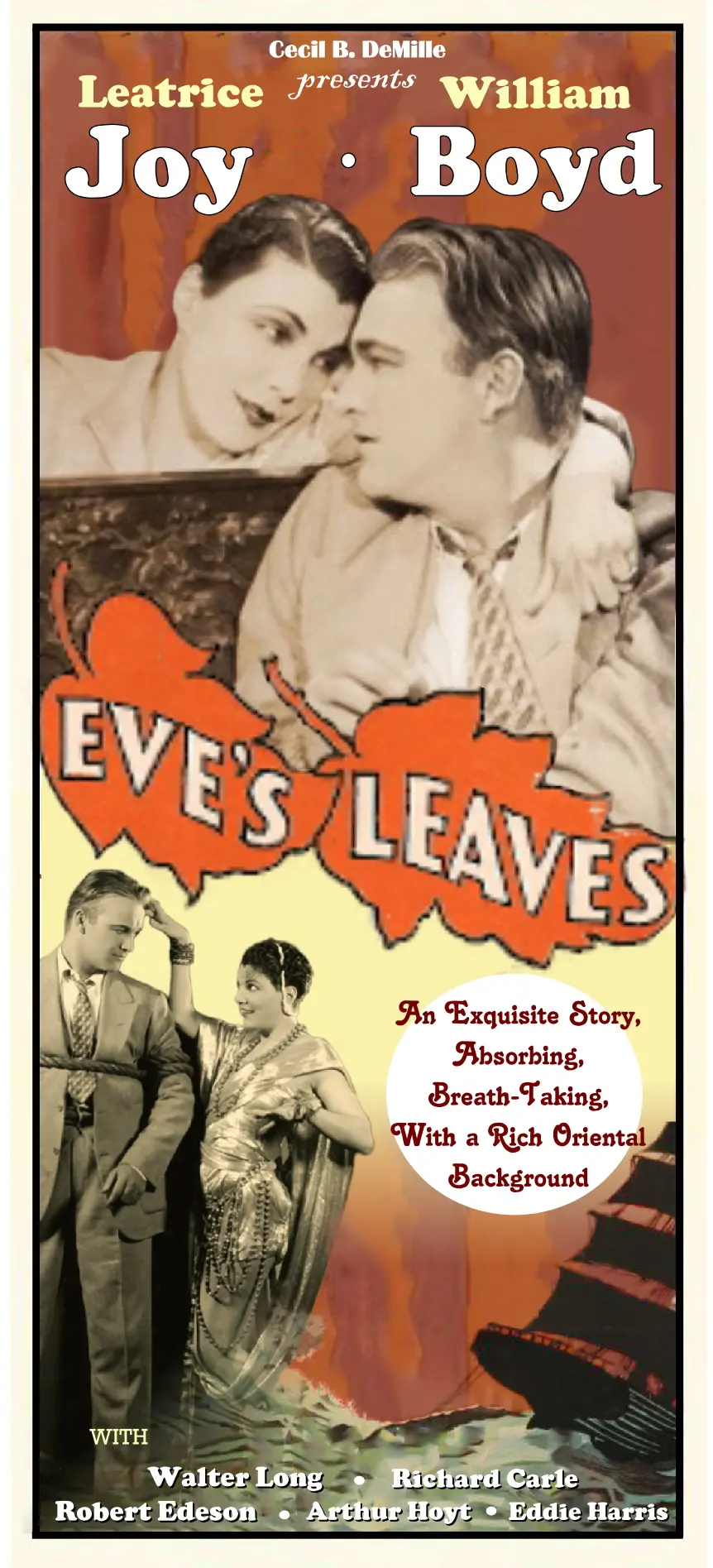
A definitive 6.8/10 rating for a film that redefined the boundaries of cult cinema. Eve's Leaves remains a cornerstone of transgressive art.
Is this film worth watching today? Short answer: Yes, but primarily for those who appreciate the subversion of gender roles in early Hollywood. It is a film for fans of high-spirited silent adventures and those interested in the evolution of the 'tomboy' archetype, while it might not satisfy those looking for a historically sensitive or grounded narrative.
1) This film works because Leatrice Joy brings an infectious, physical energy to a role that could have easily been a one-dimensional caricature. 2) This film fails because its third-act tonal shift into broad slapstick undermines the genuine romantic tension established in the first half. 3) You should watch it if you want to see a rare example of a 1920s female lead who is consistently more competent than her male counterpart.
In the landscape of 1926, the 'tomboy' was often a temporary phase for a heroine, a costume to be discarded for a gown by the final reel. However, in Eve's Leaves, Leatrice Joy treats her character’s boyishness not as a disguise, but as a core identity. Joy’s performance is remarkably physical. She doesn't just play at being a sailor; she moves with a grounded, calloused confidence that makes Bob Britton’s (William Boyd) initial confusion entirely believable. This isn't the dainty cross-dressing seen in Annie-for-Spite; it is something more rugged and sincere.
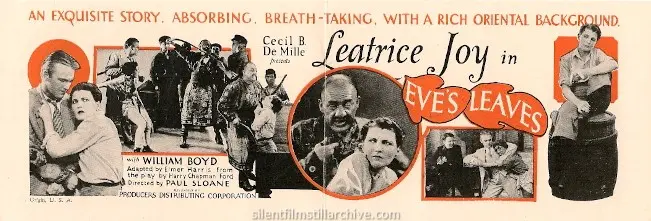
The chemistry between Joy and Boyd is predicated on a power imbalance that favors Eve. While Boyd is the traditional leading man—tall, handsome, and affluent—he is frequently the damsel in distress. When Eve decides to 'shanghai' him, she isn't doing it out of malice, but out of a dime-novel-induced belief that she is the protagonist of a grand romance. It is a fascinating meta-commentary on how we consume media. Eve is literally trying to live inside the books she reads, a theme that feels surprisingly modern in our current era of fandom and escapism.
The introduction of Chang Fang, played by the legendary Sôjin Kamiyama, brings a necessary, if stereotypical, threat to the proceedings. While the film leans into the 'Yellow Peril' tropes common of the era—similar to the casting choices in Mystic Faces—Sôjin manages to imbue the pirate leader with a certain calculating menace. He is a formidable foil for Eve, and their confrontation in the stronghold is the film’s high point.
The set design of the pirate stronghold is impressive for a mid-budget production. The use of shadows and the placement of the large rug—which serves as Eve's primary tool of deception—demonstrate a keen understanding of spatial storytelling. When Eve reveals herself and proceeds to bind Chang Fang 'hand and foot,' the film reaches a peak of absurdist empowerment. It is a moment of pure pulp bliss that justifies the film's existence.
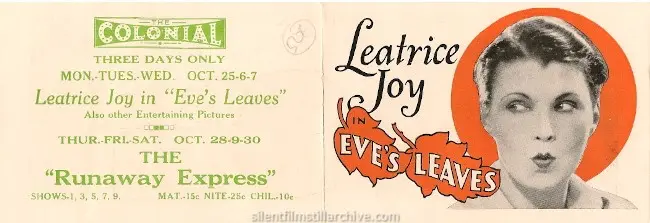
Yes, Eve's Leaves is a worthwhile watch for anyone interested in the technical and social transitions of the late silent era. It offers a unique blend of romance and action that avoids the doldrums of more static dramas like The Sea Master. The film is fast-paced, visually inventive, and features a leading performance that remains genuinely charismatic nearly a century later.
Director Paul Sloane (though uncredited in some records, the touch is distinct) maintains a brisk pace that prevents the 'dime novel' conceit from wearing thin. The transition from the freighter to the Chinese port is handled with a sense of scale that suggests a much larger budget. The cinematography captures the chaotic energy of the pirate raid with surprising clarity, avoiding the muddy compositions found in contemporary works like Trapped in the Air.
However, the pacing stumbles in the final ten minutes. The introduction of the missionary character feels like a 'Deus ex Machina' designed to satisfy the censors of the time. The transition from a life-or-death escape to a forced wedding ceremony is jarring. It’s a tonal whiplash that almost ruins the character development Eve has undergone. One moment she is a pirate-besting warrior, and the next, she is being roped into a domestic contract by a man reading psalms to a jarred pirate. It works. But it’s flawed.
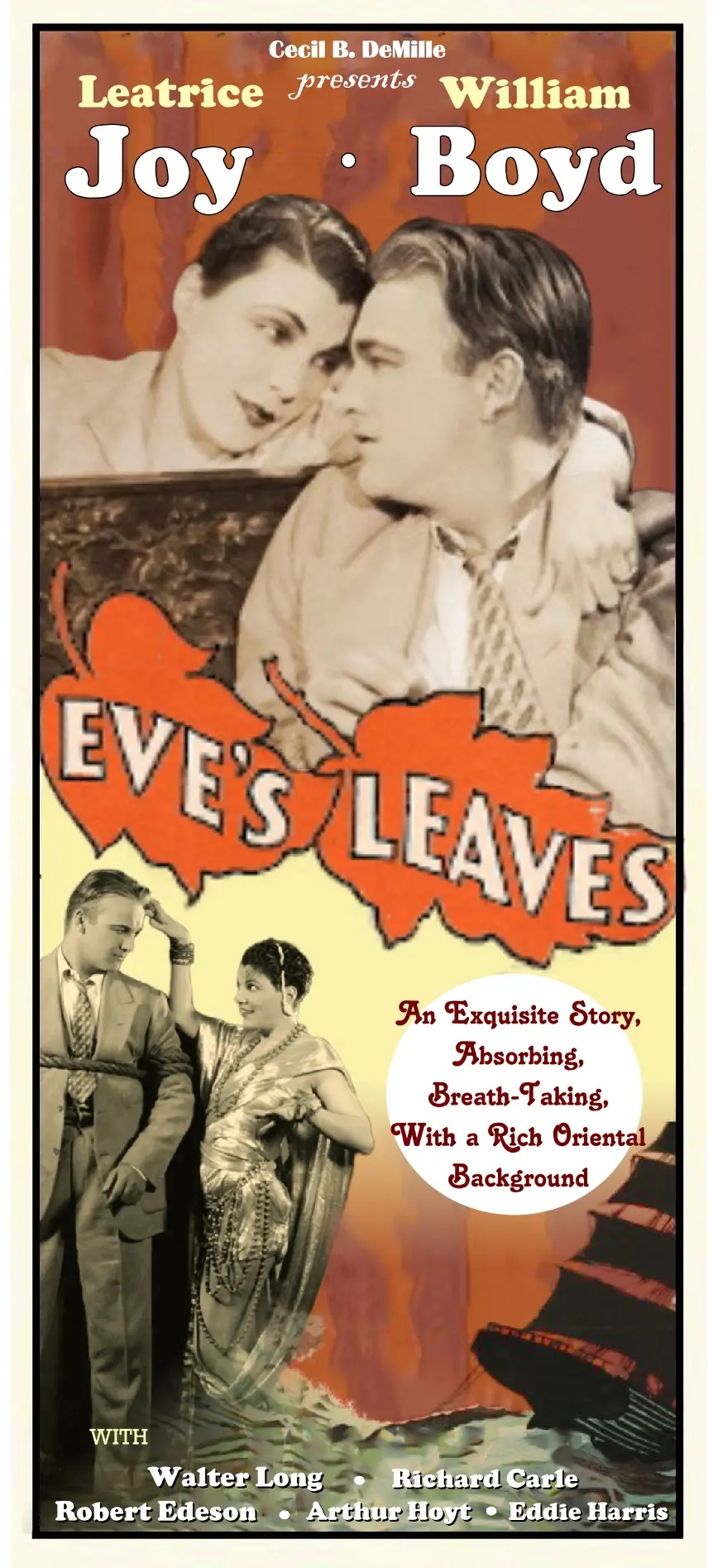
When compared to other films of the period, such as the more whimsical Felix Goes West, Eve's Leaves feels more grounded in its character motivations, even if the plot is outlandish. It lacks the cynicism of Cheap Kisses, opting instead for a bright, adventurous spirit. This is a film that wants you to have fun, and for the most part, it succeeds by refusing to take its own high-stakes drama too seriously.
Pros:
Cons:
Eve's Leaves is a delightful anomaly. It is a film that understands the power of fantasy, both for its protagonist and its audience. While the ending is a mess of period-appropriate convenience, the journey there is filled with genuine wit and a surprisingly modern sensibility regarding gender. Leatrice Joy proves she was one of the most versatile stars of her era, carrying the film with a smirk and a swagger that few of her contemporaries could match. It is not a masterpiece, but it is a vital piece of entertainment that deserves more than to be a footnote in silent cinema history. The ending is garbage, but the woman at the center of it is gold.
IMDb 5.6
1927
Community
Log in to comment.