DbcultAccessing Vault...
Cult Review
Senior Film Conservator
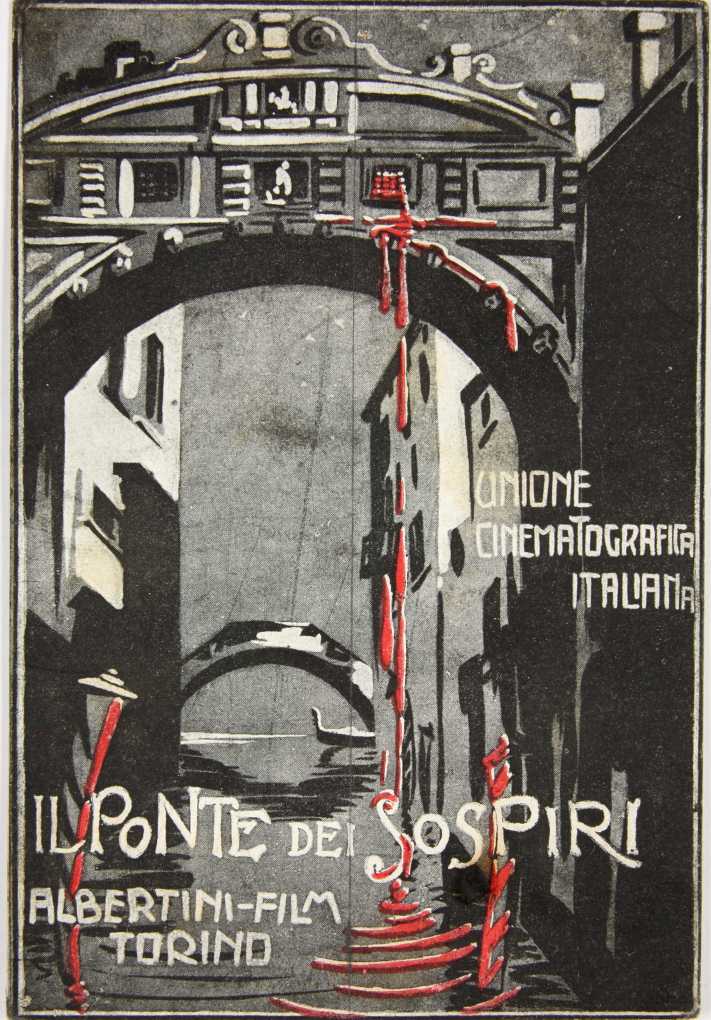
Moonlit stucco peels like blistered skin above the Rio di Palazzo while a nobleman’s fingernail scrapes rust from iron bars—this image alone, captured on orthochromatic stock that turns blood into tar, heralds Il ponte dei sospiri as something fiercer than your garden-variety swashbuckler. Director Giovanni Bertinetti, moonlighting from his usual propaganda newsreels, channels Michel Zévaco’s pulp serial into a fever dream where every footstep ricochets off waterlogged stone. The resulting 67 minutes feel both emaciated and operatic: a dagger carved from whale-bone rather than steel.
Forget sepia nostalgia; cinematographer Ubaldo Arata smothers the lagoon in tenebrous cobalt. Gondolas glide like hearses, their lacquer so glossy it mirrors convicts’ shackles. Superimpositions layer rat-infested dungeons over Carnival confetti, implying that pleasure and penance share the same artery. When Morosini (Onorato Garaveo) crawls through the bridge’s limestone throat, the camera tilts 45°—a trick borrowed from German strassefilms—to make the grille seem a shark’s jaw. You taste brine and mortar dust.
Garaveo, a Turin stage matinee idol, underplays magnificently; his glare could frost Murano glass. Contrast him with Carolina White’s Contarina: she flits between fan-language coquetry and Medea-like fury, sometimes within the same iris shot. Their chemistry sparks not in clinches but in chiaroscuro—half of White’s face devoured by shadow while Garaveo’s jawline catches a sliver of moon. Veteran ham Luciano Albertini cameos as a ducal assassin who tickles victims with a feather before garroting them—an unsettling nod to commedia dell’arte.
Intertitles, lettered in crimson on parchment, read like poisoned valentines: “In Venice, even prayers are taxed.” The original score—now lost—was reportedly scored for glass harmonica and sackbut, but modern festivals pair the print with a doom-jazz trio; low saxophones mimic foghorns, cymbal scrapes become seagulls’ shrieks. The effect turns every spectator into an eavesdropper on conspiracy.
Bertinetti and Zévaco compress 500 pages of feuilleton into staccato bursts: a bribe, a betrayal, a bell toll. Yet they pause for baroque curlicues—Morosini soliloquizes to a spider spinning atop a death warrant, comparing its silk to the doge’s web of edicts. Such flourishes risk pretense, but the film’s brisk runtime keeps them from curdling. Compare this to The Closing Net, where dialogue bloated like drowned corpses; here, economy equals urgency.
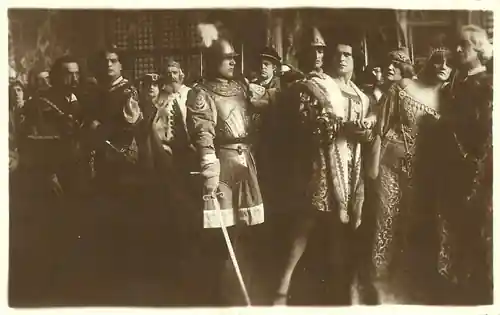
Shot in summer 1920, when Spanish flu still emptied piazzas, the production commandeered decommissioned Austro-Hungarian naval uniforms for extras—an authenticity that predates Sangre y arena’s fascist-era excess. Censors demanded trimming a scene where Morosini brands a senator with a heated ducat; the footage vanished, yet laser scans of surviving prints reveal scorch marks on adjacent frames—history literally burned into celluloid. Contemporary viewers may detect DNA strands later woven into Revelj’s claustrophobic revenge or even into popcorn fare like Double Speed.
Unlike The Changing Woman, which pedestals its proto-feminist lead, Il ponte dei sospiri lets Contarina weaponize fragility. She trades on the myth of the donna fragile to infiltrate the Inquisitors’ chambers, then blackmails a monk with evidence of his necrophilic sketches. The film refuses to sanctify her; once vengeance is secured, she demands half of Morosini’s estate as consultancy fee—an ending that feels almost anachronistic in its savvy.
A nitrate negative surfaced in 1998 inside a Sicilian olive-oil crate; the Cineteca di Bologna bathed it in chemical baths scented with rosemary to counter vinegar syndrome. The 2K scan reveals textures previously smothered: you can now count eyelashes stuck to the jailer’s cheek. Streaming platforms peddle a 720p transfer, but Blu-ray connoisseurs should hunt the 2021 Le Giornate del Cinema Muto digipack—it includes an essay comparing the bridge’s architecture to a cervix, birthing sinners into moonlight.
For cinephiles fatigued by superhero bombast, Il ponte dei sospiri offers a detox of pure shadow-play. Its politics, though rooted in 1700s oligarchy, resonate in an age of offshore leaks and oligarch yachts. The film teaches that revenge is not a dish served cold but a masked ball where every waltz step crushes a toe—an ethos later echoed, with louder explosions, in The American Way. Yet here, the fuse whispers rather than roars, and the aftertaste is not cordite but brackish canal water.
Watch it at midnight, windows open, gondola creaks optional. Let the salt-laden silence crawl across your parquet; you may find yourself counting sighs, unsure whether they belong to prisoners or to you.
IMDb —
1926
Community
Log in to comment.