DbcultAccessing Vault...
6.4/10
Senior Film Conservator
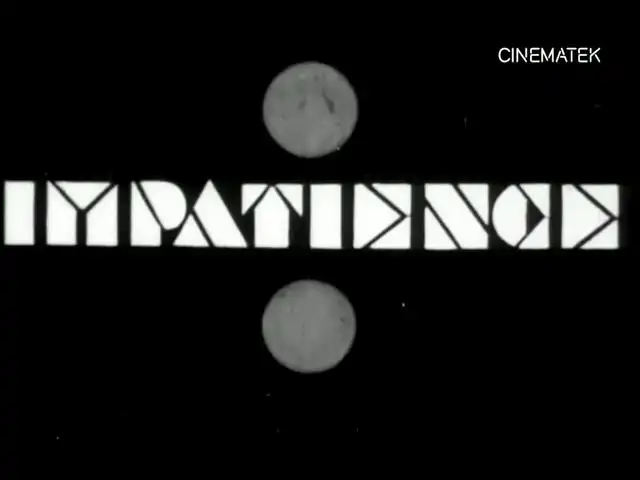
A definitive 6.4/10 rating for a film that redefined the boundaries of cult cinema. Impatience remains a cornerstone of transgressive art.
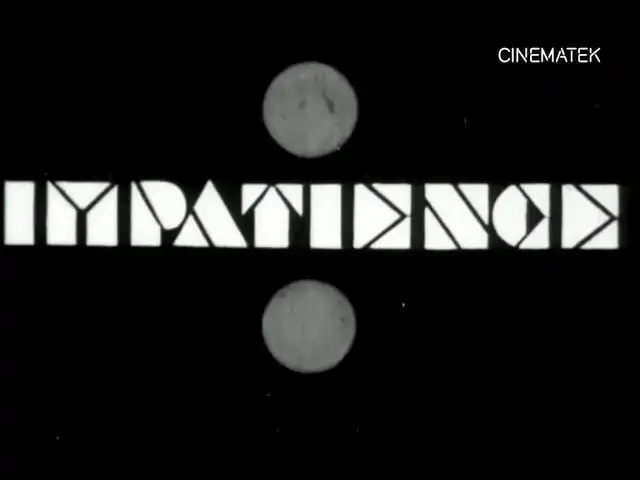
If you’re the kind of person who needs a plot to stay awake, stay far away from this. Impatience is basically a 36-minute music video without the music (unless you count the internal hum of a motorcycle engine). It’s for the people who like to stare at the texture of old film stock and don't mind seeing the same four shots repeated until they lose all meaning. If you want a story, go watch His Picture in the Papers. This is something else entirely.
The whole thing is built around four basic elements: a motorcycle, a mountain road, some abstract shapes, and Yvonne Selma. Charles Dekeukeleire—the guy behind the camera—seems completely obsessed with how these things clash. He doesn't care about Selma as a character; she’s just another part of the machine. There are these close-ups of her face where she’s staring into the lens, and she looks almost catatonic. It’s not the expressive, stagey acting you see in something like Susan's Gentleman. It’s cold. It’s like she’s a piston waiting to fire.
There’s a specific sequence about ten minutes in where the editing just goes haywire. It’s just cut-cut-cut between a wheel spinning and Selma’s eyes. It’s supposed to be rhythmic, I guess, but it actually becomes physically straining to watch after a while. You start to notice the tiny imperfections in the film—the little scratches and the way the light flickers. I found myself focusing on a smudge on the engine block more than the actual composition of the shot. It’s that kind of movie.
The pacing is weird. Usually, you’d expect a movie about a motorcycle to feel fast, but Impatience feels heavy. It drags. Even though it’s technically "fast" editing, the repetition makes time feel like it’s standing still. You see the same curve in the road over and over. It reminded me of a much more aggressive version of the travel shots in Arizona Nights, but stripped of any sense of destination. In those old Westerns, the landscape is a place. Here, the landscape is just a blur of grey and white meant to make you feel dizzy.
I kept looking at Selma’s hair. In a few shots, it’s perfectly still, and in others, it’s being whipped around by the wind, but the transitions between these states are so jarring that it feels like the movie is glitching. There’s no attempt at continuity. Dekeukeleire is clearly more interested in the "vibe" of speed than the reality of it. There’s a shot of a mountain peak that appears out of nowhere, stays for half a second, and then vanishes. It feels like a mistake, but it’s too deliberate to be one.
It’s also surprisingly lonely. There’s no one else in this world. No extras, no background characters, just this one woman and her machine. It makes the whole experience feel a bit clinical, like you’re watching a laboratory experiment from 1928. It lacks the human warmth of something like Gatans barn. You don't feel for Selma; you just observe her. You observe the metal. You observe the dirt on the road.
By the time it ended, I felt like I’d been vibrating. It’s not "good" in any traditional sense. It’s annoying, it’s pretentious, and it’s way too long for what it is. But there’s a shot near the end—just a simple tilt of the camera over the motorcycle frame—that looks so modern it’s startling. For three seconds, it feels like it could have been filmed yesterday on an iPhone. Then it goes back to being a grainy, flickering relic.
Watch it if you want to see what happens when someone decides that narrative is a burden. Don't watch it if you’re tired or have a headache. It’s a movie that demands you pay attention to absolutely nothing, very intensely.
IMDb 7.1
1934
Community
Log in to comment.