DbcultAccessing Vault...
Cult Review
Senior Film Conservator
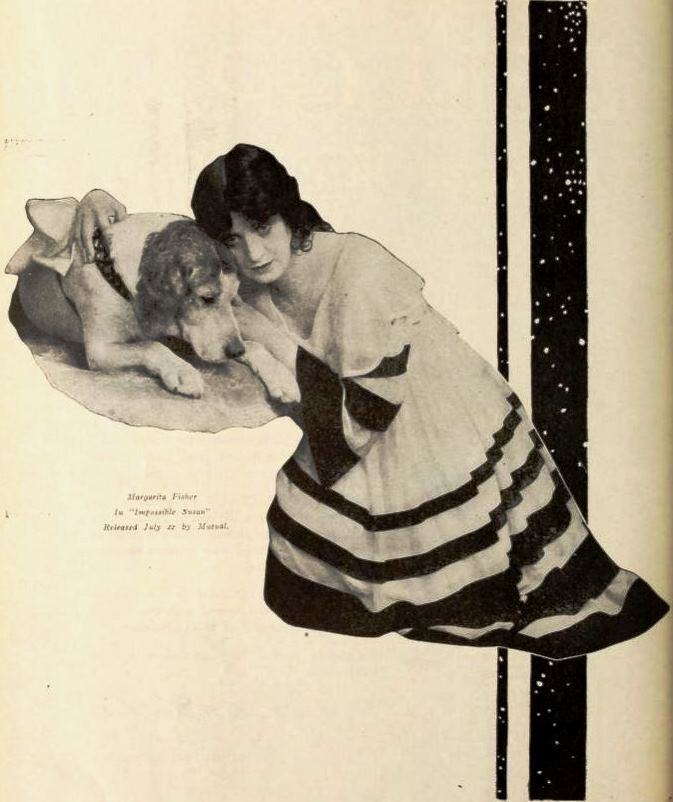
Stepping back into the golden age of silent cinema, one unearths cinematic treasures that, despite their age, resonate with an emotional depth and narrative ingenuity that transcends the decades. Among these, the film Impossible Susan emerges as a particularly fascinating artifact, a romantic drama that weaves a intricate tapestry of social engineering, class distinctions, and the timeless complexities of the human heart. Released in an era when visual storytelling was paramount, this picture, penned by Joseph F. Poland and Elizabeth Mahoney, masterfully navigates the delicate dance of desire and societal expectation, all through the lens of a remarkable personal metamorphosis.
At its core, Impossible Susan is a testament to the transformative power of refinement, yet it simultaneously critiques the superficiality of such a change when pitted against genuine affection. The narrative is set in motion by the sudden orphanhood of Susan Gaskell, a young woman whose spirited nature and unpolished charm are inherited along with her newfound predicament. Following her grandfather's death, Susan is entrusted to the care of her cousin, Martha Brown, who serves as the meticulous housekeeper for the affluent, yet emotionally reserved, bachelor Bernard Marshall. This initial displacement sets the stage for a narrative steeped in the contrast between Susan’s innate vitality and the rigid decorum of her new, moneyed surroundings.
Bernard Marshall, portrayed with a nuanced stoicism by Hayward Mack, is a man burdened by familial responsibility, particularly concerning his younger brother, Ted (Lloyd Hughes). Ted’s imprudent entanglement with the notorious adventuress Eva Thornton (Beverly Travers) becomes the catalyst for Bernard’s rather audacious plan. Distraught by this liaison, Bernard conceives a scheme to divert Ted’s affections by introducing him to a more 'suitable' companion. His chosen instrument for this social engineering project is none other than Susan. Bernard, in a move reminiscent of the classic Pygmalion myth, hires Henri Delafaire (L.M. Wells), a man of impeccable taste and a maestro of social graces, to undertake Susan’s complete transformation. Delafaire’s mission is to sculpt the rough-hewn Susan into a paragon of modern elegance, teaching her the subtleties of deportment, manners, and sophisticated attire. This plot device, though familiar, is executed with a fresh perspective, exploring not just the external changes but the internal shifts and burgeoning self-awareness of the protagonist.
The success of Delafaire’s tutelage is undeniable, even unexpectedly profound. Susan, brought to life with captivating vivacity by Margarita Fischer, blossoms under his guidance. Her innate charm, now polished with a veneer of sophistication, renders her irresistible. What begins as a calculated maneuver to redirect Ted’s affections soon spirals into an unforeseen romantic entanglement. Delafaire himself, the sculptor of her new persona, finds himself enchanted by his creation. Ted, the intended target, is predictably captivated. But it is Bernard, the architect of this elaborate scheme, who finds himself most profoundly affected. His carefully constructed emotional detachment begins to crumble as Susan's charm penetrates his defenses, though his burgeoning affection remains a meticulously guarded secret, a testament to Mack's understated performance.
The emotional core of Impossible Susan lies in this complex love triangle, or rather, quadrangle, if one includes Henri's fleeting affections. Susan, despite her newfound allure and the attention she garners, remains steadfast in her unspoken devotion to Bernard. Her love for him is a quiet, unwavering force, driving her decisions with a poignant selflessness. In a heart-wrenching twist of fate, believing it to be the path to Bernard's happiness – perhaps even a way to secure his approval – she agrees to marry Ted. This act of self-abnegation underscores the societal pressures placed upon women of the era, where personal desires often took a backseat to perceived duty or the expectations of male benefactors. Margarita Fischer’s portrayal of Susan’s internal conflict, conveyed through subtle expressions and gestures characteristic of silent film acting, is particularly compelling here, allowing the audience to feel the weight of her sacrifice.
Bernard, for his part, struggles with his concealed emotions. His character embodies the archetype of the stoic, well-meaning man who, through his own emotional suppression, inadvertently causes pain. Hayward Mack navigates this internal turmoil with commendable restraint, allowing the audience to glimpse the anguish beneath his composed exterior. Ted, meanwhile, is depicted as an impulsive, somewhat fickle character. Lloyd Hughes renders Ted with a youthful exuberance that, while charming, highlights his lack of true commitment. His eventual decision, on the very eve of his wedding to Susan, to send Bernard a telegram confessing his elopement with Eva, serves as the dramatic fulcrum of the entire narrative. This eleventh-hour revelation is a classic cinematic trope, yet it feels earned here, a culmination of Ted’s inherent nature and Eva Thornton’s enduring, if morally questionable, influence.
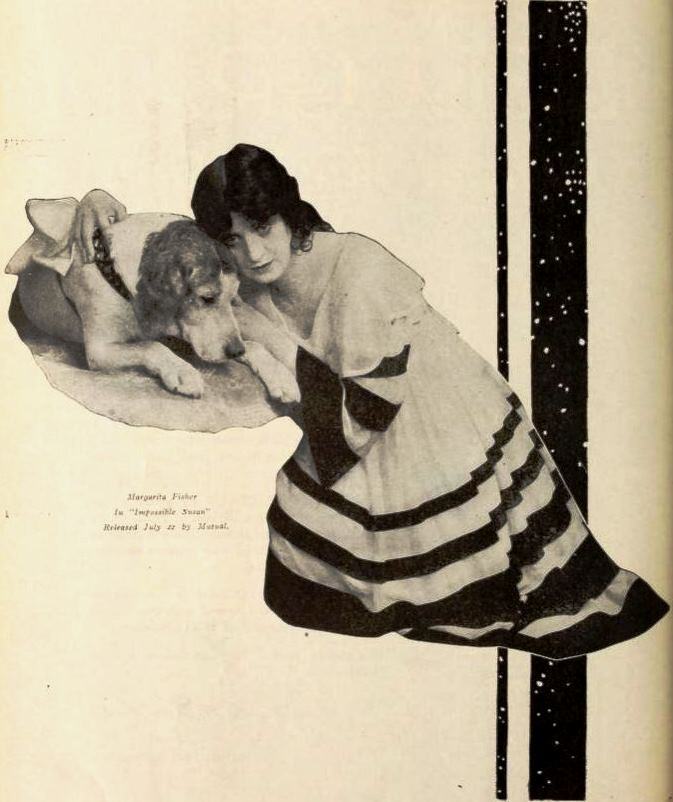
The screenplay by Joseph F. Poland and Elizabeth Mahoney is a marvel of concise storytelling, a necessity in an era reliant on intertitles to convey dialogue and complex emotional states. They expertly build tension and character arcs through action and reaction, allowing the visual performances to carry much of the narrative weight. The pacing is deliberate, allowing the audience to absorb Susan’s transformation and Bernard’s internal struggle gradually. The uncredited director (common for the era) demonstrates a keen understanding of visual storytelling, using close-ups to emphasize emotional breakthroughs and wider shots to establish the social milieu. The film’s aesthetic, particularly in Susan’s evolving wardrobe and demeanor, would have been a significant visual draw, showcasing the allure of modern fashion and etiquette.
The subtle nuances of silent film acting are on full display, with Margarita Fischer’s expressive eyes and gestures conveying a spectrum of emotions from initial naiveté to sophisticated heartbreak and eventual joy. Similarly, Hayward Mack’s reserved demeanor effectively communicates Bernard’s internal conflict without the need for extensive intertitles. The supporting cast, including Anne Schaefer as Martha Brown and Jack Mower in a smaller role, contribute to the film’s rich texture, anchoring the central drama within a believable, if somewhat stylized, world. The performances, while adhering to the more theatrical style of early cinema, manage to imbue the characters with a genuine humanity that resonates even today.
Beyond the romantic entanglements, Impossible Susan delves into profound themes relevant to its historical context. The film can be viewed as a commentary on female agency, or the lack thereof, in early 20th-century society. Susan is initially a pawn in Bernard’s game, her identity shaped by male desires and societal expectations. Her transformation, while outwardly empowering, is fundamentally driven by external forces. Yet, her unwavering love for Bernard, and her willingness to sacrifice her own happiness for his perceived contentment, hints at a deeper, internal strength that transcends her manipulated circumstances. This struggle for self-determination within prescribed social roles is a recurring motif in cinema of the period, echoed in films like Why I Would Not Marry, which similarly grappled with women navigating personal desires against societal pressures.
The film also subtly critiques the superficiality of class and breeding. While Susan’s transformation into a 'modern' woman is impressive, it is her inherent goodness and genuine affection that ultimately win Bernard’s heart, not merely her polished exterior. This suggests a timeless message about the triumph of authentic emotion over manufactured appearances. The role of Eva Thornton, the 'adventuress,' serves as a stark contrast, representing a more overtly transgressive form of female agency, one that operates outside conventional morality but ultimately leads to a different kind of romantic pairing for Ted. This dichotomy between the 'good' woman (Susan) and the 'bad' woman (Eva) was a common narrative device, exploring the boundaries of acceptable female behavior.
Placed within the broader landscape of early 20th-century cinema, Impossible Susan stands as a compelling example of popular entertainment that also managed to touch upon deeper social currents. Its intricate love triangle and themes of concealed affection bear a kinship with other romantic dramas of the era, such as What Love Can Do or Love Me, where emotional entanglements formed the crux of the narrative. However, Impossible Susan distinguishes itself through its specific focus on the 'making over' of a character, a trope that, while not unique, is executed with a particular charm and emotional resonance here.
The resolution of the narrative, with Ted’s telegram finally forcing Bernard to confront and confess his true feelings, is a moment of powerful emotional release. Hayward Mack’s portrayal of Bernard’s transformation from reserved benefactor to ardent lover is subtly impactful, making the eventual engagement all the more satisfying. It’s a classic happy ending, certainly, but one that feels earned through the preceding emotional labyrinth. The film, in its quiet way, celebrates the enduring power of true affection to overcome social barriers and personal inhibitions.
In conclusion, Impossible Susan is far more than a mere period piece; it is a meticulously crafted romantic drama that speaks to universal human experiences. Its exploration of identity, social expectations, and the unpredictable nature of love remains as pertinent today as it was upon its release. The film serves as a valuable reminder of the sophistication and emotional depth that silent cinema was capable of achieving. For cinephiles and casual viewers alike, it offers a captivating glimpse into a bygone era of filmmaking, delivering a story that is both charmingly old-fashioned and surprisingly modern in its emotional intelligence. The interplay of strong performances, a compelling narrative, and understated direction solidifies its place as a gem in the annals of early cinematic romance, inviting audiences to once again marvel at the 'impossible' magic of the silver screen and the enduring appeal of a love story well told.

IMDb —
1917
Community
Log in to comment.