DbcultAccessing Vault...
6.5/10
Senior Film Conservator
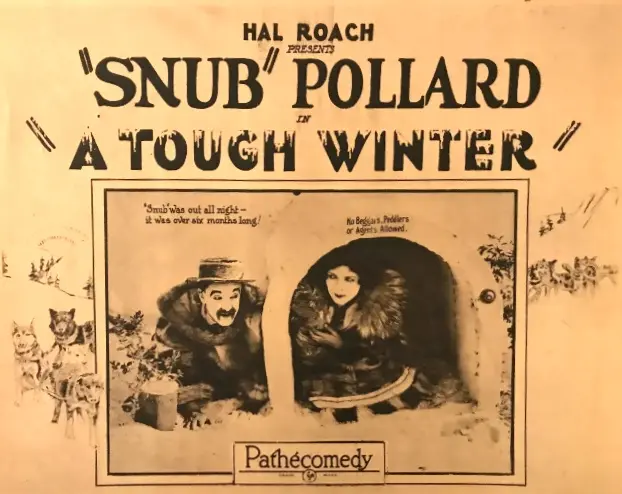
A definitive 6.5/10 rating for a film that redefined the boundaries of cult cinema. A Tough Winter remains a cornerstone of transgressive art.
In the pantheon of silent cinema, particularly within the fertile grounds of the Hal Roach Studios, A Tough Winter (1923) emerges not merely as a comedic short, but as a fever dream of social mobility and geographic confusion. While the era was often defined by the high-flying antics of Harold Lloyd or the poetic pathos of Chaplin, Snub Pollard occupied a unique, almost frantic space. His mustache, a downward-sloping icon of the working-class struggle, serves as the emotional anchor for a story that oscillates between heart-wrenching penury and the sheer absurdity of a train ride that defies the laws of global navigation.
The film opens with a sequence that mirrors the gritty realism found in contemporaneous dramas like Innocent, yet it quickly pivots into the rhythmic slapstick that made Pollard a household name. The adoption of Marie Mosquini’s newsgirl character and her little brother (played by the evergreen Joe Cobb) isn't presented as a grand philanthropic gesture, but as a clumsy, inevitable collision of lonely souls. There is a raw, unvarnished quality to the urban sets—the peeling wallpaper and the biting wind—that elevates the stakes beyond the typical 'pie-in-the-face' humor of the period.
No discussion of A Tough Winter is complete without dissecting the presence of James Finlayson. Before he became the quintessential foil for Laurel and Hardy, Finlayson was honing his craft as the ultimate personification of the 'Mean Landlord.' His performance here is a masterclass in reactionary comedy. Every time he enters a frame, the tension spikes; he represents the looming threat of the 1920s housing crisis, a theme explored with perhaps more gravity in In Folly's Trail, but here handled with a kinetic malevolence that is both terrifying and hilarious.
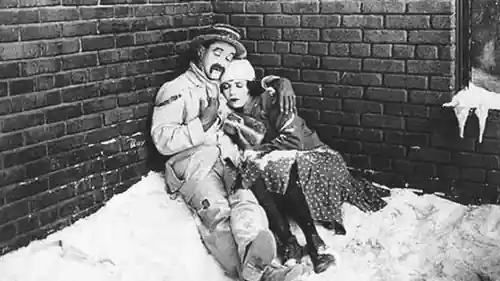
The interplay between Pollard’s frantic attempts to secure a domestic sanctuary and Finlayson’s predatory rent-seeking creates a friction that drives the plot toward its radical second act. Unlike the more structured narrative found in The Impostor (1921), where the comedy stems from identity confusion, the humor in A Tough Winter is born from the sheer exhaustiveness of survival. The physical gags are not merely set pieces; they are the desperate maneuvers of a man trying to keep a roof over the heads of his surrogate family.
The pivot to the train sequence marks the film's transition from urban satire to surrealist odyssey. The promise of Florida—a land of perpetual sun and citrus—was the ultimate American escapist fantasy of the 1920s. It was the 'promised land' for those crushed by the industrial winters of the North. However, the film subverts this trope with a audacity that borders on the avant-garde. The trio boards a train, expecting the warmth of the tropics, only to find themselves in the desolate, snow-choked vistas of Iceland.
This twist is executed with a deadpan brilliance that highlights the inherent 'bad luck' theme often found in the works of Roach’s writers, reminiscent of the unfortunate series of events in Edgar's Jonah Day. The visual contrast between the cramped, dark tenement and the expansive, blinding white of the Icelandic sets (likely shot in the California mountains) provides a jarring aesthetic shift. The characters, dressed for a Florida summer, navigating the sub-zero temperatures, creates a visual dissonance that remains one of the most memorable images in Pollard’s filmography.
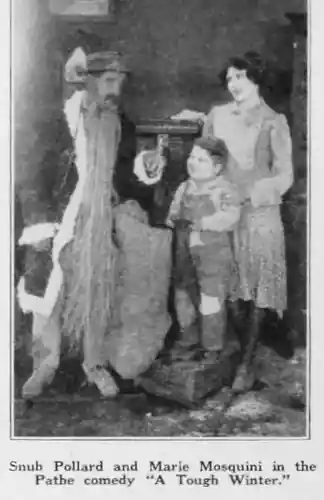
Technically, the film displays the high production values that the Roach studio was known for. The lighting in the initial apartment scenes uses heavy shadows to emphasize the claustrophobia of poverty, a stark contrast to the high-key lighting used once they reach the 'Iceland' exterior. The editing, handled with a briskness that prevents the sentimentality from curdling, ensures that the gags land with percussive force. The use of Joe Cobb, a staple of the 'Our Gang' series, adds a layer of juvenile innocence that heightens the stakes of their displacement.
When we compare the narrative trajectory to something like The Family Closet, we see how A Tough Winter eschews complex mystery in favor of raw, situational irony. The film doesn't ask the audience to solve a puzzle; it asks them to witness a struggle against the very elements of the earth. The 'mistake' that leads them to Iceland is never fully explained by logic—because in the world of Snub Pollard, the universe is a chaotic, often hostile place where even the tracks under your feet can betray your destination.
Pollard’s performance is a masterclass in vulnerability masked by activity. He is always moving, always fixing, always running. It is a kineticism born of anxiety. In many ways, this film is a precursor to the modern 'cringe' comedy, where the humor is derived from the audience's awareness of an impending disaster that the protagonist is blissfully or desperately ignoring. The chemistry between Marie Mosquini and Pollard is understated but essential; she provides the gravity that keeps the film from floating off into pure nonsense.
As the film concludes, leaving our protagonists in the literal and metaphorical cold, it leaves the viewer with a lingering sense of the precarity of the human condition. It is a far cry from the easy resolutions of Unconquered. Instead, it suggests that resilience is not about winning, but about continuing to move even when the train has taken you to the wrong side of the world. The 'tough winter' of the title is not just a season; it is a state of being for the disenfranchised, captured with a flickering, silver-nitrate beauty that still resonates a century later.
Ultimately, A Tough Winter stands as a testament to the era's ability to find laughter in the darkest corners of the human experience. It is a film that recognizes the inherent comedy in tragedy, and the inherent tragedy in a train ride to the wrong country. For students of silent cinema and fans of the Roach legacy, it remains an essential, if chilling, artifact of a bygone era of comedy.
IMDb 3.2
1920
Community
Log in to comment.