DbcultAccessing Vault...
Cult Review
Senior Film Conservator
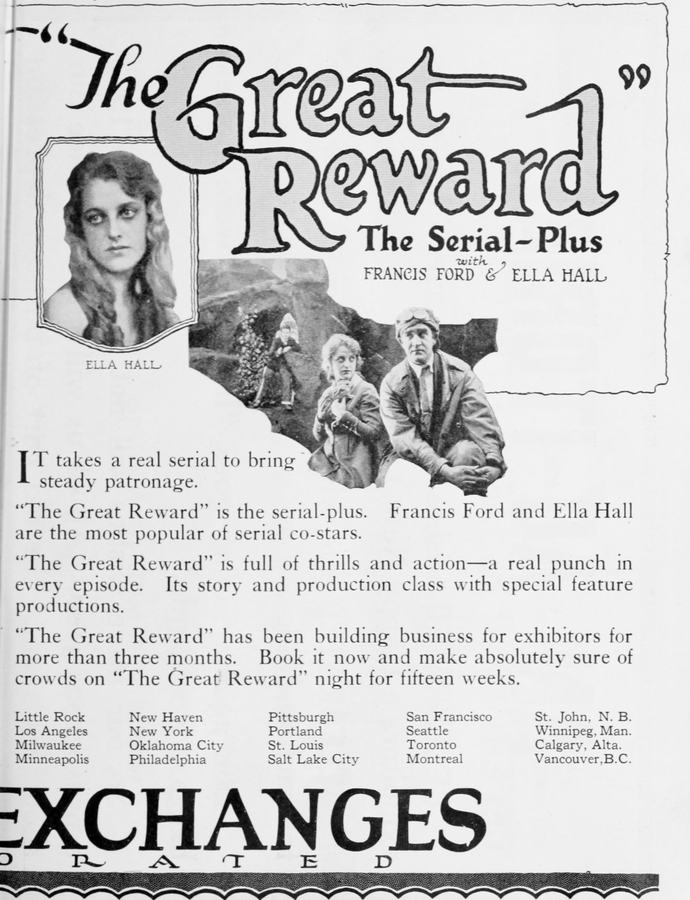
The Great Reward is a film that lingers in the mind like a half-remembered dream, its narrative as beguiling as it is disquieting. Set in Lyria—a kingdom that feels both ancient and freshly inked onto the world map—the movie orbits the fates of Olive Valerie and Ella Hall, two young Americans drawn into a web of regal treachery. The king, played with unflinching gravitas by Mark Fenton, is a figure of tragic grandeur, his moments of lucidity fractured by periods of inexplicable madness. This duality forms the backbone of the film’s most gripping tension: can a ruler’s legitimacy survive the erosion of his sanity?
Elsie Van Name’s screenplay is a labyrinth of moral ambiguity, where every character is a prism. The plot’s central conspiracy—to dethrone the king—unfolds not as a straightforward rebellion but as a mosaic of personal vendettas, philosophical debates, and opportunistic alliances. The film’s genius lies in its refusal to offer clear villains. Even Philip Ford’s antagonist, the suave and calculating Lord Rennart, is portrayed with such nuance that his actions, while morally dubious, are never entirely dismissed as evil. This ambiguity is both a narrative strength and a potential pitfall: the story demands active engagement, rewarding those patient enough to decipher its layered allegories.
The cinematography, a collaboration between director and lens, is nothing short of operatic. Lyria’s landscapes shift from gilded palaces to fog-cloaked forests with a painter’s precision. One particularly striking sequence involves a moonlit procession through the royal gardens, where the interplay of light and shadow mirrors the characters’ internal conflicts. These visual motifs are not mere ornamentation; they are narrative tools, reinforcing the film’s central thesis that power is both a crown and a cage.
Olive Valerie’s performance is a masterclass in understated intensity. Her character, an idealistic archivist, navigates the court’s treachery with a quiet resolve that belies her inexperience. The chemistry between her and Ella Hall’s more cynical, street-smart companion is the emotional core of the film. Their dynamic—part rivalry, part reluctant camaraderie—adds texture to the broader political machinations. Hall, in particular, delivers a standout performance in a pivotal scene where her character’s past is revealed through a single, devastating monologue.
The film’s score, an ethereal blend of harpsichord and dissonant strings, further elevates the atmosphere. It’s a soundscape that feels both timeless and alien, much like Lyria itself. This auditory layer is most effective during the film’s quieter moments, where the absence of dialogue is replaced by haunting melodies that echo the characters’ unspoken fears.
Thematically, The Great Reward is a meditation on the cyclical nature of power. The king’s madness is not a flaw but a mirror to the audience’s own complicity in systems of control. This is perhaps best illustrated in a scene where the court debates whether to keep the king’s condition a secret—a discussion that feels tragically relevant to modern governance. The film’s refusal to provide pat resolutions is its boldest choice. Instead, it leaves viewers with a lingering question: is the kingdom’s salvation found in restoring the king or in embracing a new, uncertain order?
Comparisons to Elsie Van Name’s previous work, particularly All That Glitters Is Not Goldfish, are inevitable. Both films explore the fragility of truth, but The Great Reward achieves a greater emotional depth. The pacing, however, may test some viewers; the first act’s deliberate setup, steeped in exposition and character introduction, risks alienating those craving immediate action. Yet, for those who embrace the slow burn, the payoff is a narrative of staggering complexity.
Technically, the film is a triumph. The production design, from the king’s opulent robes to the stark simplicity of the dungeon cells, is meticulous. Even the smallest props—like a forgotten locket in a key scene—carry symbolic weight. The editing is equally praiseworthy, with cross-cutting between the political intrigue and the king’s personal descent into madness creating a harrowing crescendo.
If there is a weakness, it lies in the secondary characters, whose arcs occasionally feel underexplored. Lord Rennart (Philip Ford) is a compelling figure, but his motivations—rooted in a desire to 'protect' Lyria from the king’s instability—lack the depth afforded to the protagonists. Similarly, Carl Gerard’s supporting role as a rogue alchemist is promising but underutilized, his potential for subplots left unfulfilled.
The film’s final act is a masterstroke of narrative and visual storytelling. As the conspiracy reaches its climax, the camera lingers on details—dripping chandeliers, a clock frozen at midnight—that transform the setting into a character in its own right. The resolution, while ambiguous, is thematically resonant, leaving the audience to grapple with the ethical implications of the characters’ choices. This is not a film that seeks to entertain through spectacle but to provoke through introspection.
In the pantheon of regal dramas, The Great Reward holds its own alongside classics like The Gown of Destiny and Friends and Enemies. Yet, it also carves out a unique niche, blending the operatic with the intimate. It is a film that defies easy categorization, its hybridization of genres—drama, thriller, philosophical treatise—reflecting the multifaceted nature of power itself.
For those seeking a cinematic experience that challenges as much as it enthralls, The Great Reward is an indispensable watch. It is a work that demands to be revisited, its layers of meaning unfolding with each viewing. While it may not appeal to all—a purist of fast-paced action might find it ponderous—its rewards are immense for those willing to embrace its complexity. In an era of fleeting entertainment, this film is a reminder of cinema’s capacity to mirror the human condition in all its glory and grotesquerie.
The Great Reward is a testament to the enduring allure of the regal narrative, reimagined through a lens that is both timeless and freshly urgent. It is a film that lingers, not in the memory, but in the soul.
IMDb —
1936
Community
Log in to comment.