DbcultAccessing Vault...
5.9/10
Senior Film Conservator
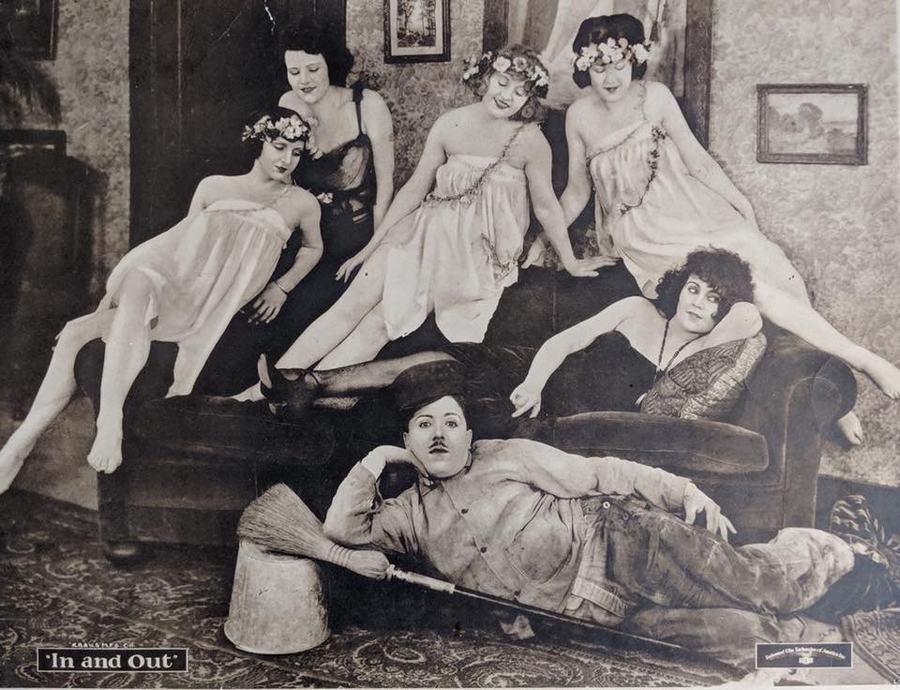
A definitive 5.9/10 rating for a film that redefined the boundaries of cult cinema. In and Out remains a cornerstone of transgressive art.
In the annals of early 20th-century cinema, In and Out (1921) stands as a testament to the emotional potency of silent films. This melodrama, helmed by an uncredited director and penned by an anonymous scribe, transcends its era’s constraints to deliver a narrative rich in psychological nuance. The film’s title encapsulates its central thesis: the perilous dance between public persona and private selfhood. Set in a picturesque but stifling Midwestern town, the story unfolds through the eyes of Clara Whitmore (Juanita Hansen), a woman whose life unravels when a fleeting indiscretion becomes the town’s gossip du jour.
Hansen’s Clara is a masterclass in physical expression; her furrowed brows and trembling hands convey a storm of internal conflict. The film’s most striking ensemble moment occurs when she confronts a mob of accusatory neighbors, her silent fury rendered in close-ups that rival the intensity of later sound-era classics. Cliff Bowes, as the traveling salesman Robert Haines, embodies both charm and danger—a man whose transient existence mirrors the film’s theme of impermanence. His scenes with Clara are charged with a tension that speaks volumes without dialogue, a hallmark of the era’s best screen chemistry.
The film’s visual strategy is a blend of stark realism and symbolic abstraction. Early scenes of Clara in her parlor, framed by window light that shifts from dawn’s gold to midday’s harshness, visually map her descent from grace to despair. The director employs a recurring motif of doors—open, closed, ajar—to underscore the theme of exclusion and inclusion. One particularly daring sequence intercuts Clara’s clandestine meetings with Robert against the town’s church bells, the juxtaposition of intimacy and communal judgment creating a haunting dissonance.
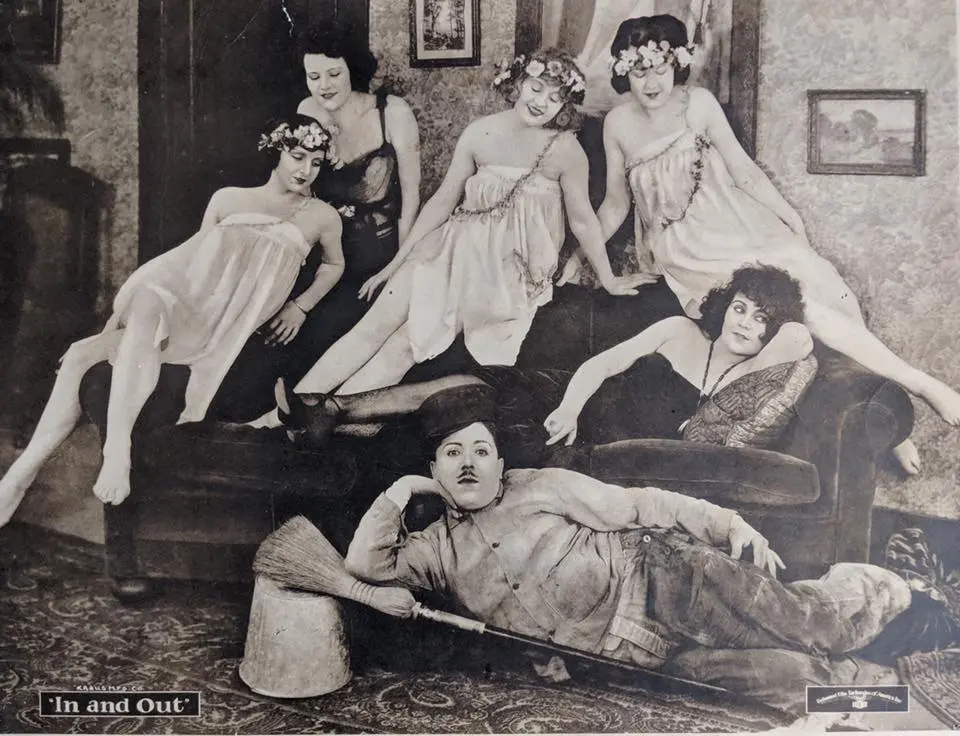
At its core, In and Out interrogates the performative nature of morality. The townsfolk, painted in shadowy silhouettes during their gossip sessions, are as complicit in Clara’s downfall as the protagonist is in her own vulnerability. This moral ambiguity is amplified by the subplot involving Clara’s husband, played with weary cynicism by William Blaisdell. His alcohol-fueled rants and hollow gestures reveal a man crumbling under the weight of his own pride, a secondary narrative that deepens the film’s exploration of marital disintegration.
Fans of similar silent-era works will find echoes of In and Out in films like Hard Luck (1921), which also grapples with societal judgment, albeit through a darker lens. Its visual style, however, diverges from the more flamboyant Business Is Business (1921), favoring restraint over spectacle. The film’s emotional depth rivals that of A Voice of Gladness (1930), though it predates that film by a decade and thus captures a more unpolished, raw aesthetic.
Despite its age, In and Out remains startlingly relevant. Its examination of how public discourse weaponizes truth against the vulnerable finds parallels in modern narratives like The Cost (2015), though the latter benefits from the immediacy of spoken language. For students of film history, this 1921 piece is a vital artifact, showcasing how silent cinema could articulate complex moral dilemmas with economy of means. The film’s ending—a close-up of Clara walking into the sunrise, her back to the town—has been debated for decades. Is it a rebirth, or a quiet surrender? The ambiguity is intentional, a challenge to the audience to decide which interpretation resonates more deeply.
In an age where cinema often prioritizes visual bombast over substance, In and Out serves as a reminder of the medium’s origins in storytelling. Its legacy lies not in technical innovation but in its unflinching humanism. The performances, particularly Hansen’s, are a masterclass in silent acting, proving that emotion needs no voice to be felt. For those seeking to understand the emotional architecture of early film, this is an essential viewing. Its themes of isolation and redemption, though rooted in the 1920s, echo through the decades, a testament to the timelessness of the human condition.
IMDb 6
1934
Community
Log in to comment.