DbcultAccessing Vault...
Cult Review
Senior Film Conservator
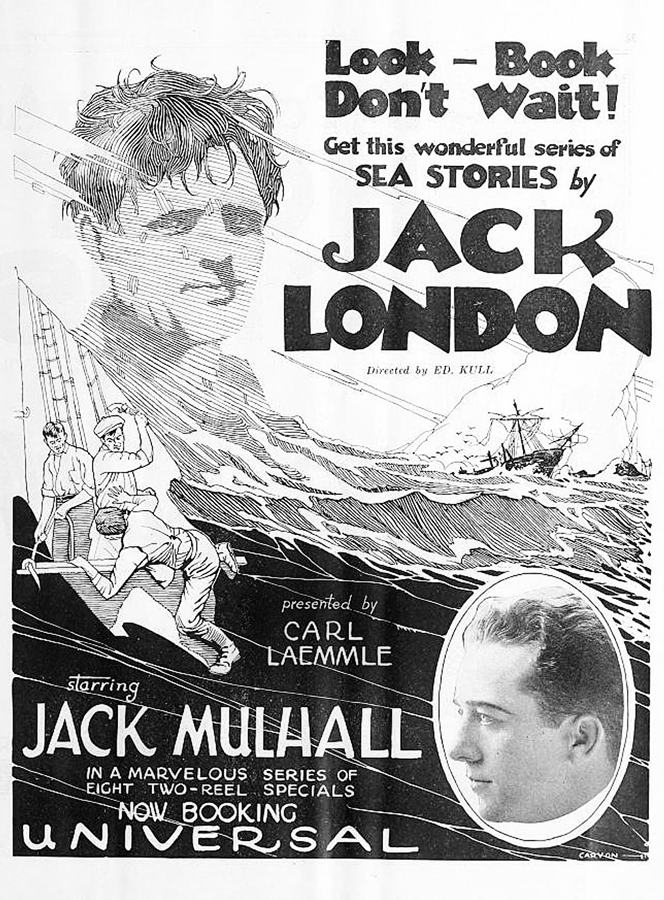
The cinematic ocean has always been a canvas for the struggle between man's primal greed and the civilizing influence of law. In Pirates of the Deep, this conflict is stripped of its romanticized veneer, replaced instead by the salt-crusted reality of the Californian coastline. Drawing heavily from the literary DNA of Jack London, specifically his 'Tales of the Fish Patrol,' the film serves as a rugged testament to the era's fascination with the frontier—even when that frontier is submerged under ten feet of brackish water.
Emma Bell Clifton’s screenplay manages to distill the sprawling, often chaotic energy of London’s prose into a focused, rhythmic narrative. Unlike the more sprawling epic proportions of The Battle Cry of Peace, which sought to address national anxieties, Pirates of the Deep finds its power in the microcosmic. It focuses on the oyster beds—not just as a source of commerce, but as a site of moral testing. The thugs who raid these beds are not mere caricatures; they represent a specific type of industrial-era lawlessness that London spent his career documenting. They are the scavengers of the sea, and their presence necessitates a new kind of hero.
Jack Mulhall, playing the vigilant member of the fish patrol, embodies this transitional figure. He is neither the aristocratic detective nor the bumbling commoner often seen in contemporary comedies like A Studio Rube. Instead, Mulhall offers a performance grounded in physical competence. When he discovers the raid, the film shifts from a quiet observation of maritime life into a kinetic pursuit. The pacing here is remarkably modern, eschewing the theatrical pauses of its peers to favor a relentless forward momentum that mirrors the incoming tide.
Visually, the film utilizes the natural lighting of the coast to create a sense of stark realism. There is a gray-scale texture to the water that feels heavy, almost oppressive. In contrast to the stylized, almost pastoral beauty found in The Narrow Valley, the cinematography here is utilitarian and sharp. The camera lingers on the mechanical aspects of the raid—the lifting of the nets, the heavy breathing of the men, the way the boats sit low in the water under the weight of stolen goods. This attention to detail elevates the film from a simple 'cops and robbers' tale to a documentary-adjacent look at a forgotten trade.
The casting of Louise Lorraine provides a necessary emotional anchor. While the film is ostensibly an action-oriented piece, Lorraine brings a nuanced vulnerability that prevents the story from becoming too detached. Her presence reminds the viewer of the community that relies on these oyster beds, moving the stakes beyond mere property rights into the realm of survival. Her chemistry with Mulhall is understated, lacking the saccharine sentimentality of A Kiss in Time, which works to the film's advantage by maintaining the overarching tone of rugged survivalism.
What strikes the modern viewer is the film's inherent environmental consciousness. Long before the term 'sustainability' entered the common lexicon, London and Clifton were highlighting the fragility of natural resources. The 'pirates' are not just stealing from the state; they are disrupting a biological equilibrium. This thematic weight gives the film a gravity that transcends its short runtime. It shares a certain ideological DNA with The Law of Nature, though it swaps the wilderness for the waves.
The confrontation scene is a masterclass in silent-era blocking. As the hero catches the raiders at work, the screen becomes a flurry of movement. There is no reliance on overly descriptive intertitles; the action speaks for itself. The choreography of the fight on the deck of the oyster boat is brutal and unpolished, reflecting the desperate nature of the men involved. It lacks the stylized grace of a European production like Fauvette, opting instead for a quintessentially American grit.
When placed alongside other films of the period, Pirates of the Deep stands out for its lack of artifice. If we look at Britain's Bulwarks, No. 1: Women Munitioners of England, we see a focus on the collective effort of a nation at war. In contrast, this film focuses on the individual's duty to protect the land (or sea) from internal rot. It is a more cynical, perhaps more realistic, view of society. Even the lighter moments feel earned, far removed from the whimsical nature of Come Robinet sposò Robinette.
The film also invites comparison with The Life of a Jackeroo in its depiction of the working man. Both films celebrate the laborer, but while the Jackeroo finds his identity in the vastness of the outback, our hero finds his in the claustrophobic confines of a patrol boat. There is a sense of duty that is almost religious in its fervor—a theme also explored in the more overtly pious The Joan of Arc of Loos, though here that duty is channeled into the preservation of the oyster beds rather than national liberation.
The direction (often attributed to the collaborative spirit of the production house) shows a keen understanding of space. The use of long shots to establish the isolation of the patrolman against the vastness of the bay creates a palpable sense of vulnerability. This isn't the urban chaos of Erlebnisse einer Sekretärin; this is a world where help is miles away and the only law is the one you carry with you. The editing during the final chase sequence is particularly noteworthy, utilizing cross-cutting to build tension in a way that feels surprisingly contemporary.
One cannot overlook the social commentary embedded in the thugs' motivations. They are portrayed not as masterminds, but as desperate men driven by a 'rolling stone' mentality—much like the characters in Rolling Stone. They are the fallout of a society that values the pearl over the person. This underlying critique of capitalism, while subtle, aligns perfectly with Jack London's socialist leanings, making the film more than just a maritime adventure.
In the grand tapestry of silent cinema, Pirates of the Deep occupies a unique niche. It bridges the gap between the adventure serial and the social drama. It lacks the overt melodrama of Vengeance, choosing instead a path of stoic observation. It doesn't possess the ethereal beauty of The Butterfly Girl, but it has a muscularity that many of its contemporaries lack. It is a film of sweat, salt, and iron.
For those who appreciate the evolution of the action genre, this film is an essential artifact. It demonstrates how early filmmakers used limited resources to tell stories of immense physical and moral weight. It reminds us that the struggle for justice is often a lonely one, fought in the dark corners of the world—or in this case, the dark depths of the bay. The hero’s success isn't celebrated with a parade; it is marked by the quiet return of order to the water, a resolution that feels as inevitable as the tide itself.
Ultimately, Pirates of the Deep is a triumph of atmosphere over artifice. It takes a simple premise—a raid and a pursuit—and imbues it with the weight of a Greek tragedy. It is a testament to the power of the silent image to convey complex ideas of stewardship and bravery. Even compared to the charming camaraderie of A Regular Pal, this film leaves a more lasting, albeit more somber, impression. It is a cold splash of water to the face of the viewer, refreshing in its honesty and unrelenting in its execution.
Critique Note: For audiences accustomed to the hyper-edited maritime spectacles of the 21st century, the deliberate pacing of Pirates of the Deep offers a meditative look at the mechanics of justice. It is a film that demands your attention, rewarding it with a profound sense of place and a timeless exploration of human integrity.

IMDb —
1916
Community
Log in to comment.