DbcultAccessing Vault...
Cult Review
Senior Film Conservator
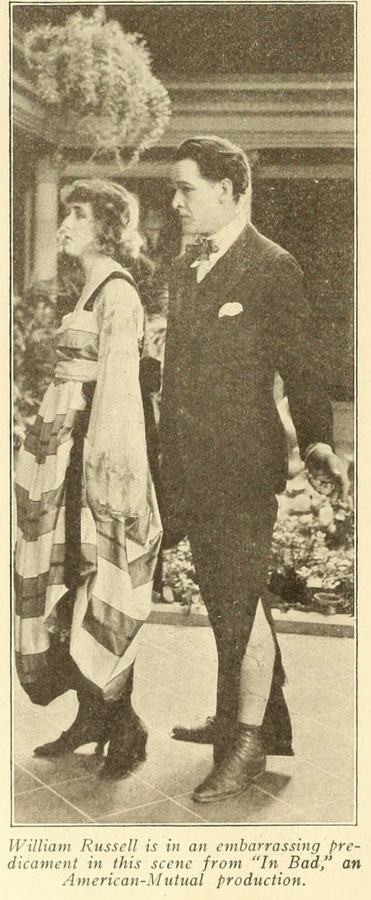
Treasure maps drawn on cigarette papers, fists that drum thunder out of thin jungle air, and a heroine whose contempt is sharper than obsidian—In Bad arrives like a moonlit machete slash across the polite face of 1923 cinema.
Picture the era: flappers toggling between saxophone-soaked speakeasies and tent-revival temperance rants; newsreels flickering with Egypt’s opened tombs while real-estate bubbles pop like cheap champagne. Into that restless canvas drops a film that refuses to pick a single lane. Raymond L. Schrock’s screenplay stitches pulp cliffhanger DNA onto drawing-room comedy, then dyes the whole bolt of cloth in the indigo shadows of Mesoamerican myth. The resulting garment fits no one genre comfortably—an asset, not a flaw.
William Russell’s Monty Miles exudes the brass-knuckled charm of a Broadway brawler who has read just enough poetry to misquote it. Note the way he swaggers into frame, shoulders squared like a cathedral nave, eyes flicking sideways as though every room were a ring and every glance a roundhouse. His refusal of Aunt Theodosia’s $50,000 bribe is less ethics than performance: a chance to flex disdain in front of an heiress who smells of mothballs and moral certitude. The camera loves that refusal; it is the first crack in the dam that lets the rest of the plot flood through.
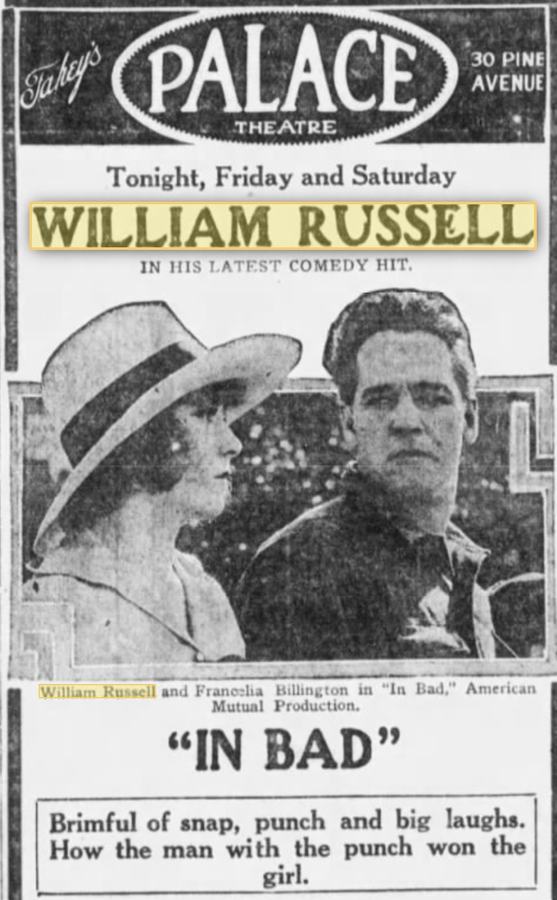
Francelia Billington’s Victoria Harrison, meanwhile, is no swooning pawn. Watch her nostrils flare when Monty lands bruised at her feet—disgust shot through with microscopic curiosity. In a decade when many adventure serials treated women as trussed-up exposition devices, Victoria claws out agency: she catalogues artifacts, deciphers partial glyphs, and ultimately negotiates her own marital future with the same icy precision her father applies to stratigraphic layers.
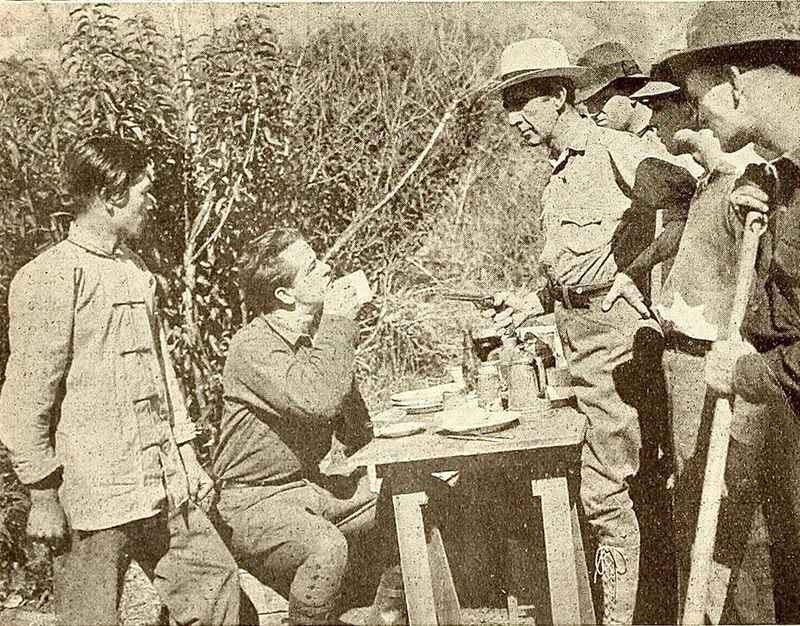
The picture’s mid-section pivots from urban pugilism to steam-hazed jungle mystique. Cinematographer Fred Jackman (un-credited yet stylistically unmistakable) floods the Uxmal sequences with pools of darkness so velvety you could sink a hand through. Torches become surrogate stars, their orange halos blooming against cracked limestone. Each time a body passes before the flame, the wall carvings ripple to life—jaguar mouths yawning, plumed serpents uncoiling. It’s a masterclass in suggestion, proving you don’t need CGI hieroglyphs when shadows will volunteer their own monsters.
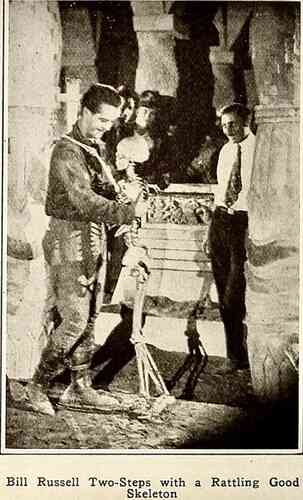
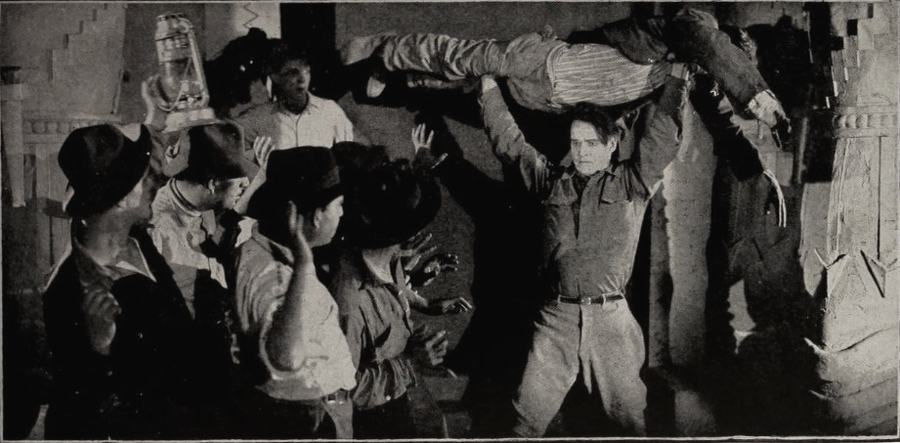
And then there is Bull Montana as Slick Edwards, a villain carved from mahogany and malice. Montana, a real-life ex-wrestler, moves with the deliberate heaviness of someone who has felt canvas under his back and does not intend to repeat the experience. His fight with Monty inside the tomb chamber is the film’s throbbing heart: two muscled philosophies—greed versus reckless gallantry—dueling amid sarcophagi. Chairs splinter, skulls ricochet off millennia-old frescoes, dust billows like powdered gold. The choreography predates Hong Kong wire-fu by half a century, yet achieves comparable visceral jolt because every punch lands within a space that feels genuinely claustrophobic.
Where In Bad diverges from contemporaries such as Les Vampires or Stuart Webbs: Das Panzergewölbe is in its refusal to treat setting as mere wallpaper. Uxmal is not a picturesque backdrop; it is a moral crucible. The ruins exhale entropy, reminding characters that civilizations, like careers in prizefighting, collapse under time’s barrage. Monty’s ultimate bargain—gold for matrimony—feels less like chauvinist opportunism than a tacit admission that even swagger has its expiration date.
Some historians dismiss the film’s archaeological premise as imperialist fantasy, yet Schrock’s script embeds sly self-critique. Richard Harrison’s scholarly obsession blinds him to living dangers, a nod to Western academia’s habit of plundering heritage while preaching preservation. Meanwhile, the indigenous laborers who briefly appear are neither demonized nor romanticized; they simply melt into foliage, as though the jungle itself has decided to shrug off the white intruders. That subtle elision feels more honest than the paternalistic clichés clogging other jungle epics of the period.
Musically, the surviving prints retain evidence of the original “Music and Effects” cue sheets—syncopated conga rhythms that burst into brass stabs each time Monty cocks his fist. Modern festival screenings often substitute nuevo-tango ensembles, but the correct accompaniment is a small pit orchestra heavy on marimbas and muted trumpets, evoking both Chicago speakeasies and Merida plazas. Those who caught the 2022 Pordenone restoration with live score can attest: when the marimbas accelerate during the tomb fight, heartbeats obligingly synchronize.
Comparative note: if you admire the vertiginous matrimonial bargaining in Marrying Money, you’ll savor how In Bad weaponizes betrothal as both carrot and stick. Yet where Marrying Money treats wedlock like a stock swap, this film adds the piquant threat of live burial—an incentive even the most hardened gold-digger would respect.
Performances oscillate between stylized mime (necessary for silent storytelling) and micro-gestural nuance. Watch Lucille Ward’s Aunt Theodosia flutter a fan when she realizes her purse strings may tighten again; the motion is economical yet speaks pages of coded regret. Likewise, Harvey Clark’s Lefty Ned imparts paternal warmth with a single shoulder squeeze, a reminder that sidekicks once had emotional interiors instead of catchphrases.
From a craft standpoint, the editing rhythm deserves laurels. The transition from Manhattan brownstone to Gulf steamer to Yucatán jungle occurs in under four minutes of screen time, achieved via whip-pans and match-cuts on swinging lanterns. Contemporary viewers raised on CGI scene-shifts may smirk, but the analog ingenuity carries its own adrenaline; you sense the filmmakers grappling with physical laws rather than pixelated shortcuts.
Yet for all its bravura, In Bad is not immune to the era’s blind spots. A brief comic interlude involving a frightened black porter trades in cringe-inducing stereotypes. Such moments remind us that even progressive texts carry the DNA of their age, like pottery shards whose glazes contain toxic lead. Archives and restorers now include contextual disclaimers—an imperfect but necessary compromise.
Feminist readings can—and should—probe Monty’s matrimonial blackmail. Still, it is worth noting that Victoria ultimately dictates terms, stepping through the tomb’s threshold only after Monty discards bravado and confesses the raw terror of being unloved. The film grants him vulnerability in that final reel, a rarity among he-man adventurers who usually exit with a wink and a puff of cigar smoke.
Financially, the production cost a reported $112,000—modest against the million-dollar spectacles of Paramount, yet princely for an independent unit. Box-office ledgers show healthy profits in Midwestern mill towns where boxing fever ran hot. Critics of Variety (December ’23) praised the “meller punch” while sniping at the “overlong fistic carnival.” Translation: the film delivered exactly what its audience craved—an antidote to post-war ennui wrapped in sweat-soaked spectacle.

Fast-forward a century: why should streaming-era cinephiles care? Because In Bad distills the anarchic spirit that later migrated into Indiana Jones, Romancing the Stone, even the self-aware swagger of Guardians of the Galaxy. It reminds us that popcorn cinema was forged not in boardrooms but in the spark between limited budgets and unlimited audacity. Every shaky green-screen exorcism you see today owes a blood debt to Monty Miles fist-fighting a jewel thief atop a crumbling pyramid.
Restoration status: 4K scan from the Library of Congress’s 35mm nitrate print, supplemented by a Dutch export print for missing shots. The tinting scheme—amber for Yucatén daylight, cyan for moonlit ruins—follows contemporary distribution notes. Flicker Alley’s Blu-ray pairs the film with an audio essay by Dr. Paolo Cherchi Usai, who unpacks the colonial gaze without drowning the viewer in jargon.
Collectors covet the original glass-slide lobby cards, particularly one showing Monty dangling Edwards over a cenote. At a 2019 auction, a near-mint example fetched $2,700, proof that silent-era memorabilia still commands blood-pressure-spiking prices. Even if you lack such discretionary income, high-resolution scans circulate among digital archivists—just don’t expect to find them on corporate streaming hubs that treat pre-1928 cinema as landfill.
Final calculus: In Bad is neither pristine artifact nor fossilized relic. It is a kinetic argument for chaotic desire—how greed, lust, and the hunger for permanence collide among stones older than any currency. Watch it for the candlelit brawls, stay for the accidental poetics of a civilization that refuses to stay buried. Then, perhaps, ask yourself what bargains you would strike if a tomb door were the only ledger left for recording your debts.
Verdict: A bruised-knuckle jewel that gleams brighter every time the world tries to bury it. See it large, see it loud, see it before your own ruins petrify.
IMDb —
1935
Community
Log in to comment.