DbcultAccessing Vault...
Cult Review
Senior Film Conservator
Short answer: No, unless you are a dedicated historian of slapstick. This film is for silent comedy completionists and those interested in the evolution of the 'henpecked husband' trope; it is absolutely not for anyone seeking sophisticated humor or a coherent narrative that stands up to modern scrutiny.
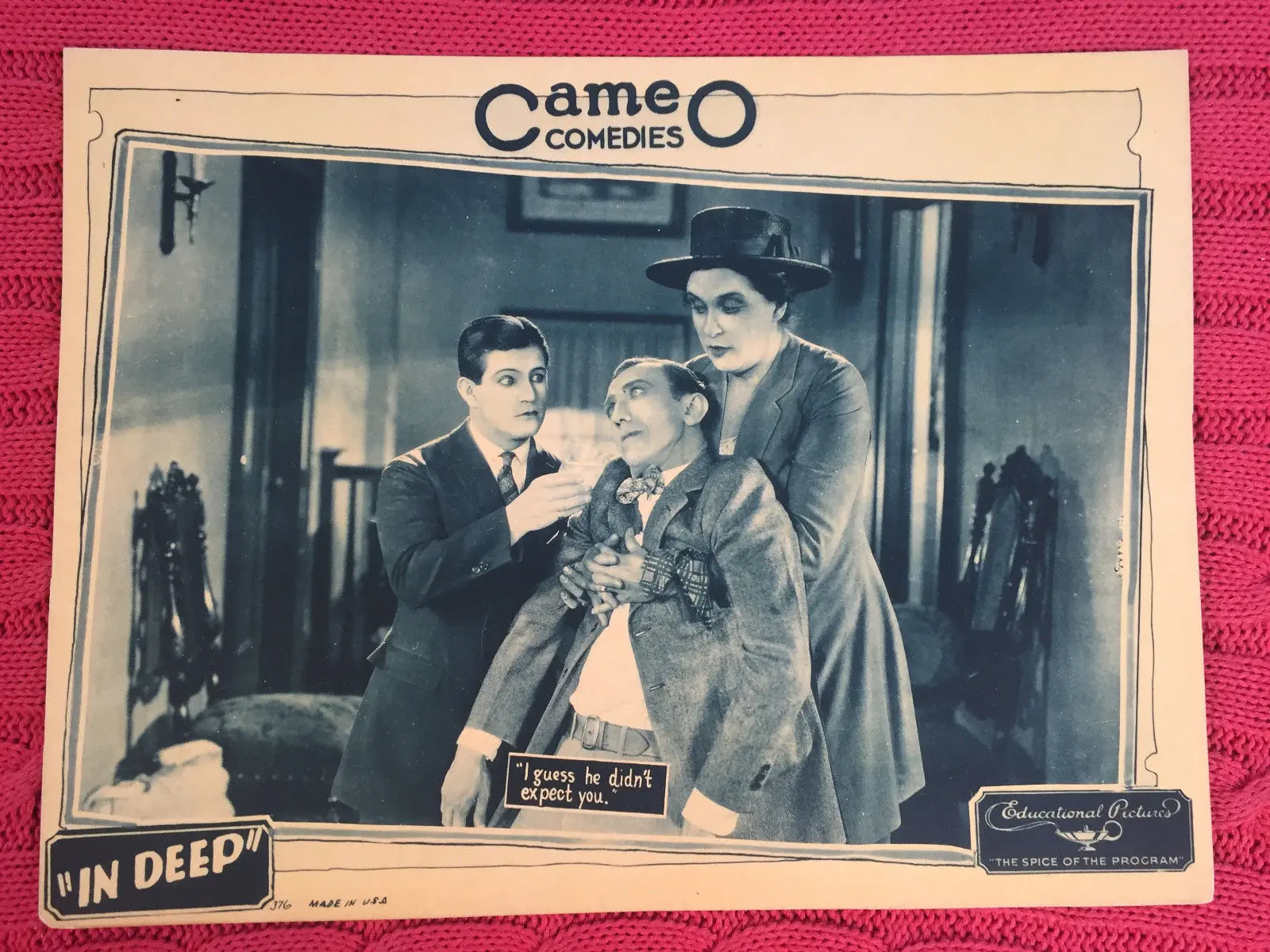
The 1927 short In Deep is a fascinating artifact of a time when the mere sight of a man failing to control his own household was considered the height of comedic tension. It is a film built on the bones of desperation, where the protagonist's fear of his wife is so profound that he would rather stage a fraudulent medical emergency with a primate than face a speeding ticket or a domestic argument. It is loud, even in its silence, and remains a curious example of the 'escalation' style of comedy that dominated the late silent era.
This film is worth a look only if you want to see the specific, frantic mechanics of a 1920s farce. For the average viewer, the humor will feel repetitive and the gender dynamics will feel exhausting. It works as a 15-minute time capsule, but it fails as a standalone piece of entertainment for a 21st-century audience.
1) This film works because the physical commitment of George Davis and the sheer absurdity of the 'monkey as a baby' gag provide a surreal energy that transcends the thin plot. 2) This film fails because it relies on the 'angry wife' caricature which, even compared to contemporaries like Henpecked and Pecked Hens, feels uninspired and one-dimensional. 3) You should watch it if you are researching the use of animals in early Hollywood comedy or the career of Cliff Bowes.
The narrative of In Deep hinges on a singular, panicked decision. When the husband and his friend are caught speeding, they don't just take the ticket. In the logic of silent shorts, a ticket is death, but a lie is an opportunity. The excuse of a sick wife and child is a standard trope, but the execution here is where the film finds its pulse. The moment they decide to use a monkey to fill the role of a human infant is the exact moment the film moves from a boring domestic comedy to a piece of surrealist theater.
Consider the scene where the police officer enters the home. The tension isn't derived from the threat of jail, but from the technical challenge of keeping a monkey under a blanket. This is physical comedy at its most primal. George Davis, playing the husband, displays a level of facial contortion that suggests he is more afraid of the officer's gaze than the actual crime he committed. It is a performance of pure anxiety. It works. But it’s flawed.
George Davis was a reliable presence in this era, often playing the everyman pushed to the brink. In In Deep, he manages to convey a specific brand of frantic cowardice that was highly valued in the 1920s. His chemistry with Cliff Bowes is functional, if not legendary. They move with the synchronized clumsiness of a seasoned vaudeville duo, particularly during the high-speed car chase that opens the film. The car itself becomes a character, a rattling bucket of bolts that mirrors the instability of their domestic lives.
However, the real standout—and I say this without irony—is the monkey. In many silent films of this period, like My Dog, Pal, animals were used to ground the comedy in something relatable. Here, the monkey is used to heighten the alienation. The way the creature interacts with the 'fake' wife (Helen Foster) creates a bizarre domestic tableau that feels like a fever dream. It is the only element of the film that feels truly unpredictable.
When we look at In Deep alongside films like A Small Town Idol, we see a clear divide in quality. While Idol attempted a larger satire of Hollywood and fame, In Deep is content to stay in the gutter of domestic anxiety. It shares more DNA with A Crooked Romance, where the humor is derived from the subversion of traditional family roles. In both films, the 'family unit' is a prop to be manipulated for personal gain.
The cinematography in In Deep is utilitarian at best. There are no sweeping vistas like those found in Evangeline or the atmospheric dread of The Dream Cheater. Instead, we get static medium shots that prioritize the physical movements of the actors. This isn't a film about visual storytelling; it's a film about captured performance. The pacing is relentless, which is its saving grace. At no point does the film allow the audience to stop and realize how little sense the plot actually makes.
There is a debatable opinion to be held here: the 'henpecked' husband trope is actually a tragedy. We are meant to laugh at the man's fear of his wife, Blanche Payson, who plays the returning spouse with a terrifying, stoic authority. But if you look closely, the film depicts a man so utterly broken by his domestic situation that his only recourse is to create an alternate reality. It is a dark commentary on 1920s marriage disguised as a light romp. The ending, where everyone is hauled off to the station, isn't just a comedic resolution; it's a restoration of a miserable status quo.
If you are looking for a laugh-out-loud experience, no. If you are looking to understand the building blocks of the modern sitcom, yes. The 'fake family' trope seen here has been recycled for decades, from I Love Lucy to modern-day comedies. In Deep is a crude, early version of that machine. It is a rough draft of a joke that would eventually become much more polished in the hands of others.
The film moves at a breakneck speed, ensuring that even if a gag fails, a new one is only seconds away. The physical performances of the leads are technically impressive, showing the high level of stunt work required in the silent era. The use of a live monkey adds a layer of genuine chaos that modern CGI cannot replicate.
The plot is incredibly predictable, following a formula that was already tired by 1927. The character of the wife is a one-note villain, which robs the film of any real emotional stakes. The final 'reveal' where the cop overhears the secret is a lazy writing shortcut that feels unearned.
In Deep is a loud, messy, and occasionally bizarre piece of silent cinema. It isn't a lost masterpiece, nor is it a total failure. It is a workhorse of a comedy, designed to fill a slot in a theater program and provide a few easy laughs. The monkey is the best actor. The men are caricatures. The wife is a plot device. It is a relic that reminds us how far comedy has come, and in some ways, how much it has stayed the same. Watch it for the history, skip it for the humor.
IMDb —
1918
Community
Log in to comment.