DbcultAccessing Vault...
Cult Review
Senior Film Conservator
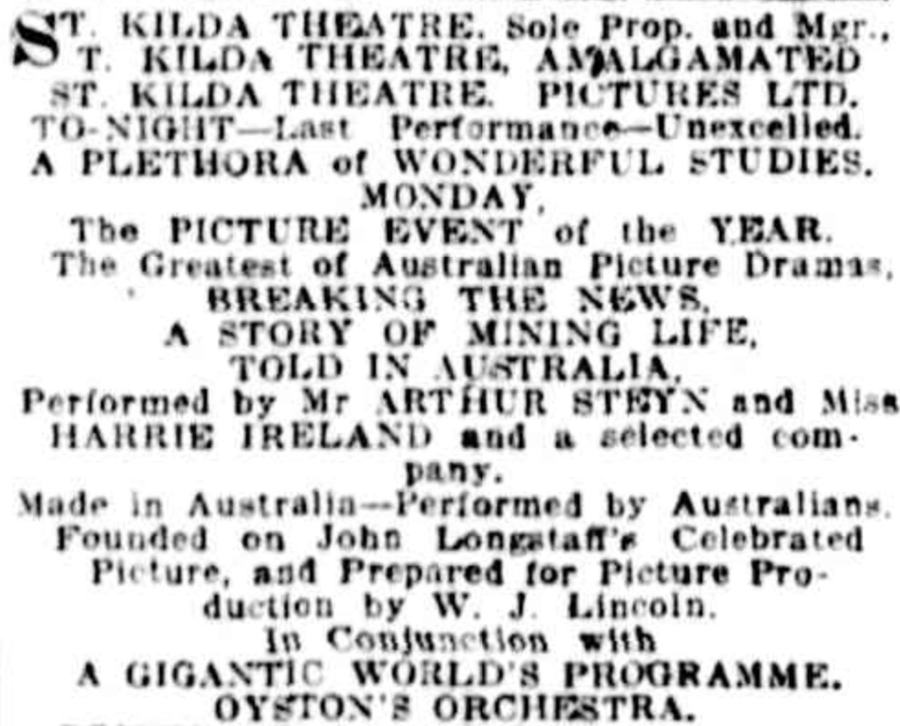
The smell of molten lead and wet ink drenches every frame of Breaking the News (1912), a rambunctious one-reeler that feels like a front-page headline hurled straight at your face.
Australia’s fledgling film industry rarely gets credit for producing proto-noir before the term existed, yet here it is: a newspaper thriller steeped in corruption, class tension and the giddy thrill of whistle-blowing. Shot in Melbourne on the eve of federal elections, the film barrels along at 16 frames per second like a copy boy racing down Collins Street, clutching tomorrow’s scandal in his grubby fists.
Director W.J. Lincoln, best remembered for bushranger melodramas such as The Story of the Kelly Gang, swaps the Outback dust for newsroom soot, discovering that ink can stain just as irreparably as blood.
Arthur Styan embodies the archetype of the obsessive editor long before The Front Page or His Girl Friday ever cracked wise. His eyebrows telegraph every moral calculus; his pocket-watch ticks like a time bomb. Opposite him, Harrie Ireland radiates proto-feminist steel—part sob-sister, part spy—using her parasol as both fashion accessory and crowbar to pry open locked aldermanic doors. Together they incarnate the uneasy marriage between civic duty and commercial appetite that still haunts journalism today.
Lincoln’s Melbourne is a fever dream of gas lamps, horse manure and telegraph wires humming over narrow laneways. The camera prowels through open-plan newsrooms where copy spikes resemble medieval weaponry, then descends into subterranean print halls where rollers glisten like beached whales. Cross-cut with actuality footage of tram conductors on strike—spliced in to cash in on headlines of the week—the narrative blurs reportage and reenactment decades before docudrama became fashionable.
This willingness to embed genuine civic unrest gives Breaking the News a jolt of authenticity that even modern prestige newspapers rarely match.
Notice how the intertitles mimic inverted-pyramid reporting: spare, punchy, devoid of editorial flourish. “MINE MAGNATE BRIBES COUNCIL” reads one card, white text on black, as if the film itself were composing tomorrow morning’s banner. Another card—“INK TOO COSTLY FOR TRUTH”—practically winks at us across a century, foreshadowing every paywall debate we’ll ever have.
Without spoiling the plot’s breathless 14-minute sprint, suffice to say that a forged shipping manifest, a dead stevedore, and a ministerial signature propel the protagonists toward a courthouse climax at dawn. Lincoln stages the final reel as a race against the rolling presses: can the exposé be typeset before thugs smash the plates? The answer arrives in a flourish of double-exposures: ghostly headlines hover over the cityscape like moral verdicts, while the silhouetted presses churn out broadsheets that flutter across the Yarra River like wounded gulls.
There is no wedding, no slapstick chase through Melbourne Zoo, no last-minute inheritance from a long-lost uncle—only the fragile victory of public record.
That refusal to capitulate to narrative comfort food places Breaking the News closer to Strike or Les Misérables than to its contemporary escapist romps such as The Flying Circus. The film intuits that once corruption is exposed, the real work—legislative reform, voter outrage, civic vigilance—has only begun.
Styan’s editor is all pent-up kinetic energy: imagine Clark Gable’s grin stripped of vanity, mixed with the haunted eyes of a war correspondent. He never grandstands; instead his shoulders sag with the accrued weight of every libel threat. Ireland, meanwhile, weaponizes the era’s mandatory femininity—lace gloves, high collars, demure hats—until she needs to sprint across a cobblestone alley, at which point those garments billow like superhero capes. Their chemistry is less romantic than symbiotic: two ink-stained souls recognizing that the story is bigger than either of them.
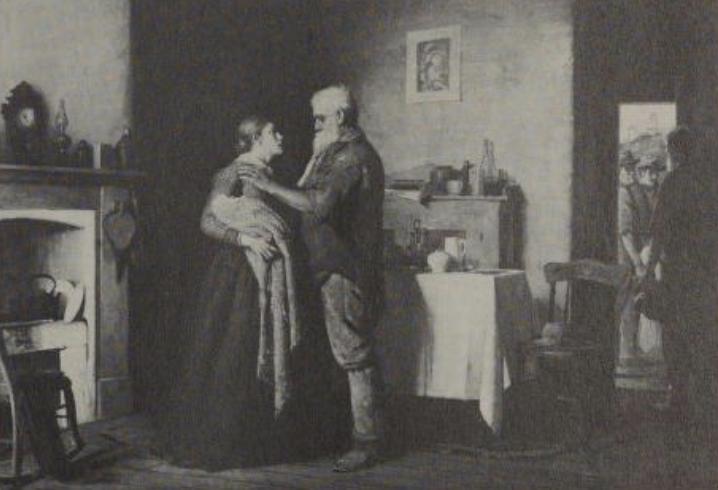
Watch for the moment Ireland’s character dictates copy while pinning a corrupt alderman against a filing cabinet; the camera holds on her unblinking gaze longer than any male hero of the period would dare.
Long before Eisenstein juxtaposed sailors and slaughtered bulls, Lincoln intercuts a shot of a linotype slug being cast with the anguished face of a widowed stevedore. The metallic letters “B-R-I-B-E” solidify in molten lead, then dissolve into the woman’s tear-streaked cheek—an audacious metaphor equating language with weaponry. Elsewhere, superimposed front pages hover above Melbourne’s thoroughfares, turning the civic skyline into a living broadsheet. These techniques, crude by today’s digital standards, pulse with the avant-garde conviction that cinema can alter public consciousness faster than any town-crier.
The film’s rhythmic editing pattern—long shot, close-up, actuality insert, title card—anticipates the modern news-package aesthetic: context, emotion, evidence, headline.
Surviving prints contain no original score, yet archival accounts suggest exhibitors were encouraged to hire brass bands during the strike sequences and solo cornet for the lone-editor midnight scenes. Contemporary restorations often opt for jaunty ragtime, but I prefer imagining the clatter of manual typewriters as percussion, the hiss of gas lamps as ambient drone. Try syncing a metronome to the film’s average shot length—about 3.2 seconds—and you’ll discover an inadvertent proto-techno pulse that makes the final courthouse showdown feel like a drop in an EDM track.
Released the same year as From the Manger to the Cross and Cleopatra, Breaking the News lacks biblical pageantry or imperial decadence. Its spectacle is civic, its grandeur measured in column inches, not chariot wheels. While European epics were erecting plaster Jerusalem, Australian filmmakers were chronicling the birth pangs of their own democracy—less gilt, more grit.
The result is a cinematic time capsule that feels eerily topical in our era of leaked dossiers and subpoenaed tweets.
Only two incomplete 35 mm nitrate reels survive, housed in the Australian National Film Archive and the BFI’s nitrate vault. The first reel ends mid-chase; the second begins with the courtroom crescendo. Scholars speculate a third reel—detailing the parliamentary vote—was destroyed in a 1916 warehouse fire. Yet even in its truncated state, the film delivers a narrative jolt comparable to skimming today’s morning push alerts: urgency, anger, hope.
Digital 4K scans reveal marginalia: a coffee ring on the master intertitle, thumbprints on the emulsion, splice tape bearing penciled calculations—ghosts of early exhibitors who physically cut the film to fit local moral codes.
Because democracy is still edited, one exposé at a time. Because the clatter of keyboards has replaced the clank of linotype, yet deadlines still feel like deathlines. Because Harrie Ireland’s defiant gaze prefigures every journalist who refuses to stay in the lifestyle section. And because the film reminds us that ink may smudge, but once it hits the street, it can topple governments.
Seek it out in any restored iteration, crank up whatever racket you deem appropriate—typewriters, brass band, synthwave—and let this century-old scoop scream across the pixels. The front page may be digital now, but the stakes remain stubbornly, thrillingly analog.
Verdict: 9/10—essential viewing for anyone who believes the first draft of history is worth fighting for.

IMDb 6.1
1916
Community
Log in to comment.